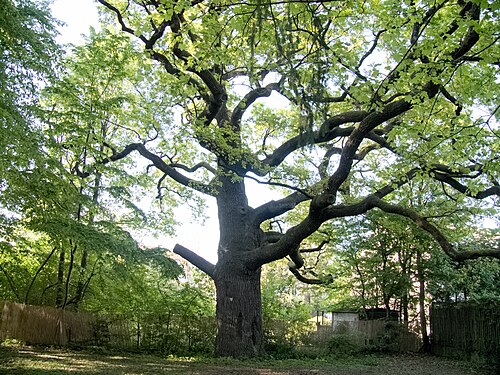
In fruit
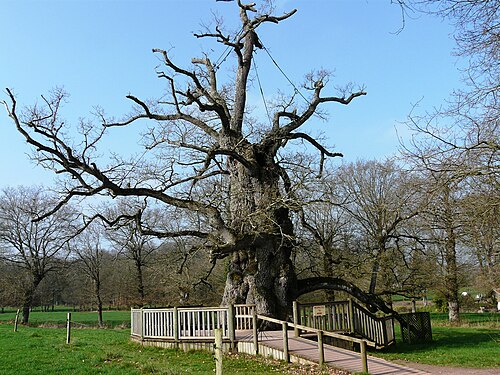
This oak has outlasted the village it once stood outside, the Bavarian duchy that once ruled the land, and most of its own major branches.
Photo: Tkarcher (CC BY-SA 4.0)
Quercus robur
Foresters used to say an oak spends three hundred years growing, three hundred resting, and three hundred slowly dying. We map 368 of them, in 179 cities.
The pedunculate oak, Quercus robur, is the tree that adage was built on: the classic broad English oak of parkland and legend, though it grows just as happily in Amsterdam or Berlin. Its trick for extreme age is to hollow out. As the heartwood rots away the tree keeps only its living outer sleeve, which lightens the load and can extend its life past a thousand years. That is why the oldest oaks are the fattest and most gnarled, not the tallest. Kings prized them enough to wall entire parks around them, and their timber built the navies and cathedrals of northern Europe. These are the ancient oaks mapped on the site so far, oldest first.
This oak has outlasted the village it once stood outside, the Bavarian duchy that once ruled the land, and most of its own major branches.
Photo: Tkarcher (CC BY-SA 4.0)
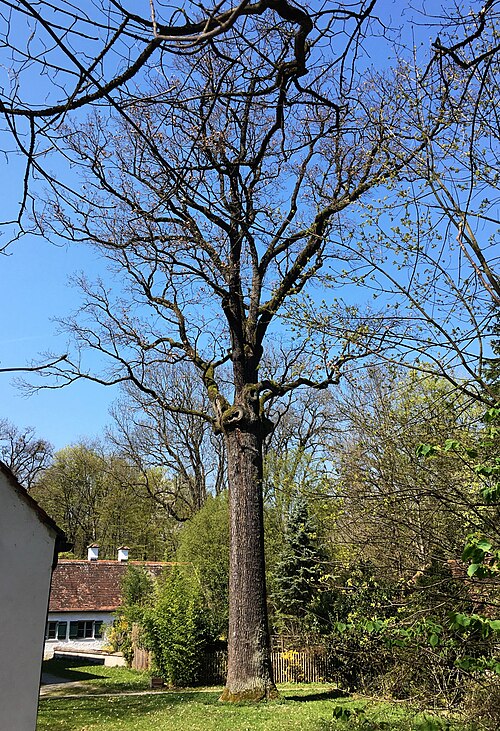
This oak grows in the one part of a royal palace garden built to look like it wasn't designed at all.
Photo: Peterf (CC BY-SA 4.0)
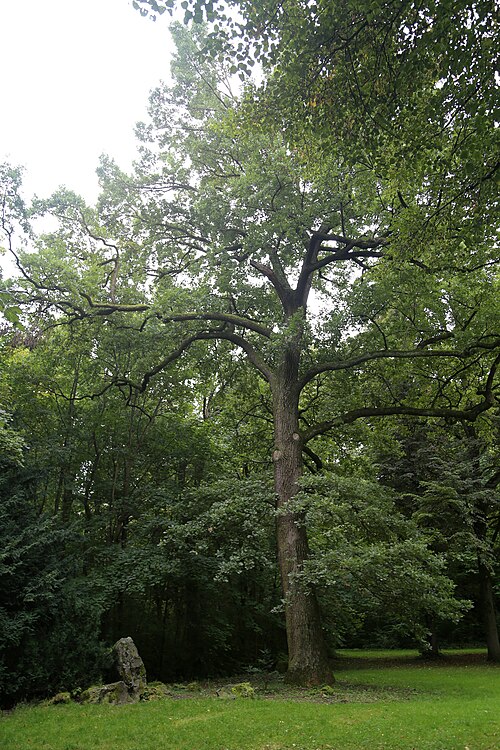
Twelve thousand schoolchildren planted this oak in one afternoon, or at least watched a handful of their classmates do it.
Photo: Rufus46 (CC BY-SA 3.0)
Maria-Eich-Strasse means Mary's Oak Street, and this is not that oak.
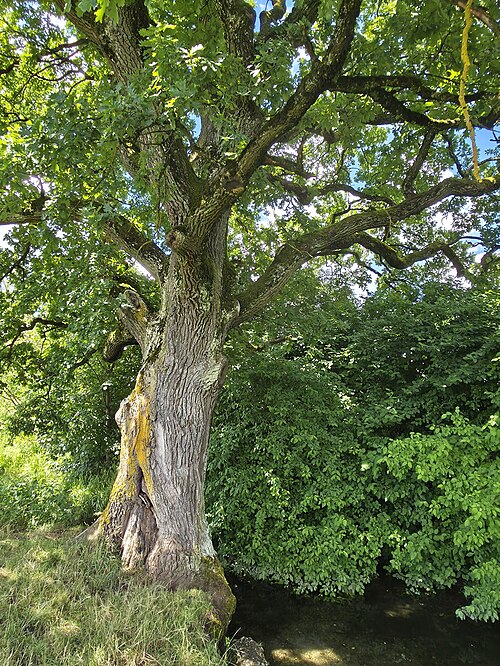
This oak marks a meeting of waters: it stands where the Entenbach runs into the Hachinger Bach, on the stretch of country between Taufkirchen and Unterhaching.
Photo: Rufus46 (CC BY-SA 4.0)
Amsterdam's oldest tree spent its first ninety years alone.
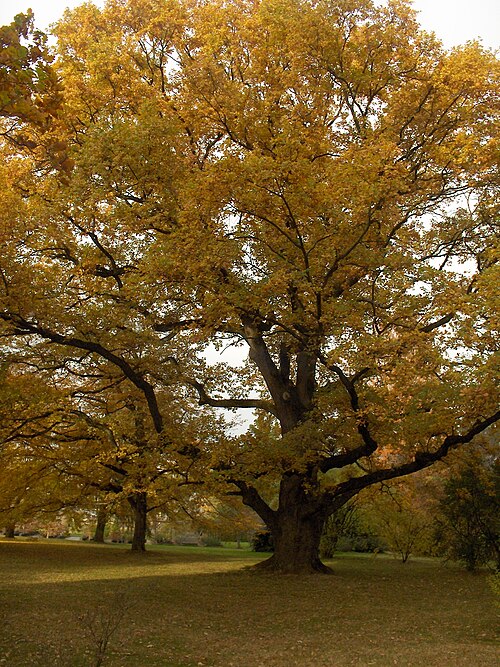
The city has drawn a quiet zone around this oak to keep visitors' feet off its roots.
Photo: apollo13 (CC BY 3.0)
Two pedunculate oaks stand together on the west side of the Frederikspark, and on the register's own dating they are the oldest things in it.
The Wijngaardtuin, the vineyard garden, takes its name from a monastery vineyard planted here in the sixteenth century, land that stayed under religious cultivation for generations before the city...
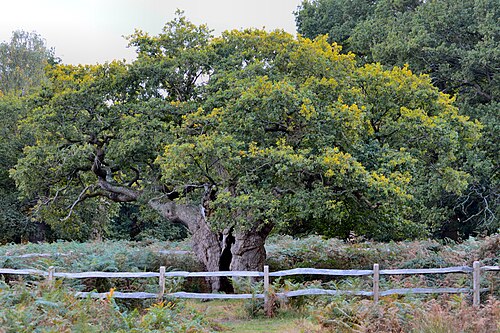
The wall came second: this oak was already centuries old when Charles I enclosed Richmond Park around it in 1637, walling off common land for his own deer rather than planting anything new.
Photo: AndyScott (CC BY-SA 4.0)
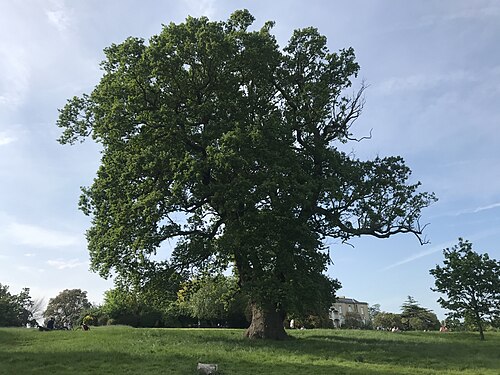
The Brockwell Oak was old before Brockwell Park existed, and old before the country estate the park was made from.
Photo: Hopefully Acceptable Username (CC BY-SA 4.0)
An avenue of oaks in Corkagh Park once led somewhere: to a country house that no longer exists.
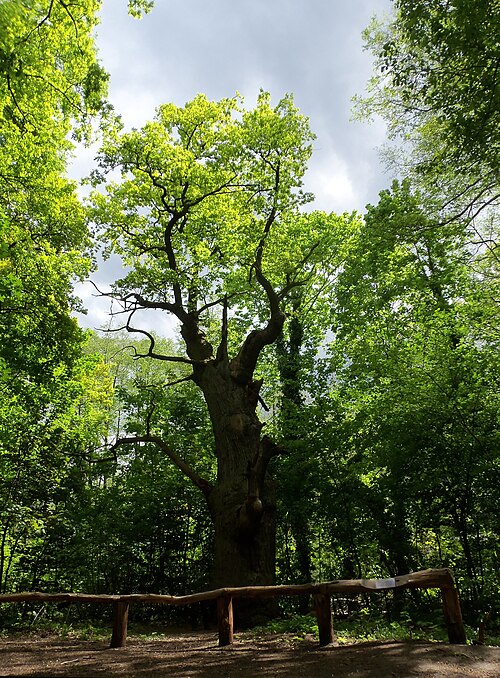
Berlin's oldest tree is older than the city itself.
Photo: Maculata (CC BY-SA 3.0)
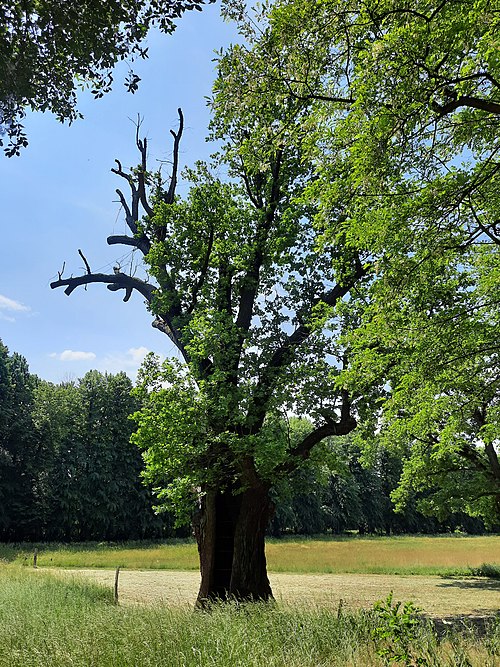
The thickest trunk in Berlin does not belong to the city's oldest tree.
Photo: Fridolin freudenfett (CC BY-SA 4.0)
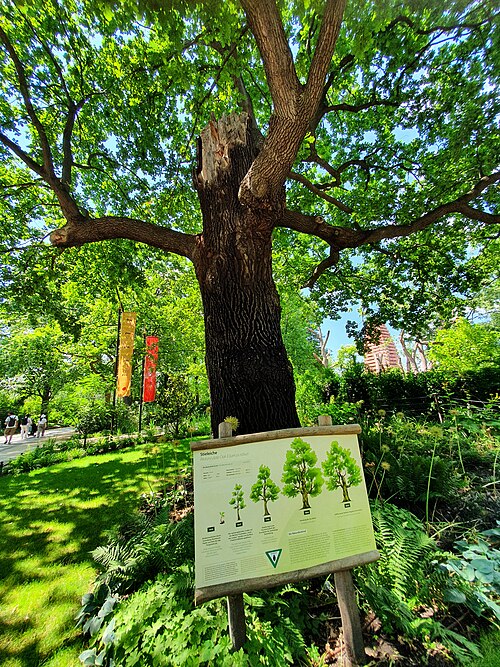
Berlin Zoo calls it the eternal oak, and says it has been giving shade for 500 years.
Photo: Istriana (CC BY-SA 4.0)
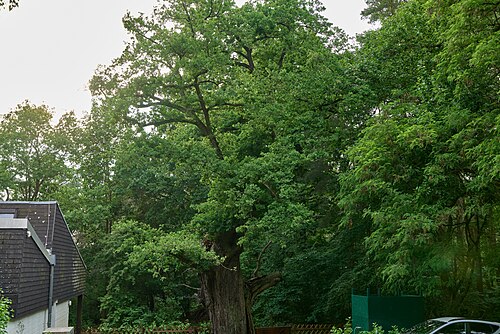
Grunewald's oldest tree survived storms that took its own crown apart.
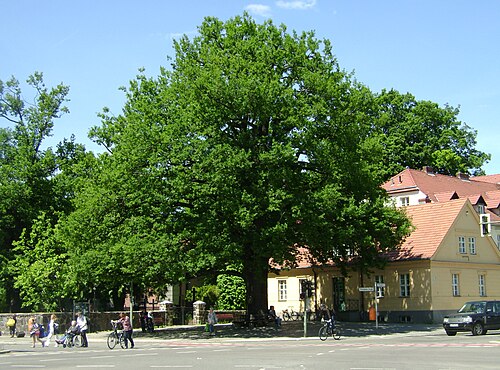
This oak was planted to mark a battle, one year to the day after it was fought.
Photo: Kvikk (CC BY-SA 3.0)
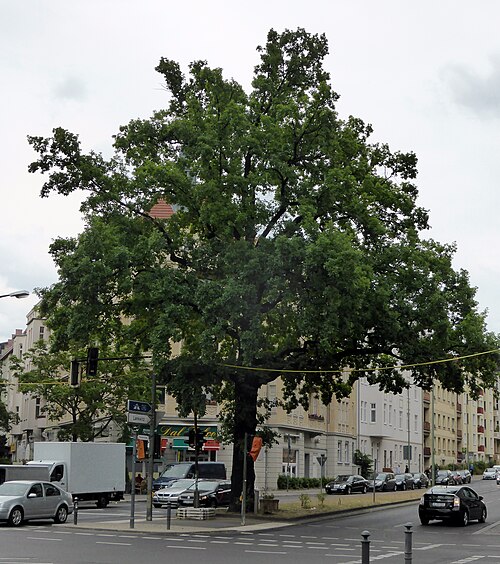
Someone tried to kill this oak as a political protest, and Berlin planted a replacement within weeks.
Photo: Dirk Ingo Franke (CC BY-SA 4.0)
Berlin's official reason for protecting this oak is beauty.
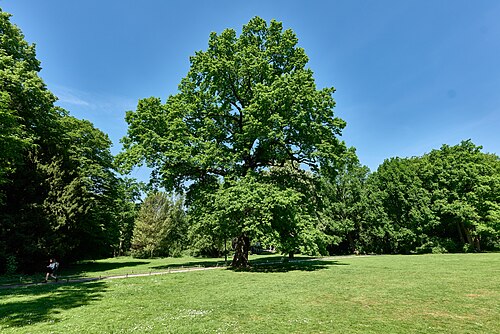
Of the protected oaks in this corner of the Tiergarten, this is the only one whose species belongs here.

This oak grows on a strip of park squeezed between two kinds of water: the Neuer See on one side, the Landwehr Canal on the other.
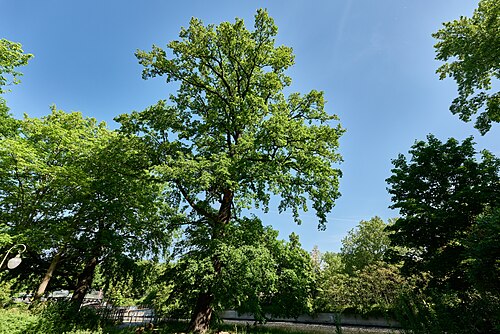
Two protected oaks stand on this stretch of canal bank, about 25 metres apart, and Berlin lists them as separate natural monuments, 1-20/B and 1-97/B.
In September 1941 three trees in one corner of Schönbrunn's botanical garden were put under protection.
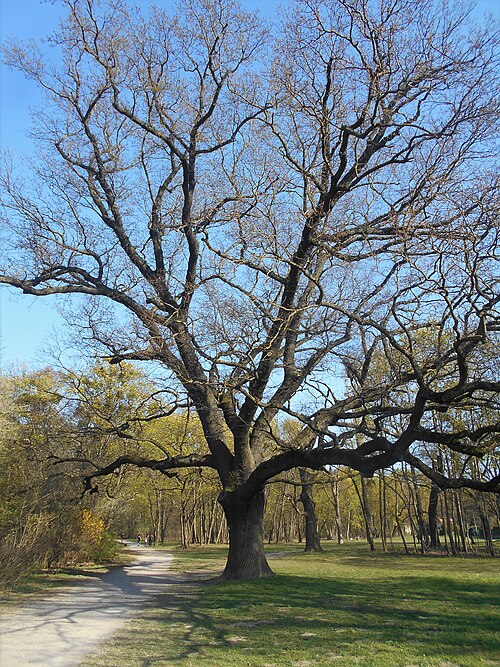
Its crown alone covers more ground than most Viennese apartment buildings.
Photo: Clemens Mosch (CC BY-SA 4.0)
This oak has its own boulder.
Vienna protects this oak as a natural monument and has published almost nothing else about it.
Vienna protected this oak in July 1956, which makes it one of the older entries on a register that most of the city's trees joined decades later.
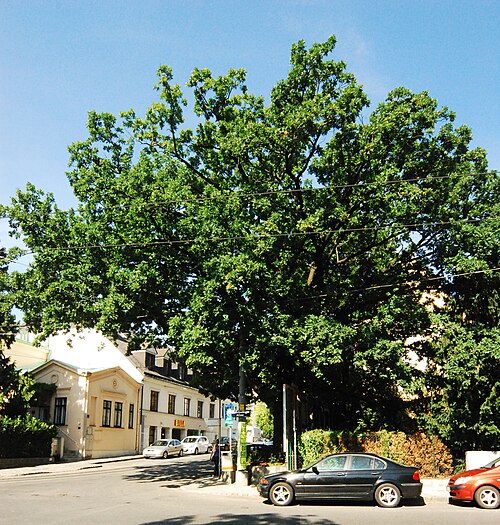
This oak's crown spreads about 20 metres, roughly as wide as the tree is tall.
Photo: GuentherZ (CC BY 3.0)
Finland's second-thickest oak grows behind a golf clubhouse, which is either an odd place for a national record or exactly where you would expect one, since golf courses are where old estate trees...
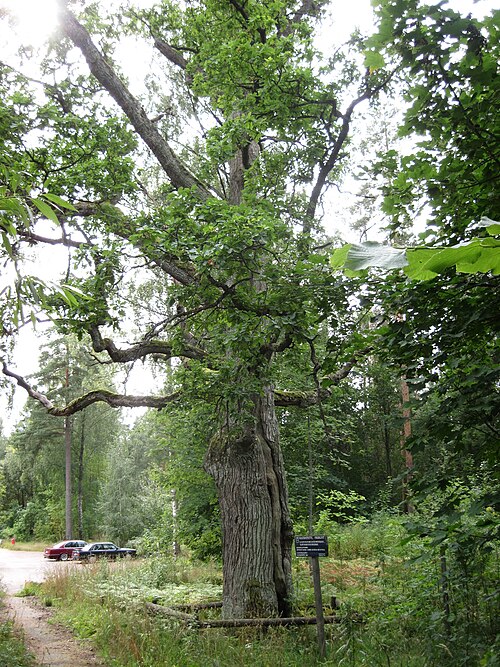
A Swedish king is said to have knelt in the mud here and planted an acorn himself.
William III wanted somewhere to hunt, and in 1685 he built a palace on the sand north of a village nobody had heard of.
An oak the size and thickness of trees three times its age stands in the enriched soil of what used to be a rose garden.
Most oak stories are about longevity.
Hendrik Lorentz got his monument in 1931.
The national register thinks this is probably the oldest tree in Park Angerenstein and will not quite say so.
The park's own forest ranger stops at this tree.
One of the thickest oaks in Park Sonsbeek is also the one its surveyor is worried about.
Nobody has managed to measure this oak properly, and the reason is livestock.
This oak grows on the line where a country estate stops and a street begins, at the corner of the wood on Landgoed Zijpendaal with Daam Fockemalaan on one side and De Vilderskamp on the other.
Two trees on the national monumental register stand seventy metres apart on this ordinary residential corner, and neither has a single line of history attached to it.
A baron's coat of arms is the reason this forest has straight lines running through it at all.
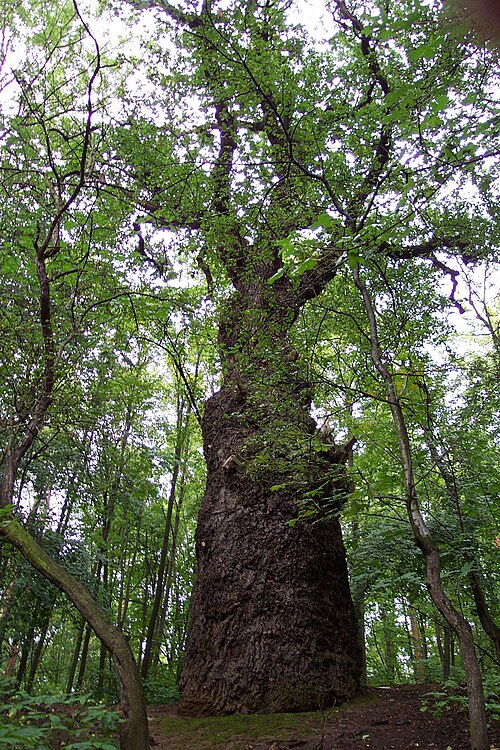
Czech conservation law has an official name for this tree, and the name is the oak with the bizarre trunk.
Photo: Aktron (CC BY-SA 3.0)
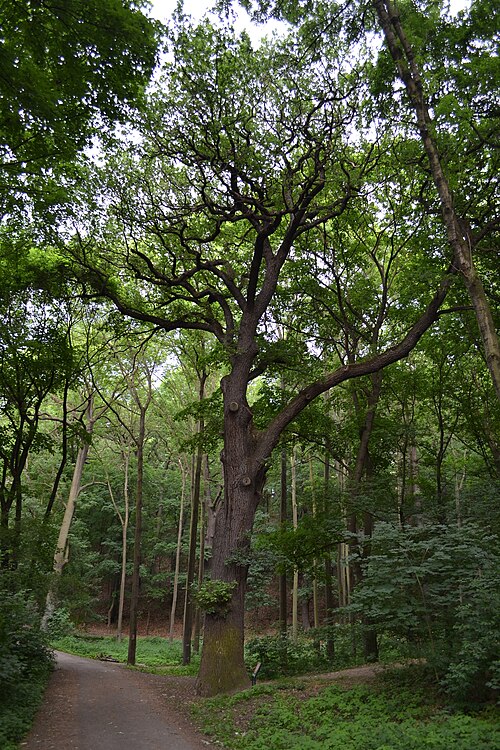
A crack runs up to eight metres down one side of this oak, and the conservation register still lists it as standing.
Photo: Sefjo (CC BY-SA 3.0)
Two great oaks stand behind this forestry lodge and only one of them is still alive.
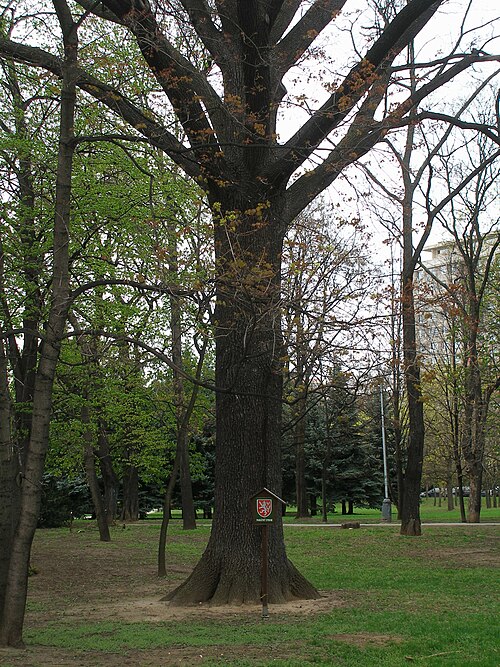
For its first century this oak stood inside a military shooting range.
Photo: Jan Polák (CC BY-SA 3.0)
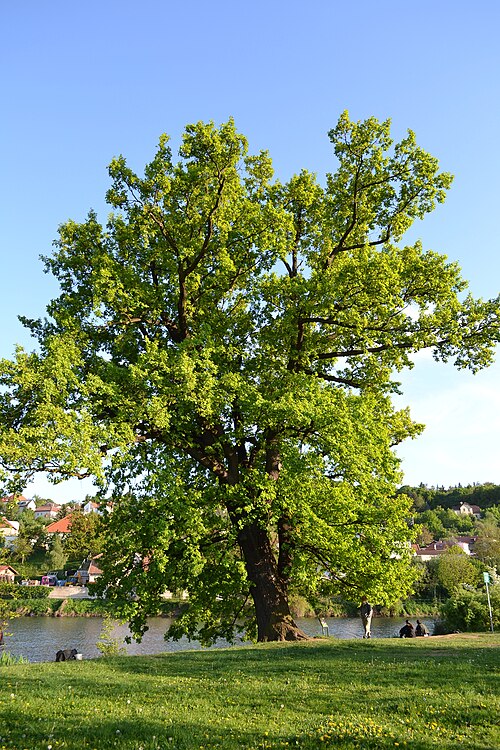
On paper this oak lost seven centimetres of waistline in nine years, which is not something living oaks do.
Photo: Sefjo (CC BY-SA 3.0)
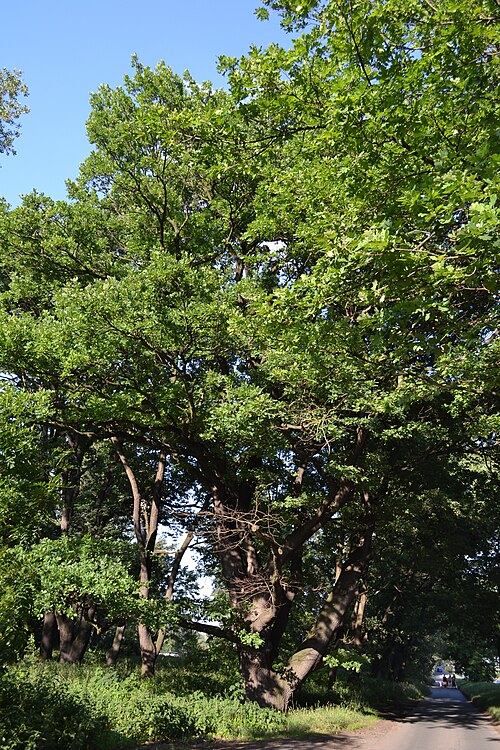
Prague's very first legally protected oak grows on an island that used to flood every spring until imperial engineers tamed it.
Photo: Sefjo (CC BY-SA 3.0)
In 2010 the Czech state drew a twelve-metre protected circle around a tree on a residential street in Libeň.
You cannot get to this oak, and you do not need to.
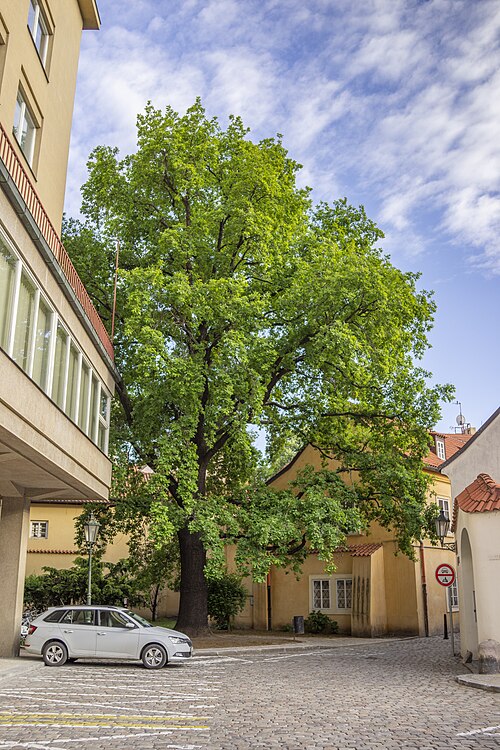
The Old Town has exactly one legally protected oak and it grows on a corner nobody photographs.
Photo: The photonaut (CC BY-SA 4.0)
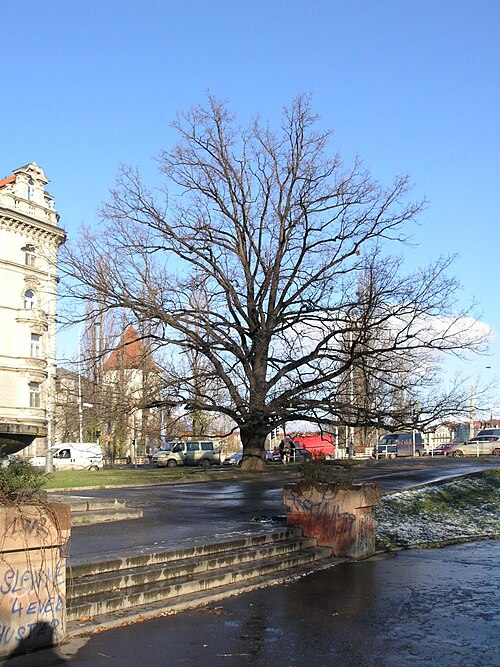
The street on the far side of this oak is called V Botanice, In the Botanical Garden, and there is no botanical garden.
Photo: Matej Batha (CC BY-SA 2.5)
On 12 May 1937, while George VI was being crowned in London, Toronto put an oak in the ground on the lakeshore and planted about 150 more trees around it before the day was out.
This oak, 4.20 metres round and 25 metres tall, stands at the western edge of the grounds around Palazzo Ducale, the summer palace Duke Ottavio Farnese began in 1561 and the building that gives the...
The board beside this oak calls it Leipzig's oldest tree, and the age that travels with it is 600 years.
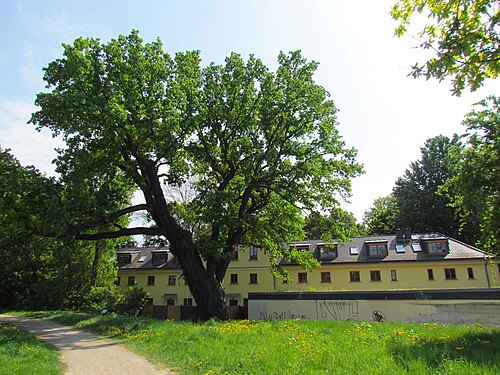
A short walk from the Kleinzschocher manor ginkgo stands a much thicker tree: a pedunculate oak 5.45 metres round.
Photo: Martin Geisler (CC BY-SA 4.0)
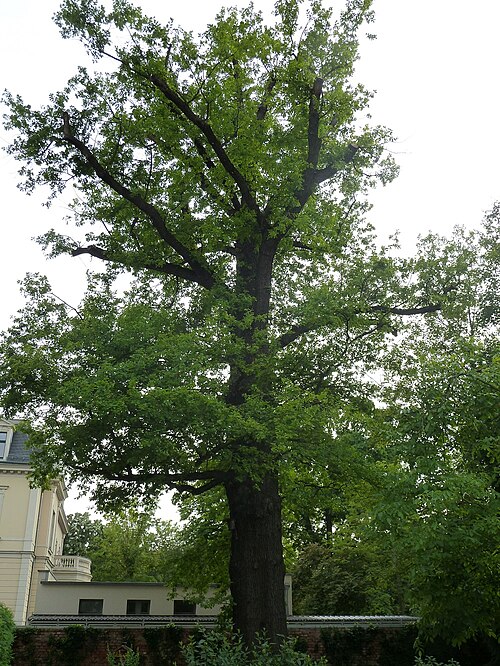
A pedunculate oak on Kaethe-Kollwitz-Strasse, named for the Leipzig-connected printmaker and sculptor, carries Leipzig's Naturdenkmal protection under the same 1996 resolution as six other trees on...
Photo: Edlerin (CC BY-SA 3.0)
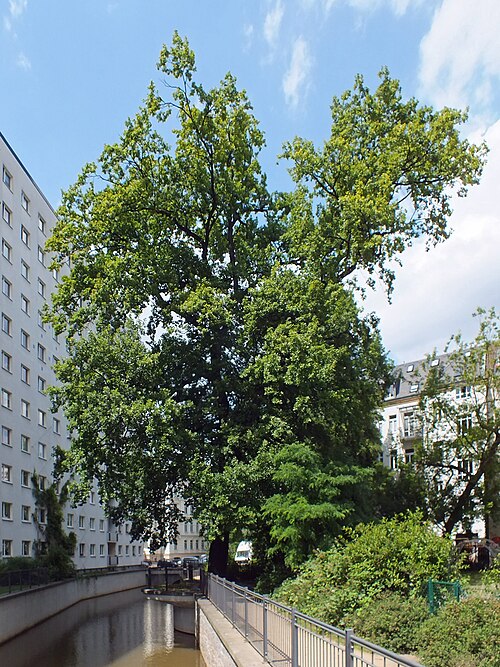
Leipzig keeps a protected zone around every one of its natural monuments, and this oak's is 33 metres across, as wide as any on the city's list.
Photo: Martin Geisler (CC BY-SA 3.0)
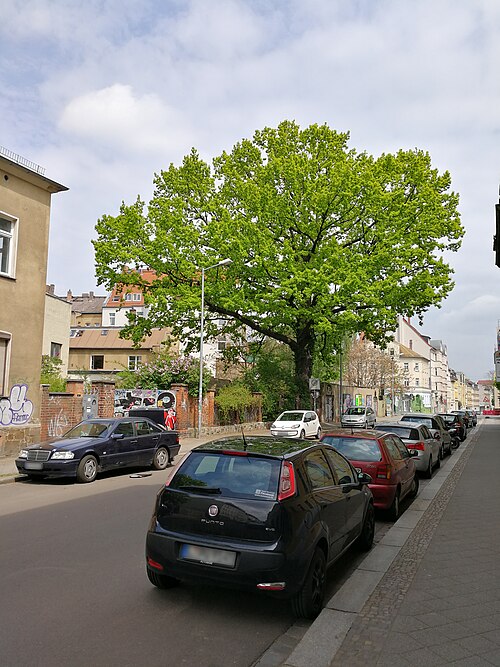
Lindenau has two protected oaks within 150 metres of each other, and this is the one that hangs over a brick wall.
Photo: Pixelkaktus (CC BY-SA 4.0)
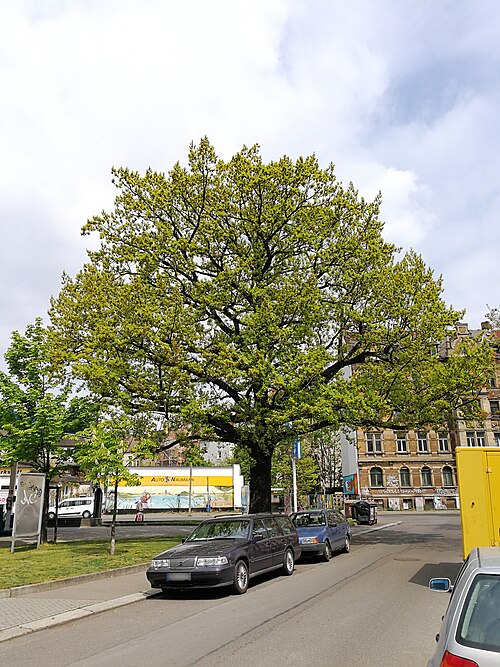
Of Leipzig's protected street oaks, this is the one with room to be seen.
Photo: Pixelkaktus (CC BY-SA 4.0)
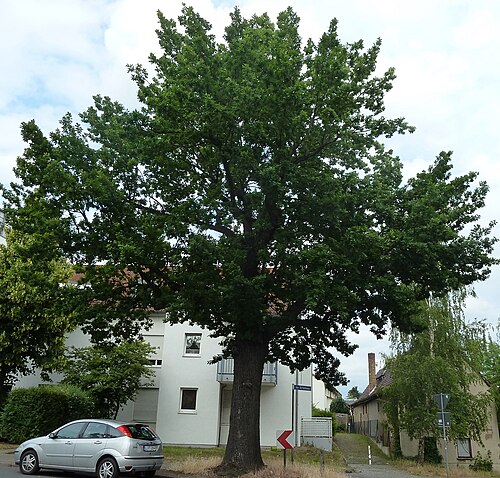
Leipzig's register calls this tree the Friedenseiche, the peace oak, and then says nothing about which peace.
Photo: Edlerin (CC BY-SA 4.0)
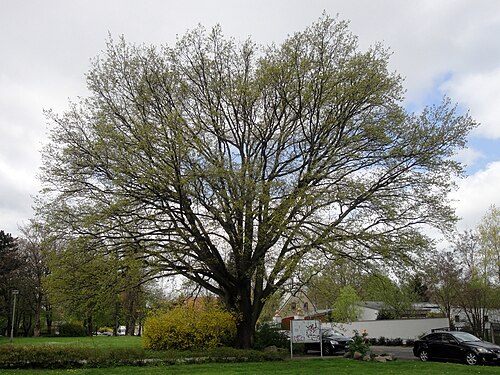
This oak is wider than it is tall.
Photo: Reise Reise (CC BY-SA 4.0)
Two big oaks stand 36 metres apart by the Torhaus in Doelitz, and the one Leipzig protects is not the bigger of the two.
Villeurbanne's official tree register calls this pedunculate oak rare, and it means it plainly: street plantings here run to plane and lime, so a full-grown Quercus robur on a residential corner st...
This oak lost roughly eighty percent of its root system and is still alive.
The tree commemorates a walk.
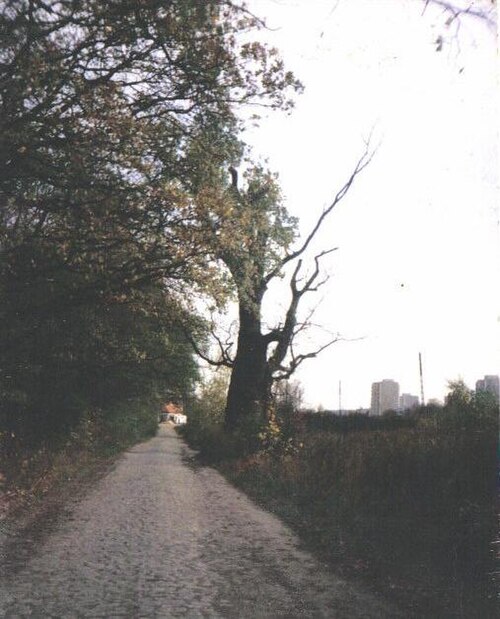
Warsaw's oldest tree survived six centuries of Polish history only to be set on fire by a person, not a storm, in June 2019.
For almost two centuries, two pedunculate oaks have grown side by side in the Romantic Garden of Lazienki Krolewskie, the park Poland's last king built for himself in the 18th century.
Poland's register of natural monuments protects this oak without saying where it is.
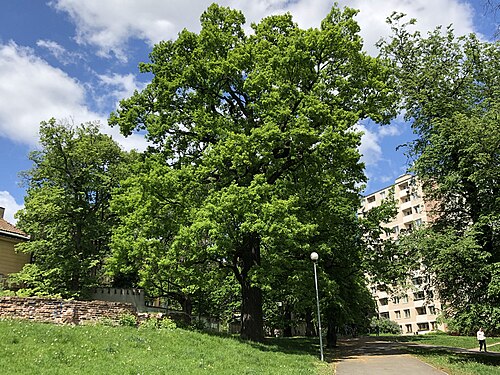
Five pedunculate oaks stand together near Palac Szustra, the neoclassical villa at the heart of Park Morskie Oko, registered as one natural monument in 1978.
Photo: Emptywords (CC BY-SA 4.0)
An oak stands on Aleja Niepodleglosci, on the edge of what was once the main campus of SGGW, the Warsaw University of Life Sciences.
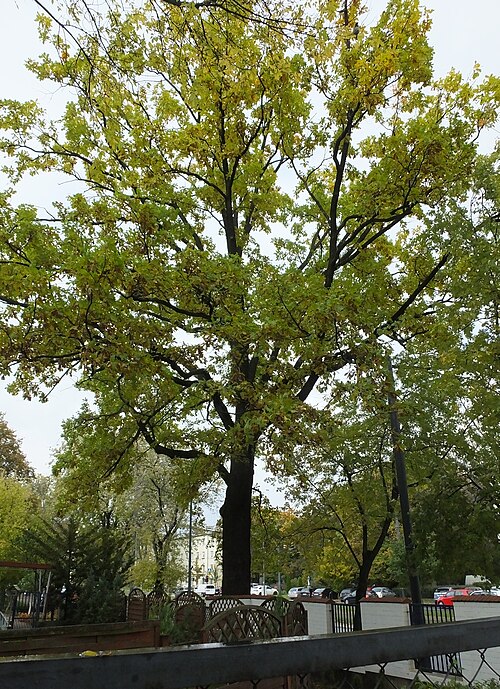
Warsaw's register of natural monuments gives this oak a first name.
Photo: Panek (CC BY-SA 4.0)
Warsaw's register gives this oak a date five years older than its five famous neighbours.
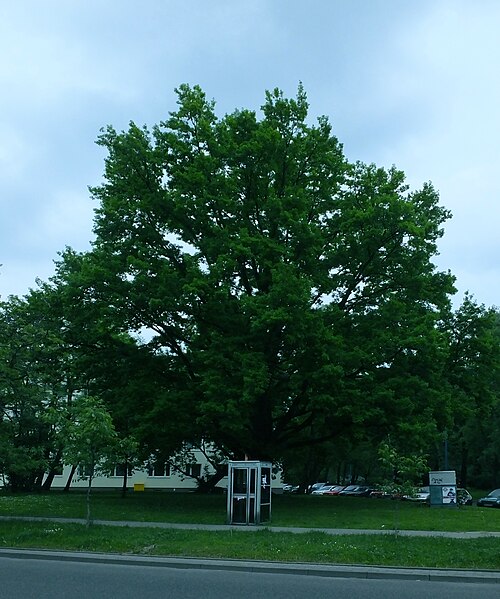
Warsaw's natural monument register measures this oak three times over.
Photo: Panek (CC BY-SA 3.0 pl)
Wroclaw's oldest tree is called Grandpa and it is held together with steel.
In 1865 the mayor of Breslau bought a piece of riverbank so that this oak would not be cut down.
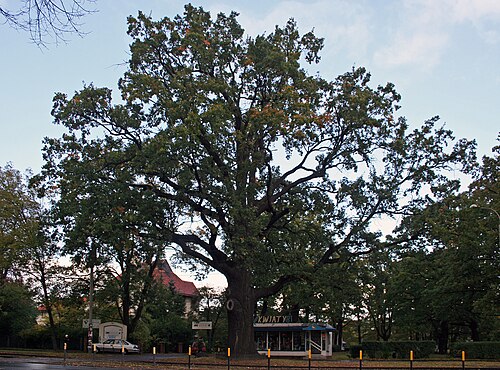
This is the one in the group that is not falling apart.
Photo: Siliesiac (CC BY-SA 3.0)
Lightning found this oak and it is still in leaf.
The tallest tree in Florence's largest park stands where racehorses used to run.
Local memory says a soldier planted this oak the day he came home.
When the Slaveykov family moved from Plovdiv to Sofia after Bulgaria's 1878 liberation and bought a garden in what is now the Lozenets district, they got more than a plot of land.
Brussels' own heritage inventory calls this oak probably the oldest tree of any kind in the entire region, and its evidence is a single number: 6.05 metres around the trunk, measured at chest height.
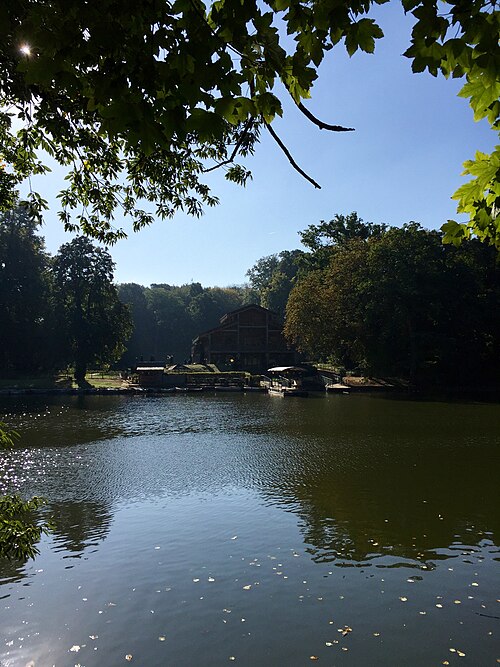
Brussels' most fashionable park is also a fragment of a forest older than the city walls that once surrounded it.
Photo: GdML (CC BY-SA 4.0)
The Mont des Arts garden is not what it looks like: a formal, two-hectare terrace of clipped yew and box hedges offering one of the best panoramic views over central Brussels, it is actually a roof...
For a hundred years you could not come here.
In 1920 Anton Philips and his wife Anna de Jongh gave twenty five hectares of wood to the people of Eindhoven.
Every December the neighbourhood covers this oak in fairy lights, and keeps them on through January.
This oak is the first tree anyone meets walking into the Antonius kerkhof, standing just inside the gate beside the old caretaker's house.
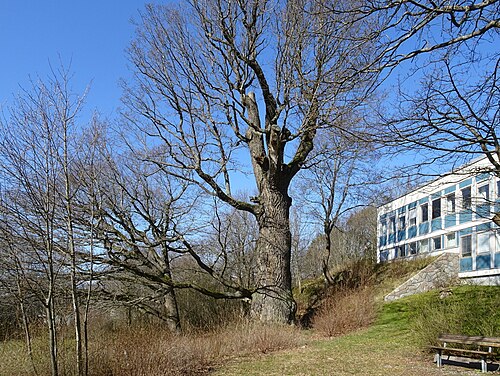
This oak is hollow from the ground to the top of the trunk, and you can walk inside it.
Photo: Holger.Ellgaard (CC BY-SA 4.0)
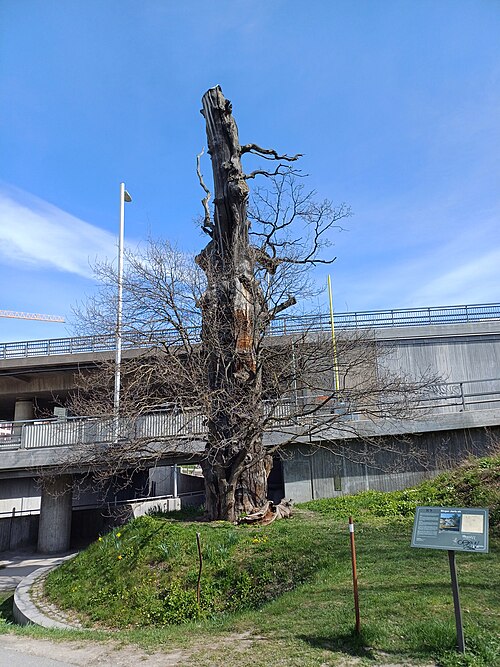
Stockholm's founding date is usually given as 1252, when the regent Birger Jarl is credited with establishing the city, and this oak has been growing on Kungsholmen for almost exactly as long, roug...
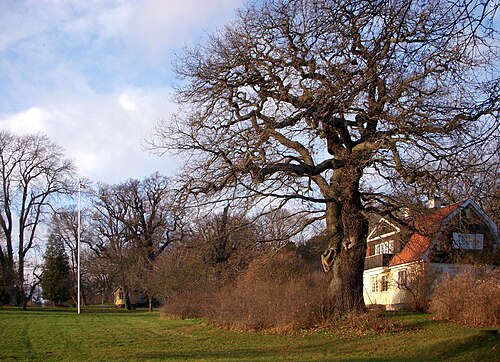
In 1835, the Scottish geologist Charles Lyell was in Stockholm gathering evidence for one of the founding ideas of modern geology, that Scandinavia's land was slowly rising out of the sea, a proces...
Photo: Holger.Ellgaard (CC BY-SA 3.0)
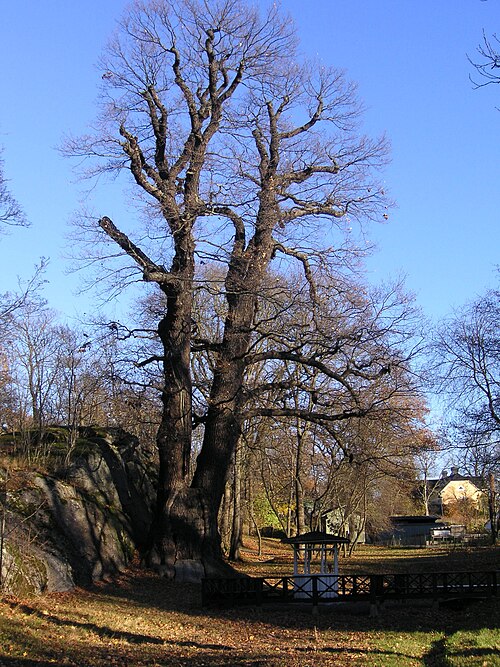
Sweden once made cutting down an oak a capital offense, because the navy needed every mature trunk for warship hulls and the crown claimed the species outright, a protection that stayed in force in...
Photo: Holger.Ellgaard (CC BY-SA 3.0)
This oak has grown into the wall of a royal fishing cottage rather than around it.

Somebody cut this tree open trying to steal a signature.
Photo: Holger.Ellgaard (CC BY-SA 3.0)
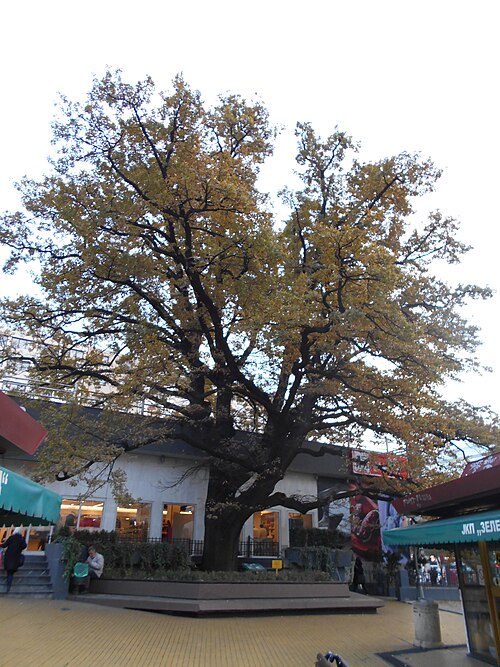
Belgrade's oldest protected natural monument stands on a market square, not in a forest or a palace garden.
Photo: BuhaM, CC BY-SA 4.0 (CC BY-SA 4.0)
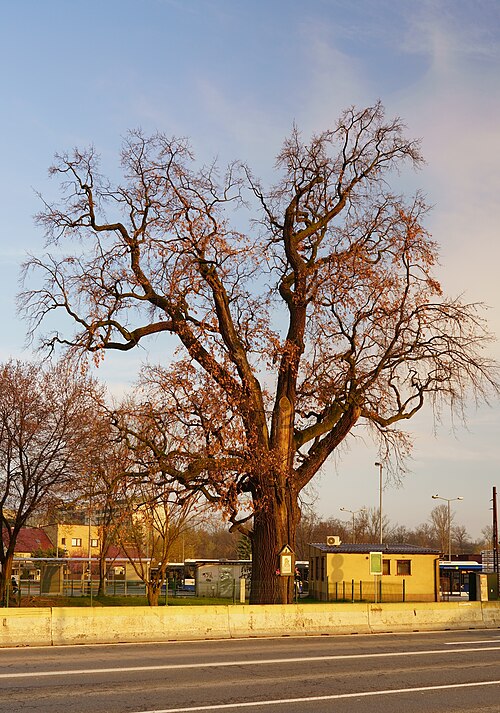
This oak is named after the man who spent decades making sure it did not get cut down, not after anyone who planted it.
Photo: Janusz Krzyzek (CC BY-SA 4.0)
This is one of the newest names on Krakow's monument register, a list whose earliest entries reach back to the 1960s.
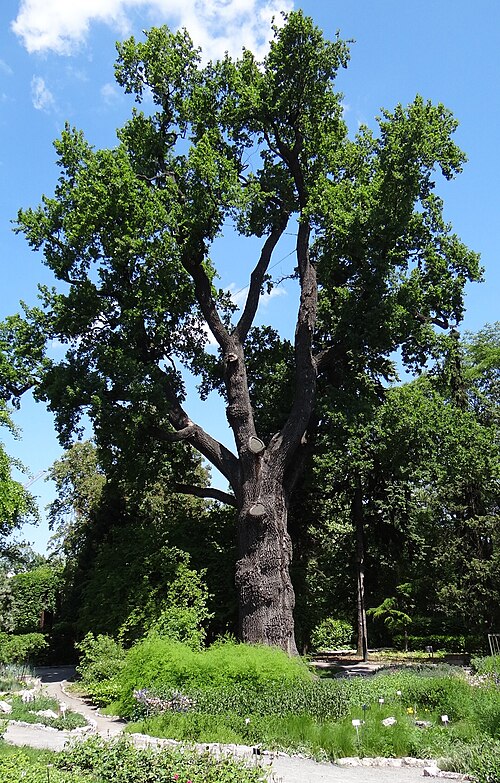
For generations, guides at Poland's oldest botanical garden told visitors this oak was 500 years old, older than the university faculty that planted the garden around it.
Photo: Jerzy Opiola (CC BY-SA 4.0)
Plac Sikorskiego's oak is the youngest addition to Krakow's register among the trees on this page, protected in 2007 rather than in the 1997 batch that covers most of the others.
Two protected trees stand two doors apart on ul.
William of Orange personally guaranteed this oak's forest would survive forever, four and a half centuries before anyone thought to count the tree's actual rings.
Someone wrote a book length poem about this estate a century and a half before the oak was planted.
This oak is roughly a century and a half older than every building around it.
Hendrik Willem Mesdag painted the largest painting in the Netherlands, and this oak was already forty or fifty years old when he did it.
This oak was planted in a burial ground that had already been in use for a century and a half.
A hollow in this oak's trunk has been furnished like a dollhouse for as long as anyone in the neighbourhood can remember, complete with tiny notes left for gnomes nobody has ever claimed to see.
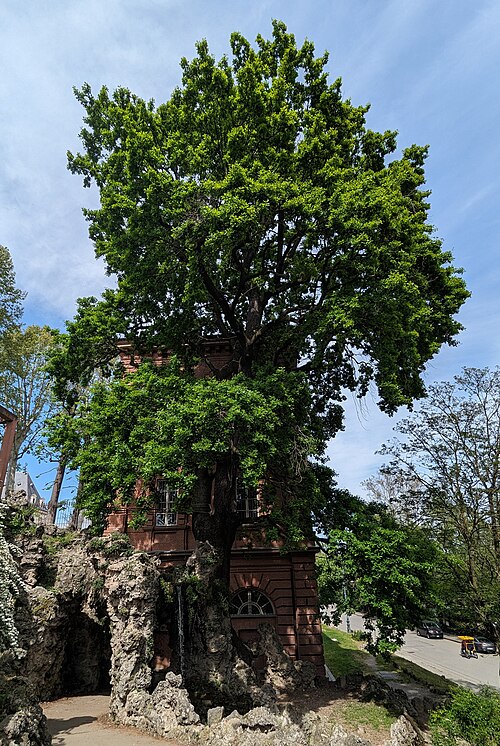
Every other tree in Turin that the register dates past two hundred years is a plane.
Photo: Ivan Ruggiero (CC BY-SA 4.0)
Storm Henk answered a question nobody had thought to ask properly.
The tree worth walking to here is the one the register mentions last.
For decades in the twentieth century, Groningen parked cars on top of this oak's roots.
Poznan's oldest protected tree on this page stands inside a playground fence, which is not where you would expect to find a tree the city dates to as much as three centuries old.
This oak split itself into a small crowd.
Cytadela Park sits on the ruins of a Prussian fortress that became, in February 1945, one of the last and bloodiest German strongholds of the war on this front.
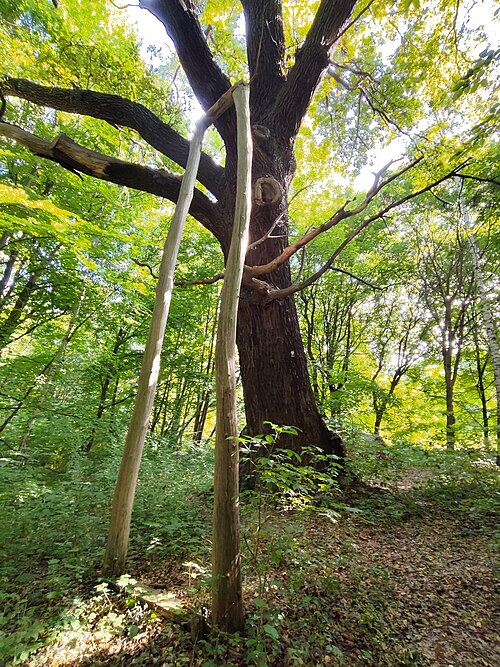
In 1685 the estate around this oak became the property of Jan III Sobieski, the king who had broken the Ottoman siege of Vienna two years earlier.
Photo: Fry72 (Karel Frydrýšek), CC BY-SA 4.0 (CC BY-SA 4.0)
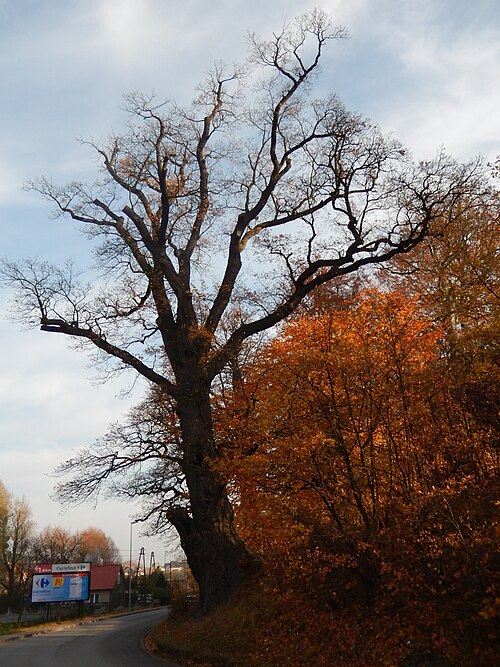
At the foot of a hill named for a dead queen's role in defeating Napoleon grows Lostowice's oldest documented tree.
Photo: Zbigniew Zielinski (Drumeros) (CC BY 3.0)
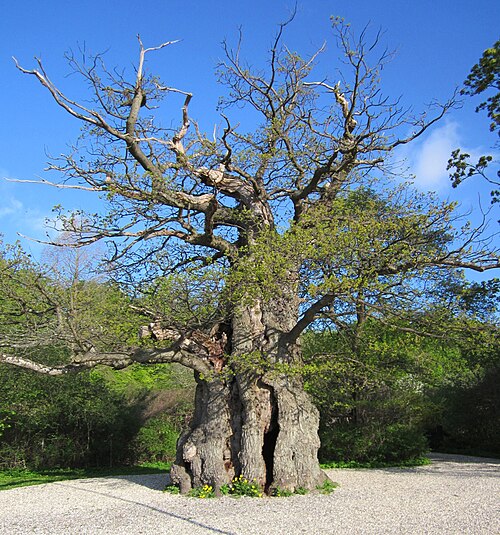
Ten metres and 42 centimetres around, and empty in the middle.
Photo: Niels Orbesen (CC BY-SA 3.0)
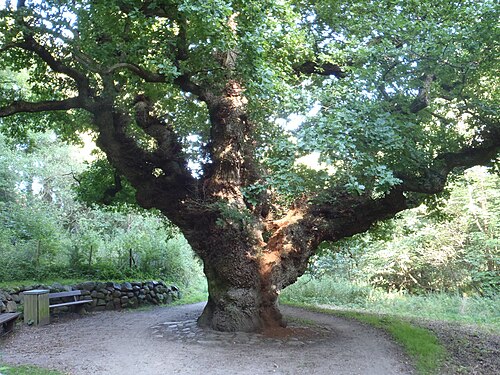
Denmark protected this oak by law in 1956 and still cannot date it within four centuries.
Photo: Finn Årup Nielsen (CC BY-SA 4.0)
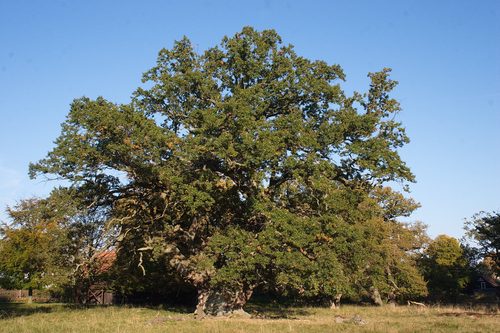
Measured at chest height in March 2017, this oak came to 8.90 metres round.
Photo: Hans Erik Lund
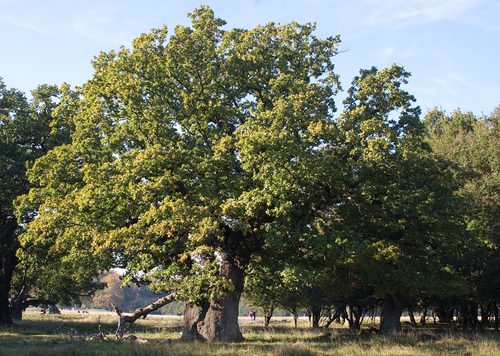
The hiker who went out to find this oak came back unsure of the find.
Photo: Hans Erik Lund
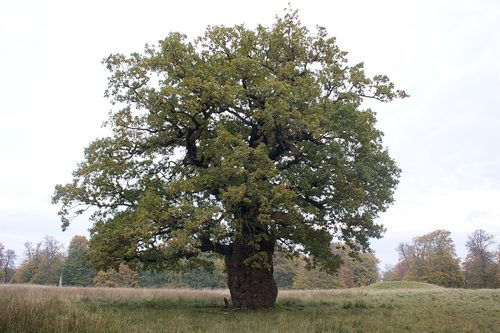
This oak is called the Wart Oak, for the wart-like burrs on its bark, and the hiker who walked out to look at them recorded that the tree did not visibly show any.
Photo: Hans Erik Lund
This oak carries three names and the most interesting one is unexplained.
This oak was dying, and treasure hunters saved it by accident.
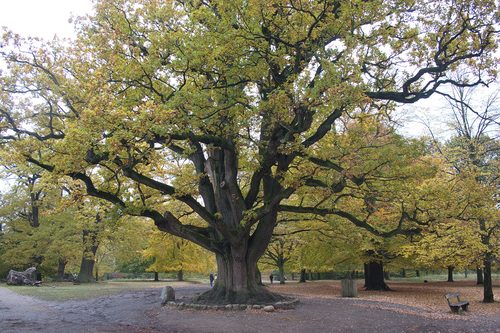
The crown of this oak is lopsided.
Photo: Hans Erik Lund
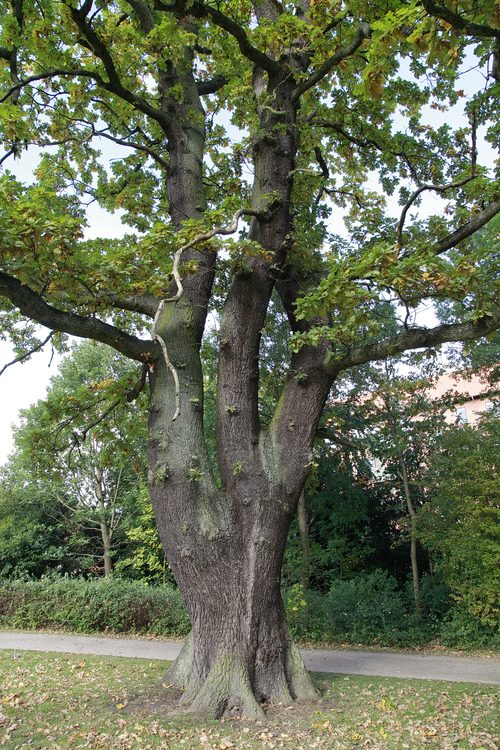
This oak has no recorded birthday, but the garden gives it a ceiling.
Photo: Hans Erik Lund
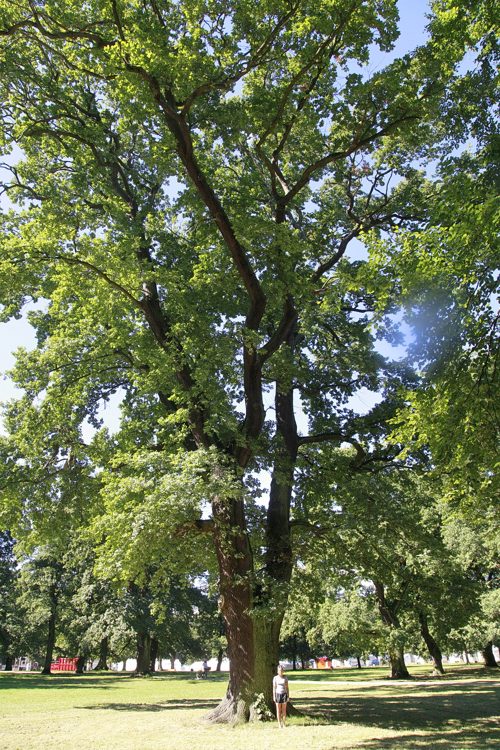
Thirty-one and a half metres is a great deal of height for a pedunculate oak, and this one in Søndermarken carries it on a single trunk 5.40 metres round at chest height.
Photo: Hans Erik Lund
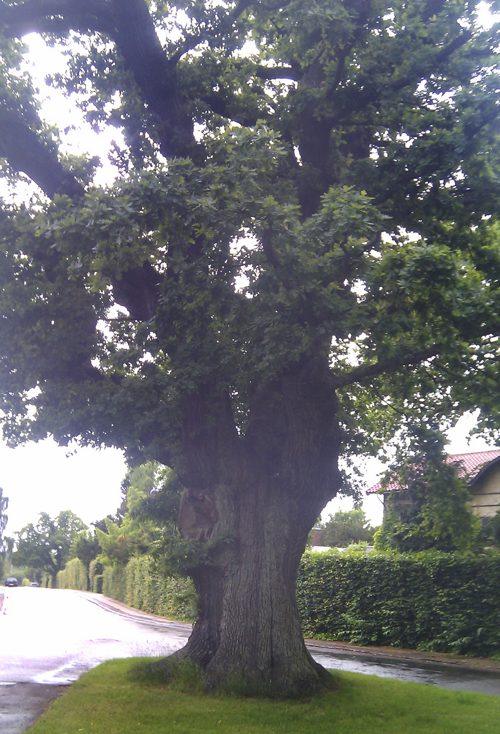
This oak has a street junction to itself.
Photo: Hans Erik Lund
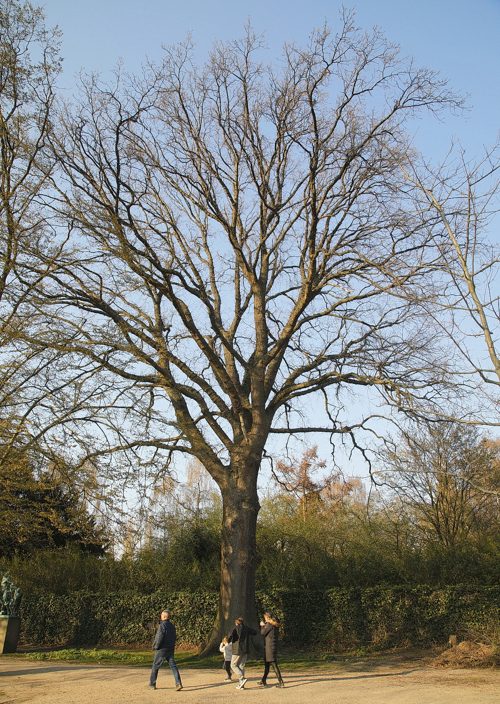
What the Danish Tree Register admires about this oak is not its size but its shape.
Photo: Hans Erik Lund
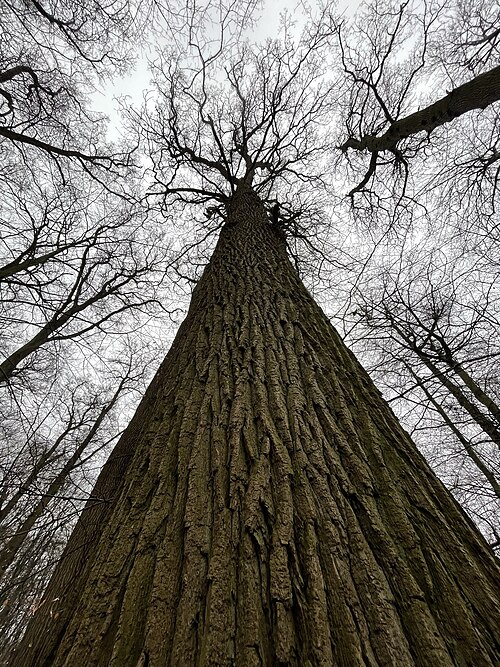
An oak became a protest symbol and then won.
Photo: DrAttendoloSforza (CC BY-SA 4.0)
This oak is older than the park it stands in.
Tallinn's oldest tree is probably not the one the city points at.
Tallinn's thickest tree was already sizeable when Peter the Great bought the land it stands on.
This oak was here before the graveyard, and it is still here after it.
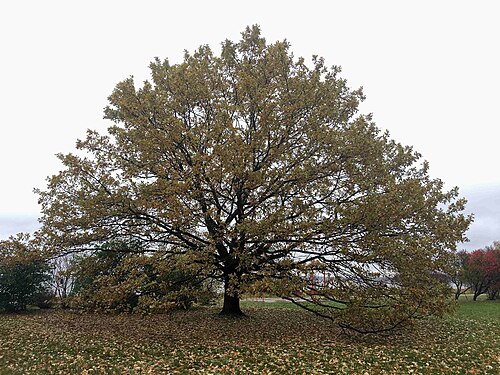
Estonia moved a road rather than cut this oak down.
Photo: Pilot Lauri Lokotar and CamKaido Kabral, Heiki Hanso (CC BY-SA 4.0)
Vancouver's heritage register lists this oak the way it lists buildings, and two accounts explain how it got there.
In 1679 a forest protocol listed two oaks in the Sauerbusch as boundary markers.
The sources disagree about when this oak was planted by two full centuries: somewhere between 1570 and 1770.
Until June 2025 there were two of them.
This oak was planted in 1681 as a timber investment, and nobody ever collected.
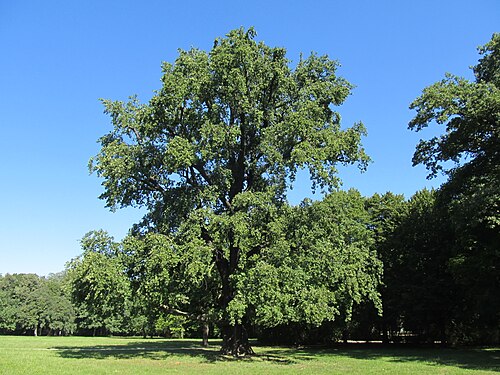
This oak is named after its wounds.
Photo: DynaMoToR (CC BY-SA 4.0)
Beneath these three oaks lie a general's legs.
This oak was slowly dying of the village around it, and Dresden dug up its square to save it.
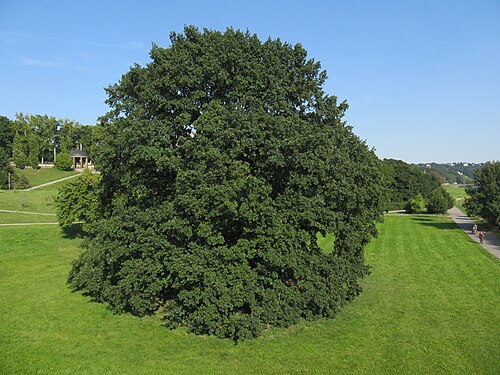
This oak was planted for a song festival, and the sources still argue over whether it is the oak they planted.
Photo: DynaMoToR (CC BY-SA 4.0)
This oak is wider than it is tall: when it was measured in 1999 its crown spread about 28 metres across, on a tree about 25 metres high.
This oak probably started out in a beer garden.
Schoolchildren planted this oak on 10 November 1883, Martin Luther's 400th birthday, and it has run the village square ever since.
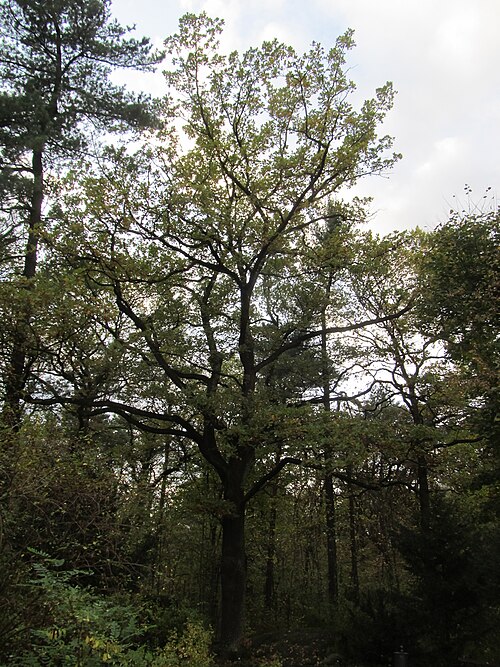
The stone beside this oak has changed its mind about who it honours.
Photo: DynaMoToR (CC BY-SA 4.0)
This oak was planted as a birthday present for a king, and has spent most of its life negotiating with traffic.
In 1945 a laundry owner named Menzel plastered over the gold lettering on the stone in front of this oak, to hide a king's name from the approaching Soviet army.
This oak is protected less for its size than for the way it looks beside a pond.
The law draws a circle round this oak.
Brno put a price on this oak before it protected it: more than 600,000 Kčs, the figure on record when the city's national committee declared it a memorial tree on 27 June 1985, alongside two other...
The youngest tree on this page and the one that will outlast every other by centuries.
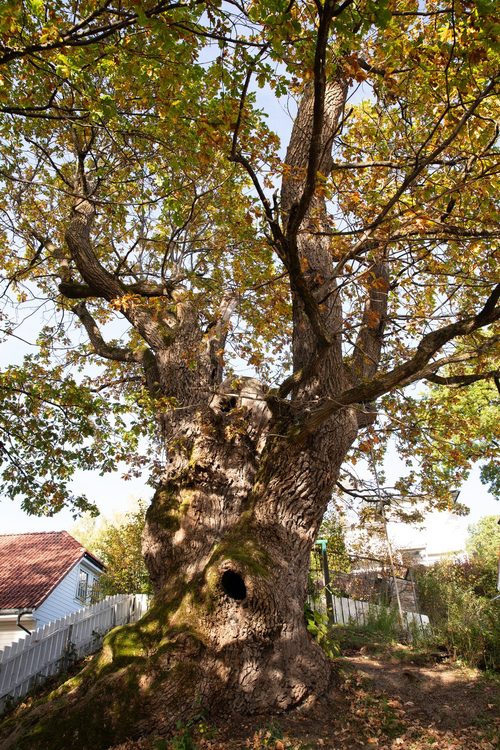
Oslo's own city-planning office names this oak the city's oldest tree, roughly 500 to 600 years old with a trunk about eight metres around, growing in the Montebello area on the city's west side.
Photo: Ingar Sørensen
This oak is not on Hobart's significant tree register for being large or old.
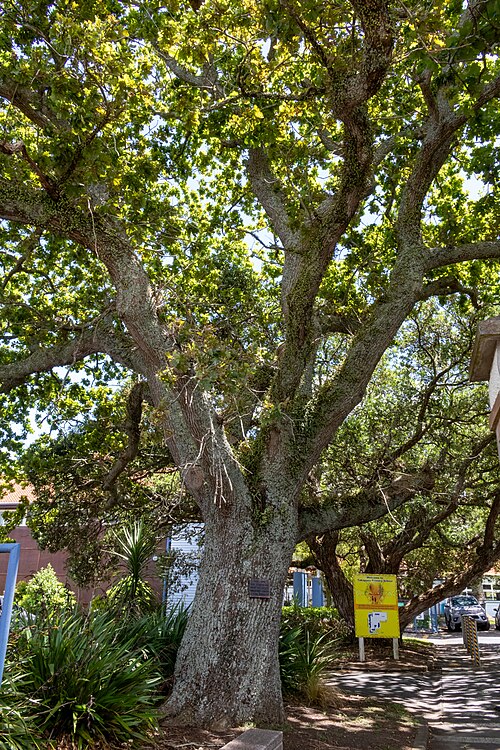
The two records of this oak cannot agree on the day it was planted, and they are a week apart.
Photo: Bjankuloski06 (CC BY 4.0)
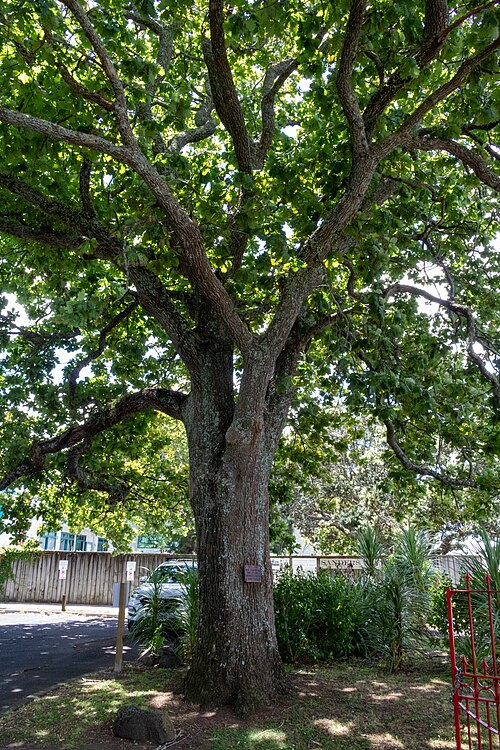
A primary school in Takapuna is on Auckland Council's historic heritage schedule because of two oak trees on its front lawn.
Photo: Bjankuloski06 (CC BY 4.0)
Ashton Court appears in the Domesday Book, the survey William the Conqueror ordered of his new kingdom in 1086, and one oak in the estate's parkland is thought to have already been growing around t...
Sir John Vanbrugh, the architect behind Blenheim Palace and Castle Howard, designed Kings Weston House for the politician Edward Southwell between 1712 and 1719, one of the grandest early 18th-cent...
Nobody has counted this oak's rings.
Everything at this crossroads has been replaced except the tree.
The register itself calls this the tallest pedunculate oak in Valkenberg, which is a real claim rather than a guess, since somebody with the right instrument had to measure every registered oak in...
The park's own notes point out that a pedunculate oak can live five hundred years, which makes this one, at somewhere around 120 to 170, a tree with most of its life still in front of it.
Three oaks, one entry.
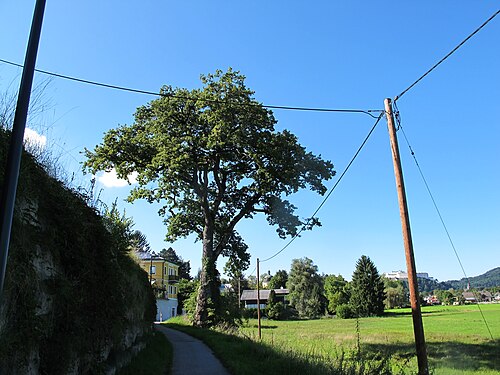
No tree in Salzburg has been protected for longer than this one.
Photo: Georg Pflugbeil (CC BY-SA 3.0 at)
On 15 September 1817 a man stopped and rested under this oak, and Salzburg has been naming the tree after him ever since.
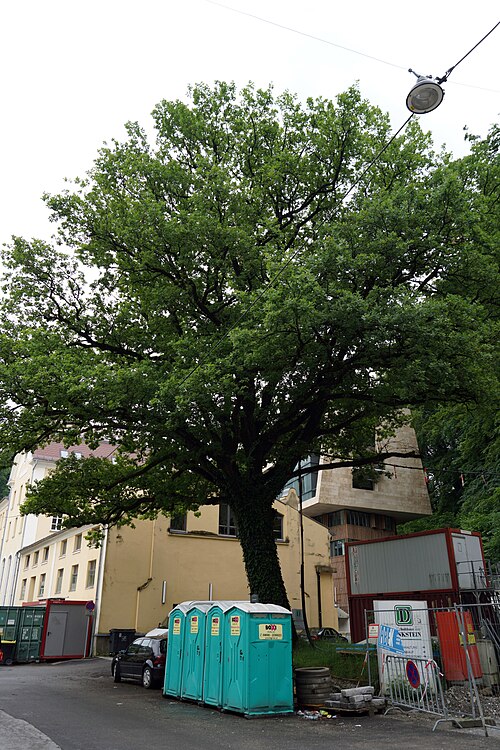
On Steinbruchstraße in Riedenburg, an oak has been growing ivy for longer than the street's newest residents have been alive.
Photo: Microble (CC BY-SA 3.0 at)
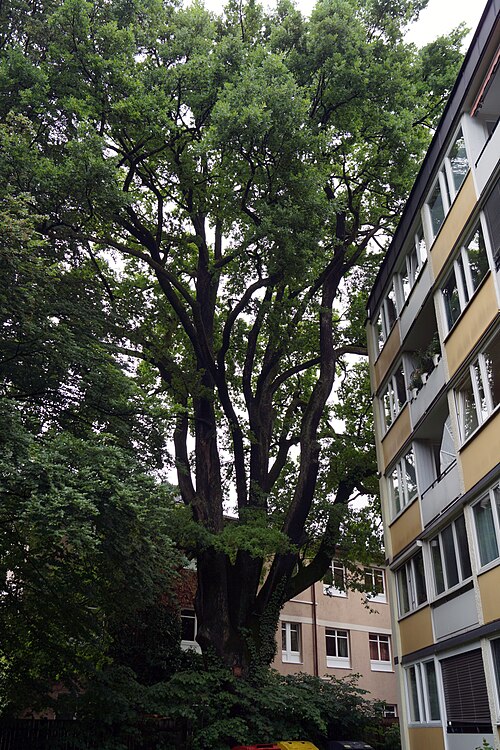
Salzburg protected this oak in 2005, and it went on the list standing in the courtyard of a block of flats.
Photo: Microble (CC BY-SA 3.0 at)
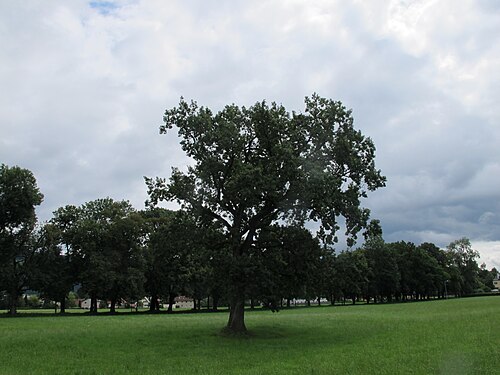
This oak is protected as a leftover of a landscape that no longer exists.
Photo: Georg Pflugbeil (CC BY-SA 3.0 at)
Where Salzburg's city streets give out and the Untersberg moor begins, one oak stands at the northern end of Sebastian-Kneipp-Straße, and it is there because of what used to surround it.
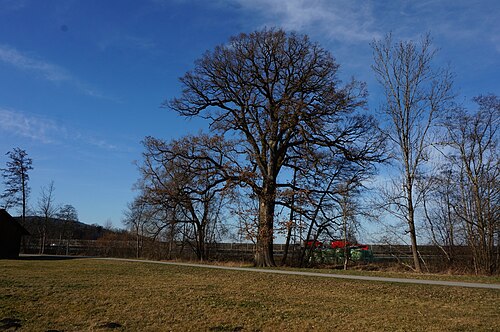
The Tofferl Oak's crown is nearly as wide as the tree is tall.
Photo: Flanierer (CC BY-SA 4.0)
The oak was here first.
Berlin protects this oak by law and almost nothing else about it is on record.
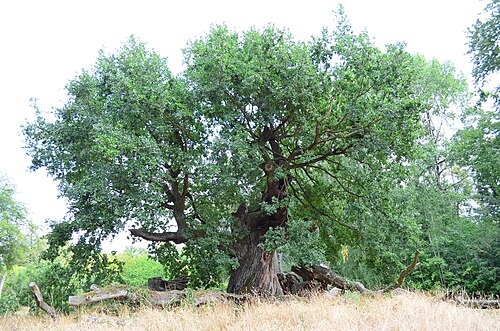
Potsdam's register calls this the thousand-year oak, and nobody has ever counted the thousand years.
Photo: WikiVagant (CC BY-SA 4.0)
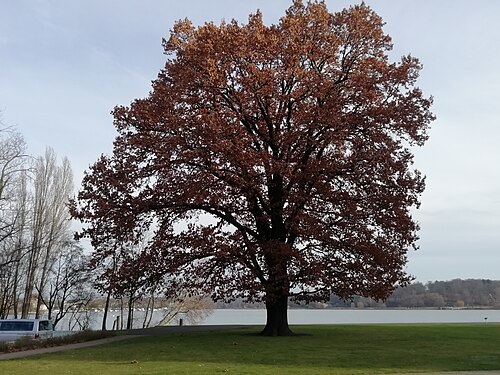
This oak has a theatre for a neighbour.
Photo: Haplochromis (CC BY-SA 4.0)
Three oaks share one entry in Potsdam's register, and the register will not tell you which is which.
The oldest tree in Enschede is not on anybody's estate.
The earthwork under this oak is younger than the oak.
It is in the new section, and it is a century and a half old, which tells you something about the scale a cemetery is planned on.
The register is honest about this one in a way that is worth quoting: the planting history is not known, and the oak was probably put in during the first half of the nineteenth century.
The French cut down the trees here and the city planted them again.
Nobody has put a number on this oak, and the official one is no help.
Somebody wrote a book about the trees of this town, and because of it we know what this oak is called.
The tower dates from about 1400 and the oak from about 1855, which is a gap of four and a half centuries between two things standing side by side.
The Warande is older than any tree standing in it.
Pedunculate means stalked, and the stalk belongs to the acorn rather than to the tree.
Kasteel Croy is not open to you.
The oldest of the four survivors in the castle grounds, and the one most likely to outlast the rest by centuries.
This is the tree people in Navarra mean when they say the big oak.
Lightning took one of its main limbs and it is still standing.
Two of them, declared separately, about 570 metres apart in the same wood.
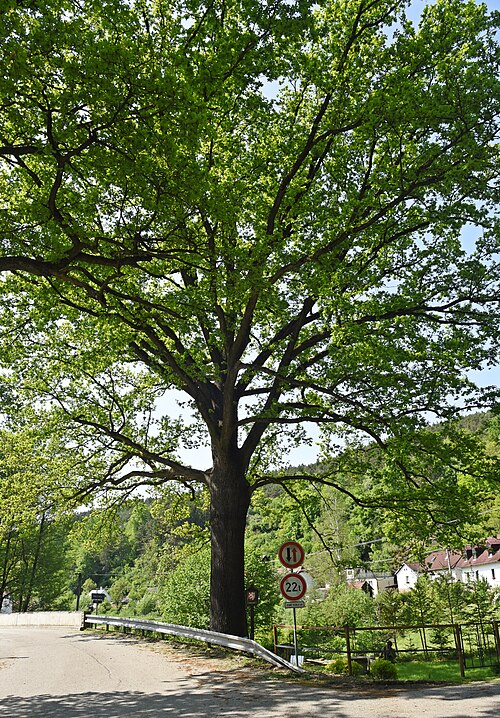
The crash barrier runs in front of it.
Photo: Peter Doležal (CC BY-SA 4.0)
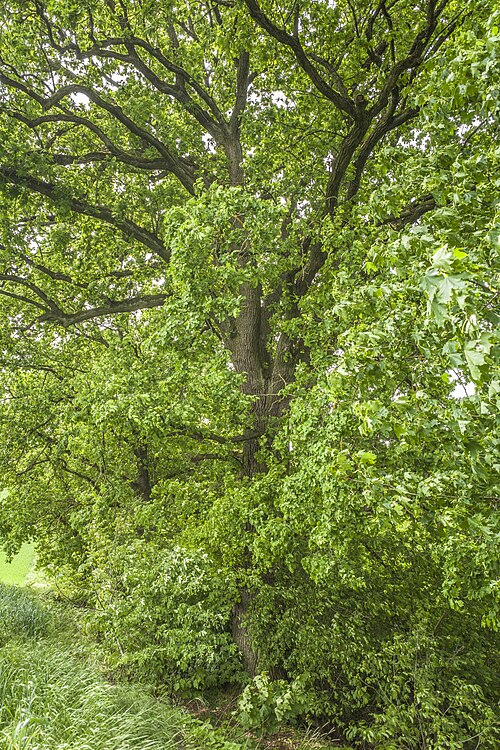
The address is the Devil's Ditch.
Photo: Stephan van Helden (CC BY-SA 4.0)
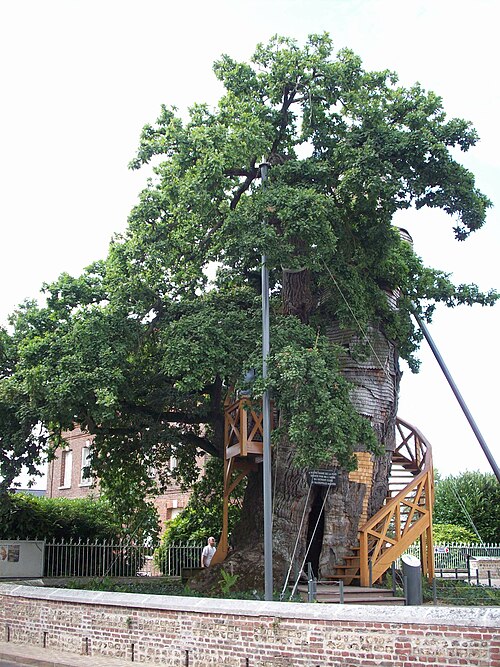
Lightning hollowed this oak sometime in the 1600s, and two priests turned the hollow into two chapels rather than let the tree rot from the inside.
Photo: Giogo (CC BY-SA 4.0)
Locals call it "die dicke Oachn", the fat oak, and it has survived at least one bad repair.
Nobody has dated this oak, and it is probably the oldest thing in the park.
This pedunculate oak is 4.94 metres round, measured in August 2021, and it stands about thirty metres south-west of the lake rather than on its bank, which is where our map first put it.
This oak has no plaque, no register entry and no date, and it may be the finest tree in the park.
Almost everything classified in this forest arrived by ship.
A priest hid from the Revolution here, or so the story around this oak insists, and Pierre-Paul Guillotin's name replaced its older one, the Chêne des Rues-Éon, sometime in the 20th century.
Photo: franek2 (CC BY-SA 3.0)
There are two oaks here of the same age and they are worth seeing together, because between them they show what open ground does to a tree.
A single oak standing alone in a field is one of the most reliable pleasures this country offers, and it is almost always deliberate.
It stands inside a fenced national park where you have to pay to walk, and both of those facts are the reason it is in good condition.
A village street with an oak on it that is older than most of the houses.
There is only one long grave in the Netherlands and this oak is standing next to it.
This village was made by digging peat, and the oak is about as old as the village.
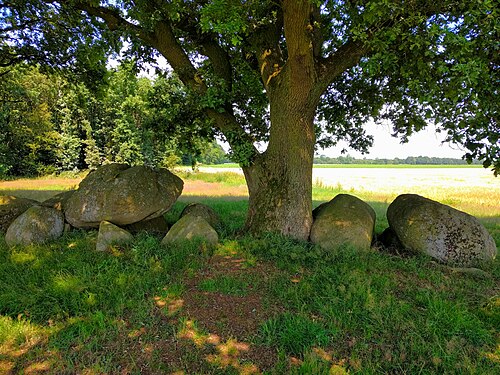
The oak is standing in the middle of the tomb.
Photo: Rudolphous (CC BY-SA 4.0)
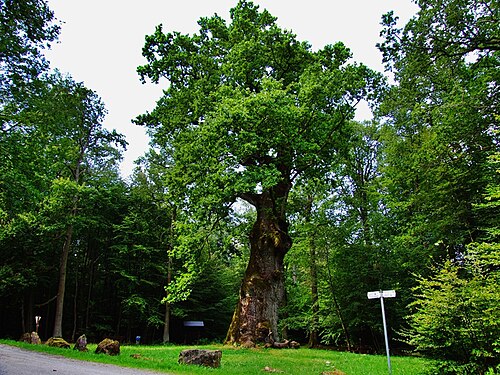
The thickest oak in Hessen stands in the middle of a village that has been gone since 1312.
Photo: Alexander Nowak, via Wikimedia Commons, CC BY 3.0 (CC BY 3.0)
A forester's core sample in 1982 counted 1,637 rings in this oak, which puts its germination around 345, in the twilight of the Roman Balkans, and makes it Bulgaria's oldest recorded tree.
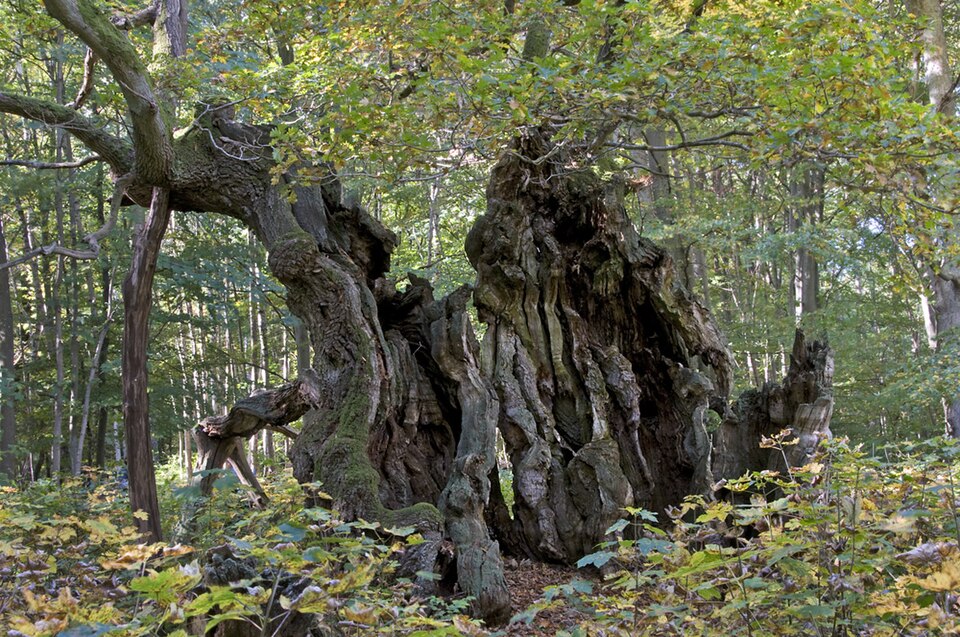
Three ancient oaks made this forest famous.
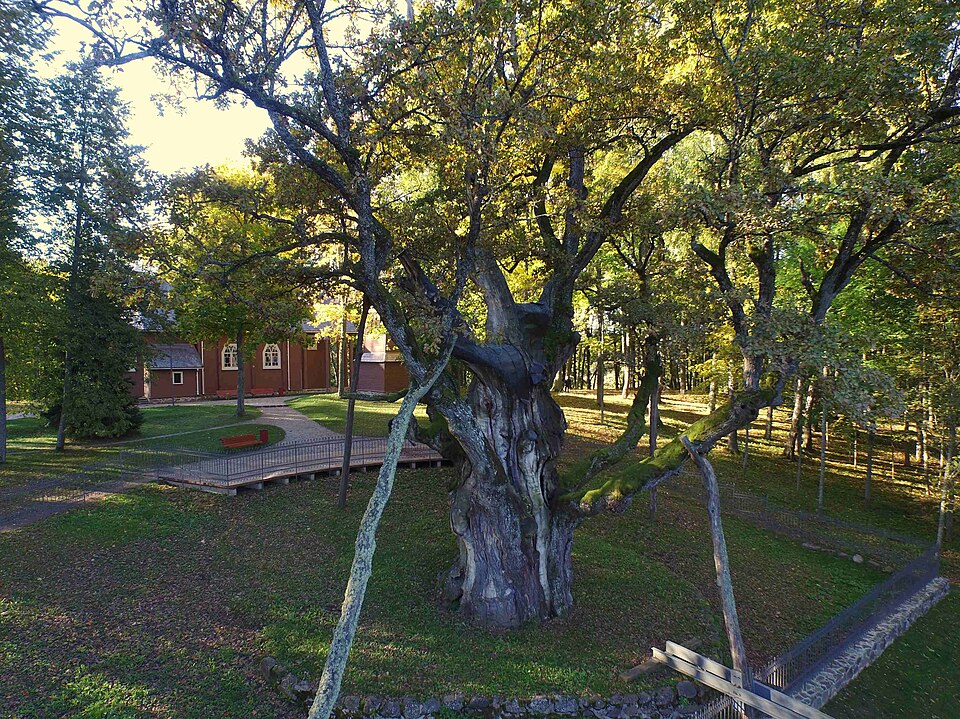
Restorers working on the trunk found a rifle and a human skeleton inside it, thought to belong to a French soldier left behind by Napoleon's retreat from Russia in 1812.
Photo: Algimantas Navickas, Arnoldas Abramavičius, Gintautas Antanavičius, Arvydas Veik (CC BY-SA 4.0)
Danish protection orders normally cover coastlines, moors and the ground around churches.
Danish women voted for the first time in 1915.
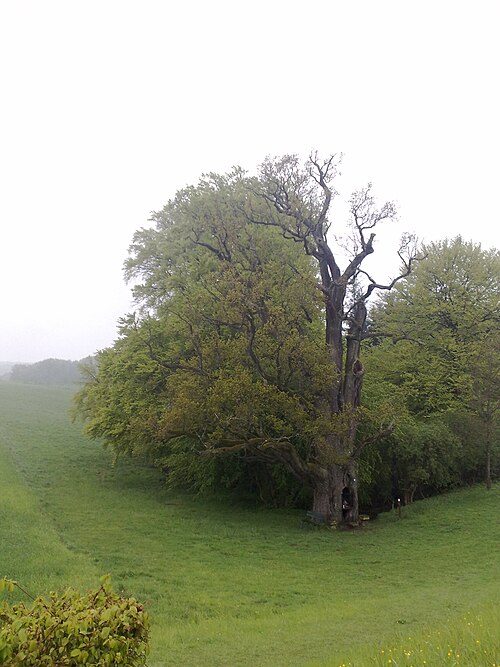
Call it the thousand-year oak and nobody in Bech will correct you, but no source found supports anywhere near that age.
Photo: Manuel FLURY (CC BY-SA 4.0)
Louis XIV's army burned Kasteel Amerongen to the ground in 1673, and when the castle was rebuilt a few years later, somebody planted an oak in the new park.
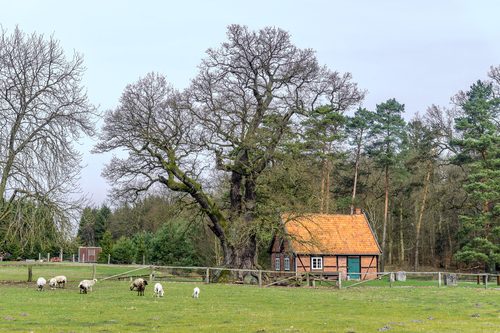
A tape measure around this oak's trunk reads 8.91 metres, and dendrologists reckon that puts it at roughly 450 years old.
Photo: Rainer Lippert
Divide this trunk by its own growth rate and the local story comes apart.
The register calls this the heaviest oak in Assen and one of the thickest in the whole of Drenthe, then adds the honest complaint: almost nobody has heard of it, next to the famous oaks of Beilen a...
Assen's old deer park still has its stable in it, built in 1875, and this oak grows right by it at the pond, planted, most likely, when the park itself was laid out in 1841.
Two stone gateposts stand next to this oak with nothing left between them to mark: they are what remains of the driveway to Port Natal, a psychiatric hospital built here in 1920 and replaced in 199...
This oak's girth runs past four metres, and it is in better shape than most trees this old get to be: a sound trunk, a clear run for its crown, and a growing spot nobody has ever crowded.
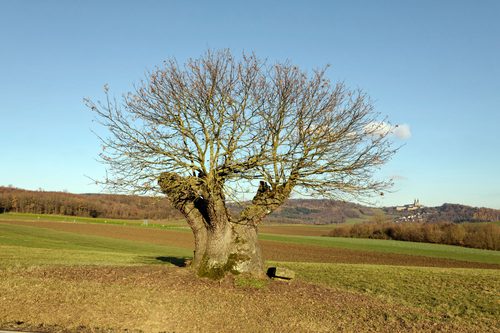
The 2003 feature film Luther put its young monk under this oak to shelter from a thunderstorm.
Photo: Rainer Lippert
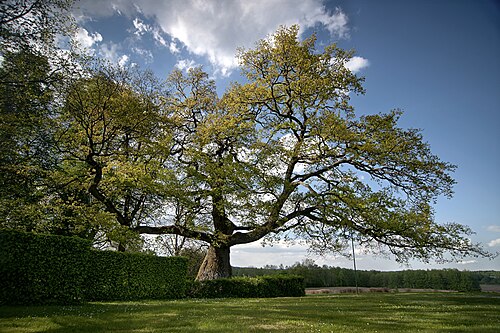
Poland's national anthem was written by a boy who grew up under this oak, and Będomin has made a shrine of both.
Photo: Tomek Pikuła (CC BY-SA 4.0)
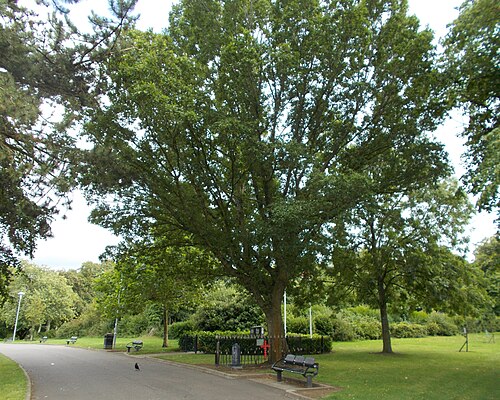
This oak was planted on Empire Day, 24 May 1919, for the men of Woodvale who did not come back from the First World War.
Photo: Whiteabbey (CC BY-SA 4.0)
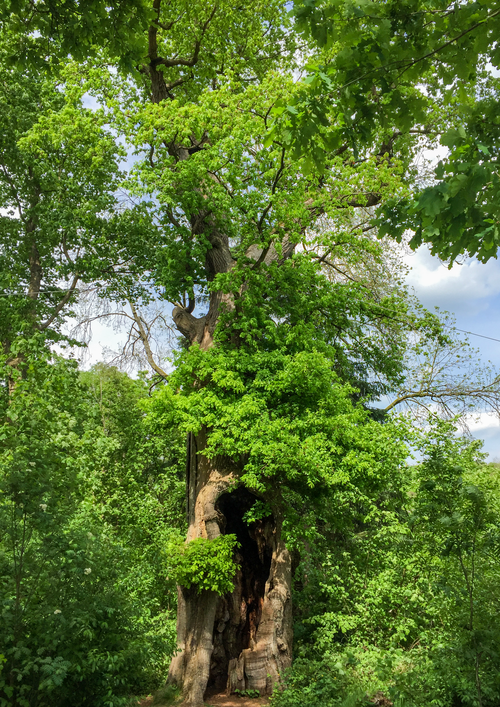
This oak once caught fire and smouldered for weeks.
Photo: Aeroid (CC BY-SA 4.0)
Two information boards stand beside this oak and they disagree with each other.
Den Olifant is ten metres tall and may have passed 250 years, and those two facts are the same fact.
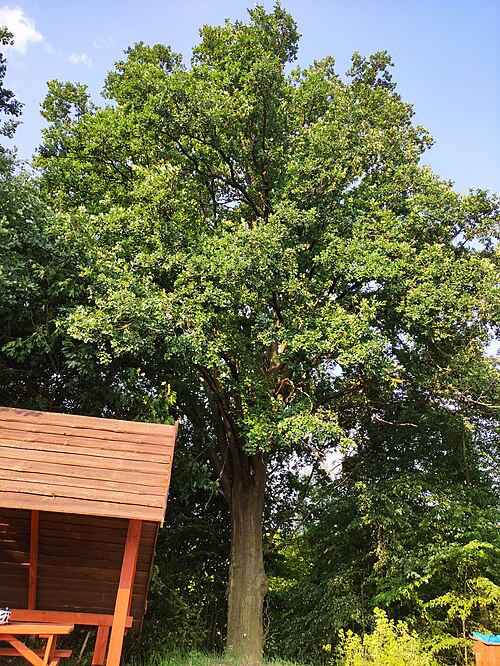
This oak became a legal nature monument on the same day and in the same document as the two limes standing fifteen metres away.
Photo: Fry72 (CC BY-SA 4.0)
Around 1750 a hermit named Le Graet is said to have moved into this tree, keeping a bed, a table and a library inside the hollow trunk.
The town of Cajvana keeps a camera on its oak around the clock, and anyone can watch it live on the town hall's website.
A tree does not usually get a verdict from a university, but this one did.
In February 2010 a cold snap split this oak in two, and it kept growing anyway.
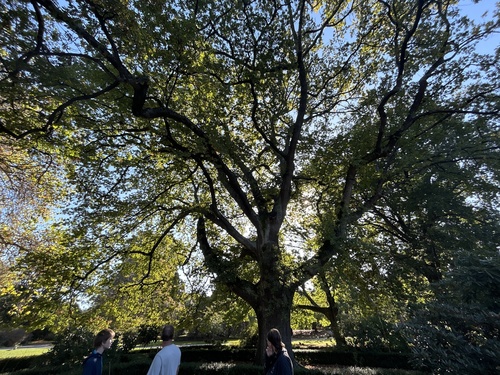
The Christchurch Botanic Gardens began with a royal wedding.
A hundred metres from the big plane in the Hohenlind hospital park stands a pedunculate oak, 3.75 metres round, on the same patch of former estate ground that predates the hospital by the better pa...
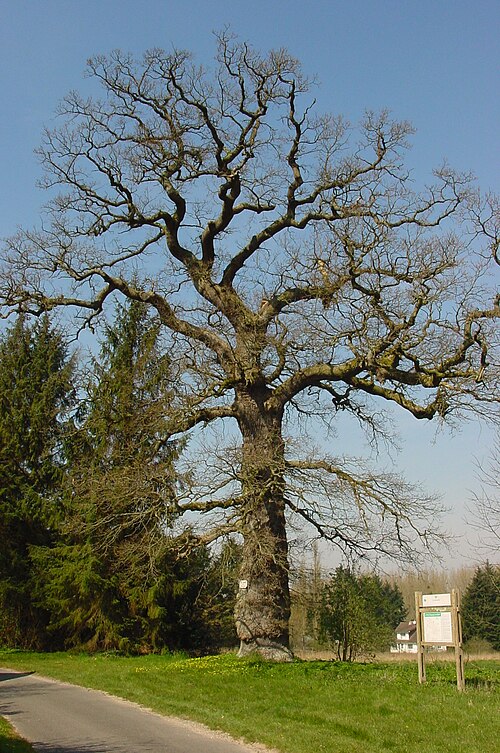
Somebody measured this oak at four metres round in 1936.
Photo: Camster (CC BY-SA 2.5)
Słowianin means the Slav, and the name was chosen to make a point.
In 2011, Poland picked its first favourite tree, and an oak outside a small garrison town beat out eighty-four rivals from every corner of the country.
The order that made this oak a protected national monument is dated June 2026, which makes it one of the newest protected trees in Lithuania and one of the least written about.
A lightning strike about two centuries ago hollowed this oak out and left it open down one side.
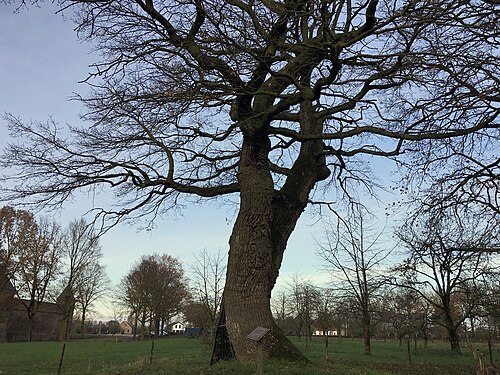
The name promises a thousand years and the wood does not deliver them.
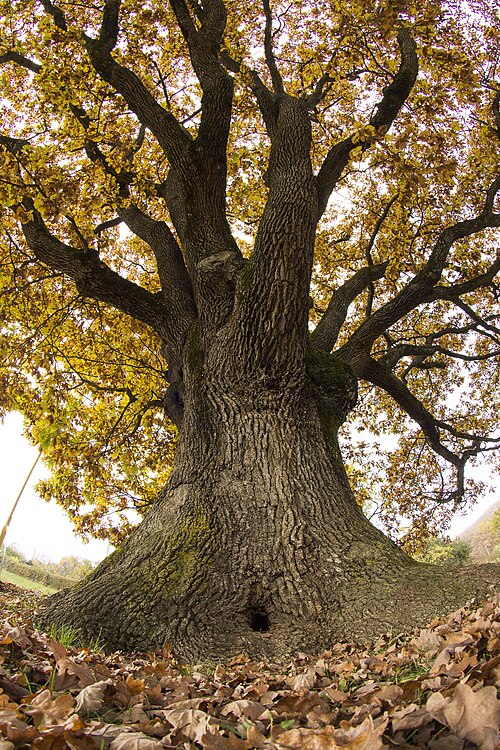
In 2020 this oak took 5,246 of the 24,839 votes cast in Strom roka and was named Slovakia's tree of the year, then went on to represent the country in the European Tree of the Year contest.
Photo: Martin Babarik (CC BY-SA 4.0)
Nobody can date this oak, because the wood that held the answer has rotted away.
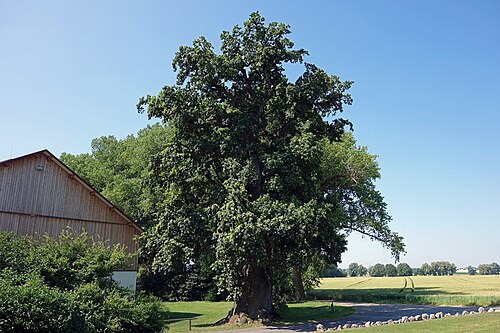
On a December night in 2003 somebody poured petrol into this oak's hollow trunk and set it alight.
Photo: Rainer Lippert (CC BY-SA 3.0)
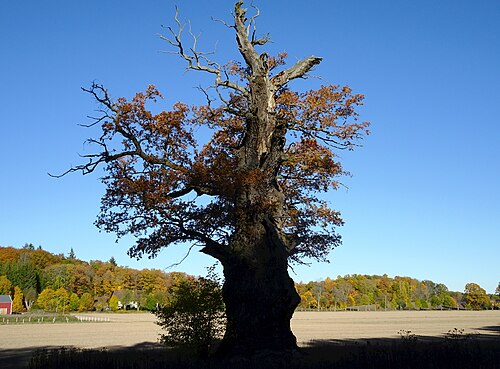
Sweden's largest deciduous tree by volume is only 17 metres tall.
Photo: Holger.Ellgaard (CC BY-SA 4.0)
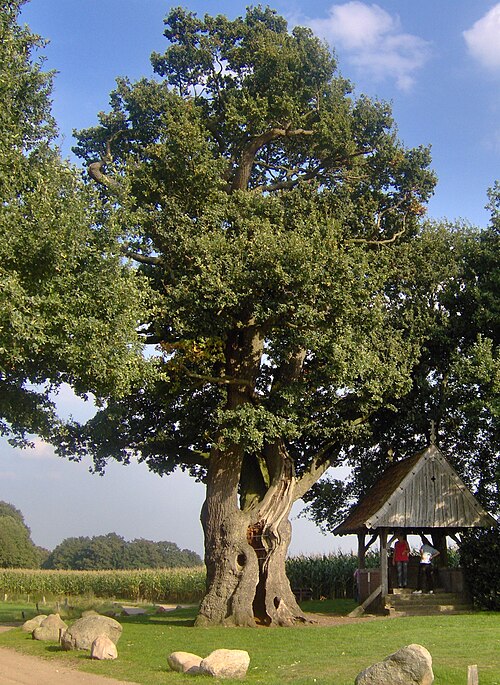
Under the Dutch Republic, Catholics in Twente worshipped where they could, and one of the places they could was under this oak.
Photo: Tubantia (CC BY-SA 3.0)
Until the 1920s, pigs were driven into this wood to feed under these oaks, and in the Middle Ages sheep, goats, horses and cattle grazed here too.
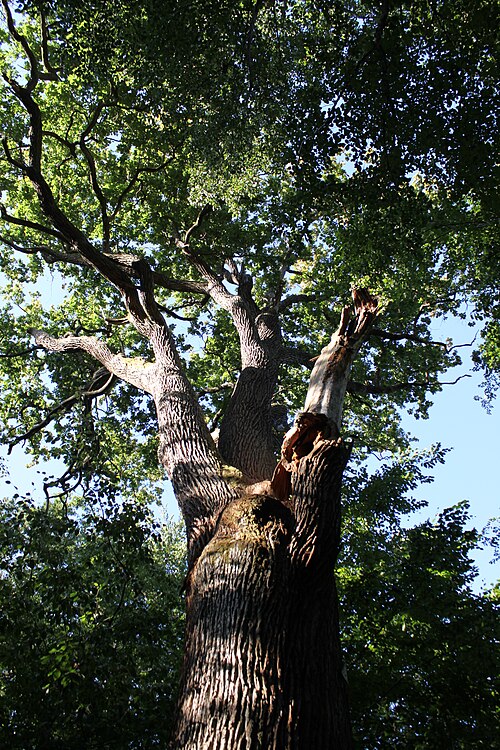
This oak was planted around 1590, which makes it older than the Thirty Years War and, by the City of Offenbach's own count, the oldest tree in Offenbach.
Photo: Lucas Willem Danehl (CC BY-SA 4.0)
Frankfurt's register entry for this oak says it is still fairly young and has not reached its full size, which is a candid thing to write into the document that protects it.
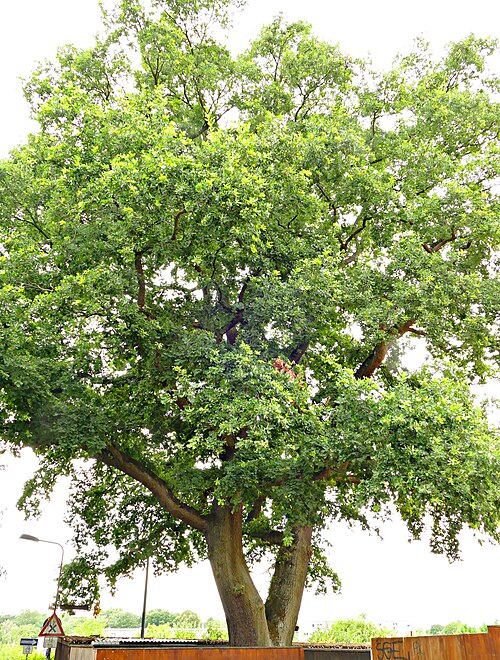
Frankfurt protects this oak for two reasons, and one of them is a beetle.
Photo: Thomas Wilhelmi (CC BY-SA 4.0)
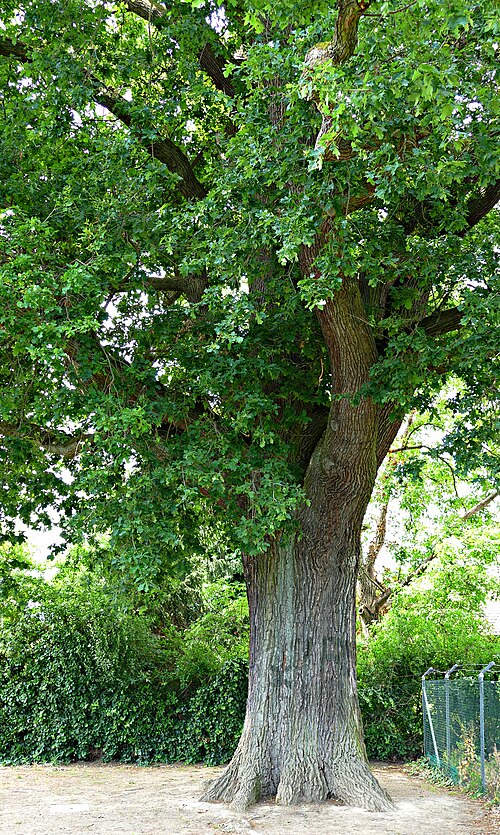
Lightning once split this oak from its crown to its roots, and it is still standing.
Photo: Thomas Wilhelmi (CC BY-SA 4.0)
This oak is 4.55 metres round, and the document that protects it will only say it is over 100 years old.
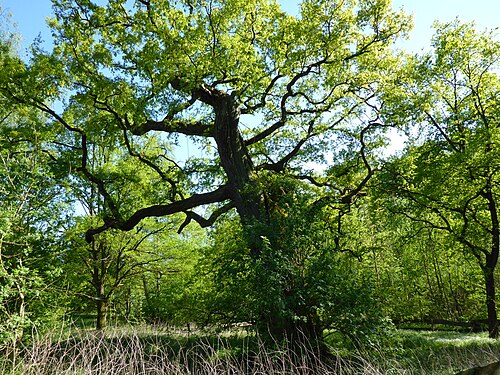
A steel grating covers the triangular hole in this oak's trunk, one heavy horizontal branch rests on two steel tubes, and the bark has gone from the far side.
Photo: B!G!1851 (CC BY-SA 4.0)
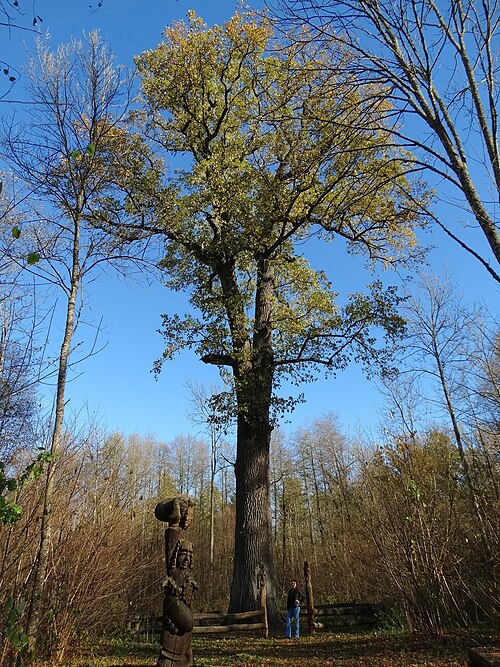
By volume of wood this is reckoned the largest tree in Lithuania, 43 cubic metres of oak, which is a rarer way to measure a tree than the one everybody quotes.
Photo: Vilensija (CC BY-SA 3.0)
A crash barrier was growing into the trunk of Gothenburg's largest oak.
Goteborgs-Posten calls this the only giant tree in Gothenburg with a plot of its own, and it means that literally: Skar 751:93 is a parcel of land that exists for an oak rather than for a building.
When Gothenburg turned four oaks into nature monuments on 14 October 2025, this is the tree everybody stood under.
This oak was a property line before Laboratoriegatan was a street.
This oak and its neighbour forty metres down the hill were protected on the same day in July 1979, near-identical paperwork for two trees that turned out nothing alike: a 2015 field survey measured...
Two pedunculate oaks stand forty metres apart on the same hillside street, protected on the exact same day in July 1979, and this is the smaller of the pair: a trunk measured at 2.80 metres round i...
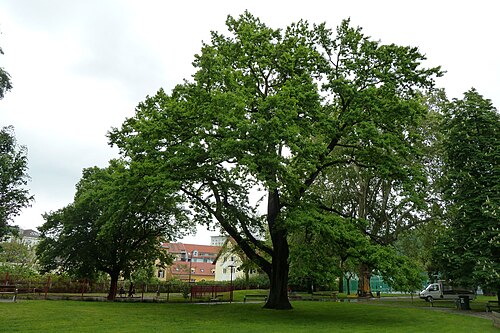
Three of Graz's officially protected trees stand inside one small park, and this oak is the first of them, rooted near the Muhlgasse side of the Volksgarten.
Photo: Gerdsch (CC BY-SA 3.0 at)
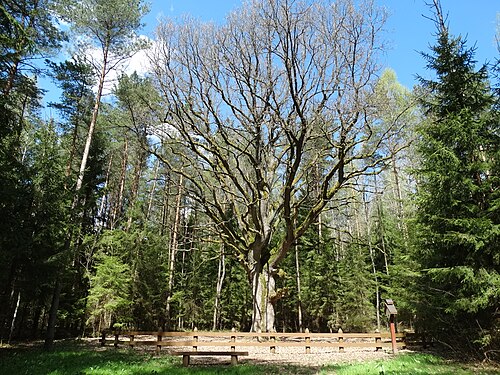
The largest porcini ever recorded in Lithuania was found at the foot of this oak.
Photo: Vilensija (CC BY-SA 3.0)
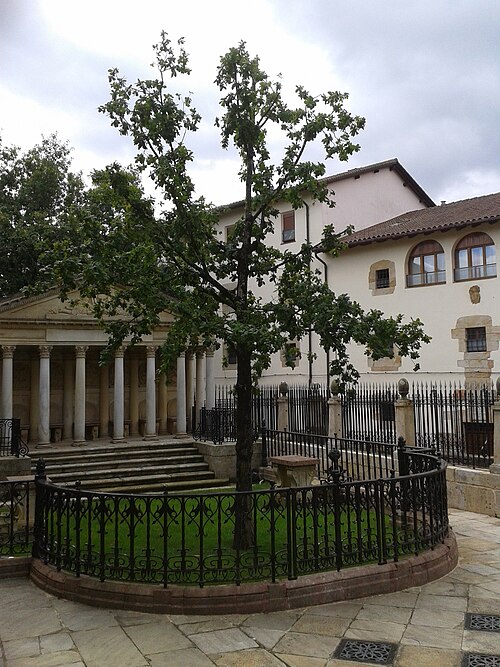
The oak everyone comes to see was planted in 2015.
Photo: Fernando Vázquez (CC BY 3.0)
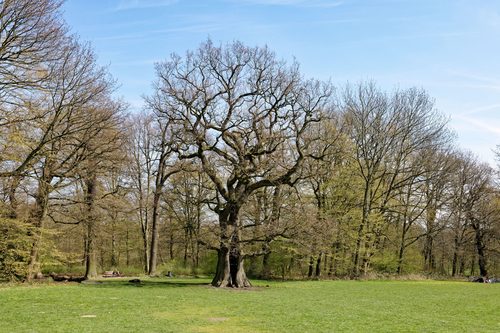
Hamburg's thickest oak has a hole in it big enough to stand in.
Photo: Rainer Lippert
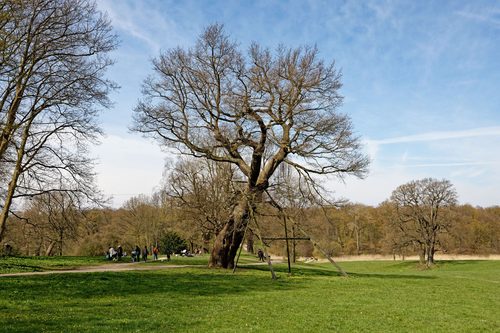
A birch is growing inside this oak, and has been for decades.
Photo: Rainer Lippert
This oak grows in woodland that a nature conservation body now manages, on the north edge of ground once part of Imstenrade, one of the country estates that ring Heerlen's old core.
A second oak from the same wider stretch of woodland as its neighbour at Imstenrade, this one growing at the edge of the trees on the north side of Nieuw Eyckholt.
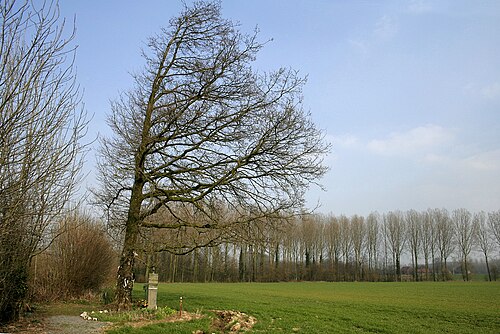
Visitors to this oak do not stand back and admire it, they drive a nail into it.
Photo: Jean-Pol GRANDMONT (CC BY-SA 3.0)
In 2016, 23,313 people across Europe voted for an oak in Hniszów, a village in the far east of Lubelskie near the Ukrainian border.
This oak was a sapling while the Thirty Years' War was tearing through Bohemia.
Innsbruck put this oak under protection in 1934, earlier than most trees on its list of natural monuments, and it grows on an ordinary street corner a few minutes' walk from the main station.
Most oaks spread sideways.

The survey that lists Innsbruck's natural monuments did not put a number on this oak's age.
Photo: Gotglä (CC BY-SA 3.0 at)

The register still files this oak under a guesthouse.
Photo: Gotglä (CC BY-SA 3.0 at)
A nineteenth-century lawyer who owned the Gospinal estate received his clients inside this oak.
The hollow inside this oak is said to hold eight people.
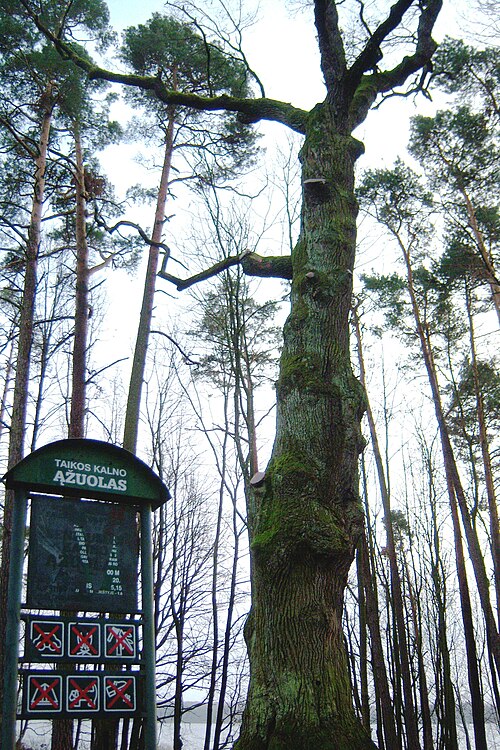
The oldest and thickest tree in Kaunas inherited the job from one that was burned down.
Photo: Vilensija (CC BY-SA 3.0)
An oak and a pine grew into each other at the foot here, and in 2009 the parish of Samylai put the pair on its official coat of arms.
In September 2025 Lithuania added 80 new natural heritage objects to its protected list in a single ministerial order, 49 of them ancient oaks proposed by local communities and their municipalities.
This oak does not have a name.
The only photograph of this oak is captioned with the word olos, caves, for the hollows under the base of its trunk.
Of the three oaks Lithuania protected in this corner of forest on one day in June 2026, this is the thickest by a clear metre: 5.50 metres round at chest height, against 4.45 and 4.25 for the Sitkū...
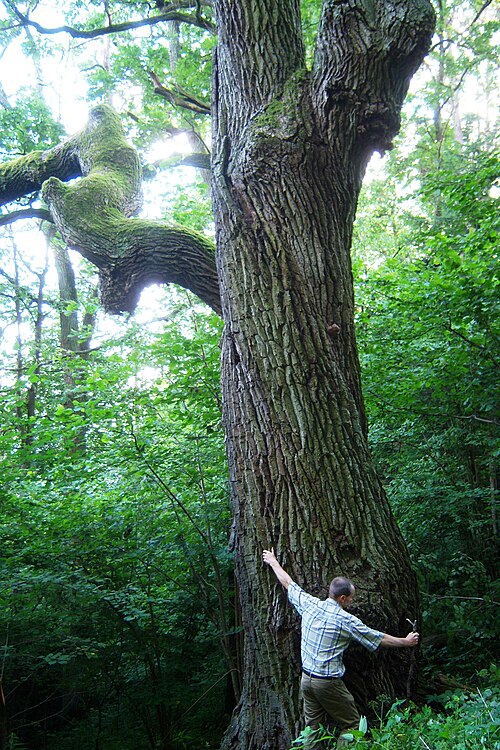
A tourism guide for the Kaišiadorys district calls this the thickest tree in the whole of Kaunas Reservoir Regional Park, and it grows at the mouth of one of the park's sights.
Photo: Vilensija (CC BY-SA 3.0)
Slovakia's national tree-of-the-year vote in 2013 went to an oak growing in a town garden rather than a forest, and the town put it forward for the European title the same year.
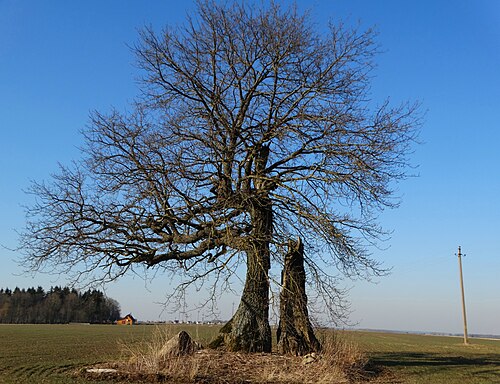
A grown adult can walk into this oak.
Photo: Vilensija (CC BY-SA 3.0)
In 1767 a miller offered the van der Borch family 275 guilders for the right to cut two millstone axles from this oak's trunk.
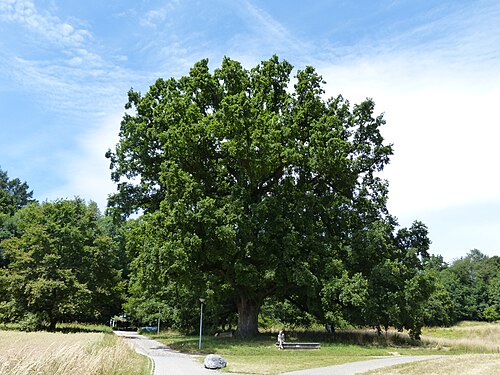
Legend says this oak was planted for Napoleon.
Photo: Abaddon1337 (CC BY-SA 4.0)
The building moved instead of the tree.
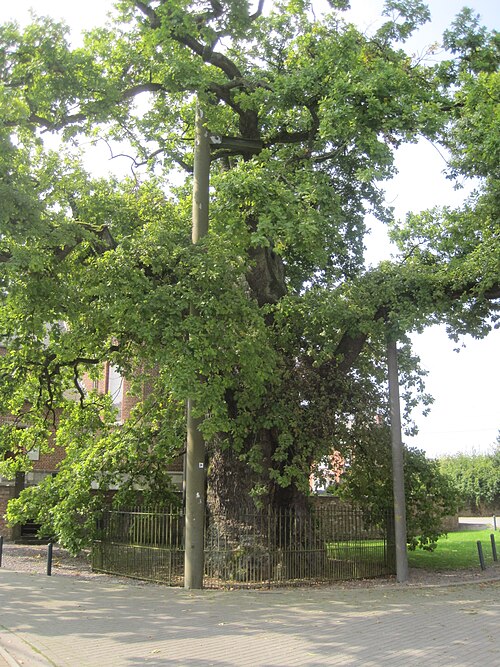
At just over 14 metres round, the Gros Chene of Liernu is reputed to be the widest tree trunk in Belgium, and oral tradition in the village puts its age near a thousand years, back to Charlemagne.
Photo: Mortier.Daniel (CC BY-SA 3.0)
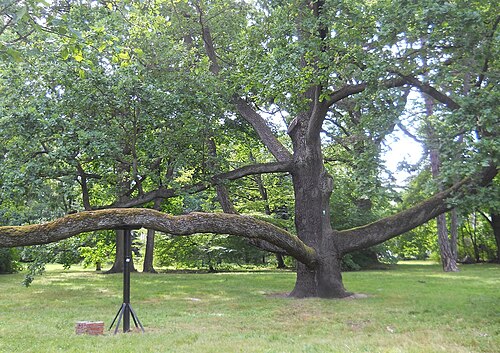
In 2023 an oak in an ordinary Łódź city park won European Tree of the Year with 45,718 votes, having taken the Polish national title the year before.
Photo: Śryż (CC BY-SA 4.0)
Finns call this the most beautiful tree in the country, and they were saying so a century before the internet agreed.
In 2023 only one tree in Europe drew more votes than this oak: Poland's Oak Fabrykant.
Around 1870 tenant farmers came to cut this oak up for firewood.
Somebody once tried to kill this oak with a shovel.
Luxembourg's register offers half a dozen grounds for protecting a tree, and this oak was listed on exactly one of them: its shape.
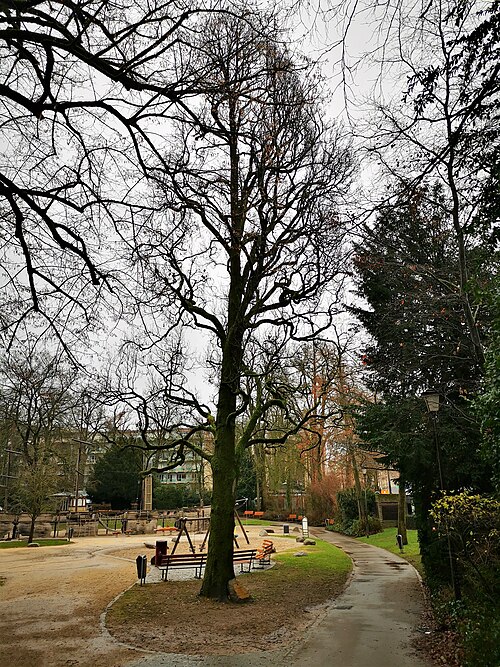
Somebody planted this oak for a botanist and then forgot to write down when.
Photo: GilPe (CC BY-SA 3.0)
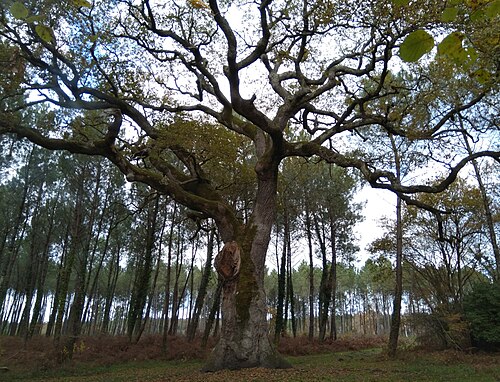
In August 2010 this oak shed a single branch that measured 3.3 metres around.
Photo: Blef00fr (CC BY-SA 4.0)
This oak is older than the park it stands in.
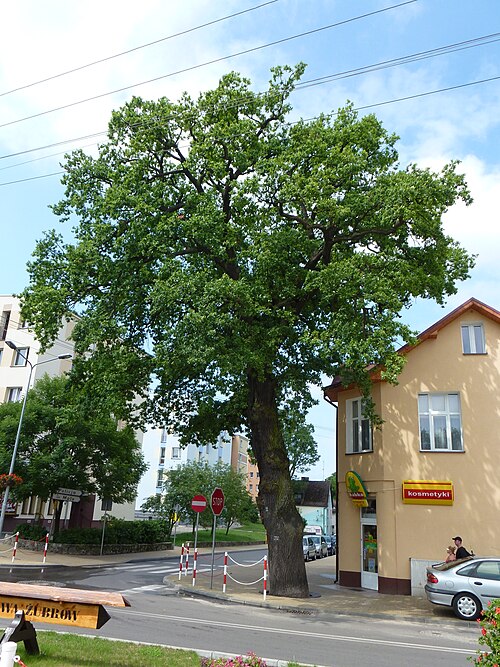
A stop sign, a pedestrian crossing and the corner of a shop have grown up around this oak, and a low chain fence is now the only thing keeping cars off its roots.
Photo: Geonidiusz (CC BY-SA 3.0)
Lightning took a large part of this oak's crown and it is still standing, held together with steel and visited by climbing arborists.
A dual carriageway was bent around this tree.
The village of Novo Selo, near Veliko Tarnovo, dates its founding to 1750.
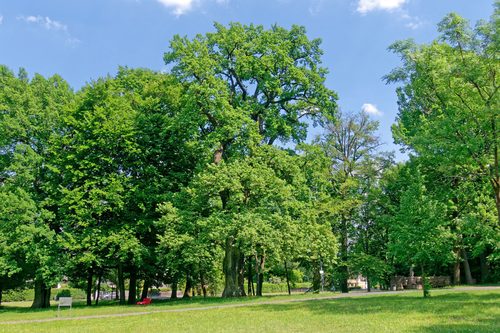
Around 1960 somebody filled the base of this oak's trunk with brickwork, and the tree has been slowly growing over the masonry ever since.
Photo: Rainer Lippert
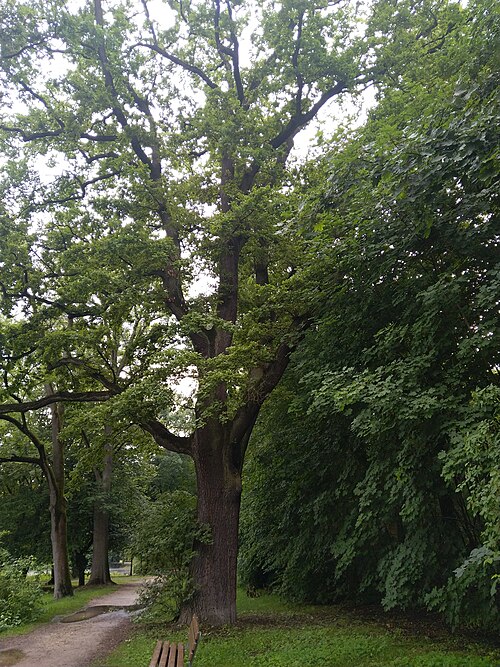
Three oaks along one lakeshore in Nuremberg carry registration numbers of their own, and this is number 34.
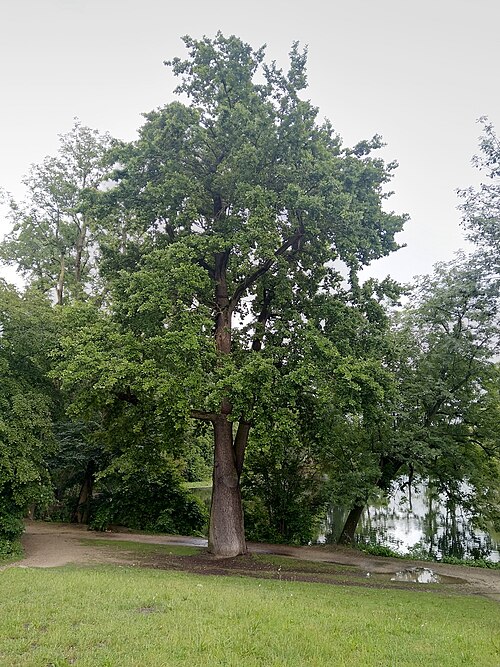
This oak grows in the footpath itself.
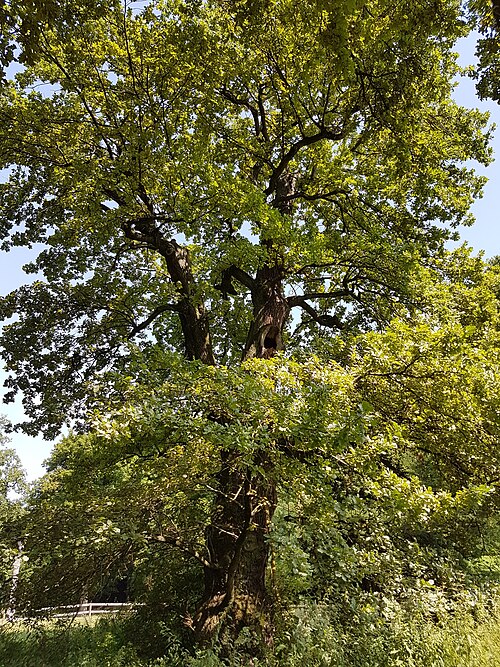
Of the three protected oaks along the Nummernweiher in Nuremberg's Volkspark Dutzendteich, number 31 is the one that stands back from the water.
Photo: Buendia22 (CC BY-SA 4.0)
Bavaria protects this oak by an address rather than a park: the green in front of the house at Jakob-Wolff-Strasse 19, 21 and 23.
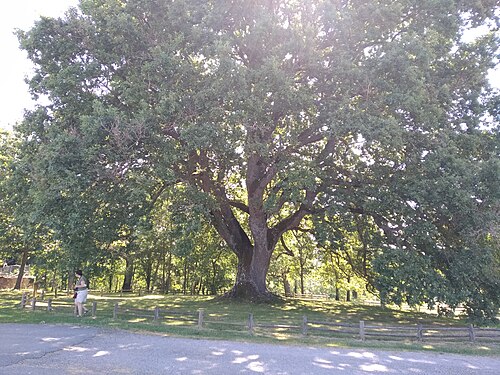
Until the Spanish Civil War, the village of Ondategi held its summer festival under this oak, and the music was one accordion.
Photo: Luistxo (CC BY-SA 3.0)
You can step through a hole in the side of this oak and stand inside it.
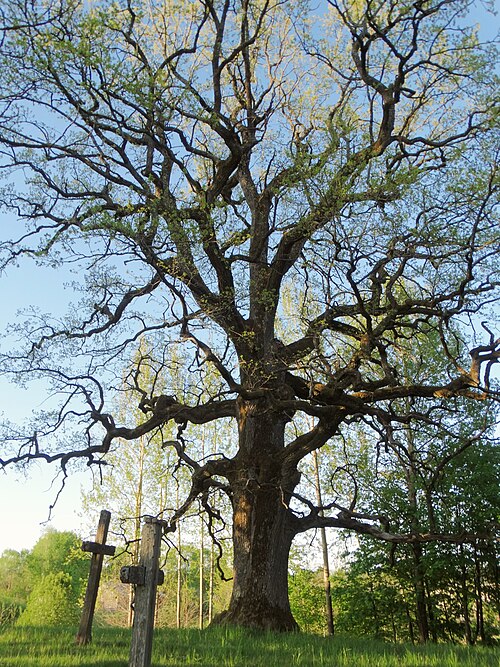
By local telling, the oak that stood here before this one had a hollow big enough to shelter five calves, and Vytautas the Great stopped his retinue under it for a meal on his way through.
Photo: Vilensija (CC BY-SA 3.0)
Two and a half kilometres from a hollow, lightning-wrecked oak stands the version that got away with it: the same species, the same park, nearly the same waistline, and no damage at all.
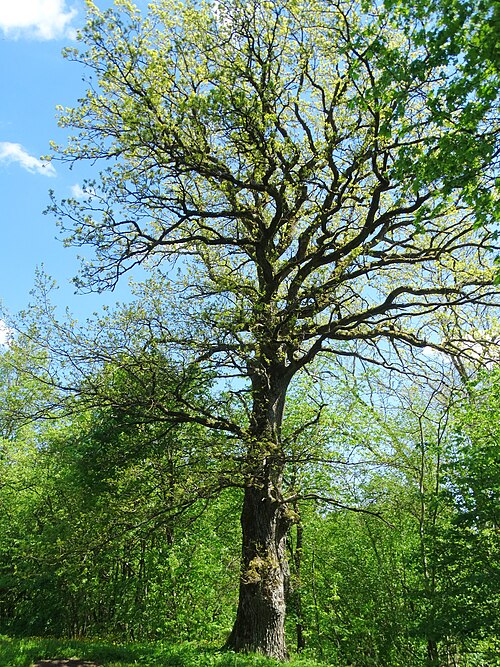
The thickest oak in Tamosaiciai is not the Tamosaiciai oak.
Photo: Vilensija (CC BY-SA 3.0)
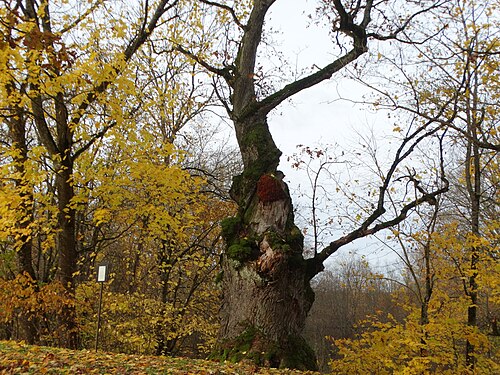
Gaurė put this oak on its coat of arms, as the town's symbol of strength.
Photo: Vilensija (CC BY-SA 4.0)
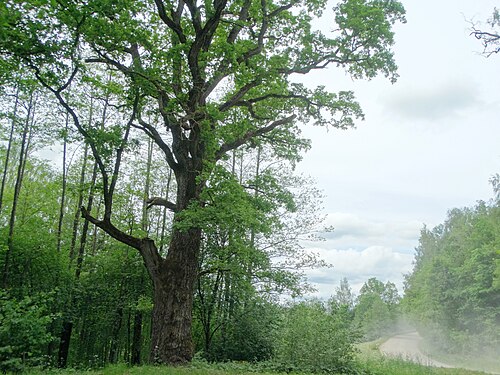
Four and a half metres of trunk, and the Lithuanian state did not get round to protecting it until April 2017.
Photo: Vilensija (CC BY-SA 3.0)
The village of Peruc may be named after a load of washing.
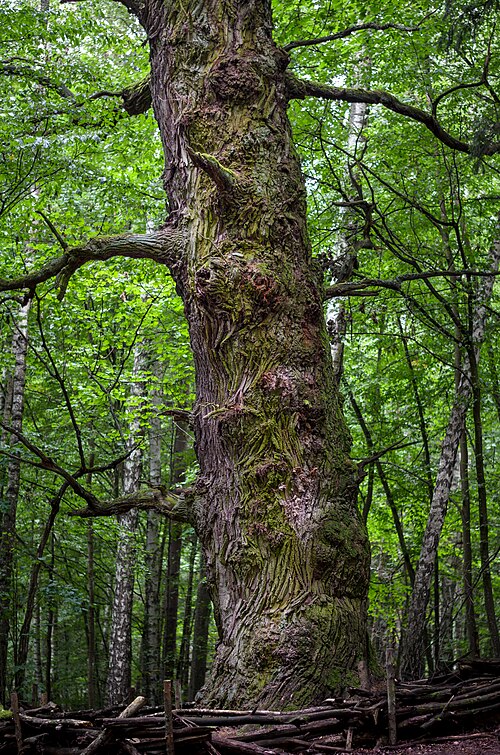
This oak is named after a god of thunder.
Photo: Marta Reszka (CC BY-SA 3.0)
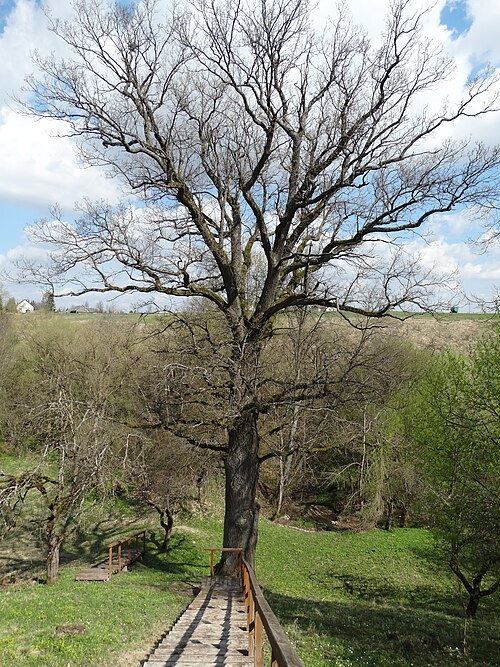
The man this oak is named for helped give Lithuanian a written form, and he was the parish priest 300 metres up the slope.
Photo: Vilensija (CC BY-SA 3.0)
Lithuania signposts this oak by name from the public highway, three and a half kilometres before you get to it.
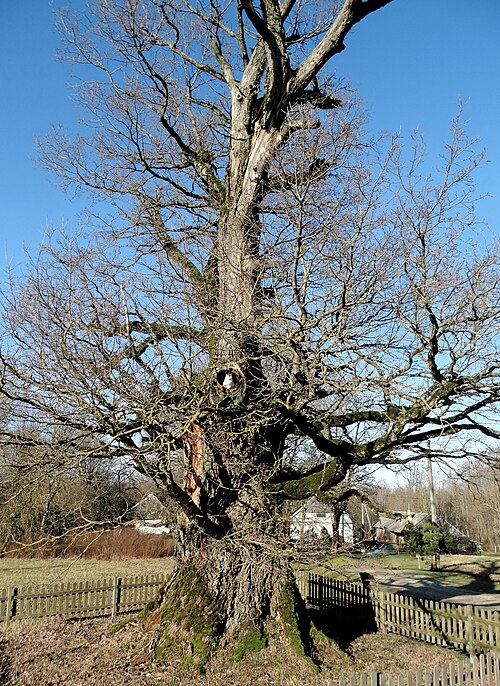
Legend says this oak lost its top after Samogitia was Christianised in 1413 and its sacred oaks had their crowns cut.
Photo: Vilensija (CC BY-SA 3.0)
In March 2026 this oak became the first Lithuanian tree ever to win European Tree of the Year, announced in the European Parliament in Brussels.
The scar running down this trunk is the reason for the name.
Nobody agrees on how tall the tallest tree in Plunge Manor Park is.
When the tower clock stopped, the estate told the time with a sundial in the flowerbed instead.
Poleski National Park named an entire nature trail after this one oak.
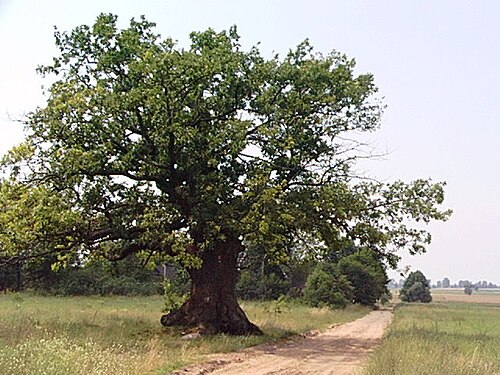
This oak won European Tree of the Year in 2022, a year after Poland voted it the best tree in the country.
Photo: Leszek Jańczuk (CC BY-SA 4.0)
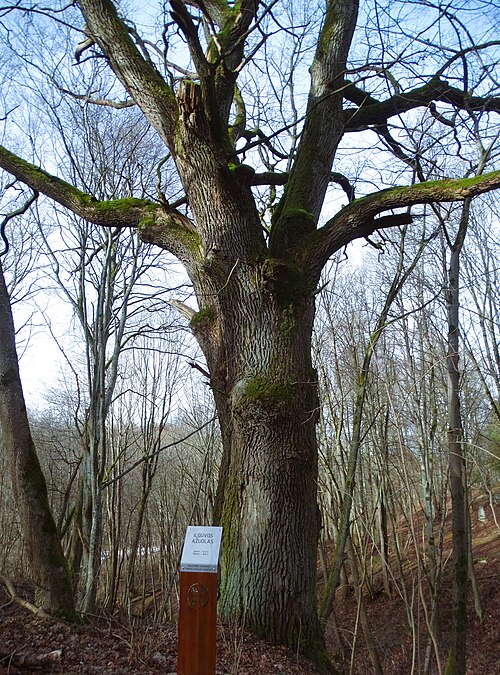
This is the oak you have to look for.
Photo: Vilensija (CC BY-SA 3.0)
Children in Plokščiai used to climb inside this oak.
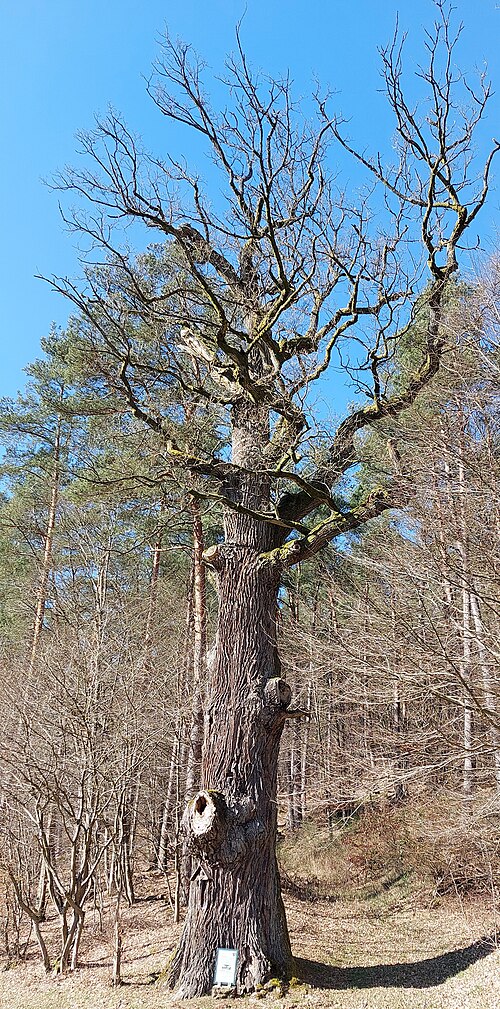
Somebody fixed a small crucifix to this oak, and the reason given for it is the darkest story in the Pays de Bitche.
Photo: Didivo67 (CC BY-SA 4.0)
Somebody set fire to the inside of this oak three times in 1967.
Riga has spent decades patching this oak with metal sheets and plates, and it is still green.
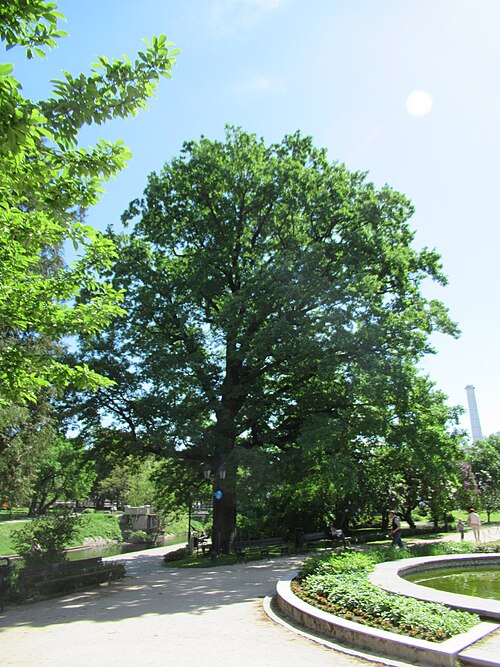
The easiest old tree to reach in Riga is also the one nobody has named.
Photo: Edgars Košovojs (CC BY-SA 4.0)
In 2019 the Institute of Dendrology at Kornik put a core into this trunk and came back with a number: 800 to 850 years, which makes it the oldest oak anybody has dated in Poland.
Of the three oaks named for the brothers of the Slavic founding legend, Lech is the one nobody has dated.
This oak stands in three places at once: partly in the field, partly in the road verge and partly under the paving of Essenseweg.
This oak's story exists in exactly one place, and it is bolted to a post beside the trunk.
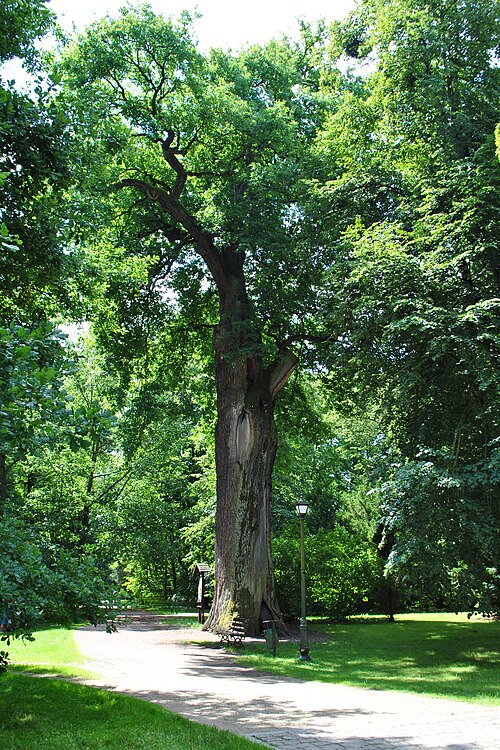
Someone set fire inside this oak's hollow trunk in October 2022, an act of vandalism reported to the police and confirmed by the Regional Directorate of State Forests in Katowice.
Photo: Marek Mroz (CC BY 4.0)
The poet was christened in a wooden church that has since disappeared, next to an oak that has not.
In the summer of 2025, one branch of Sweden's most famous oak still carried leaves.
The plaque at this oak says ancient Latvian chieftains once met beneath it.
The stones at the foot of this oak carry a single date, 1918-02-16, the day Lithuania declared its independence.
A small chapel hangs on the side of this oak, the same side where lightning tore into it.
At 33.5 metres, this oak is more than twice the height of the Independence Oak in town, and at 5.6 metres round it is the thickest of the four trees on this page.
This oak on the Rijksweg Noord in Geleen carries the register's most detailed physical description on this list: a trunk running four and a half metres around, grown wide and open since it has stoo...
Johan van Oldenbarnevelt held this estate from 1615 until the state beheaded him in 1619, and tradition says these two oaks were planted in his memory.
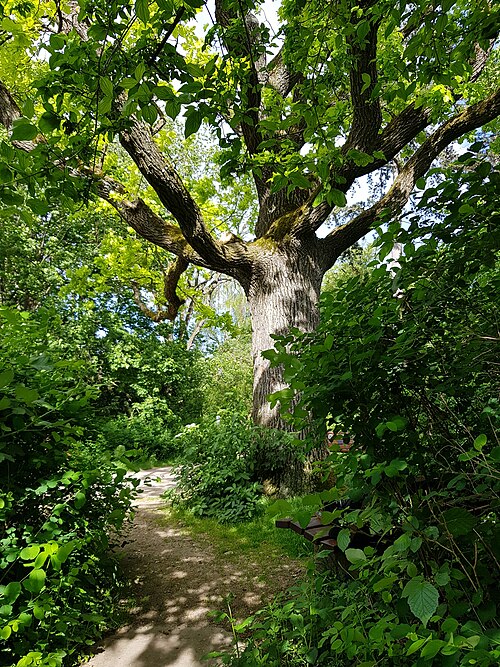
This oak was planted for a play.
Photo: Fyrtaarn (CC BY-SA 4.0)
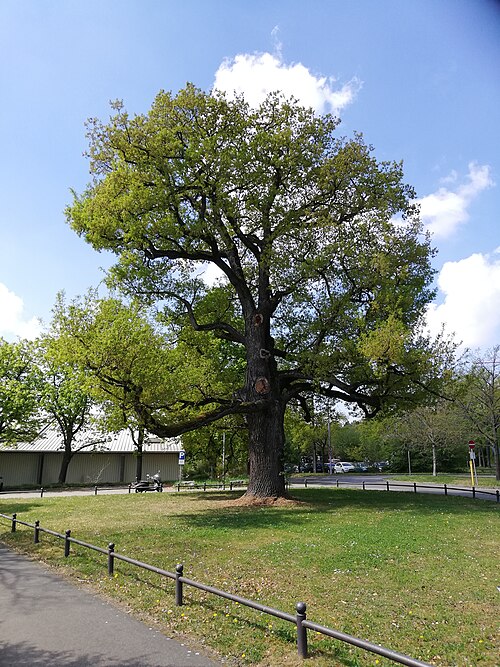
By 1711 this oak was already called a stately old tree, and a duke chose it as the spot for his hunting lodge.
Photo: Florian Hoffmann (CC BY-SA 4.0)
This oak is named for a five hundredth anniversary, and that is the one thing about it nobody should read as an age.
A drill bit took three hundred years off this oak.
Two entirely separate sets of people decided this oak was worth pointing at.
This is the youngest tree on this list and genetically it is one of the oldest.
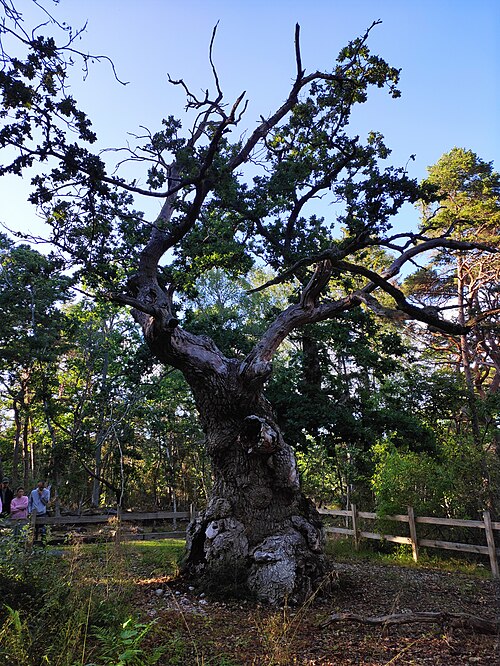
Öland's oldest oak is somewhere between 800 and 900 years old, and nobody has ever published how thick it is.
Photo: Fry72, Karel Frydrýšek (CC BY-SA 4.0)
Local superstition says that when this oak drops a limb, a member of the family that owns it will die.
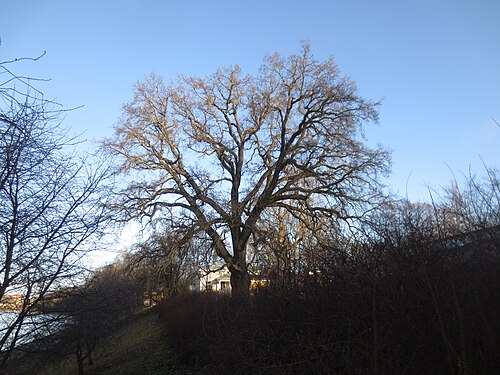
The Great Fire of Turku in 1827 took most of the city and it took the botanical garden this oak was planted in.
Photo: Puppe100 (CC BY-SA 4.0)
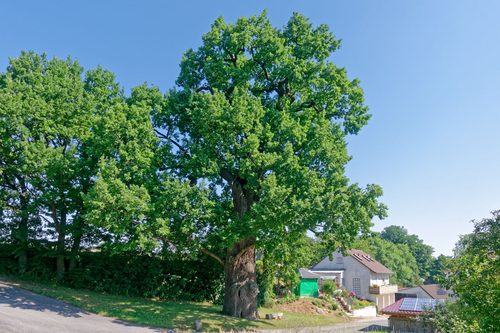
Two sources disagree about this oak's age by nearly three centuries, and neither has given way.
Photo: Rainer Lippert
Estonians carried this oak in their wallets: it was printed on the back of the old 10 kroon banknote.
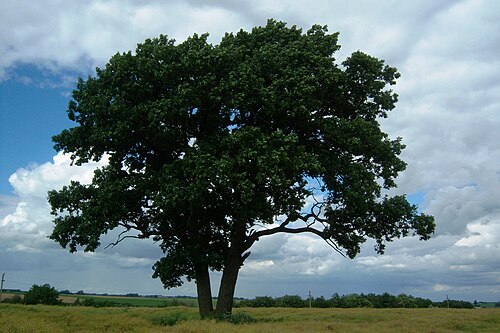
Banned books were hidden at the foot of this oak.
Photo: Vilensija (CC BY-SA 3.0)
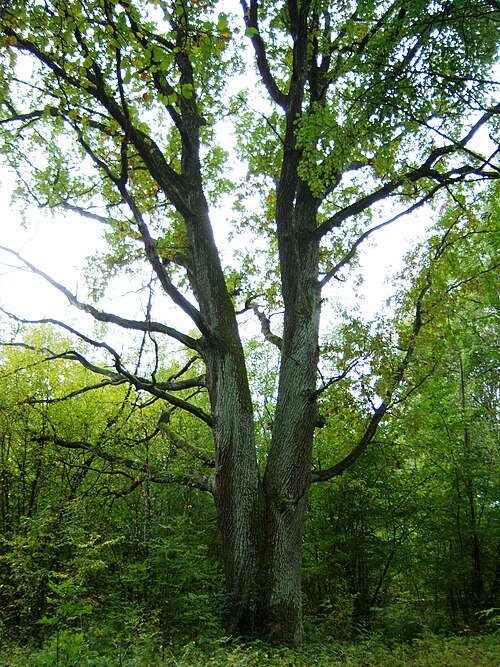
Thirty metres of oak, and you will not see it until you are nearly underneath it.
Photo: Vilensija (CC BY-SA 3.0)
Somebody wrote this oak down before 1492.
Storms do not read the names.
The pilgrims come for the Stations of the Cross, and the oak is waiting for them at the third one.
The hollow in this oak is big enough that people compare it to a small cave, and a village story from the Second World War says a sniper once hid inside it to cover the crossing of the Dniester.
This oak is famous because an artist drew it.
The church is named after the tree, not the other way round.
On 7 August 2010 this oak stood in the way of a flood and held.
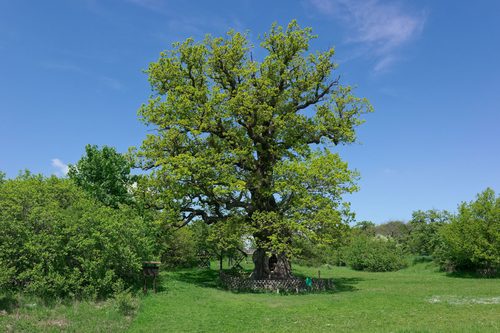
Lightning did this oak an odd favour.
Photo: Rainer Lippert
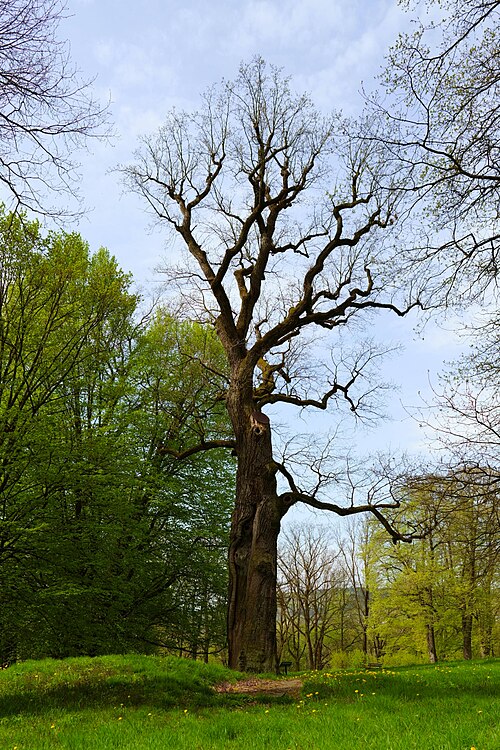
This oak spent the 1930s in people's wallets.
Photo: Janusz Krzyżek (CC BY-SA 4.0)
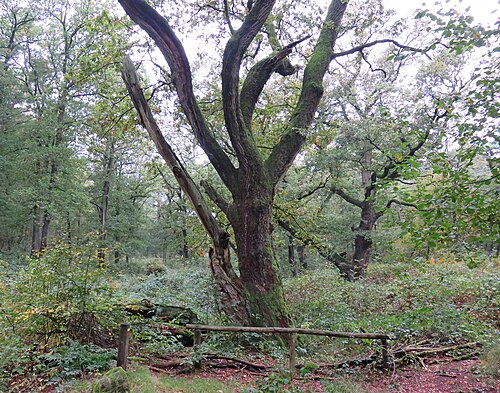
A circle of nineteenth-century landscape painters used to walk out to these oaks at night, and it was they who named them after a god.
Photo: WeeJeeVee (CC BY-SA 4.0)
This oak was protected by the state on 1 September 1960, one of the first trees in Lithuania to be given that status, and it has spent its life among the dead.
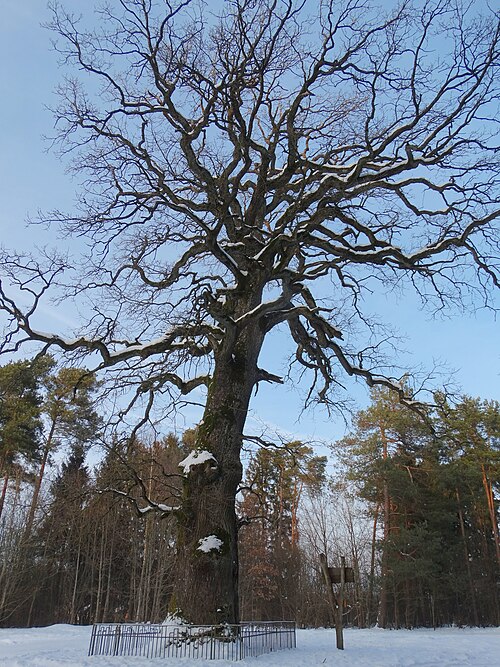
Somebody measured this oak in 1987 and somebody has measured it since, and between the two readings it is still putting on wood.
Photo: Vilensija (CC BY-SA 3.0)
Three Academy Awards trace back to the bog at the end of this trail.
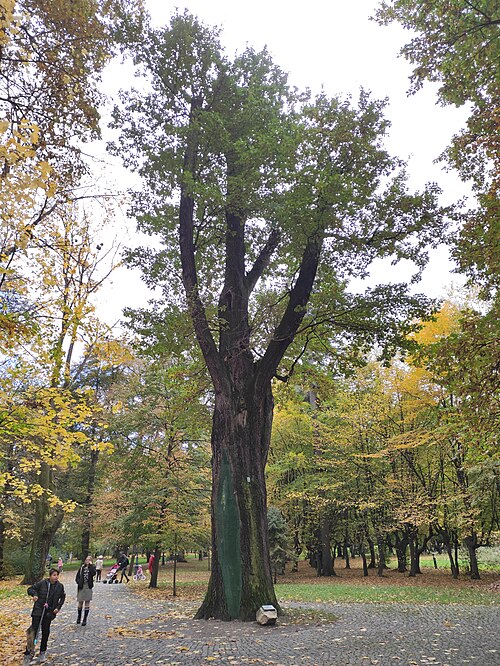
The plan for the oldest tree in Żywiec's castle park is to make it shorter.
Photo: Fry72 (CC BY-SA 4.0)
Explore by city: Munich · Amsterdam · Geneva · Haarlem · London · Dublin · Berlin · Vienna · Helsinki · Apeldoorn · Arnhem · Maastricht · Prague · Toronto · Parma · Leipzig · Lyon · Vilnius · Warsaw · Wroclaw · Florence · Brussels · Eindhoven · Stockholm · Belgrade · Krakow · The Hague · Turin · Groningen · Gdansk · Copenhagen · Utrecht · Budapest · Tallinn · Vancouver · Dresden · Brno · Tilburg · Oslo · Hobart · Auckland · Bristol · Dordrecht · Amersfoort · Breda · Genoa · Braga · Salzburg · Potsdam · Enschede · Den Bosch · Zwolle · Deventer · Guimaraes · Helmond · Pamplona · Cesky Krumlov · Bamberg · Bad Homburg · Bucaco · Ede · Emmen · Aarhus · Assen · Belfast · Bruges · Christchurch · Cologne · Frankfurt · Giessen · Graz · Hamburg · Heerlen · Innsbruck · Kaunas · Lausanne · Luxembourg City · Miedzyzdroje · Modena · Nuremberg · Pagramantis Regional Park · Plunge · Riga · Stuttgart · Toulouse · Žalgiriai · every city · or browse all species.