The 500-Year Oak of Berlin Zoo
Tiergartenthe Tiergarten
Approximate location.
Seasons1 of 4
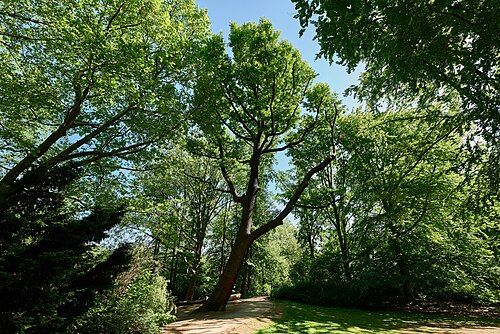
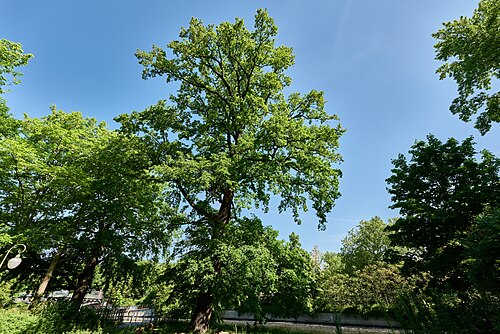
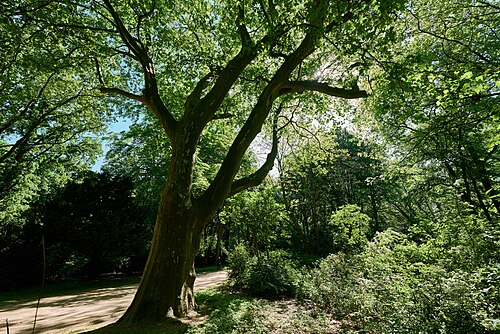
Berlin Zoo calls it the eternal oak, and says it has been giving shade for 500 years. If the zoo's figure is right, the tree was already old when the zoo itself opened in 1844, the first in Germany. The zoo also gives it a second name, the Columbus oak, without explaining it. Treat the number as the owner's word rather than a measurement. It is a round figure, no method is given, and nobody has published a girth to check it against. A photograph of the tree on Wikimedia Commons is captioned the same way, about 500 years old. So the honest version is: about 500 years, according to the zoo. There is a second thing we cannot quite close. Berlin's register protects one pedunculate oak inside the zoo, Naturdenkmal 1-52/B, south of the hippo house, listed in 1993 for its distinctiveness and for regional heritage. That is the tree we have mapped. It is the only protected oak the register lists in the grounds, which makes it almost certainly the eternal oak, but no source we have read says in so many words that the two are the same tree. The zoo counts eleven protected natural monuments on its ground in all. You will need a ticket, and our pin comes from the register rather than from a visit, so expect to look around south of the hippo house. If you have stood under it, tell us whether we have the right one.
From people who stood here
No notes yet
Did you visit the tree? Leave a note for the next visitor.
Getting there
Zoologischer Garten Berlin, south of the hippo house, Hardenbergplatz 8, Berlin-Charlottenburg
You can recognise it as the old pedunculate oak south of the hippo house, the only oak Berlin's register protects inside the zoo. Our pin is approximate, so look around that end of the hippo house rather than for an exact spot.
Paid entry, the oak stands inside the Zoologischer Garten Berlin. Day ticket for adults from 16 euro online, 25 euro at the ticket booth (zoo only, children 4 to 15 from 7.50 euro online). Open every day of the year: 9:00 to 18:30 from 30 March to 20 September, 9:00 to 18:00 from 23 February to 29 March and 21 September to 25 October, 9:00 to 16:30 from 26 October to 22 February; last admission 1 to 1.5 hours before closing.
In fruit
The line is our estimate of how much there is to see, not a measurement. Typical for this species where this tree stands; exact weeks shift with the year.
Sources
Where the facts on this page come from. The story was written with AI from these sources, and readers who know the tree correct it.
- In the official register: Naturdenkmal (Land Berlin, layer schutzgebiete:a_nd), no. 1-52/B
- gdi.berlin.de
- stadtundgruen.de
- commons.wikimedia.org
- zoo-berlin.de