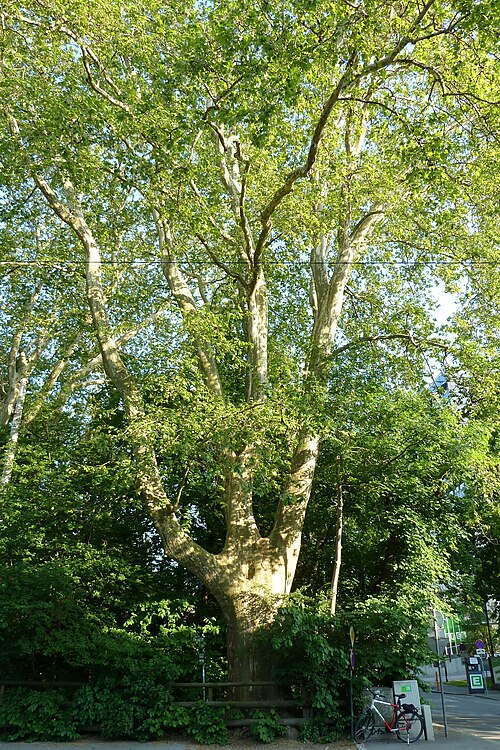
This oak and its neighbour forty metres down the hill were protected on the same day in July 1979, near-identical paperwork for two trees that turned out nothing alike: a 2015 field survey measured this one at 4.90 metres round, nearly double its neighbour's 2.80 metres, despite an address and a protection date that otherwise read like a matched pair. Nothing in either source explains the gap, whether one was planted decades before the other or simply grew faster on better ground, so this page states the measurement rather than guessing at a reason. It stands opposite house number 56 on Panoramagasse, a hillside street in Geidorf on the Ruckerlberg slope, on the public verge rather than inside any private plot, per the register's own wording. No published age exists for it and none is invented here; a girth this size on an oak usually means real age, but converting one into the other needs a cited growth-rate figure this pass did not have in hand, so the number stays a girth rather than becoming a guess.
In fruit
September to October: acorns drop, and a good mast year buries the ground in them
The line is our estimate of how much there is to see, not a measurement. Typical for this species where this tree stands; exact weeks shift with the year.
Opposite Panoramagasse 56, 8010 GrazYou can recognise it by being the larger of the two Panoramagasse oaks, 4.90 metres round, nearly double its neighbour's girth. It stands opposite house number 56, a minute's walk up the hill from the smaller tree.
Free, on public ground opposite the house number given
Bus toward Ruckerlberggurtel/Geidorf, then a walk up Panoramagasse; about a minute from the Panoramagasse Oak (No. 54).
Sources
Where the facts on this page come from.
- In the official register: Naturdenkmale Graz (Stadt Graz, Stadtvermessungsamt, open government data), no. 16
- Stadt Graz Naturdenkmale open-data register (geodaten.graz.at, CC BY 4.0), register_id 16
- de.wikipedia.org
- graz.at