Seasons1 of 4
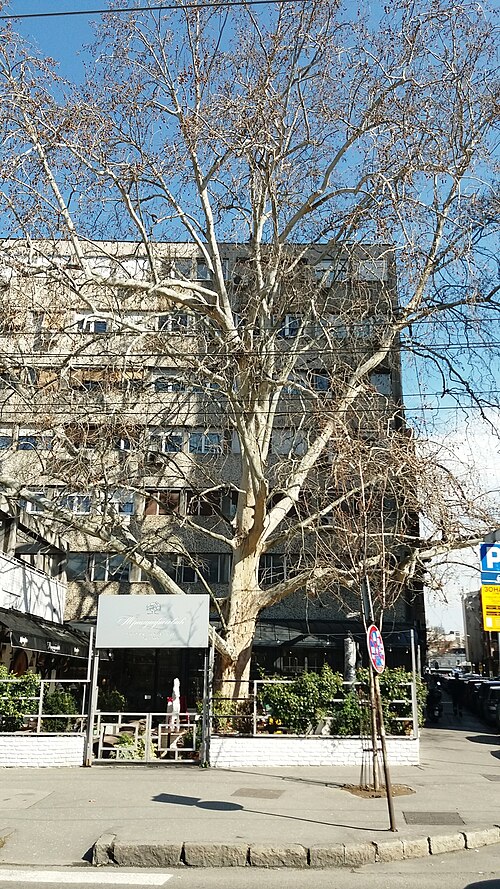
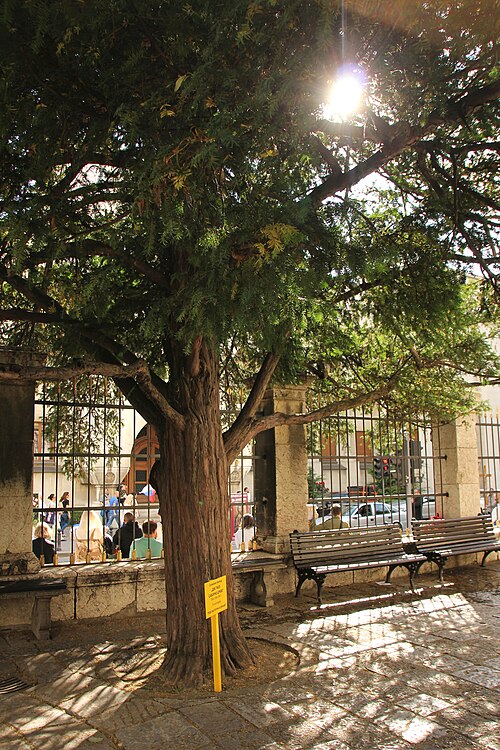
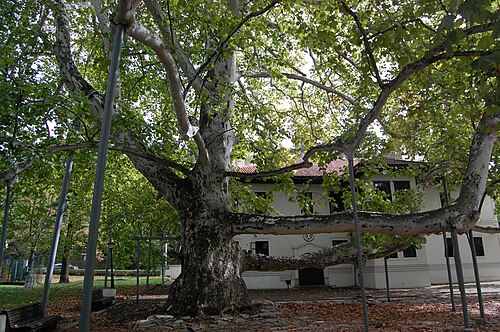
Belgrade's oldest protected natural monument stands on a market square, not in a forest or a palace garden. The pedunculate oak on Cvetni trg, in the Vračar district, is what is left of the oak and ash woodland that once covered this whole part of the city before Belgrade's 19th-century expansion cleared it for streets and a marketplace; virtually everything else that grew alongside it is gone, and this one tree carries the entire ecosystem's memory alone. It stands about 25 metres tall with a trunk 4 metres around, first protected in 1980 and reconfirmed in a 2001 review, its branches now held with steel cables against the ordinary damage of two centuries. Vračar itself grew up around the tree rather than the other way round. The oak was already old when the square took shape, and the streets, the market stalls and the apartment blocks all arranged themselves at a respectful distance from a trunk that outdates every building currently standing near it. It gets no palace, no royal legend, no famous name attached, just a metal fence, a protection order first signed in 1980, and roughly two centuries of continuous growth on a spot that could easily have gone under concrete instead.
From people who stood here
No notes yet
Did you visit the tree? Leave a note for the next visitor.
Getting there
Cvetni trg, Njegoševa ulica, Vračar, Belgrade
You can recognise it by the trunk, 4 metres round with branches held by steel cables, the last survivor of the woodland the square replaced. It stands in the middle of Cvetni trg.
Free, public square, viewable anytime
Vračar district, Njegoševa ulica; about a 15 minute walk from Slavija Square
In fruit
acorns drop, and a good mast year buries the ground in them
The line is our estimate of how much there is to see, not a measurement. Typical for this species where this tree stands; exact weeks shift with the year.
Sources
Where the facts on this page come from. The story was written with AI from these sources, and readers who know the tree correct it.