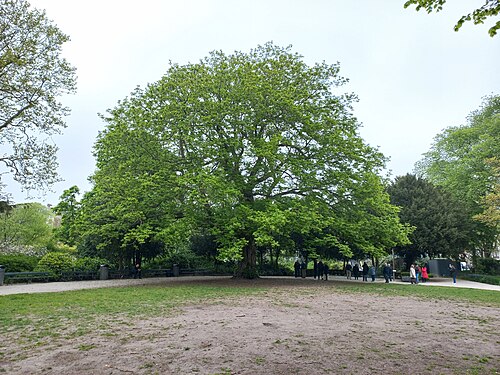
The Heimanseik
NetherlandsAmsterdamPlantage, Amsterdam-Centrum
You need a ticket to see this treePaid entry, part of Artis zoo and botanical garden
Amsterdam's oldest tree spent its first ninety years alone. This pedunculate oak took root around 1750, nearly a century before Artis existed at all, in a patch of land that later became a zoo built around it rather than the other way round. It is the one tree in the park older than the institution itself, a genuine relic wearing a visitor wristband it never applied for. Orangutans once used its lower limbs as a climbing frame during outdoor play, before keepers decided a 275-year-old oak deserved a rest from primates swinging off its branches. It is named after Eli Heimans, the schoolteacher-naturalist who wrote about it in 1903 and helped make unglamorous urban nature a subject worth admiring in its own right. His name stuck to the tree the way ivy sticks to a wall. Two fungi now grow in its trunk, common enough in oaks this age, and arborists check it every year to judge how much longer the trunk can be trusted to stand. Summer oaks can live seven centuries, so at 275 this one is, technically, still young. Amsterdam's ground rarely lets anything get that far.
In fruit
acorns drop, and a good mast year buries the ground in them
The line is our estimate of how much there is to see, not a measurement. Typical for this species where this tree stands; exact weeks shift with the year.
Artis Park, Plantage Kerklaan 38-40, 1018 CZ AmsterdamThe one tree in Artis older than the zoo itself: a pedunculate oak 3.9 metres round, with two bracket fungi growing in the trunk.
Tram 14, Artis stop, directly adjacent
Sources
Where the facts on this page come from.
- In the official register: Landelijk Register Monumentale Bomen (Bomenstichting), no. 1693793
- artis.nl
- oost-online.nl
- openstreetmap.org