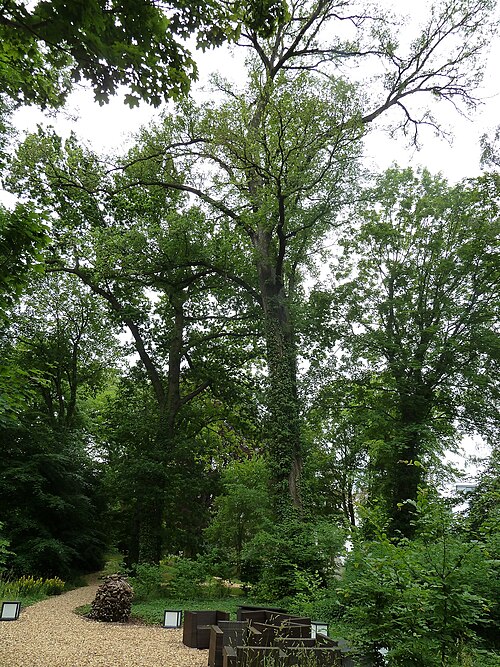
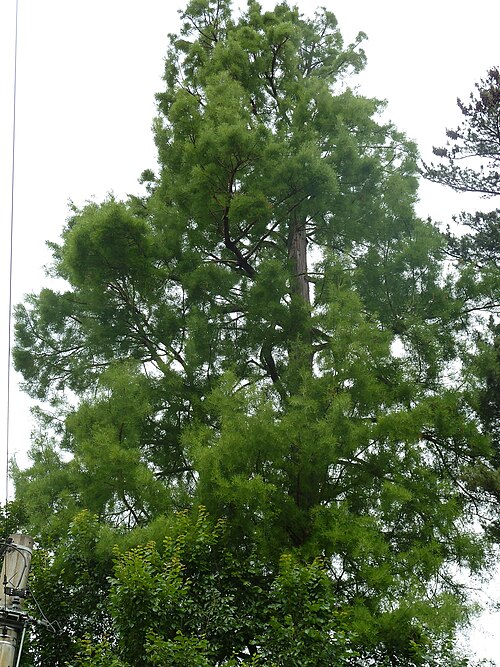
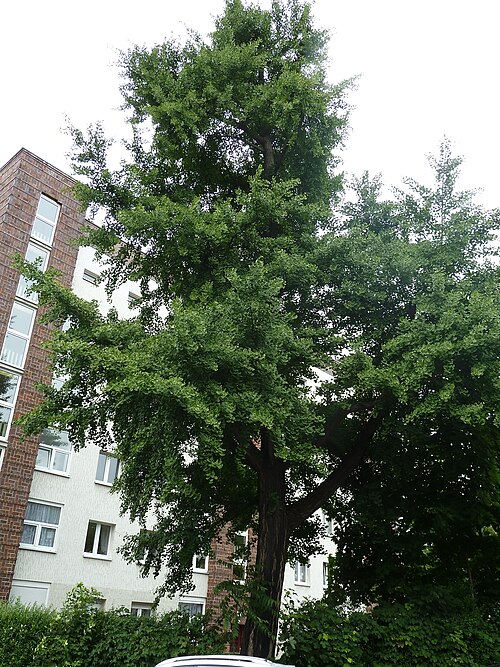
A pedunculate oak on Kaethe-Kollwitz-Strasse, named for the Leipzig-connected printmaker and sculptor, carries Leipzig's Naturdenkmal protection under the same 1996 resolution as six other trees on this page. Its protected root zone runs 23 metres across, evidence of real size even without a recorded girth or age. Pedunculate oak is the common oak of northern European streets and parks, named for the short stalk, the peduncle, that carries its acorns clear of the twig, unlike the stalkless acorns of its close relative the sessile oak. Under German municipal protection it will now outlive the street around it by design rather than by accident. It stands about a kilometre northeast of the Karl-Heine-Strasse cluster, close enough to fold into the same outing. A pedunculate oak this size is also feeding a small ecosystem nobody sees from the pavement: the species supports more insect life than almost any other tree native to Britain and central Europe, from gall wasps that shape its acorns into hard, marble-sized growths to the moth caterpillars that keep every tit and warbler in the neighbourhood fed each spring.
In fruit
September to October: acorns drop, and a good mast year buries the ground in them
The line is our estimate of how much there is to see, not a measurement. Typical for this species where this tree stands; exact weeks shift with the year.
Kaethe-Kollwitz-Strasse 62, 04109 LeipzigYou can recognise it by its acorns carried clear of the twig on a short stalk, unlike the stalkless acorns of a sessile oak. It stands behind a villa garden wall on Kaethe-Kollwitz-Strasse.
Visible from Kaethe-Kollwitz-Strasse, behind a villa garden wall; public access to the grounds is not confirmed
Karl-Heine-Strasse tram (lines 3/N3) or S-Bahn Leipzig MDR, then a short walk
Sources
Where the facts on this page come from.
- In the official register: Naturdenkmale der Stadt Leipzig (Verordnung 601/96), no. ND 67
- de.wikipedia.org
- wikidata.org