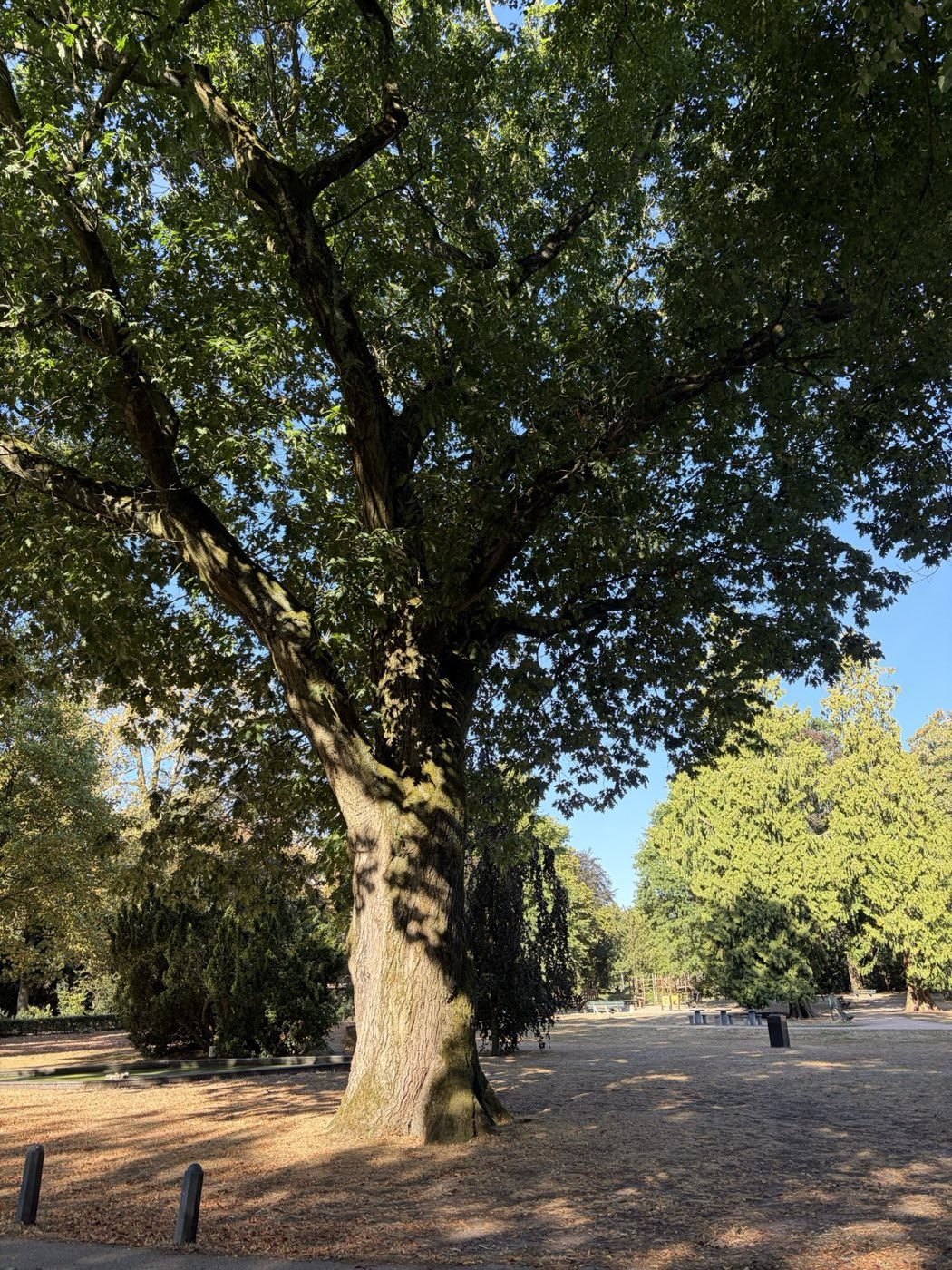
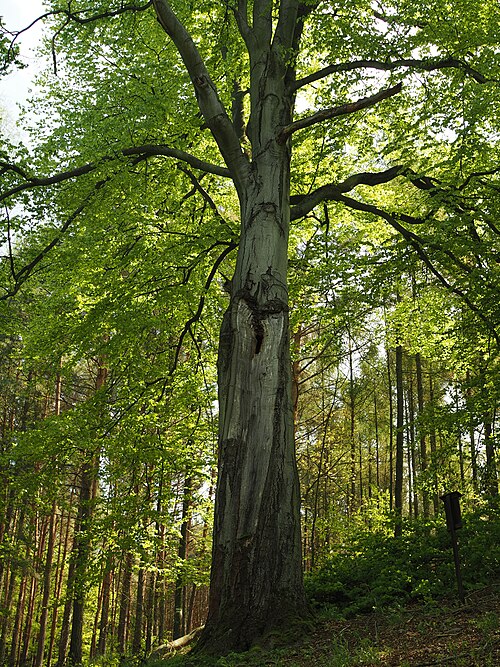
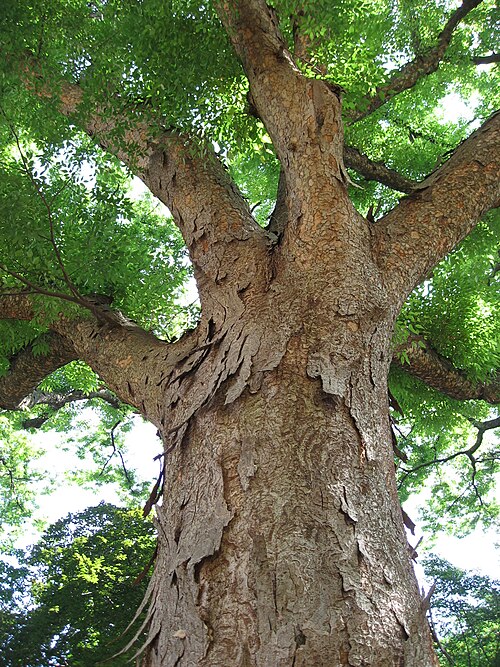
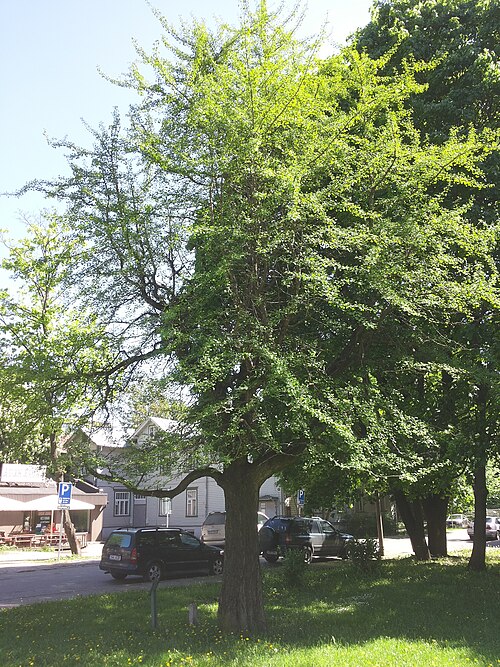
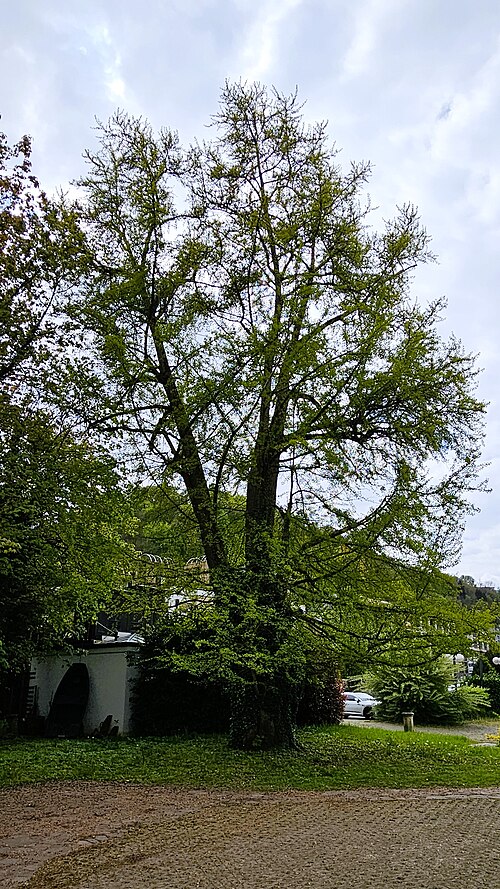
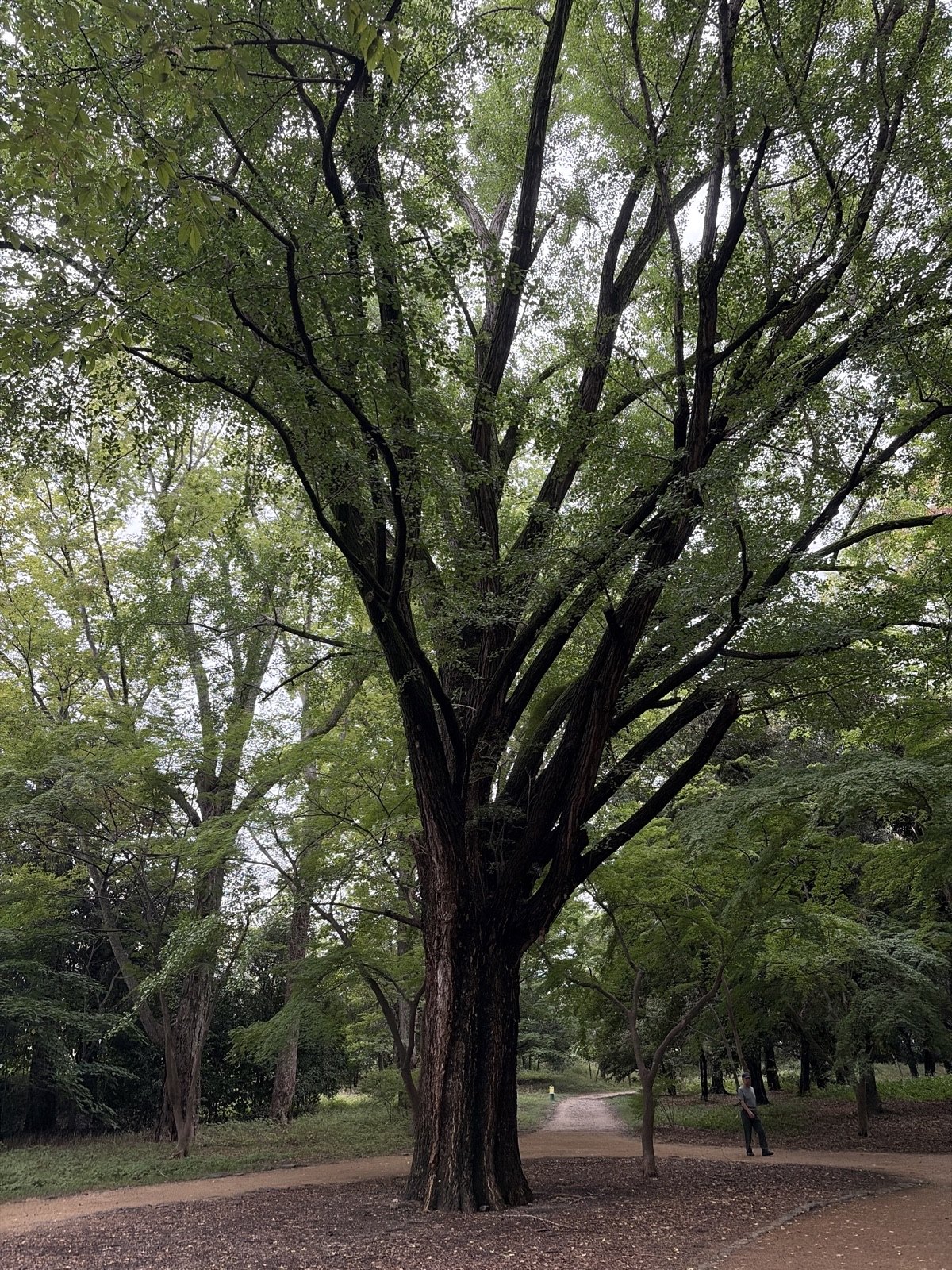
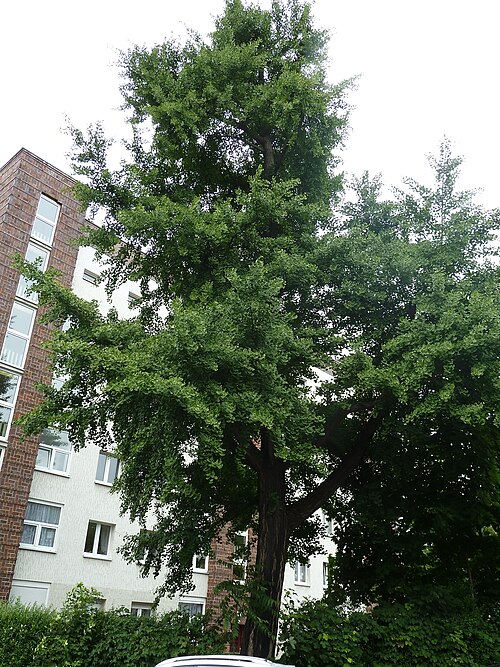
Home › Collections › Autumn Worth the Trip Autumn Worth the Trip Autumn is the one thing a tree does that you can put a date on. A yew looks much the same in April as in November, but a ginkgo drops a whole crown of gold in about a fortnight, and if you miss the fortnight you wait a year. This page ranks every tree we map that is worth going to see for its colour, grouped by the month it turns, so the question it answers is which weekend rather than which tree. The weeks move with the weather and with how far north you are: a Copenhagen beech and a Naples one do not turn together, and a warm October can hold the leaves three weeks longer than the average. Most of them sit in October. Each tree's own page says what it actually does.
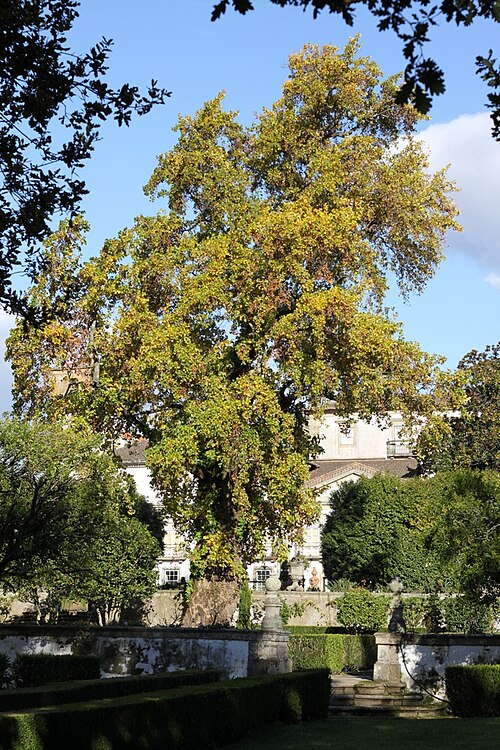
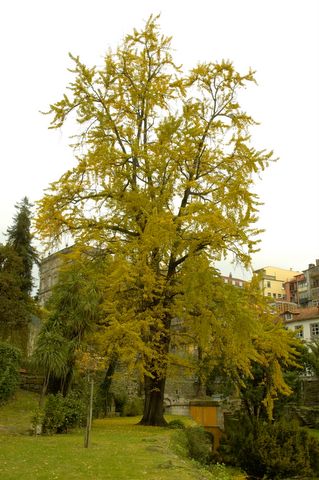
September (6) Photo: Adelino Manuel Pinhe… (CC BY-SA 3.0)
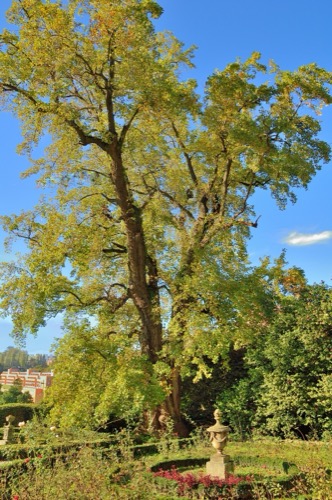
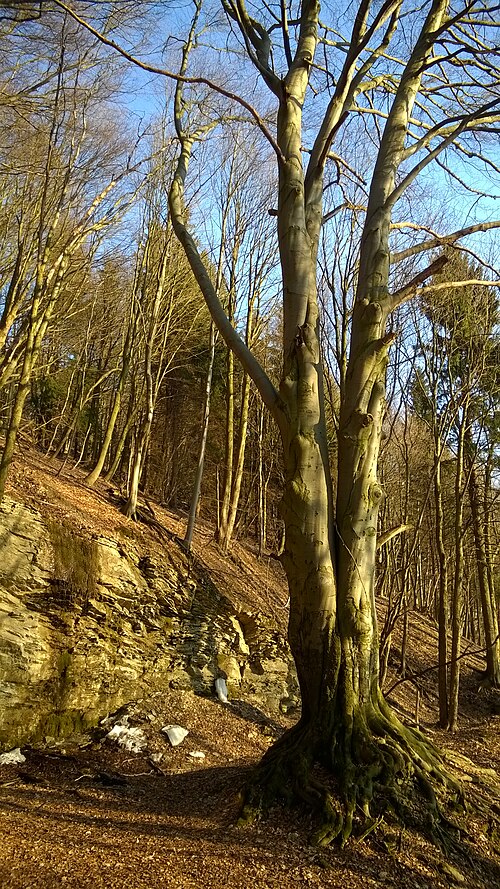
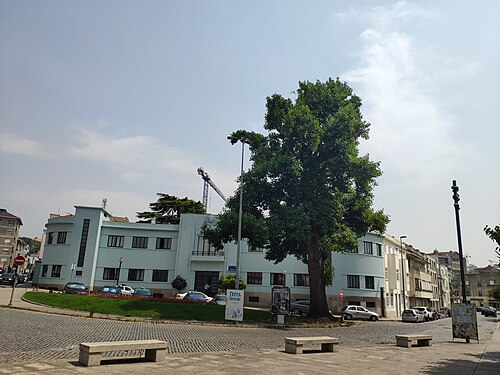
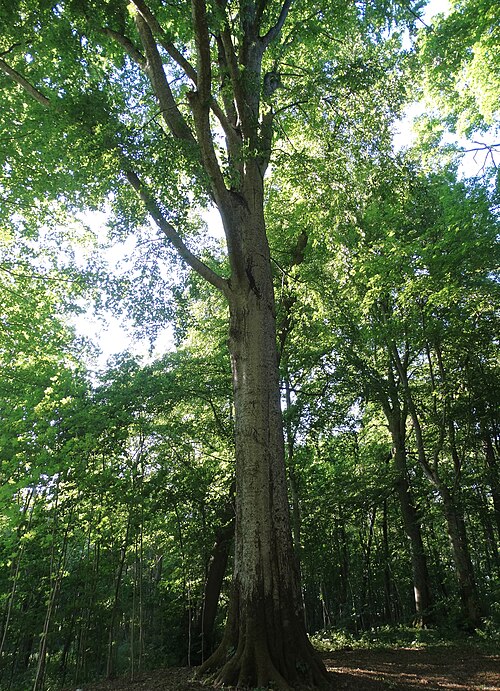
Tulip Tree (Liriodendron tulipifera) · roughly 285 years · UF Braga (Maximinos, Se e Cividade)
September to October: clear yellow, one of the most reliable autumn trees.
Read more and get directions →
Braga →
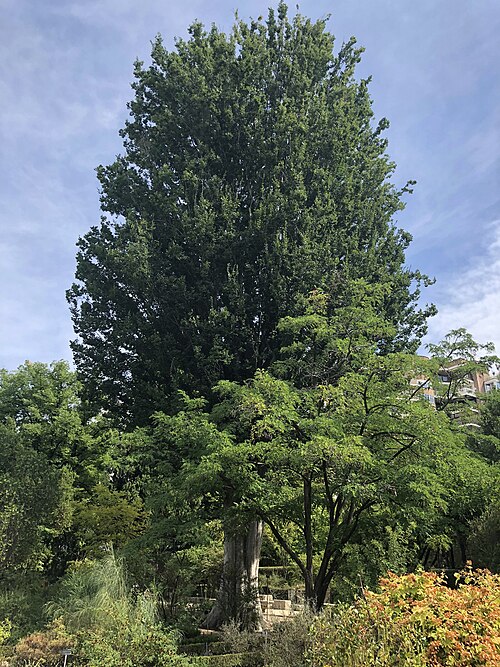
Photo: EnriqueSN (CC BY-SA 4.0)
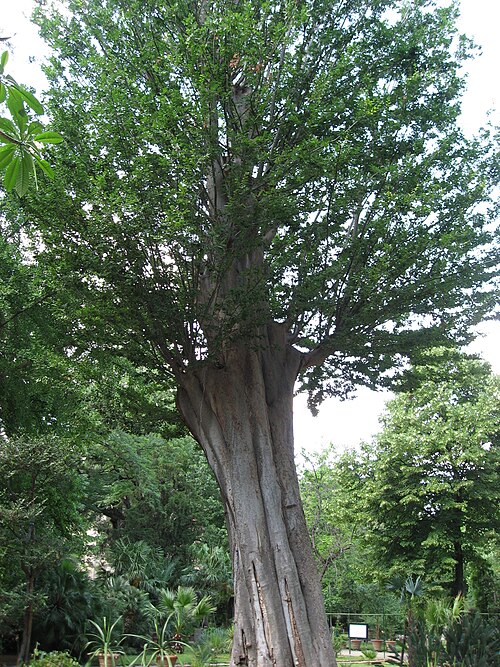
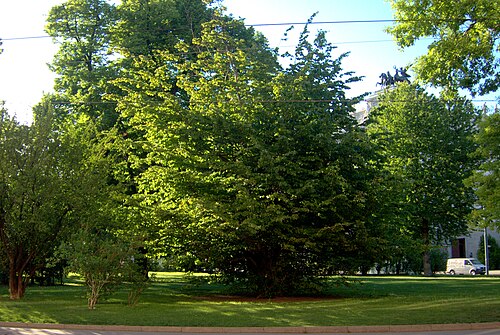
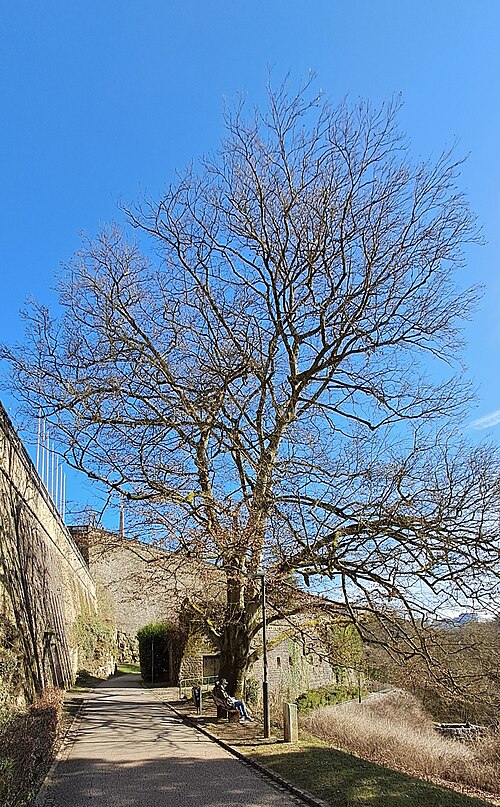
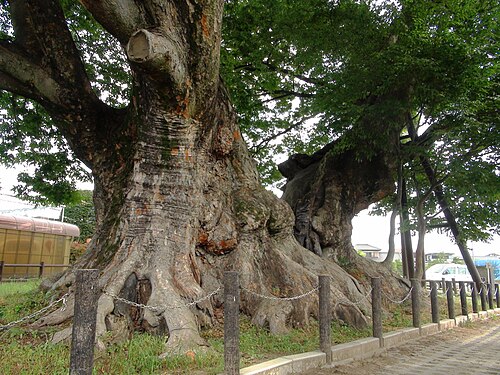
Caucasian Elm (Zelkova carpinifolia) · about 200 years · Retiro, near the Prado
September to October: the whole crown turns orange-brown, the tree's best-known moment after its shape.
Read more and get directions →
Madrid →
Caucasian Elm (Zelkova carpinifolia) · roughly 175 years, possibly older · Capitol Hill / National Mall (Union Square)
September to October: the whole crown turns orange-brown, the tree's best-known moment after its shape.
Read more and get directions →
Washington DC →
Tulip Tree (Liriodendron tulipifera) · roughly 135-150 years · Capitol Hill
September to October: clear yellow, one of the most reliable autumn trees.
Read more and get directions →
Washington DC →
Caucasian Elm (Zelkova carpinifolia) · undated, no planting record found · Ciutat Vella
September to October: the whole crown turns orange-brown, the tree's best-known moment after its shape.
Read more and get directions →
Valencia →
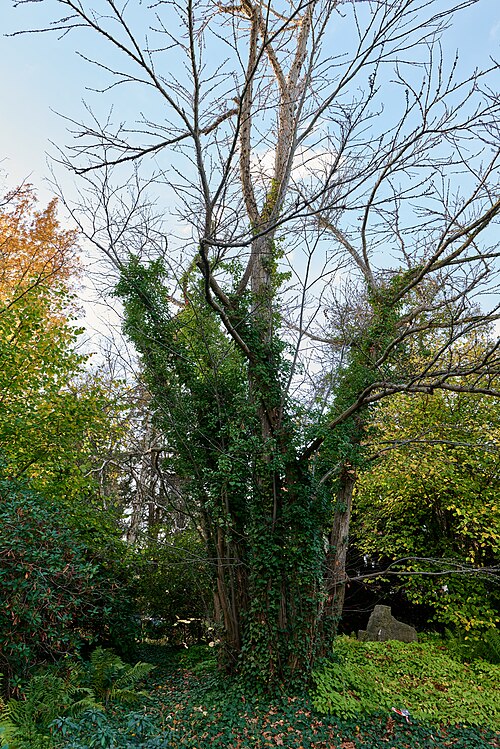
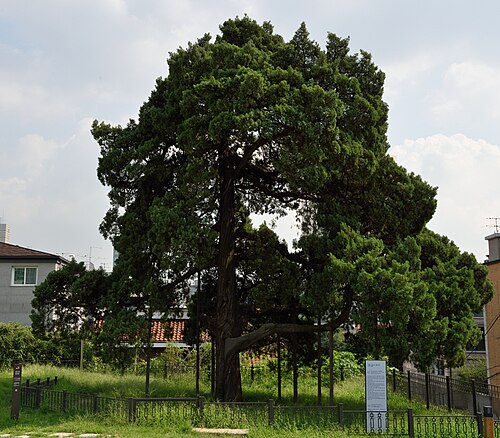
Quaking Aspen (Populus tremuloides) · estimated thousands of years (a single precise figure is disputed) · the Old Spanish Trailhead parking area, where the Lakeshore National Recreation Trail runs a spur directly through the Pando clone
Late September into early October, when every stem turns gold in the same week.
Read more and get directions →
Fish Lake, Utah →
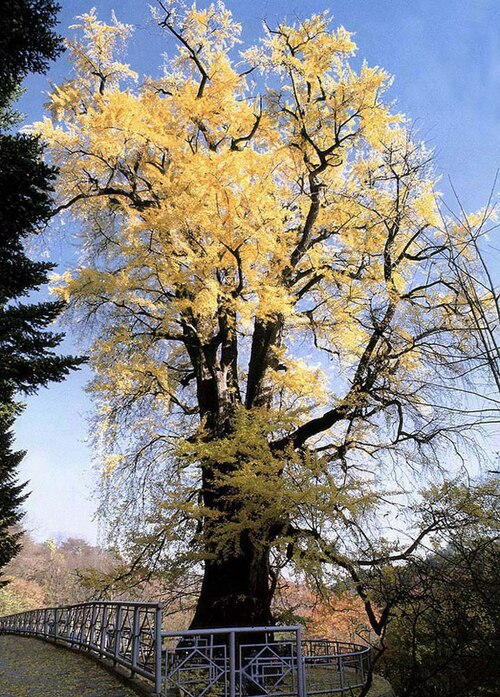
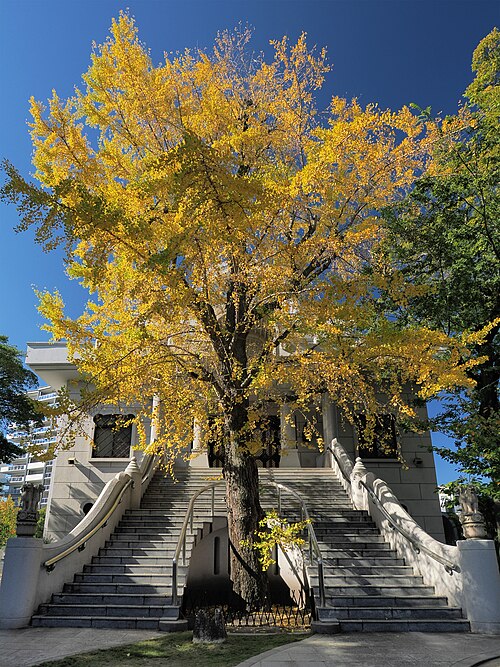
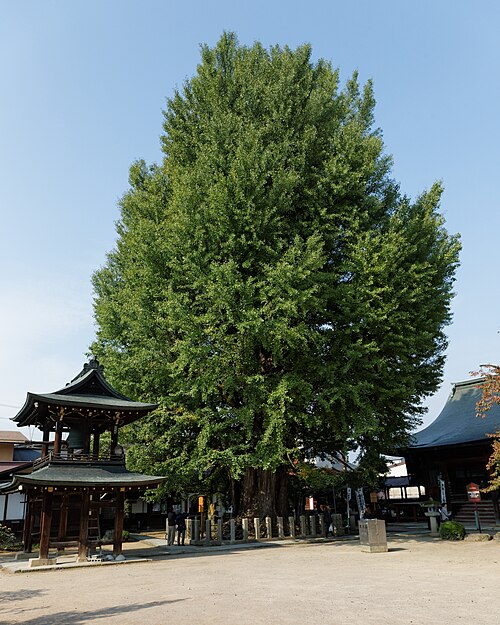
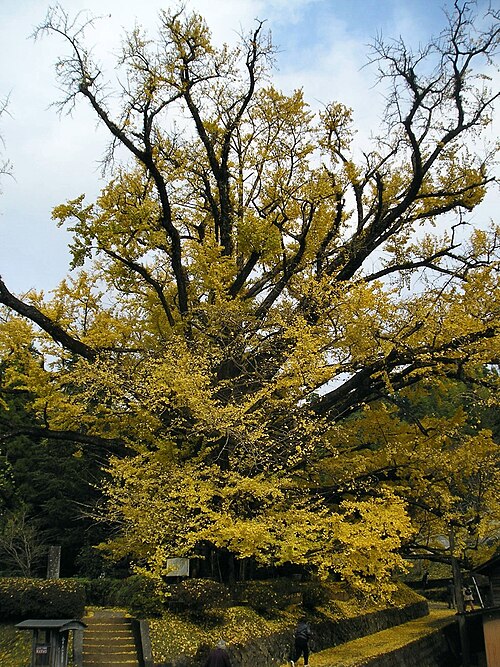
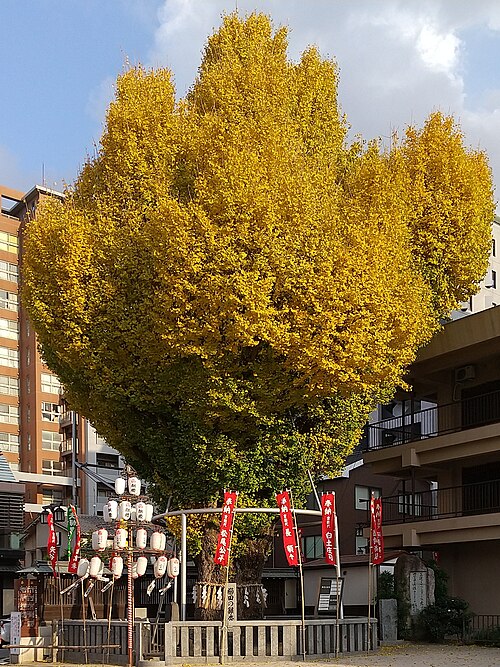
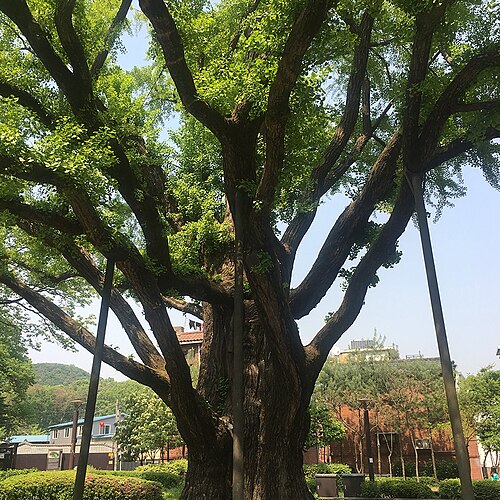
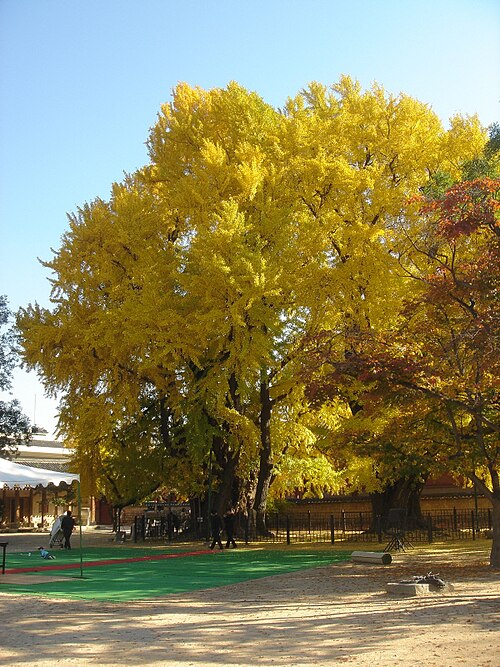
October (159) Ginkgo (Ginkgo biloba) · roughly 1,100 years · Yongmunsan (Mount Yongmun), Yongmun-myeon, Yangpyeong-gun
Late October into early November, when the whole crown goes gold.
Read more and get directions →
Yangpyeong →
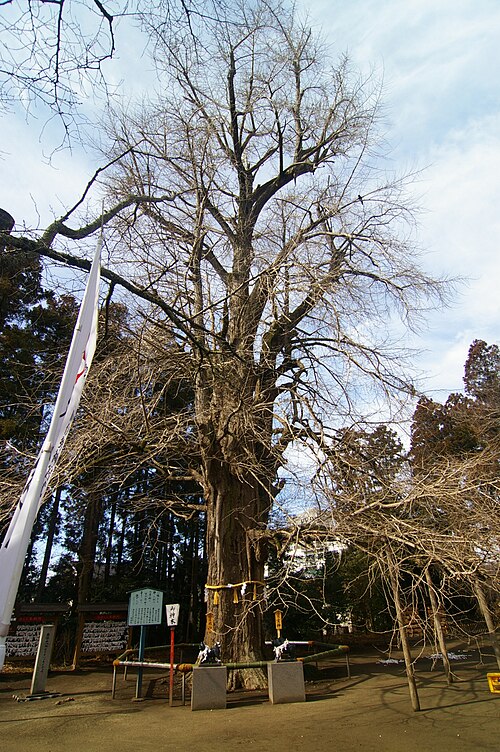
Katsura (Cercidiphyllum japonicum) · roughly 1,300 years · Takasu
October and November, when the leaves turn butter yellow and the fallen ones smell of burnt sugar.
Read more and get directions →
Okuizumo →
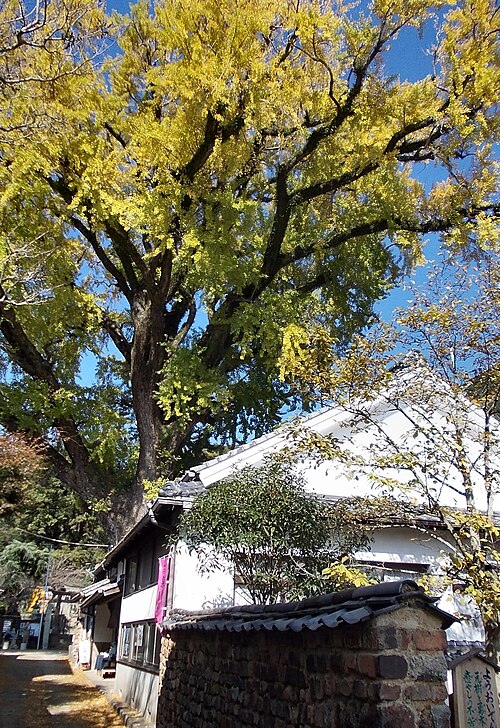
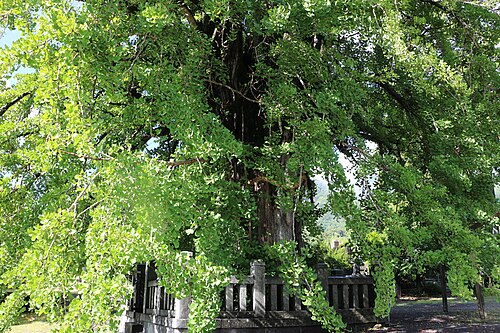
Ginkgo (Ginkgo biloba) · about 900 years · Bodaiji Temple, Mount Nagi
October: the whole crown turns butter gold, then drops in a day or two.
Read more and get directions →
Nagi →
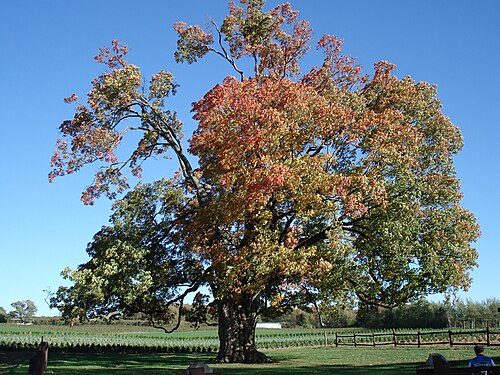
Photo: Mac Armstrong (CC BY-SA 2.0)
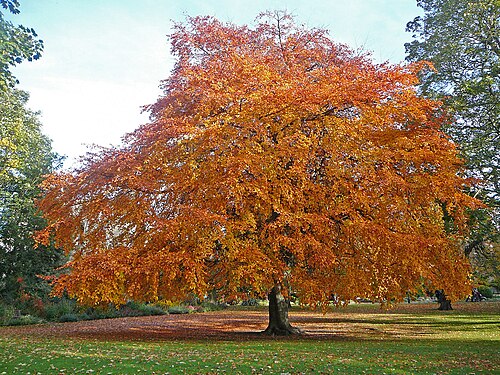
Sugar Maple (Acer saccharum) · roughly 400-500 years · North Pelham / Fenwick, Niagara region
October, when a sugar maple this size turns the whole field orange.
Read more and get directions →
Pelham →
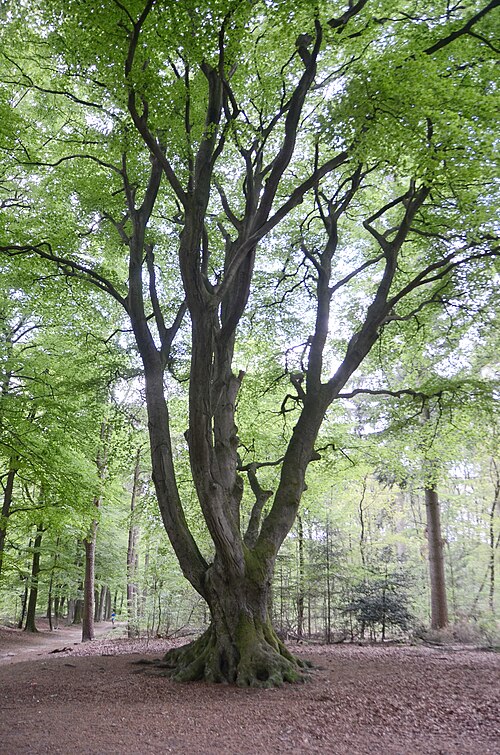
European Beech (Fagus sylvatica) · 350 to 450 years · Msecke Zehrovice, Rakovnik District, Central Bohemia
October to November: copper and russet, and young trees keep dead leaves all winter.
Read more and get directions →
Msecke Zehrovice →
Photo: Michael J. Papay (CC BY)
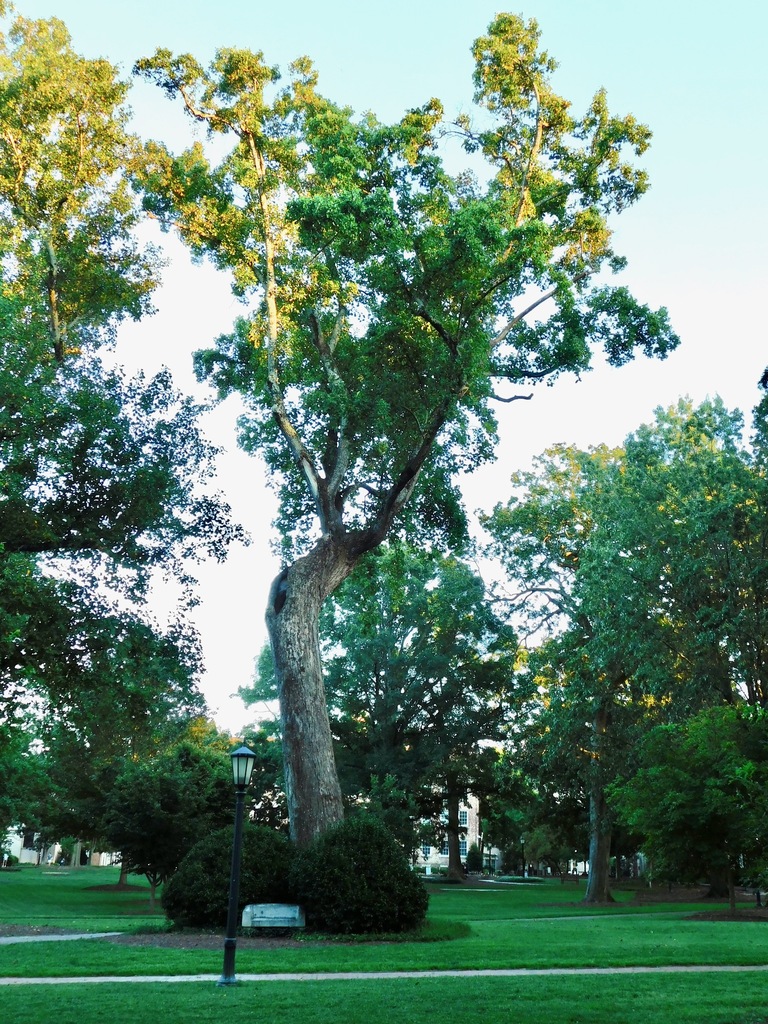
Tulip Tree (Liriodendron tulipifera) · roughly 300 to 375 years · McCorkle Place, the university's oldest quad, on public campus grounds
Late October, when the crown turns clear yellow over the quad.
Read more and get directions →
Chapel Hill, North Carolina →
Tulip Tree (Liriodendron tulipifera) · about 310 years · Academiewijk
October to November: clear yellow, one of the most reliable autumn trees.
Read more and get directions →
Leiden →
Copper Beech (Fagus sylvatica f. purpurea) · roughly 275 to 325 years, from the register's planting band of 1700 to 1750 · Stratum
October, when the purple burns through to copper.
Read more and get directions →
Eindhoven →
Photo: Paulo V. Araujo, Dias com Arvores
Tulip Tree (Liriodendron tulipifera) · 250+ years · Massarelos
Clear yellow, one of the most reliable autumn trees.
Read more and get directions →
Porto →
European Beech (Fagus sylvatica) · 275 years · Brakkenstein
October and November, when the beech leaves turn copper before they fall.
Read more and get directions →
Nijmegen →
Northern Red Oak (Quercus rubra) · over 250 years · Parc des Champs-de-Bataille / Plains of Abraham, Montcalm
October, when the red oaks on the plain turn and hold their colour for weeks.
Read more and get directions →
Quebec City →
European Beech (Fagus sylvatica) · over 230 years · Haarlemmerhout
October to November: copper and russet, and young trees keep dead leaves all winter.
Read more and get directions →
Haarlem →
Copper Beech (Fagus sylvatica f. purpurea) · roughly 225 to 275 years, from the register's planting band of 1750 to 1800 · Nieuw-Schoonebeek
October, when the purple turns copper.
Read more and get directions →
Emmen →
Photo: Aktron (CC BY 3.0)
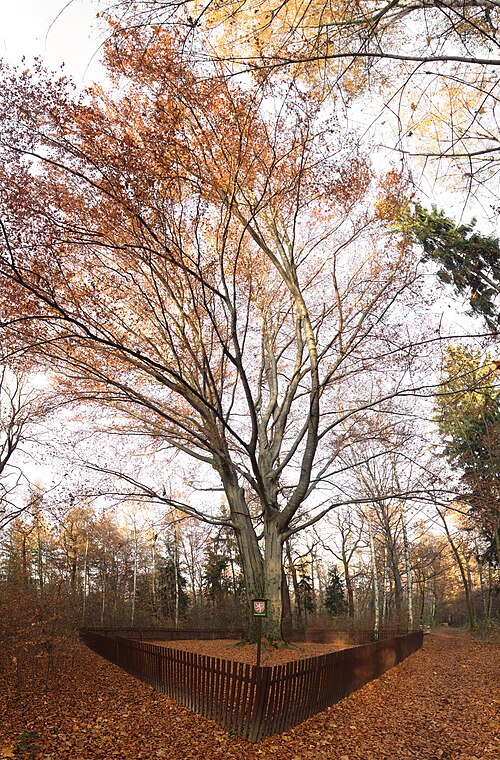
European Beech (Fagus sylvatica) · roughly 235 years · Liboc, Praha 6
October to November: copper and russet, and young trees keep dead leaves all winter.
Read more and get directions →
Prague →
Tulip Tree (Liriodendron tulipifera) · around 210 years · Angerenstein
October and November, when 37 metres of crown turns clear yellow.
Read more and get directions →
Arnhem →
Copper Beech (Fagus sylvatica f. purpurea) · roughly 205 to 215 years, from the register's planting band of 1810 to 1820 · Het Loo
October, when the purple turns to copper.
Read more and get directions →
Apeldoorn →
Photo: Lubor Ferenc (CC BY-SA 3.0)
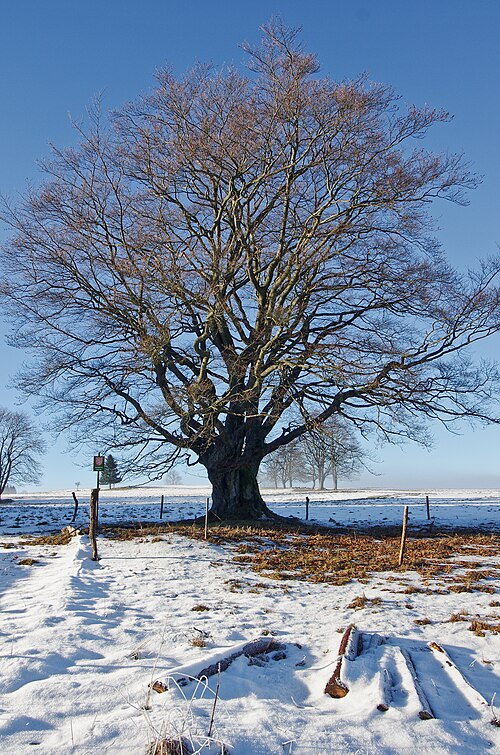
European Beech (Fagus sylvatica) · roughly 250 years · Lazy, Cheb District, Karlovy Vary Region
October, when the last standing half turns copper on an open hillside.
Read more and get directions →
Lazy →
Photo: MartinVeselka (CC BY-SA 4.0)
European Beech (Fagus sylvatica) · roughly 200 to 350 years, judged from a trunk 5 m round · Padouchov, Proseč pod Ještědem, Liberec Region
October to November: copper and russet, and young trees keep dead leaves all winter.
Read more and get directions →
Prosec pod Jestedem →
Northern Red Oak (Quercus rubra) · an enthusiast's estimate of around 250 years, unconfirmed · Hartmannshofen, Moosach
October, when the red oak's leaves turn deep red.
Read more and get directions →
Munich →
Copper Beech (Fagus sylvatica f. purpurea) · roughly 205 years, from the park's documented replanting of 1822 · De Worp
Late October, when the purple burns through to copper.
Read more and get directions →
Deventer →
Photo: Henk Monster (CC BY 3.0)
European Beech (Fagus sylvatica) · roughly 195 to 205 years, from the register's planting band of 1820 to 1830 · Edese bos
October, when it turns copper against the dark conifers.
Read more and get directions →
Ede →
European Beech (Fagus sylvatica) · about 200 years · Haagse Hout
Late October into November, when the beech turns copper and keeps it for weeks.
Read more and get directions →
The Hague →
Northern Red Oak (Quercus rubra) · roughly 200 years · Long Branch
Late October, when the crown turns the deep red it is named for.
Read more and get directions →
Toronto →
European Beech (Fagus sylvatica) · roughly 185 to 195 years, from the register's planting band of 1830 to 1840 · Wageler
October, when the whole crown goes copper.
Read more and get directions →
Enschede →
European Beech (Fagus sylvatica) · roughly 190 years, from a registered planting date around 1840
October to November: copper and russet, and young trees keep dead leaves all winter.
Read more and get directions →
Roosendaal →
Copper Beech (Fagus sylvatica f. purpurea) · roughly 185 to 195 years, from the register's planting band of 1830 to 1840 · 't Zand
October, when the purple turns copper.
Read more and get directions →
Amersfoort →
European Beech (Fagus sylvatica) · roughly 190 years, from a registered planting date around 1840 · Leidschendam-Voorburg
Late October into November, when the green crown turns copper beside the purple ones.
Read more and get directions →
The Hague →
European Beech (Fagus sylvatica) · about 190 years, and the register's own note puts it loosely in the first half of the 19th century · Benoordenhout
October to November: copper and russet, and young trees keep dead leaves all winter.
Read more and get directions →
The Hague →
Photo: Line1 (CC BY-SA 3.0)
Caucasian Elm (Zelkova carpinifolia) · about 199 years, planted 1827 · San Marco
October to November: the whole crown turns orange-brown, the tree's best-known moment after its shape.
Read more and get directions →
Florence →
Caucasian Elm (Zelkova carpinifolia 'James Gordon') · 195 years · Royal Victoria Park
The whole crown turns orange-brown, the tree's best-known moment after its shape.
Read more and get directions →
Bath →
Pin Oak (Quercus palustris) · roughly 180-190 years · Frederikspark
Late October into November, when it goes scarlet and holds it for weeks.
Read more and get directions →
Haarlem →
European Beech (Fagus sylvatica) · roughly 175 to 185 years, from the register's planting band of 1840 to 1850 · Prinsentuin
October to November: copper and russet, and young trees keep dead leaves all winter.
Read more and get directions →
Leeuwarden →
European Beech (Fagus sylvatica) · roughly 175 to 350 years, judged from a trunk 4.65 m round · Monte Bondone (above Sopramonte and Candriai)
October, when the beech turns copper and the pasture around it goes brown.
Read more and get directions →
Trento →
Weeping Beech (Fagus sylvatica 'Pendula') · about 180 years · Westend-Süd
Late October and November, when the hall of leaves under it turns copper before it comes down.
Read more and get directions →
Frankfurt →
Photo: Polymagou (CC BY-SA 4.0)
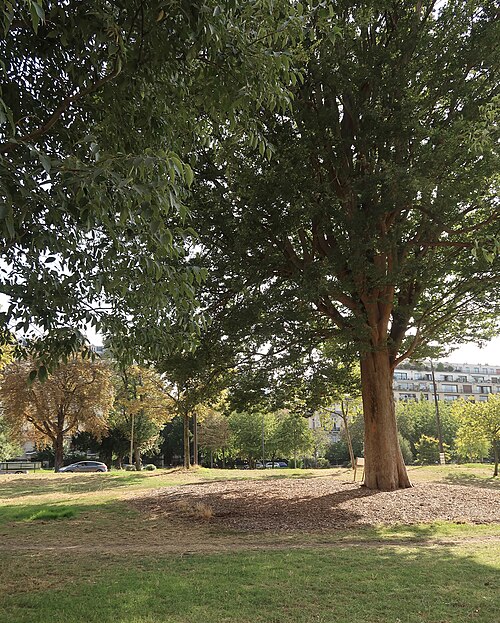
Caucasian Elm (Zelkova carpinifolia) · 175 years · 16th arrondissement
October to November: the whole crown turns orange-brown, the tree's best-known moment after its shape.
Read more and get directions →
Paris →
European Beech (Fagus sylvatica) · documented planting in 1843, roughly 180 years old · Tegel, Reinickendorf
October to November: copper and russet, and young trees keep dead leaves all winter.
Read more and get directions →
Berlin →
Caucasian Elm (Zelkova carpinifolia) · roughly 165-215 years · Glasnevin
The whole crown turns orange-brown, the tree's best-known moment after its shape.
Read more and get directions →
Dublin →
European Beech (Fagus sylvatica) · ~170 years · Statenbolwerk
October to November: copper and russet, and young trees keep dead leaves all winter.
Read more and get directions →
Haarlem →
European Larch (Larix decidua) · about 175 years (planted 1849) · Degsnė Forest, Nemuno Loops Regional Park
Late October, when the larch turns gold and drops its needles.
Read more and get directions →
Degsne →
Northern Red Oak (Quercus rubra) · roughly 175 years · Pekingtuin, village centre, near Baarn railway station
Late October and November, when a red oak's leaves turn scarlet.
Read more and get directions →
Baarn →
Turkey Oak (Quercus cerris) · roughly 155 to 190 years · Binnenstad / Geertebolwerk
October, when the mossy acorns drop and the foliage turns.
Read more and get directions →
Utrecht →
European Beech (Fagus sylvatica) · roughly 155 to 165 years, from the register's planting band of 1860 to 1870 · Prinsentuin
October, when it turns copper and the litter goes orange.
Read more and get directions →
Leeuwarden →
Copper Beech (Fagus sylvatica f. purpurea) · roughly 155 to 165 years, from the register's planting band of 1860 to 1870 · Van Nahuysplein
Late October, when it turns burnt copper.
Read more and get directions →
Zwolle →
Copper Beech (Fagus sylvatica f. purpurea) · roughly 156 to 166 years, from the register's planting band of 1860 to 1870 · Zonnehof
October, when the copper deepens toward black before the leaves drop.
Read more and get directions →
Amersfoort →
European Beech (Fagus sylvatica) · roughly 155 to 165 years, from the register's planting band of 1860 to 1870 · Eekhout
October to November: copper and russet, and young trees keep dead leaves all winter.
Read more and get directions →
Zwolle →
Pin Oak (Quercus palustris) · roughly 155 to 165 years, from the register's planting band of 1860 to 1870 · Oranjepark
Late October, when it turns scarlet.
Read more and get directions →
Apeldoorn →
Northern Red Oak (Quercus rubra) · roughly 155 to 165 years, from the register's planting band of 1860 to 1870 · Boschwijk
Late October, when it goes scarlet.
Read more and get directions →
Zwolle →
Northern Red Oak (Quercus rubra) · roughly 160 years, from a registered planting date around 1870
October, when the crown turns deep brick red.
Read more and get directions →
Sittard-Geleen →
Northern Red Oak (Quercus rubra) · roughly 155 to 165 years, from the register's planting band of 1860 to 1870 · Wilhelminapark
October, when it goes properly red.
Read more and get directions →
Apeldoorn →
European Beech (Fagus sylvatica) · roughly 160 years, from a registered planting date around 1870 · Leidschendam-Voorburg
October to November: copper and russet, and young trees keep dead leaves all winter.
Read more and get directions →
The Hague →
European Beech (Fagus sylvatica) · about 160 years · Jekerdal
October to November: copper and russet, and young trees keep dead leaves all winter.
Read more and get directions →
Maastricht →
Weeping Beech (Fagus sylvatica 'Pendula') · roughly 155 to 165 years · Heinkenszand, Zeeland
October, when the hanging curtain turns copper.
Read more and get directions →
Heinkenszand →
Ginkgo (Ginkgo biloba) · around 156 years · Toyen
October, when its fan-shaped leaves turn brilliant yellow.
Read more and get directions →
Oslo →
European Beech (Fagus sylvatica) · roughly 150 to 300 years, judged from a trunk 4.19 m round · Kitsilano (Dunbar Street near West 1st/2nd Avenue)
Late October into November, when the crown turns copper and russet.
Read more and get directions →
Vancouver →
Photo: Tomáš Merta (CC BY-SA 4.0)
European Beech (Fagus sylvatica) · roughly 150 to 300 years, judged from a trunk 4.15 m round · Mcely, Nymburk District, Central Bohemian Region
October to November: copper and russet, and young trees keep dead leaves all winter.
Read more and get directions →
Mcely →
European Beech (Fagus sylvatica) · roughly 150 to 200 years · Blarney
October to November: copper and russet, and young trees keep dead leaves all winter.
Read more and get directions →
Cork →
European Beech (Fagus sylvatica) · ~180 years · Oliwa
October to November: copper and russet, and young trees keep dead leaves all winter.
Read more and get directions →
Gdansk →
European Beech (Fagus sylvatica) · roughly 150-160 years · Binnenstad-Noord
October to November: copper and russet, and young trees keep dead leaves all winter.
Read more and get directions →
Groningen →
Katsura (Cercidiphyllum japonicum) · roughly 148 years (seed arrived 1878) · Meadow Road, Arnold Arboretum, Jamaica Plain
October, when the falling leaves turn apricot gold and smell of burnt sugar.
Read more and get directions →
Boston →
Copper Beech (Fagus sylvatica f. purpurea) · roughly 145 to 155 years, from the register's planting band of 1870 to 1880 · Horst
October, when the purple turns copper.
Read more and get directions →
Helmond →
European Beech (Fagus sylvatica) · roughly 150 years · Liboc, Praha 6
October to November: copper and russet, and young trees keep dead leaves all winter.
Read more and get directions →
Prague →
European Beech (Fagus sylvatica) · roughly 136 to 146 years, from the register's planting band of 1880 to 1890 · Diaconessenpark
October to November: copper and russet, and young trees keep dead leaves all winter.
Read more and get directions →
Leeuwarden →
European Beech (Fagus sylvatica) · roughly 140 years, from a registered planting date around 1890
October to November: copper and russet, and young trees keep dead leaves all winter.
Read more and get directions →
Oss →
Copper Beech (Fagus sylvatica f. purpurea) · roughly 135 to 145 years, from the register's planting band of 1880 to 1890 · Zonnehof
Late October, at full colour.
Read more and get directions →
Amersfoort →
Ginkgo (Ginkgo biloba) · roughly 140-145 years · Frederiksberg C
Late October into November, when it turns gold and drops the whole crown within a week.
Read more and get directions →
Copenhagen →
Photo: Line1 (CC BY-SA 3.0)
Saw-leaf Zelkova (Zelkova serrata) · 135 years, planted 1891 · San Marco
October and November, when the leaves turn orange and rust.
Read more and get directions →
Florence →
European Beech (Fagus sylvatica) · around 130 years · Utrechtseweg
October to November: copper and russet, and young trees keep dead leaves all winter.
Read more and get directions →
Arnhem →
Copper Beech (Fagus sylvatica f. purpurea) · roughly 130 years, from a registered planting date around 1900
October, when the purple turns copper.
Read more and get directions →
Assen →
Pin Oak (Quercus palustris) · roughly 130 years, from a registered planting date around 1900 · Villapark
October, when the finely cut leaves turn reddish-bronze and hold on through much of winter.
Read more and get directions →
Eindhoven →
European Beech (Fagus sylvatica) · roughly 120 to 150 years · Forêt de Roumare, D351 between Canteleu and Sahurs
October to November: copper and russet, and young trees keep dead leaves all winter.
Read more and get directions →
Rouen →
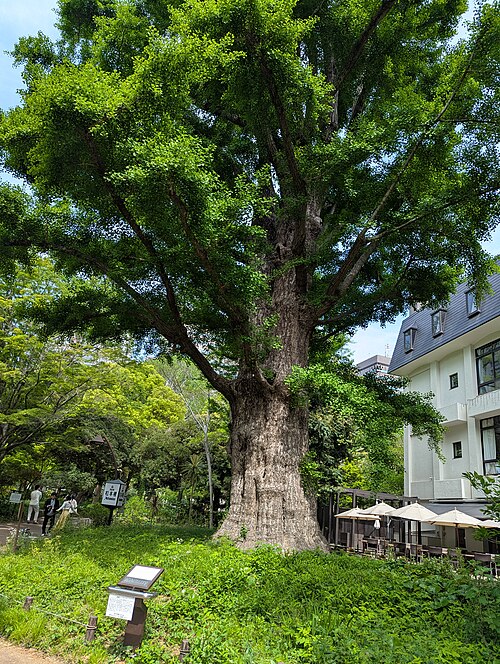
Ginkgo (Ginkgo biloba) · roughly 134 years · Downtown / McGill campus
Late October, when the whole crown turns gold and drops within days.
Read more and get directions →
Montreal →
European Beech (Fagus sylvatica) · roughly 120 to 150 years · Foret Verte, near Bois-Guillaume
Late October into November, when the whole group turns copper in the same fortnight.
Read more and get directions →
Rouen →
European Beech (Fagus sylvatica) · roughly 120 to 150 years · Foret Verte, near Houppeville
October to November: copper and russet, and young trees keep dead leaves all winter.
Read more and get directions →
Rouen →
European Beech (Fagus sylvatica) · not documented · Frederiksberg
Late October, when the copper leaves come down onto the canal below it.
Read more and get directions →
Copenhagen →
Tulip Tree (Liriodendron tulipifera) · not documented; among DC's largest tulip poplars · Georgetown
October, when a hundred feet of crown turns clear yellow over Lovers Lane.
Read more and get directions →
Washington DC →
Northern Red Oak (Quercus rubra) · estimated 125-140 years · Strelecky ostrov, Praha 1
Late October, when it goes scarlet weeks after the embankment limes have finished.
Read more and get directions →
Prague →
Pin Oak (Quercus palustris) · roughly 120 years, from a registered planting date around 1910
October, when the finely cut leaves turn bronze-red and hold through winter.
Read more and get directions →
Sittard-Geleen →
Northern Red Oak (Quercus rubra) · roughly 115 to 125 years, from the register's planting band of 1900 to 1910 · Hagerhof
Late October, when it goes scarlet.
Read more and get directions →
Venlo →
Scarlet Oak (Quercus coccinea) · ~120 years · Markt
October into November, when the canopy turns a deep, genuine scarlet.
Read more and get directions →
Arnhem →
European Beech (Fagus sylvatica) · roughly 116 to 126 years, from the register's planting band of 1900 to 1910 · Noordersingel, across from the Prinsentuin
October to November: copper and russet, and young trees keep dead leaves all winter.
Read more and get directions →
Leeuwarden →
Weeping Beech (Fagus sylvatica 'Pendula') · roughly 115 to 125 years, from the register's planting band of 1900 to 1910 · Molenstraat
Late October, when the falling curtain turns copper.
Read more and get directions →
Helmond →
Northern Red Oak (Quercus rubra) · roughly 115-125 years · Kleverlaan
Late October and November, when the leaves turn deep red before they let go.
Read more and get directions →
Haarlem →
Photo: 03jansa (CC BY-SA 3.0 ee)
Ginkgo (Ginkgo biloba) · over 110 years · Tatari
Late October into November, when it turns gold and drops the lot within days.
Read more and get directions →
Tallinn →
Northern Red Oak (Quercus rubra) · about 125 years · Kita 3-jo Nishi
October, when the leaves turn deep red.
Read more and get directions →
Sapporo →
Lombardy Poplar (Populus nigra 'Italica') · roughly 115 to 120 years · University District
Late October into November, when it turns yellow.
Read more and get directions →
Seattle →
Photo: Atsje (CC BY-SA 4.0)
Tulip Tree (Liriodendron tulipifera) · roughly 110-115 years · Landgoed Groeneveld (Staatsbosbeheer estate), west of the castle
Late October and November, when sixty crowns turn clear yellow at once.
Read more and get directions →
Baarn →
Japanese Maple (Acer palmatum) · over a century old · Waldeckpark
October and November, when the leaves run from orange into deep red.
Read more and get directions →
Maastricht →
Persian Ironwood (Parrotia persica) · roughly 110 years, planted 1910-1920 · Plantsoen
October and November, when one tree carries yellow, orange, red and purple at once.
Read more and get directions →
Leiden →
Tulip Tree (Liriodendron tulipifera) · roughly 110 years · Cantonspark, former Utrecht University botanical garden / pinetum
October and November, when the crown turns clear yellow.
Read more and get directions →
Baarn →
Tulip Tree (Liriodendron tulipifera) · roughly 110 years, from a registered planting date around 1920
October, when the whole crown turns a clean, even butter yellow.
Read more and get directions →
Sittard-Geleen →
Norway Maple (Acer platanoides) · roughly 120 years · Binnenstad
October to November: clear yellow, sometimes red.
Read more and get directions →
Den Bosch →
Northern Red Oak (Quercus rubra) · planted in 1920 · Wondelgem
Late October, when the crown goes scarlet and then rust.
Read more and get directions →
Ghent →
Tulip Tree (Liriodendron tulipifera) · roughly 100-150 years · Chambésy
Late October and November, when the crown goes butter yellow at the head of the terrace lawn.
Read more and get directions →
Geneva →
Tulip Tree (Liriodendron tulipifera) · 100+ years · Lordelo do Ouro e Massarelos
Late October into November, when the whole crown turns clear yellow at once.
Read more and get directions →
Porto →
Caucasian Elm (Zelkova carpinifolia) · 100 to 200 years · Centro, Giardini Reali
Late October into November, when the whole crown turns orange-brown.
Read more and get directions →
Turin →
Northern Red Oak (Quercus rubra) · around 120 years · Sablon / Bruxelles-Ville
October, when it turns scarlet a few weeks before the ginkgo turns gold.
Read more and get directions →
Brussels →
Sycamore (Acer pseudoplatanus) · about 110 years · Lago da Fonte
October into November, when it turns gold.
Read more and get directions →
Bucaco →
Fern-leaved Beech (Fagus sylvatica f. asplenifolia) · roughly 100-180 years (girth-based estimate, no dated source) · Via Garibaldi / Strada Nuova, historic centre
Late October into November, when the cut leaves go copper against the stone.
Read more and get directions →
Genoa →
Cappadocian Maple (Acer cappadocicum) · roughly 100 to 150 years · Blarney
October, when it turns a pure, saturated gold.
Read more and get directions →
Cork →
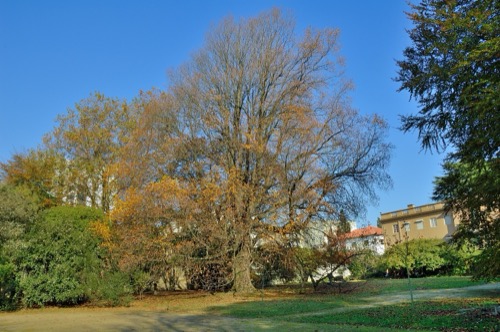
Caucasian Elm (Zelkova carpinifolia) · 150 years · University Parks
October to November: the whole crown turns orange-brown, the tree's best-known moment after its shape.
Read more and get directions →
Oxford →
American Beech (Fagus grandifolia) · not documented; predates the park's 1920s-30s design · Georgetown
Late October into November, when two acres of beech turn copper at once.
Read more and get directions →
Washington DC →
Tulip Tree (Liriodendron tulipifera) · roughly a century old · Meerssen village centre
October, when the whole crown turns clear yellow.
Read more and get directions →
Maastricht →
Photo: Skjold Søndergaard (CC BY)
Wild Service Tree (Sorbus torminalis) · up to about 145 years (2010 register estimate) · Moesgård / Højbjerg
October, when the crown turns deep crimson.
Read more and get directions →
Aarhus →
European Beech (Fagus sylvatica) · disputed: register says roughly 140 years, the municipality's 2024 list says roughly 95 years · Binnenstad
Late October into November, when it turns copper and russet.
Read more and get directions →
Zwolle →
Japanese Maple (Acer palmatum) · around 100 years · Angerenstein
Late autumn, when the leaves run from orange into deep red.
Read more and get directions →
Arnhem →
Sweet Gum (Liquidambar styraciflua) · about 100 years · Biesland
Late October into November, when one tree carries red, orange and purple at once.
Read more and get directions →
Maastricht →
Photo: Rob Grange (CC BY-SA 4.0)
European Beech (Fagus sylvatica) · about 105 years · Aberford, West Yorkshire
October to November: copper and russet, and young trees keep dead leaves all winter.
Read more and get directions →
Aberford →
Photo: Sordelli (CC BY-SA 4.0)
Caucasian Wingnut (Pterocarya fraxinifolia) · age undocumented, among the oldest of its species in Milan · Porta Venezia
Late October, when the long compound leaves turn butter yellow.
Read more and get directions →
Milan →
Photo: Reis Quarteu (CC BY-SA 4.0)
Tulip Tree (Liriodendron tulipifera) · roughly 100 years · Cedofeita, Santo Ildefonso, Sé, Miragaia, São Nicolau e Vitória
Clear yellow, one of the most reliable autumn trees.
Read more and get directions →
Porto →
Honey Locust (Gleditsia triacanthos) · at least 85 years, likely older · Nørrebro
October, when the small leaflets turn clear yellow and come down almost at once.
Read more and get directions →
Copenhagen →
Tulip Tree (Liriodendron tulipifera) · roughly 90 years, from a registered planting date around 1940 · Amstelveen
Late October, when the whole crown turns clear butter-yellow.
Read more and get directions →
Amsterdam →
Honey Locust (Gleditsia triacanthos) · about a century old (sources disagree on the decade) · Stadswandelpark, Stratum
October, when the small leaflets turn clear yellow and come down early.
Read more and get directions →
Eindhoven →
Sweet Gum (Liquidambar styraciflua) · roughly 90 years, from a registered planting date around 1935 · Oosterbegraafplaats
Late October into November, when the star-shaped leaves go scarlet and plum at once.
Read more and get directions →
Enschede →
Tulip Tree (Liriodendron tulipifera) · roughly 90 years, from a registered planting date around 1940
October to November: clear yellow, one of the most reliable autumn trees.
Read more and get directions →
Heerlen →
Photo: Thomas Ledl (CC BY-SA 3.0 AT)
Persian Ironwood (Parrotia persica) · estimated 85-110 years · Innere Stadt, 1st district
Late October, when the leaves turn scarlet, amber and green all at once.
Read more and get directions →
Vienna →
Ginkgo (Ginkgo biloba) · at least 81 years · Teramachi
October: the whole crown turns butter gold, then drops in a day or two.
Read more and get directions →
Hiroshima →
Photo: Tim Green (CC BY 2.0)
European Beech (Fagus sylvatica 'Miltonensis') · 150 years · York city centre
October to November: copper and russet, and young trees keep dead leaves all winter.
Read more and get directions →
York →
Small-leaved Lime (Tilia cordata) · 150 years · York city centre
October, when its small heart-shaped leaves turn a clean yellow.
Read more and get directions →
York →
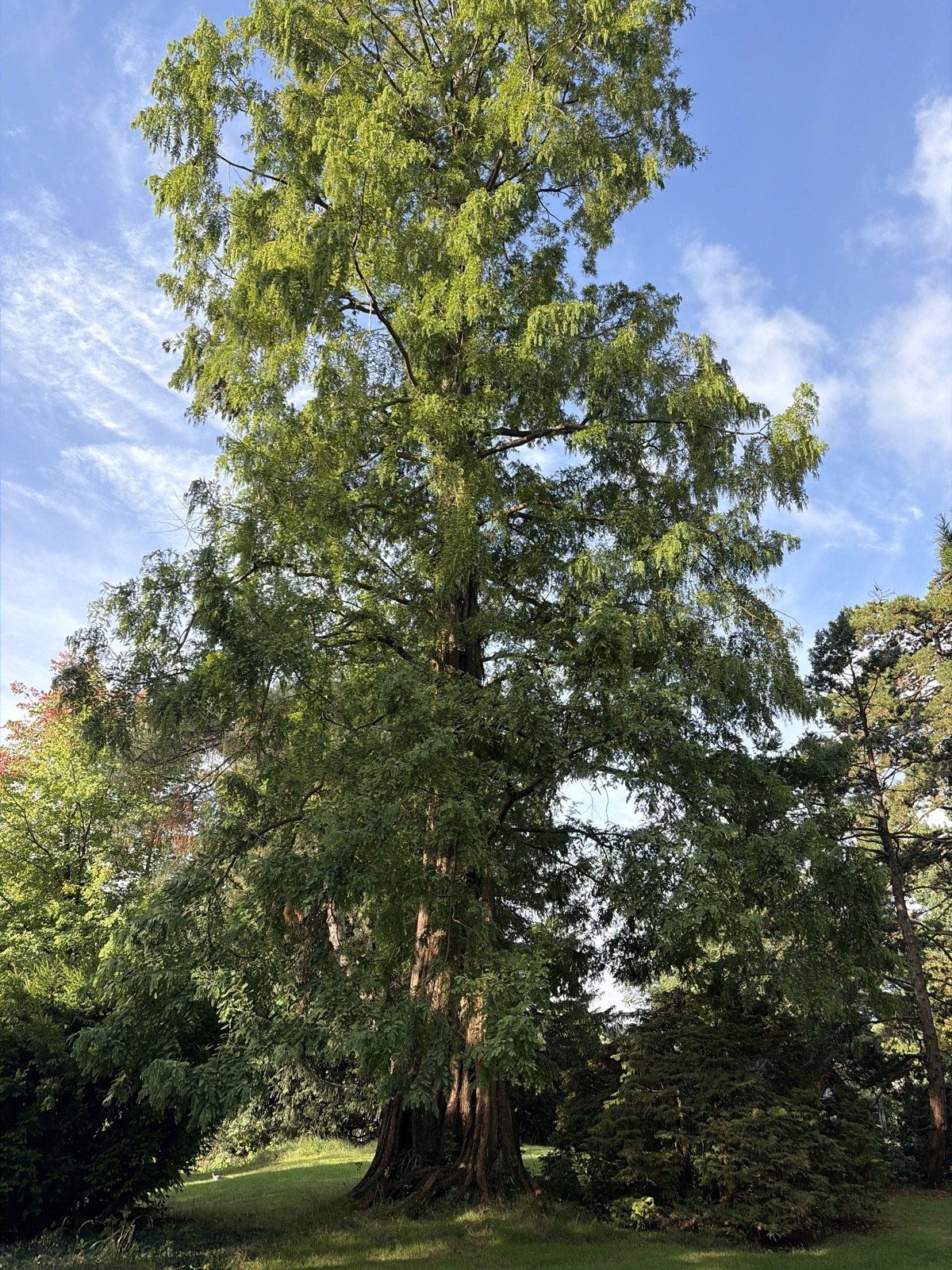
Dawn Redwood (Metasequoia glyptostroboides) · roughly 78 years · Cantonspark, former Utrecht University botanical garden
Late October and November, when a conifer 28 metres tall turns rust orange and drops every needle it has.
Read more and get directions →
Baarn →
Dawn Redwood (Metasequoia glyptostroboides) · about 78 years · Arlington Heights / Washington Park
Late October into November, when it turns copper and then bare, which is not what a conifer is supposed to do.
Read more and get directions →
Portland →
European Beech (Fagus sylvatica) · roughly 75 to 90 years · Foret de Roumare, between Canteleu and Sahurs
October to November: copper and russet, and young trees keep dead leaves all winter.
Read more and get directions →
Rouen →
Dawn Redwood (Metasequoia glyptostroboides) · roughly 77 years, grown from seed collected in Hubei, China in 1948 · Arborway, Arnold Arboretum, Jamaica Plain
Late October into November, when a conifer this size turns rust orange and drops every needle it has.
Read more and get directions →
Boston →
Dawn Redwood (Metasequoia glyptostroboides) · planted around 1950 · Queen's Quarter, Belfast
Late October into November, when the needles turn rust orange and drop, which is not what a conifer is supposed to do.
Read more and get directions →
Belfast →
Dawn Redwood (Metasequoia glyptostroboides) · about 75 years · Westend-Nord
Late October into November, when the needles turn rust orange and fall, which is not what a conifer is supposed to do.
Read more and get directions →
Frankfurt →
Photo: Ing.Mgr.Jozef Kotulič (CC BY-SA 4.0)
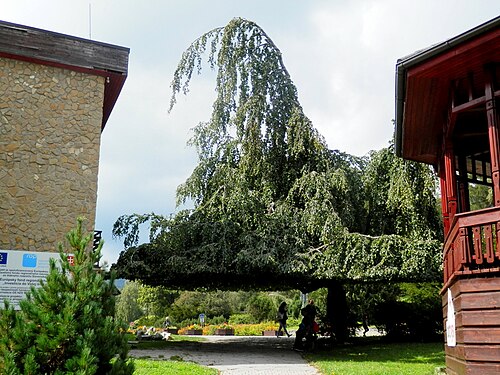
European Beech (Fagus sylvatica f. pendula) · roughly 80 years · Starý Smokovec, Vysoké Tatry
October and November, when the weeping crown turns copper and russet.
Read more and get directions →
Starý Smokovec →
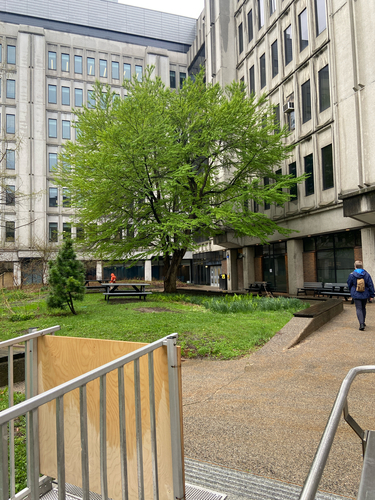
Tulip Tree (Liriodendron tulipifera) · roughly 77 years · Downtown / McGill campus
October to November: clear yellow, one of the most reliable autumn trees.
Read more and get directions →
Montreal →
Dawn Redwood (Metasequoia glyptostroboides) · about 75 years (planted circa 1950) · West Spokane
Late October into November, when two conifers in an arboretum of evergreens turn rust orange and go bare.
Read more and get directions →
Spokane →
Dawn Redwood (Metasequoia glyptostroboides) · roughly 63 years (planted 1963) · Beacon Hill / Public Garden
Late October into November, when the needles turn foxy orange and fall.
Read more and get directions →
Boston →
Photo: Alex Baxter (CC BY)
Katsura (Cercidiphyllum japonicum) · about 60 years · McGill downtown campus / Golden Square Mile
October, when the fallen leaves smell of caramel.
Read more and get directions →
Montreal →
European Beech (Fagus sylvatica) · roughly 40 to 60 years · Foret de La Londe-Rouvray, near Orival / Les Essarts, overlooking the Seine
October to November: copper and russet, and young trees keep dead leaves all winter.
Read more and get directions →
Rouen →
Ginkgo (Ginkgo biloba) · the standing tree is regrowth from 2010; the original was traditionally called a thousand years and was not · Yukinoshita
October: the whole crown turns butter gold, then drops in a day or two.
Read more and get directions →
Kamakura →
Katsura (Cercidiphyllum japonicum) · not documented · Kaishio (Ushio), Daito-cho, Unnan
October and November, when the round leaves turn yellow and the fallen ones smell of caramel.
Read more and get directions →
Unnan →
Sweet Chestnut (Castanea sativa) · Cartajima
Late October and November, when the whole Genal valley turns copper.
Read more and get directions →
Ronda →
European Beech (Fagus sylvatica) · Parkrose Heights
October to November: copper and russet, and young trees keep dead leaves all winter.
Read more and get directions →
Portland →
Photo: Paulo V. Araujo, Dias com Arvores
Tulip Tree (Liriodendron tulipifera) · not documented · Lordelo do Ouro e Massarelos
Clear yellow, one of the most reliable autumn trees.
Read more and get directions →
Porto →
European Beech (Fagus sylvatica) · not documented · Ixelles / Solbosch
Late October, when the beech wood turns copper over the path.
Read more and get directions →
Brussels →
European Beech (Fagus sylvatica) · uncertain, two sources disagree · Heijendaal
October to November: copper and russet, and young trees keep dead leaves all winter.
Read more and get directions →
Nijmegen →
Photo: Vilensija (CC BY-SA 3.0)
European Beech (Fagus sylvatica) · not documented · Priekulė, Klaipėda district
October, when the beech turns copper and the whole old park goes with it.
Read more and get directions →
Priekulė →
Caucasian Elm (Zelkova carpinifolia) · Caudéran-Saint Augustin, Parc Bordelais
October to November: the whole crown turns orange-brown, the tree's best-known moment after its shape.
Read more and get directions →
Bordeaux →
Bald Cypress (Taxodium distichum) · Centro Storico
Late October and November, when the needles turn rust orange before they drop.
Read more and get directions →
Lucca →
Caucasian Elm (Zelkova carpinifolia) · not documented · Latin Quarter, opposite the Sorbonne, 5th arrondissement
October to November: the whole crown turns orange-brown, the tree's best-known moment after its shape.
Read more and get directions →
Paris →
European Larch (Larix decidua) · not documented · Podgorze
Late October into November, when the needles turn gold and then drop.
Read more and get directions →
Krakow →
Ginkgo (Ginkgo biloba) · not documented; a mature specimen, likely planted when the park's dendrological garden was developed in the 19th or early 20th century · Oliwa
Late October into November, when the whole crown turns gold and drops within days.
Read more and get directions →
Gdansk →
Katsura (Cercidiphyllum japonicum) · not documented; likely a late-19th or early-20th-century planting, since the species only reached European gardens after 1865 · Oliwa
October, when the leaves turn and the fallen ones smell of burnt sugar.
Read more and get directions →
Gdansk →
Photo: Zinneke (CC BY-SA 4.0)
European Beech (Fagus sylvatica) · over a century · Petrusse valley / Ville Haute
October to November: copper and russet, and young trees keep dead leaves all winter.
Read more and get directions →
Luxembourg City →
European Beech (Fagus sylvatica) · Cínovec, Ústí nad Labem Region
October to November: copper and russet, and young trees keep dead leaves all winter.
Read more and get directions →
Cinovec →
European Beech (Fagus sylvatica) · not documented · Gärten bei Wöhrd / Wöhrd
Late October and November, turning alongside its neighbour eighty metres away.
Read more and get directions →
Nuremberg →
European Beech (Fagus sylvatica) · not documented · Gärten bei Wöhrd / Wöhrd
October to November: copper and russet, and young trees keep dead leaves all winter.
Read more and get directions →
Nuremberg →
European Beech (Fagus sylvatica) · Ramersdorf-Perlach
Late October and November, when the copper runs from the top of the crown down to the grass.
Read more and get directions →
Munich →
European Beech (Fagus sylvatica)
Late October into November, when a crown this size turns the whole clearing copper.
Read more and get directions →
Munich →
European Beech (Fagus sylvatica) · Altstadt-Lehel
Late October and November, when the crown turns copper over the green in front of the school.
Read more and get directions →
Munich →
European Beech (Fagus sylvatica) · Kleinweidenmühle
Late October and November, when it turns copper and holds it.
Read more and get directions →
Nuremberg →
European Beech (Fagus sylvatica) · Parc de l'Orangerie
October to November: copper and russet, and young trees keep dead leaves all winter.
Read more and get directions →
Strasbourg →
Katsura (Cercidiphyllum japonicum) · Dahlem, Steglitz-Zehlendorf
October, when the leaves turn apricot and the ground underneath smells of gingerbread.
Read more and get directions →
Berlin →
Northern Red Oak (Quercus rubra) · Fairview
Late October into November, when a red oak turns the deep red it is named for.
Read more and get directions →
Vancouver →
Norway Maple (Acer platanoides) · Untergiesing-Harlaching
October, when the crown turns clear butter yellow over the square.
Read more and get directions →
Munich →
Northern Red Oak (Quercus rubra) · Moosach
Late October into November, when the crown turns scarlet.
Read more and get directions →
Munich →
European Beech (Fagus sylvatica) · Schlossberg / Schlossgarten
October to November: copper and russet, and young trees keep dead leaves all winter.
Read more and get directions →
Heidelberg →
European Beech (Fagus sylvatica) · Kleinweidenmühle
Late October and November, when the mast drops and the crown turns russet.
Read more and get directions →
Nuremberg →
November (94) Ginkgo (Ginkgo biloba) · roughly 1,500 years · Shaolin Temple, Song Mountain, Dengfeng
November, when the crown turns gold over the first hall of the temple.
Read more and get directions →
Dengfeng →
Photo: KimonBerlin (CC BY-SA 2.0)
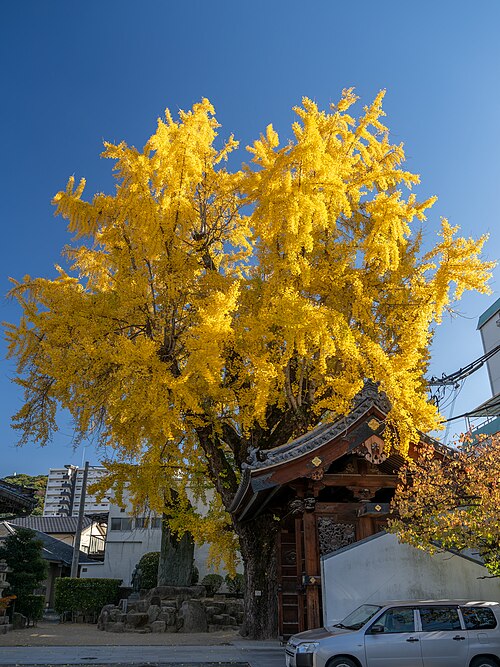
Ginkgo (Ginkgo biloba) · roughly 1,200 to 1,300 years · Sowa-cho, Takayama
Late November into early December, when it goes gold and lets the whole crown go at once.
Read more and get directions →
Takayama →
Ginkgo (Ginkgo biloba) · roughly 1,500 years, per its 1979 designation record (not a ring count) · Kawachi-nukui, Asaminami-ku
Late November, when the whole crown turns gold.
Read more and get directions →
Hiroshima →
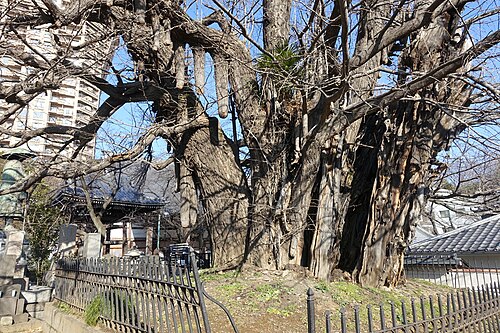
Saw-leaf Zelkova (Zelkova serrata) · 1,000 to 1,500+ years (sources disagree) · Honmaru-minami, Higashine
November, when the leaves come down and the schoolchildren chase them.
Read more and get directions →
Higashine →
Ginkgo (Ginkgo biloba) · over 1,000 years · Jonichiji Temple, Asahihonmachi, Himi
Mid November, when the ginkgo turns gold.
Read more and get directions →
Himi →
Ginkgo (Ginkgo biloba) · roughly 1,200 years · Yawata, Ichikawa
Late November, when the shrine lights the gold crown up after dark.
Read more and get directions →
Tokyo →
Photo: STA3816 (CC BY-SA 3.0)
Ginkgo (Ginkgo biloba) · over 1000 years · Shimojo, Oguni
November, when the whole crown turns gold and the town lights it at night.
Read more and get directions →
Oguni →
Saw-leaf Zelkova (Zelkova serrata) · estimated over 1,000 years · Yashiro, Asago
November, when the crown turns rust and comes down over a couple of weeks.
Read more and get directions →
Yabu →
Photo: Sakaori (talk) (CC BY-SA 3.0)
Saw-leaf Zelkova (Zelkova serrata) · over 1,000 years · Terabe, Minami-Alps City
November, when a crown this wide turns rust and drops inside a fortnight.
Read more and get directions →
Minami-Alps →
Photo: Pekachu (CC BY-SA 4.0)
Katsura (Cercidiphyllum japonicum) · roughly 1,000 years (official estimate) · Fuji-cho, Saga City
November, when the round leaves turn yellow and the fallen ones smell of burnt sugar.
Read more and get directions →
Fukuoka →
Photo: STA3816 (CC BY-SA 3.0)
Ginkgo (Ginkgo biloba) · 850 to over 1,000 years · Izumiyama, Arita
November, when the whole crown turns gold.
Read more and get directions →
Arita →
Ginkgo (Ginkgo biloba) · 800 years · Asakusa, Taito
Late November, when the leaves turn gold.
Read more and get directions →
Tokyo →
Ginkgo (Ginkgo biloba) · nearly 880 years (local tradition, unaudited) · Siheung-dong
November, when all the ginkgos on the intersection turn gold together.
Read more and get directions →
Seoul →
Ginkgo (Ginkgo biloba) · 750 years · Motoazabu, Minato
Late November, when the ginkgo turns deep gold.
Read more and get directions →
Tokyo →
Saw-leaf Zelkova (Zelkova serrata) · about 700 years · Hwayang-dong
November, when the crown turns a deep orange-brown.
Read more and get directions →
Seoul →
Ginkgo (Ginkgo biloba) · roughly 600 years (city figure); shrine tradition says over 800 · Kitakata
Mid to late November, when it drops a yellow floor in front of the hall and the shrine lights it after dark.
Read more and get directions →
Kitakata →
Ginkgo (Ginkgo biloba) · roughly 600 to 700 years · Zoshigaya, Toshima
Late November, when the crown turns gold above the hall.
Read more and get directions →
Tokyo →
Photo: さかおり (CC BY-SA 4.0)
Ohatsuki Ginkgo (Ginkgo biloba var. epiphylla) · roughly 700 years · Shimoyama, Minobu, about 750 metres from fjk_002 (Jotakuji) and 1.65 km from fjk_003 (Yagisawa), the same Shimoyama-area cluster of nationally designated Ohatsuki ginkgos
November, when the crown turns gold like its two Ohatsuki siblings nearby.
Read more and get directions →
Fujikawaguchiko →
Photo: Hirho (CC BY-SA 4.0)
Ginkgo (Ginkgo biloba) · 600 to over 1,000 years · Kawabata, Hakata-ku
Late November, when the whole crown turns gold within about a week.
Read more and get directions →
Fukuoka →
Ginkgo (Ginkgo biloba) · roughly 600 years (tradition) · Oji, Kita
Late November, when the crown turns gold and then drops in a day or two.
Read more and get directions →
Tokyo →
Ginkgo (Ginkgo biloba) · roughly 600 years · Wuta Temple (Five Pagoda Temple)
November, when both ginkgos turn gold and the queues form at the pagoda.
Read more and get directions →
Beijing →
Photo: Mechurii (CC BY-SA 3.0)
Ginkgo (Ginkgo biloba) · 550 to 830 years (disputed) · Banghak-dong
November, when its huge crown turns bright yellow.
Read more and get directions →
Seoul →
Photo: Larry D. Moore (CC BY 4.0)
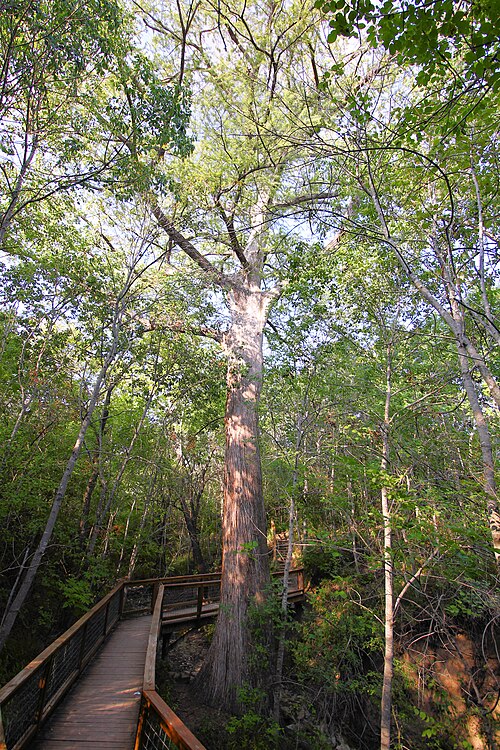
Bald Cypress (Taxodium distichum) · more than 500 years · Southeast Austin
November, when the needles turn rust before they drop.
Read more and get directions →
Austin →
Photo: DrTerraKhan (CC BY-SA 3.0)
Ohatsuki Ginkgo (Ginkgo biloba var. epiphylla) · 400 to 600 years · Hachimancho, Mito
November, when the whole crown turns gold.
Read more and get directions →
Mito →
Photo: Mark Yasuda (Myasuda) (CC BY-SA 4.0)
Ginkgo (Ginkgo biloba) · 450 years · Hibiya, Chiyoda
Late November, at the peak of its golden colour.
Read more and get directions →
Tokyo →
Ginkgo (Ginkgo biloba) · roughly 500 years · Myeongnyun-dong
Mid-to-late November, when the canopy turns gold.
Read more and get directions →
Seoul →
Photo: Reggaeman (CC BY-SA 3.0)
Ginkgo (Ginkgo biloba) · 385 years · Shiba Park, Minato
Late November, when the ginkgo turns gold.
Read more and get directions →
Tokyo →
Ginkgo (Ginkgo biloba) · about 800 years by the signboard, and probably less · Sarukawa, Takaoka
Late November, when the whole crown turns gold.
Read more and get directions →
Miyazaki →
Saw-leaf Zelkova (Zelkova serrata) · about 1,000 years by the shrine's signboard · Nomachi
November, when a zelkova this size turns and drops in about a fortnight.
Read more and get directions →
Kanazawa →
Ginkgo (Ginkgo biloba) · over 300 years, from the national survey's age band · Kasuga Taisha, on the approach between the Second Torii and Nanmon Gate
November, when the ginkgo turns gold.
Read more and get directions →
Nara →
Photo: LBM1948 (CC BY-SA 4.0)
Ginkgo (Ginkgo biloba) · 300 years · Hakusan, Bunkyo
Late November, when the leaves turn gold.
Read more and get directions →
Tokyo →
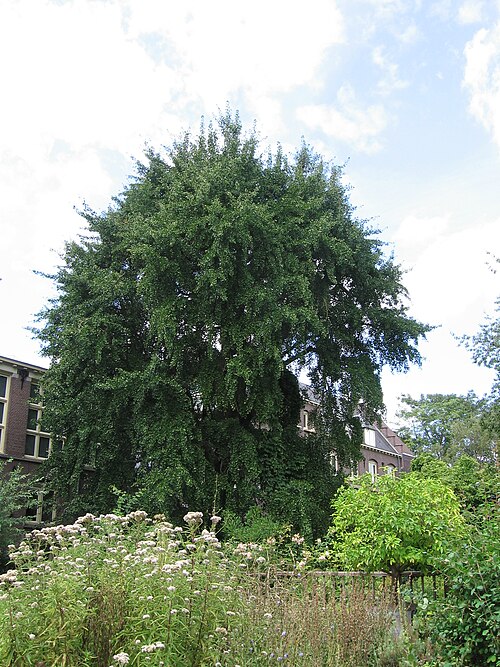
Ginkgo (Ginkgo biloba) · over 270 years, from a planting band of 1700 to 1750; unconfirmed local tradition ties it to Carl Linnaeus's studies at Harderwijk in 1735 · Harderwijk old town
November, when it goes gold and then drops the lot within days.
Read more and get directions →
Harderwijk →
Photo: lejones417 (CC BY-SA)
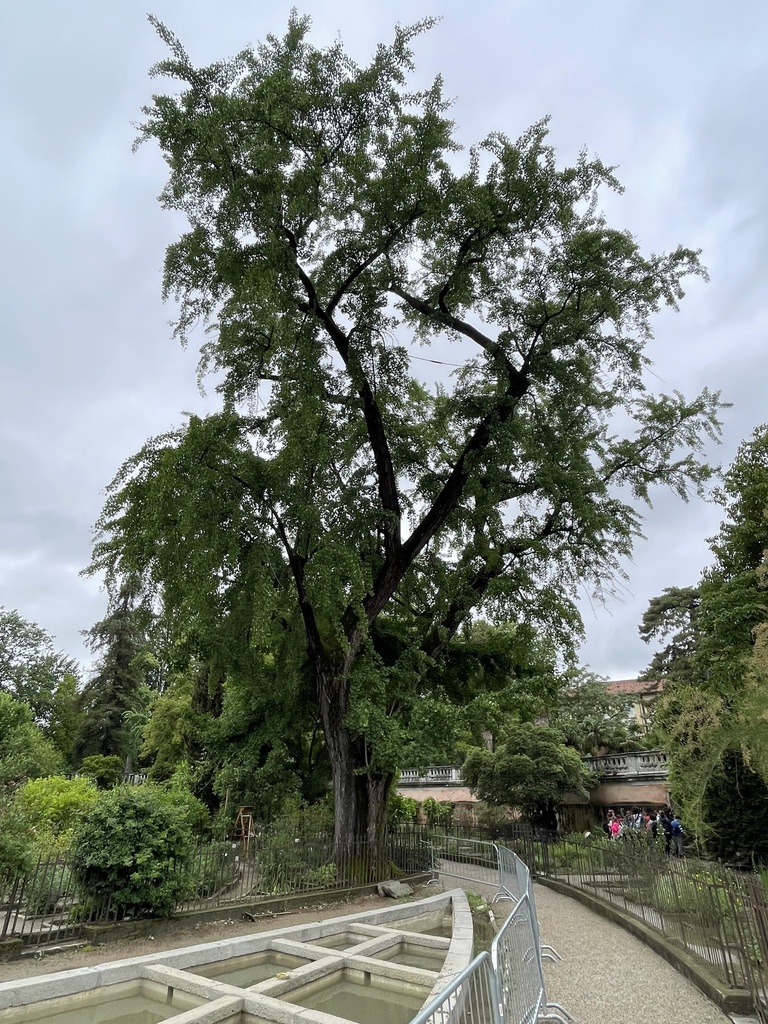
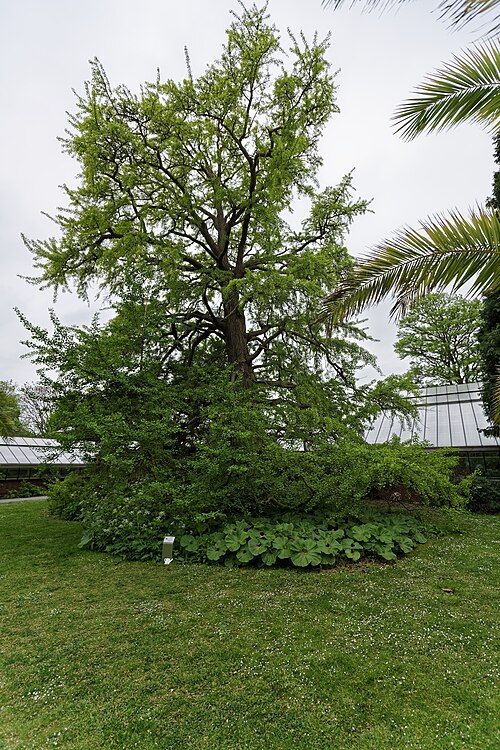
Ginkgo (Ginkgo biloba) · roughly 275 years · Orto Botanico
November, when it turns hard yellow and then drops the whole canopy in a matter of days.
Read more and get directions →
Padua →
Photo: Hansmuller (CC BY-SA 4.0)
Ginkgo (Ginkgo biloba) · over 260 years · Binnenstad
November: the whole crown turns butter gold, then drops in a day or two.
Read more and get directions →
Utrecht →
European Beech (Fagus sylvatica) · roughly 300 years · Gjerrild, Norddjurs municipality
November to December: copper and russet, and young trees keep dead leaves all winter.
Read more and get directions →
Gjerrild →
Ginkgo (Ginkgo biloba) · roughly 240 years · Southwest Philadelphia (Kingsessing)
November, when the whole crown turns gold and can drop within a day or two.
Read more and get directions →
Philadelphia →
Photo: Txllxt TxllxT (CC BY-SA 4.0)
Ginkgo (Ginkgo biloba) · about 240 years · Academiewijk
November, when the fan-shaped leaves turn gold before dropping almost overnight.
Read more and get directions →
Leiden →
Ginkgo (Ginkgo biloba) · about 240 years · Near Piazza dei Miracoli, historic centre
November: the whole crown turns butter gold, then drops in a day or two.
Read more and get directions →
Pisa →
Ginkgo (Ginkgo biloba) · roughly 225 to 325 years · Kabe-minami, Asakita-ku
Late November, when the whole crown turns gold.
Read more and get directions →
Hiroshima →
Bald Cypress (Taxodium distichum) · over 200 years · Downtown / River Walk
Late November into December, when the needles turn rust and drop into the river.
Read more and get directions →
San Antonio →
Photo: Utilisateur:Djampa (CC BY-SA 4.0)
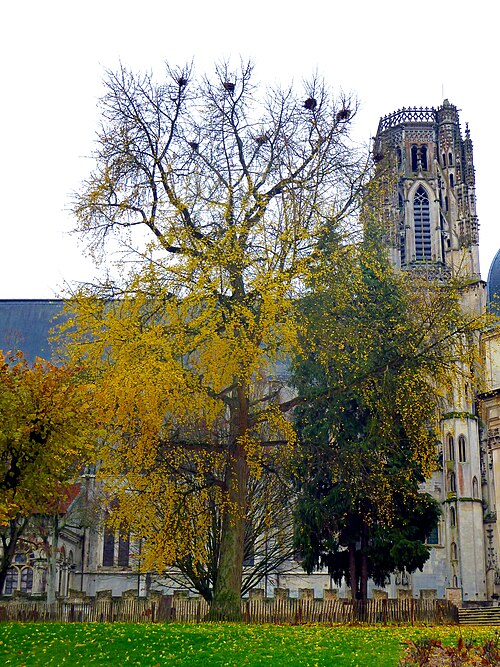
Ginkgo (Ginkgo biloba) · roughly 220 years · Town centre, Toul
Mid-November, when the whole crown turns gold at once.
Read more and get directions →
Toul →
Ginkgo (Ginkgo biloba) · several hundred years · Karasuma, Kamigyo-ku (immediately west of Kyoto Gyoen)
Late November, when the whole crown goes gold at once and drops within a week.
Read more and get directions →
Kyoto →
Ginkgo (Ginkgo biloba) · about 200 years (planted 1824) · Srodmiescie
November: the whole crown turns butter gold, then drops in a day or two.
Read more and get directions →
Warsaw →
Bald Cypress (Taxodium distichum) · roughly 190 years · Muurhuizen, old town
November, when the needles turn foxy red and then drop.
Read more and get directions →
Amersfoort →
European Beech (Fagus sylvatica) · roughly 175-225 years · Kleverlaan
November, when three crowns go copper at once and the light under them turns orange.
Read more and get directions →
Haarlem →
Ginkgo (Ginkgo biloba) · around 168 years · Trsteno
November, when its fan-shaped leaves turn brilliant yellow.
Read more and get directions →
Dubrovnik →
Ginkgo (Ginkgo biloba) · about 164 years, planted in 1862 · Centro Storico
Mid-November, when it turns hard yellow and drops it all at once.
Read more and get directions →
Lucca →
Ginkgo (Ginkgo biloba) · roughly 160 years · Mon-Repos
Early November, when the whole crown goes gold at once and then drops.
Read more and get directions →
Lausanne →
Photo: Geert Van der Linden (CC BY 4.0)
Ginkgo (Ginkgo biloba) · roughly 170 years · Muinkpark
Late November, when the whole crown turns gold and then drops almost at once.
Read more and get directions →
Ghent →
Ohatsuki Ginkgo (Ginkgo biloba var. epiphylla) · roughly 200 years · Kamiyagisawa, Minobu-cho, about 17 km south of Fujikawaguchiko's centre and about 1.7 km from fjk_002 (the Ohatsuki Ginkgo of Jotakuji Temple), in the same Shimoyama-area cluster of nationally designated Ohatsuki ginkgos
November, when the whole crown turns butter gold and drops in a day or two.
Read more and get directions →
Fujikawaguchiko →
Photo: Huhulenik (CC BY 3.0)
Ginkgo (Ginkgo biloba) · estimated 150-165 years · Nove Mesto, Na Slupi
Mid-November, when the low spreading crown goes yellow and lays a circle of leaves on the grass.
Read more and get directions →
Prague →
Photo: Matthewlunas (CC BY-SA 4.0)
Ginkgo (Ginkgo biloba) · about 150 years, from the garden's laying out in the 1870s · Centro
November, when it turns hard yellow and drops the lot in a day or two.
Read more and get directions →
Turin →
Ginkgo (Ginkgo biloba) · more than 140 years · Binnenstad-Noord
November, when the fan-shaped leaves turn gold and drop almost overnight.
Read more and get directions →
Groningen →
Ginkgo (Ginkgo biloba) · roughly 145 years · Villa del Grumello
November, when the ginkgo goes gold beside the greenhouses.
Read more and get directions →
Como →
Photo: Nicola Quirico (CC BY-SA 4.0)
Ginkgo (Ginkgo biloba) · over 130 years · Centro Storico
Late November into early December, when the canopy turns gold and draws crowds to photograph it.
Read more and get directions →
Ferrara →
Bald Cypress (Taxodium distichum) · ~130 years · Centrum
November, when the needles turn rust orange before dropping.
Read more and get directions →
The Hague →
Bald Cypress (Taxodium distichum) · ~130 years · Kenaupark
November, when the needles turn rust orange before dropping.
Read more and get directions →
Haarlem →
Ginkgo (Ginkgo biloba) · about 130 years · Hortusbuurt
November: the whole crown turns butter gold, then drops in a day or two.
Read more and get directions →
Groningen →
Photo: さかおり (CC BY 4.0)
Japanese Maple (Acer palmatum) · roughly 125 to 250 years, judged from a trunk 3.5 m round · Nakakamado, Watanabe-machi
Late November, when the maple turns red.
Read more and get directions →
Iwaki →
Norway Maple (Acer platanoides) · roughly 140 years · Zasulauks / Kalnciema Quarter
November to December: clear yellow, sometimes red.
Read more and get directions →
Riga →
Photo: Daniel Cahen (CC BY)
Ginkgo (Ginkgo biloba) · over a century, planted late 1800s to early 1900s · Neustadt
November, when both crowns turn butter gold and drop within days of each other.
Read more and get directions →
Strasbourg →
Ginkgo (Ginkgo biloba) · about 130 years · Kamitatsuo-cho
November, when the crown turns a single even gold.
Read more and get directions →
Kagoshima →
Ginkgo (Ginkgo biloba) · about 110 years · Weteringschans, Amsterdam-Centrum
Mid November, when the fans turn gold and drop within days.
Read more and get directions →
Amsterdam →
Bald Cypress (Taxodium distichum) · about 110 years · Nieuwe Plantage
November, when the needles turn rust orange before dropping.
Read more and get directions →
Delft →
Ginkgo (Ginkgo biloba) · roughly 110 years, from a registered planting date around 1920
November: the whole crown turns butter gold, then drops in a day or two.
Read more and get directions →
Heerlen →
Ginkgo (Ginkgo biloba) · ~110 years · De Bolwerken / Statenbolwerk
November: the whole crown turns butter gold, then drops in a day or two.
Read more and get directions →
Haarlem →
Photo: Nicola Quirico (CC BY-SA 3.0)
Ginkgo (Ginkgo biloba) · over a century · Corso Porta Mare
November, when the fan-shaped leaves turn a uniform hard gold.
Read more and get directions →
Ferrara →
Bald Cypress (Taxodium distichum) · roughly 100-150 years · Eaux-Vives
November, when the needles turn rust and fall, leaving the one bare conifer on Geneva's lakeside walk.
Read more and get directions →
Geneva →
Ginkgo (Ginkgo biloba) · around 120 years · Sablon / Bruxelles-Ville
November, when it drops the whole crown of gold in a few days.
Read more and get directions →
Brussels →
Ginkgo (Ginkgo biloba) · more than 100 years, undated precisely · San Carlo all'Arena
Late November, when the fans turn flat gold and drop almost together.
Read more and get directions →
Naples →
Ginkgo (Ginkgo biloba) · undocumented, garden dates to 1884 · Cotroceni
November: the whole crown turns butter gold, then drops in a day or two.
Read more and get directions →
Bucharest →
Photo: Kentin (CC BY-SA 3.0)
Ginkgo (Ginkgo biloba) · 100+ years · Kitaaoyama, Minato
Late November, when the whole avenue turns gold.
Read more and get directions →
Tokyo →
Bald Cypress (Taxodium distichum) · roughly 100 years, from a registered planting date around 1920-1930 · Wipstrik
November, when the needles turn rust orange before dropping.
Read more and get directions →
Zwolle →
Ginkgo (Ginkgo biloba) · about a century · Villa Geno, lakefront promenade
November, when the whole crown turns butter gold and drops within days.
Read more and get directions →
Como →
Ginkgo (Ginkgo biloba) · 100+ years (undocumented) · Grad (Old Town)
November: the whole crown turns butter gold, then drops in a day or two.
Read more and get directions →
Split →
Ginkgo (Ginkgo biloba) · 95 years · City centre
November, when the ginkgo turns gold.
Read more and get directions →
Nijmegen →
Ginkgo (Ginkgo biloba) · at least 81 years · Ushita
Late November, when the whole crown turns and drops through the gate roof.
Read more and get directions →
Hiroshima →
Ginkgo (Ginkgo biloba) · at least 81 years, in a garden laid out in 1620 · Kaminobori-cho
Late November, when it turns yellow with the garden's maples.
Read more and get directions →
Hiroshima →
Ginkgo (Ginkgo biloba) · about 68 years · Montjuic, Sants-Montjuic
November, when the whole crown turns butter gold and then drops in a day or two.
Read more and get directions →
Barcelona →
Ginkgo (Ginkgo biloba) · roughly 70 to 80 years · Ciudad Jardín
Late November into early December, when the whole crown turns gold and drops within days.
Read more and get directions →
Cordoba →
Bald Cypress (Taxodium distichum) · not documented · Deusto
November, when the needles turn copper and drop and the conifer stands bare.
Read more and get directions →
Bilbao →
Bald Cypress (Taxodium distichum) · not documented · Parque de María Luisa
November, when it drops its needles like a deciduous tree, the habit that confuses visitors expecting a conifer to stay green.
Read more and get directions →
Seville →
Photo: GilPe (CC BY-SA 4.0)
Ginkgo (Ginkgo biloba) · not documented · Eich
November, when the whole crown turns gold and then drops it in a matter of days.
Read more and get directions →
Luxembourg City →
Bald Cypress (Taxodium distichum) · not documented · Villaggio Giardino / Vaciglio, Modena
November, when all five turn foxy red and then drop their needles.
Read more and get directions →
Modena →
Ginkgo (Ginkgo biloba) · Hypercentre / Jardin Public
November, when the whole crown turns butter gold and drops within days.
Read more and get directions →
Bordeaux →
Ginkgo (Ginkgo biloba) · Near Inui-gomon, northwest corner of Kyoto Gyoen, Kamigyo-ku
The second half of November, when it goes gold and then drops the lot within days.
Read more and get directions →
Kyoto →
Ginkgo (Ginkgo biloba) · Orto Botanico (arboretum section)
November: the whole crown turns butter gold, then drops in a day or two.
Read more and get directions →
Padua →
Ginkgo (Ginkgo biloba) · Stare Miasto (Planty ring, west side)
November, when the crown turns butter gold and drops almost all at once.
Read more and get directions →
Krakow →
Ginkgo (Ginkgo biloba) · Stare Miasto (Old Town), beside the Franciscan church
November: the whole crown turns butter gold, then drops in a day or two.
Read more and get directions →
Krakow →
Ginkgo (Ginkgo biloba) · not documented · Santa Maria Maior, Funchal
November, when the crown turns gold and drops it in a few days.
Read more and get directions →
Madeira →
Bald Cypress (Taxodium distichum) · Bad Cannstatt
November, when the needles turn rust orange and then fall.
Read more and get directions →
Stuttgart →
Ginkgo (Ginkgo biloba) · Bernhardstraße / Habsburgerstraße
November, when the leaves turn gold and then drop almost all at once.
Read more and get directions →
Freiburg →
Photo: Edlerin (CC BY-SA 4.0)
Ginkgo (Ginkgo biloba) · Plagwitz
November: the whole crown turns butter gold, then drops in a day or two.
Read more and get directions →
Leipzig →
Bald Cypress (Taxodium distichum) · Neuenheim, Neckar north bank
November, when the needles turn rust orange before dropping.
Read more and get directions →
Heidelberg →
December (1) Photo: Paulo V. Araujo, Dias com Arvores
Ginkgo (Ginkgo biloba) · around 220 years · Vitória, above the Douro
The first week of December, when it goes gold and drops within the week.
Read more and get directions →
Porto →
Explore by city: Brussels · Lisbon · Pamplona · Barcelona · Milan · Amsterdam · Oahu · Rome · Florence · Arnhem · Singapore · Palermo · Seville · Berlin · Tokyo · Brisbane · Valencia · Los Angeles · Prague · Alicante · Vienna · Paris · Malaga · London · New York · Philadelphia · Dublin · Krakow · Copenhagen · Boston · Vilnius · Utrecht · Porto · Haarlem · The Hague · Houston · Cork · Munich · Nijmegen · Kyoto · Bath · Geneva · Venice · Helmond · Sintra · Reykjavik · New Orleans · Granada · Fukuoka · Palma de Mallorca · Leiden · Leeuwarden · Cagliari · Cadiz · Edinburgh · San Francisco · Athens · Melbourne · Seattle · Dordrecht · Nice · Madrid · Chicago · Tilburg · Coimbra · Oslo · Osaka · Parma · Enschede · Eindhoven · Glasgow · Caserta · Budapest · Cordoba · Tallinn · Groningen · Warsaw · Istanbul · Cambridge · Bari · Seoul · Washington DC · Sydney · Segovia · Hobart · Leipzig · Potsdam · Amersfoort · Helsinki · Salzburg · Zurich · Bangkok · Padua · Sorrento · Zwolle · Ljubljana · Lyon · Hong Kong · Bristol · Verona · Turin · Girona · Beijing · Vancouver · Montreal · Sapporo · Apeldoorn · Genoa · Bologna · Alkmaar · Stockholm · Den Bosch · Maastricht · Naples · Split · Dresden · Taipei · Belgrade · Deventer · Quebec City · Catania · Dubrovnik · Toronto · Delft · Kamakura · Rio de Janeiro · Kanazawa · Guimaraes · Oxford · Braga · Mexico City · Breda · Rotterdam · Ferrara · Nagoya · Hiroshima · Lucca · Thessaloniki · Trieste · Venlo · York · Naha · Brno · Buenos Aires · Salamanca · Bucharest · Zaragoza · Gdansk · Ronda · Auckland · Kansas City · Setubal · Bilbao · Wroclaw · Sao Paulo · Tarragona · Assisi · Poznan · Sofia · Lima · Cesky Krumlov · Bamberg · Antwerp · Aachen · Allouville-Bellefosse · Athens, Georgia · Baarn · Bad Blumau · Bansko · Borculo · Brunswick, Georgia · Bucaco · Chadds Ford · Chapel Hill, North Carolina · Columbia, Missouri · Concoret · Coos Bay · Coppenbrügge · Craigends · Cremines · Curinga · Ede · Emmen · Erdmannrode · Fara in Sabina · Fish Lake, Utah · Fortingall · Fribourg · Fulufjället · Galenbeck · Giethoorn · Granit · Groton · Guerneville · Gutau · Hampton, Virginia · Harderwijk · Heinkenszand · Jægerspris Nordskov · Kagoshima · Lebec · Logan, Ohio · Martinsville, New Jersey · Miriam Vale · Miyazaki · Nara · Oklahoma City · Olympic National Park · Oostkapelle · Palo Alto · Pirangi · Ramsau am Dachstein · Santa María del Tule · Schlagsdorf · Sequoia National Park · Simsbury · Sliven · Stelmužė · Stratfield Saye · Sunderland, Massachusetts · Tillamook · Timber Creek · Vassununga · Villeneuve · Waipoua Forest · Zarzecze · Zehdenick · Aarhus · Aberford · Aga · Aguas de Moura · Aizuwakamatsu · Albersdorf · Alishan · Altrier · Amerongen · Amt Neuhaus · Aosta · Argoules · Arita · Asago · Assen · Atami · Aubers · Austin · Bad Staffelstein · Baldenhain · Baltimore · Bargischow · Belfast · Berga/Elster · Bergamo · Biei · Bilu · Bioul · Boetersheim · Bohunovice · Boise · Bojnice · Bonnerue · Bordeaux · Borrowdale · Bošáca · Bracon · Bratislava · Braziūkai · Breukelen · Brielow · Brighton · Bruges · Brzoza · Busan · Cabeza del Buey · Canberra · Cardiff · Časta · Cerro Veronese · Charleston · Chatenay-Malabry · Chiapa de Corzo · Chishang · Cielętniki · Cinovec · Collm · Cologne · Como · Cooper Creek · Crete · Cyprus · Dallas · Dębina · Degsne · Den Hout · Dengfeng · Derby · Doornenburg · Drnava · Dubinné · Effeltrich · Eichigt · Eisolzried · Ekerö · Estry · Feternes · Fleringen · Flinders Ranges · Fonte Colombo · Formentera · Fort Lauderdale · Fort Worth · Frankenthal · Frankfurt · Freiburg · Frydlant · Fujikawaguchiko · Ghent · Ghisonaccia · Giessen · Gjerrild · Glastonbury · Gliniak · Gojaus Miskas · Gonzales, Texas · Gornja Stubica · Gothenburg · Gottingen · Graz · Grybiskes · Gumeli · Haarlemmermeer · Hainich National Park · Hallstatt · Hamburg · Hawaii · Heede · Heerlen · Heidelberg · Henryków Lubański · Herchies · Higashiagatsuma · Higashimiyoshi · Higashine · Higashiomi · Hilo · Hilvarenbeek · Hilversum · Himi · Himmelsberg · Hino · Hinode · Hniszów · Hokuto · Hoorn · Horaiji · Horn-Lehe · Horni Bradlo · Hronsek · Ibiza · Ichinohe · Iga · Iheya · Iida · Indianapolis · Ito · Itoshiro · Iwaki · Iwata · Jachymov · Jalhay · Jauze · Jihlava · Kaga · Kanagi · Kasukabe · Kauai · Kaunas · Kawago · Kawatana · Kawazu · Kimotsuki · Kintai · Kitakata · Kitamoto · Königslutter am Elm · Komjatice · Kopčany · Koriyama · Kotel · Kozaki · Kremnica · Książ · Kybarciai · Laren, Gelderland · Las Vegas · Lausanne · Lazy · Le Precheur · Lecina · Les Clayes-sous-Bois · Leuven · Liernu · Limmersdorf · Linderhof · Lipany · Liškiava · Liverpool · Llangernyw · Łódź · Lohja · Luë · Lukavice · Luxembourg City · Machov · Macon · Macugnaga · Madeira · Maebashi · Magescq · Maibara · Malsfeld · Manchester · Matera · Matsumae · Maui · Mcely · Mendaza · Menorca · Miedzyzdroje · Miharu · Minami-Alps · Minamiaso · Minneapolis · Mito · Modena · Moffat · Monterey · Morioka · Motosu · Mrákotín · Msecke Zehrovice · Muxika · Myjava · Nagai · Nagano · Nagi · Nago · Nantes · Neba · Nedvedice · Neudrossenfeld · Neuenrade · Newtown · Nichinan, Tottori · Nicorps · Niedenstein · Nihonmatsu · Nikaho · Nishio · Novi Ligure · Nuenen · Numata · Nuremberg · Nyingchi · Odawara · Ofunato · Oguni · Okuizumo · Omishima · Ono · Ora · Oss · Otama · Otoyo · Ottawa · Ottendorf · Oyodo · Pagramantis Regional Park · Pajūris · Passo Manghen · Peesten · Pelham · Pemberton · Pérouges · Perth · Perugia · Perušić · Pesselieres · Pisa · Pisz Forest · Pittsburgh · Plauginiai Forest · Plunge · Polchow · Poleski National Park · Port Renfrew · Portalegre · Portland · Préty · Priekulė · Princeton, New Jersey · Prosec pod Jestedem · Przybudki · Radomsko · Rambynas · Ramsau bei Berchtesgaden · Rannée · Raudonė · Reaumont · Regensburg · Reinborn · Renavas · Reyersviller · Rhenen · Riga · Rimov · Robenhausen · Rogalin · Roosendaal · Rothenburg ob der Tauber · Rouen · Rudy · Rumskulla · Runnymede · 's-Gravenvoeren · Sachsenbrunn · Sakegawa · Sambeek · Samoëns · San Antonio · San Diego · San Quirico d'Orcia · Sant'Alfio · Sardinia · Savannah · Scheessel · Schenklengsfeld · Schlettau · Senica · Shimizu · Shingu · Shinkamigoto · Shiwa · Shokawa · Sittard-Geleen · Solingen · Spokane · Sremski Karlovci · Starý Smokovec · Stokaičiai · Stoutenburg · Strasbourg · Stuttgart · Sulechów · Suzuka · Taasinge · Takahagi · Takahama · Takayama · Takeo · Tamba · Tatobity · Teleci · Telgte · Tenerife · Toba · Toga · Tolpuddle · Tombeboeuf · Toul · Toulouse · Trainiškis · Trenčianske Stankovce · Trento · Tricase · Trollskogen · Tsuruoka · Tulsa · Turku · Uda · Ueda · Ueki · Unnan · Untermerzbach · Uzovská Panica · Vainiai · Veľké Borové · Velke Opatovice · Velp · Venon · Vír · Viroflay · Višňová · Volkenroda · Vorden · Vytogala · Waremme · Wessobrunn · Westerlo · Wilparting · Wiśniowa · Wolfheze · Wuppertal · Wye Mills, Maryland · Xhoris · Yabu · Yakushima · Yamanashi City · Yangpyeong · Yangshuo · Yoshida · Ypres · Yvignac-la-Tour · Zaanstad · Žalgiriai · Žilina · Zwieslerwaldhaus · Żywiec
✕ Keep your trees on every device An account keeps what you collect and save.
Continue in the app Continue with Google or
Continue with Apple Continue with email More options We store your email address and what you collect: the trees you save and the ones you photograph. By continuing you agree to the Terms and the Privacy notice.
Check your inbox We sent a sign-in link to