The Ginkgo of Shukkeien
Approximate location.
You need a ticket to see this treePaid entry: 350 yen adults, 150 yen university students, free for school pupils (from 14 April 2025). Open daily 9:00 to 18:00 from 16 March to 15 September and 9:00 to 17:00 from 16 September to 15 March, last entry 30 minutes before closing; closed 29 to 31 December.
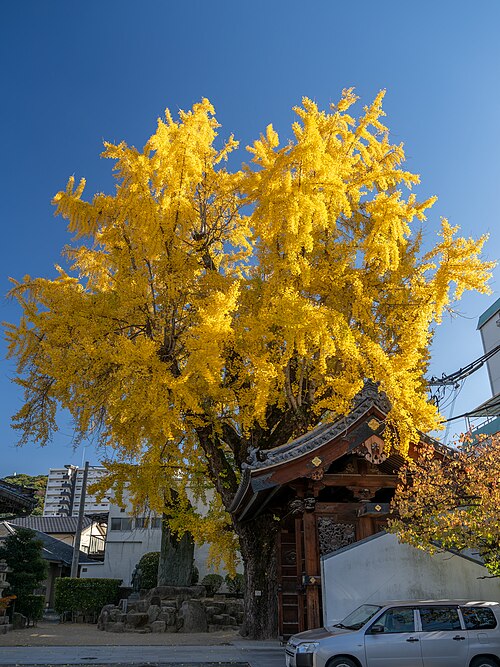
Shukkeien was made in 1620, the year after Asano Nagaakira came to Hiroshima, as the lord's garden beside his castle. It is a shrunk-down landscape, which is what the name means, with a pond standing in for a famous Chinese lake and a bridge over it, and it was designed by a tea master rather than a gardener. On 6 August 1945 it was 1,370 metres from the hypocentre. The garden burned and its buildings went, and people who had run from the city centre came here and died in the grounds; the garden was closed for six years and reopened in 1951. Three of its trees are on the city's register and have never been moved: this ginkgo, a muku and a black pine, all under the code E13a25. They are the oldest things on this page in all likelihood, because they were mature garden trees in a garden already three centuries old, though nobody has published a number for any of them. The ginkgo goes yellow in the second half of November, at the same time as the maples the garden is visited for.
Autumn colour
late November, when it turns yellow with the garden's maples
The line is our estimate of how much there is to see, not a measurement. Typical for this species where this tree stands; exact weeks shift with the year.
Shukkeien Garden, Kaminobori-cho 2-11, Naka-ku, Hiroshima 730-0014You can recognise it by the yellow it turns in the second half of November, with the garden's maples. It stands in Shukkeien among the three registered survivors there, the other two a muku and a black pine.
About 10 minutes on foot from Hiroshima Station, or tram to Shukkeien-mae
Sources
Where the facts on this page come from.