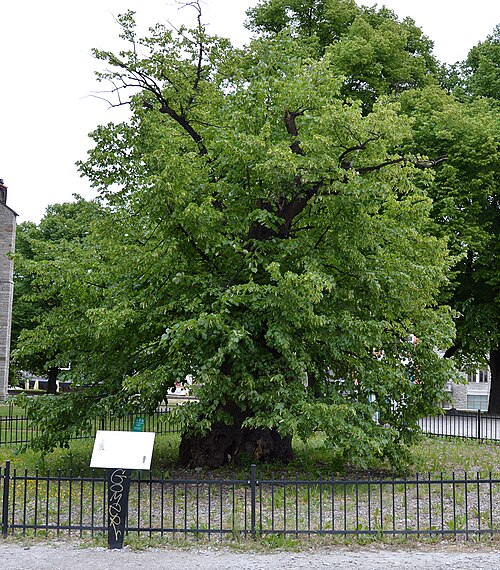
This tree gave the Estonian language a phrase. In the late 1980s a new Soviet parade grandstand and an annex for the Estonia Theatre would have taken out the ginkgo on the corner of Peeter Süda street. Public opposition stopped the project, and hõlmikpuu sündroom, ginkgo syndrome, has meant a building plan blocked by a protected tree ever since. It was not born on this corner. Heinrich Kühnert brought ginkgo seed home from Germany in the late 1800s and raised it in the family's private park a few hundred metres away. When the street was widened in 1913 his son Ernst moved the tree here, and it has been measured on and off ever since: six metres tall in 1928, 8.2 metres in 1955, 13 metres with a trunk 164 centimetres round by the 2017 survey, which put its age at over 110 years. It is the largest ginkgo in Estonia and has been protected since 30 April 1966. Its health is not perfect. In 2017 the Estonian Dendrology Society reported that the crown had gone lopsided in the shade of a neighbouring maple and needed dead wood taken out. Forty years after it beat the grandstand, planning arguments still happen around it rather than through it. Come in late October. Ginkgos turn a hard clean yellow and then drop the lot within days.
Autumn colour
late October into November, when it turns gold and drops the lot within days
The line is our estimate of how much there is to see, not a measurement. Typical for this species where this tree stands; exact weeks shift with the year.
Corner of Peeter Süda tänav and Pärnu maanteeThe only ginkgo on the corner, and the fan-shaped leaves give it away at any time of year it has them.
Free, stands at a public street corner
Central Tallinn, Tatari neighbourhood, walkable from the city centre
Sources
Where the facts on this page come from.