The Second Ginkgo of the Orto Botanico
You need a ticket to see this treeInside the Orto Botanico (UNESCO site), paid entry: full ticket 15 euro (12 euro November to February), reduced from 6 euro. Open Tuesday to Sunday and public holidays, 10:00 to 19:00 April to September, 10:00 to 18:00 in October, 10:00 to 17:00 November to February; closed on working Mondays. Hours change by season and holiday, check the garden's visiting-times page.
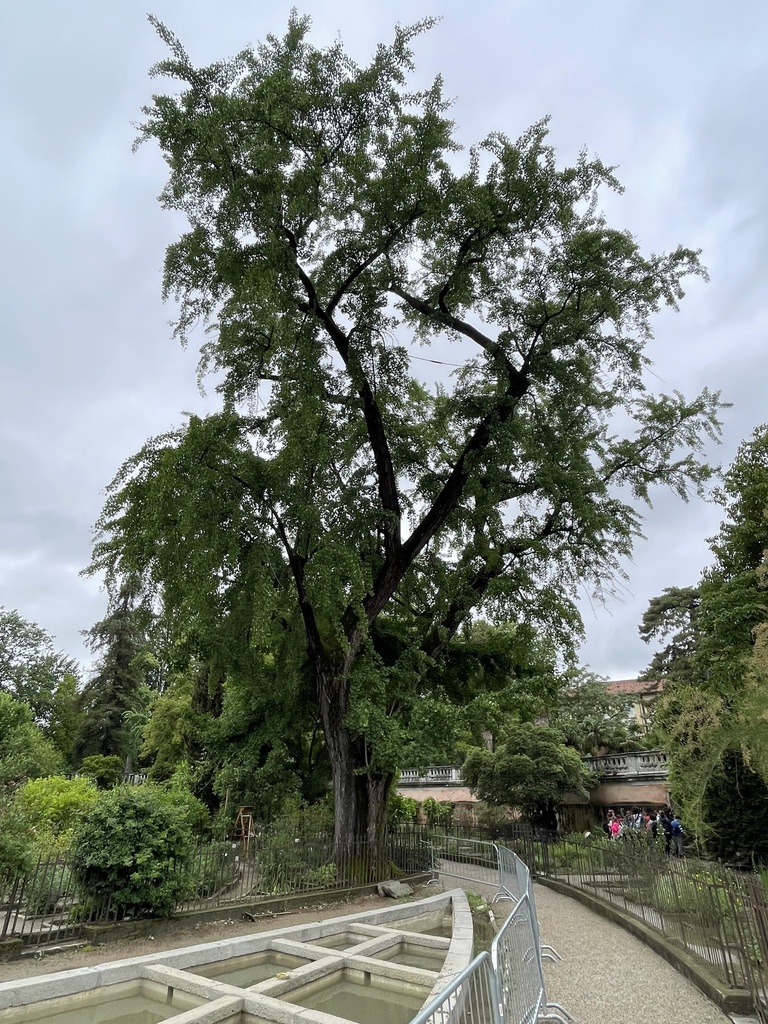
Padua's botanical garden has two ginkgos worth stopping for, and both carry the same odd trick: a female branch grafted onto a male tree, so a single trunk produces the messy, foul-smelling fruit that an all-male ginkgo never would. The more famous of the pair is dated to 1750. This is the second, the register's own 'Ginko dell'Orto Botanico n. 2', a separate three-metre-round tree with no planting date of its own on record. Ginkgo biloba is dioecious, meaning a tree is born strictly male or strictly female, and European gardens have grafted female branches onto male specimens since at least the 18th century, partly out of curiosity and partly because male trees were what nurseries could reliably supply. Both of Padua's ginkgos wear the graft, which makes this garden an unusually direct place to see the trick performed twice. Seventeen metres tall on a three-metre girth, it stands within a stone's throw of the garden's better-known ginkgo, inside grounds that require standard admission. Nobody has recorded when it went in. If you know, say so.
Autumn colour
November: the whole crown turns butter gold, then drops in a day or two
The line is our estimate of how much there is to see, not a measurement. Typical for this species where this tree stands; exact weeks shift with the year.
Orto Botanico di Padova, Via Orto Botanico 15, 35123 PadovaYou can recognise it by being the second, lesser known ginkgo in the garden, a grafted female branch on a male trunk, 3 metres round. It stands a stone's throw from the famous 1750 ginkgo in Padua's Orto Botanico.
~1.9 km / roughly 25-30 min walk from Padova railway station; nearest bus/tram stop not verified
Sources
Where the facts on this page come from.