Seasons1 of 4
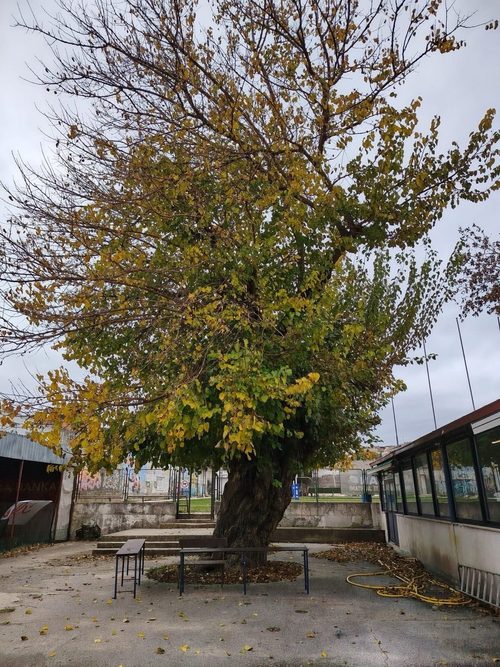
Split's own park authority has only ever given one tree its highest rarity grade, and it stands a few steps from the busiest gate of Diocletian's Palace. The ginkgo in Đardin, the compact 19th-century garden wedged between two old Venetian bastions just north of the Golden Gate, was singled out in a municipal botanical survey as a Category I rarity, officially the single most valuable tree in the park and, by the same assessment, in the city. Ginkgo biloba is itself a botanical anomaly wherever it grows, a conifer relative with fan-shaped leaves and no living close cousins, a lineage old enough to have shared the planet with dinosaurs and simply outlasted them. No record gives this particular specimen's planting date, only its rank, so its age here is an estimate rather than a documented figure. What is documented is the garden around it: cleared as parkland in 1808, when the wall between two Venetian bastions came down under French rule, and made the city's main public garden in 1859. The tree has outgrown both the empire that freed its ground and the kingdom that gave the park its purpose, and neither gets a plaque nearly as pointed as the one the city's own botanists gave the tree itself.
From people who stood here
No notes yet
Did you visit the tree? Leave a note for the next visitor.
Getting there
Strossmayerov perivoj (Đardin), north of the Golden Gate, Split
You can recognise it by the fan-shaped leaves. It is the one tree in the little garden the city's own survey grades a Category I rarity, a few steps north of the Golden Gate.
Autumn colour
November: the whole crown turns butter gold, then drops in a day or two
The line is our estimate of how much there is to see, not a measurement. Typical for this species where this tree stands; exact weeks shift with the year.
Sources
Where the facts on this page come from. The story was written with AI from these sources, and readers who know the tree correct it.