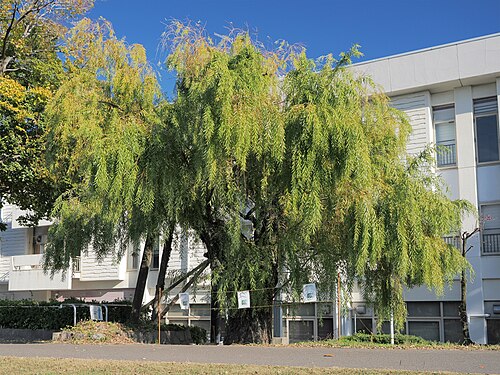
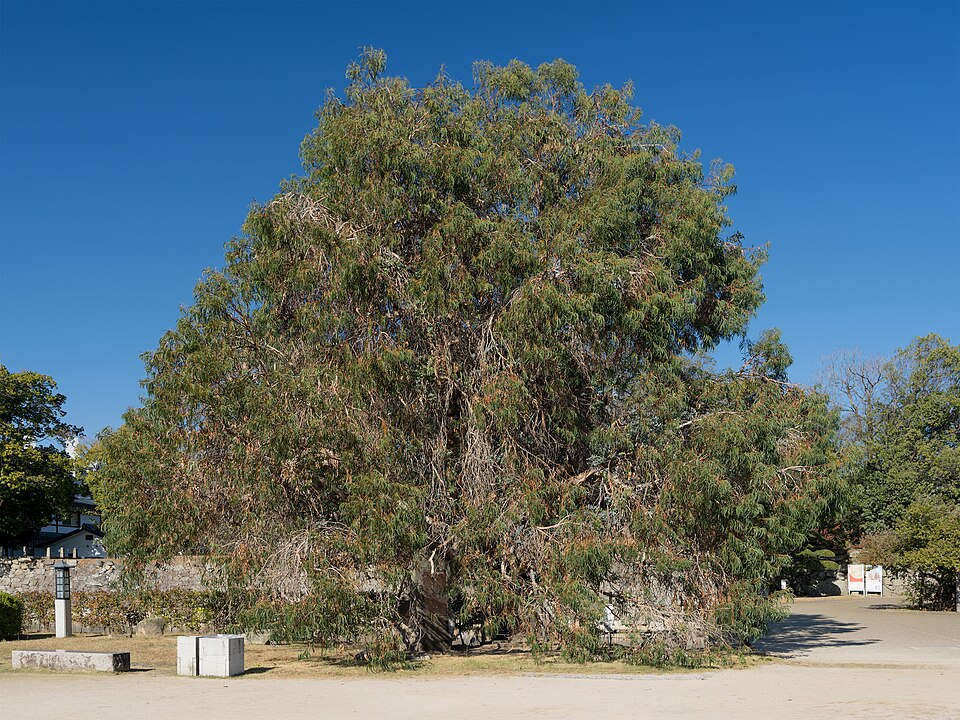
Teramachi means temple town, and it is a single street of them, laid out when the Asano lords moved Hiroshima's temples together in the seventeenth century so they would form a defensive line along the river. On 6 August 1945 that put a dozen temples in a row 1,100 metres from the hypocentre. The ginkgo at Hosenbo is the one that is still there, registered as N11a19-01 and never moved. Ginkgo is the species most associated with surviving the bomb, and the reason is not sentimental. It carries an enormous amount of water in a thick, spongy bark, it sprouts readily from the base and from dormant buds on old wood, and it is fire-resistant enough that Japanese temples have planted it against fire for centuries, which is why so many of the trees standing near the hypocentre in 1945 were ginkgoes in the first place. The temples along this street burned. Walk it now and it is quiet, narrow, entirely rebuilt, with old trees in the gaps between new buildings. No age is recorded for this one.
Autumn colour
October: the whole crown turns butter gold, then drops in a day or two
The line is our estimate of how much there is to see, not a measurement. Typical for this species where this tree stands; exact weeks shift with the year.
Hosenbo temple, Teramachi 3-3, Naka-ku, Hiroshima 730-0801You can recognise it as the ginkgo in the temple grounds, the old tree left in a gap between new buildings on Teramachi. It stands at Hosenbo, on the single street the city's temples were moved together into.
Free, temple grounds open in daylight
Tram to Teramachi, about 3 minutes on foot
Sources
Where the facts on this page come from.