Ginkgo of Shimono Hachiman Shrine (下野八幡大神社のイチョウ)
Shimono, Takachiho
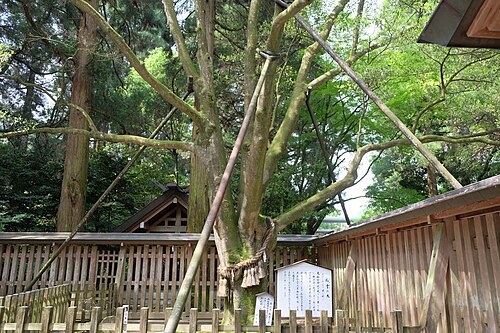
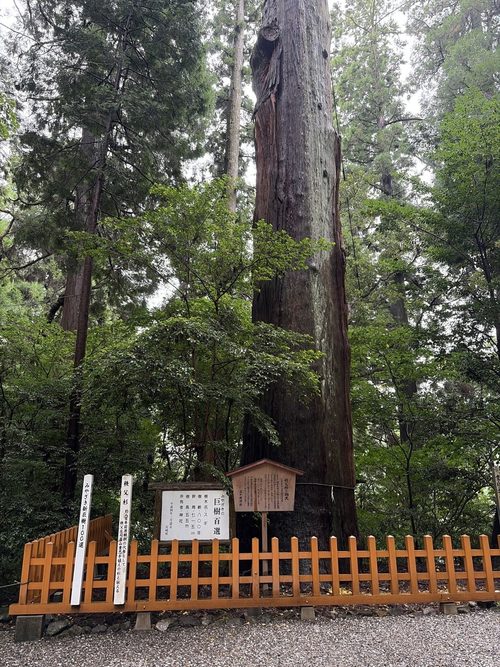
Japan made this ginkgo a national natural monument in June 1951, and the measurements explain why: 9.20 metres round at chest height and 36.4 metres tall, which is a very large ginkgo by any standard. The Agency for Cultural Affairs records it as a female tree, so in autumn it drops its fruit on the shrine ground, the soft, pungent seeds every Japanese ginkgo-watcher knows by smell before sight. It stands on the left of the approach to Shimono Hachiman Shrine, about five kilometres north-east of Takachiho's centre. The town puts its age at about 800 years and counts it among Miyazaki Prefecture's hundred giant trees. The town gives no method for the figure, so read it as a local estimate rather than a ring count, somewhere in the range of six to nine centuries. On the other side of the approach stands a second national monument, a zelkova designated the same day, so the shrine is guarded on both flanks. Getting here takes some planning. Takachiho has no railway, the local bus to Shimono runs rarely, and a taxi from the bus centre takes about twelve minutes. Late November is the time: the ginkgo turns gold and the ground beneath it follows.
From people who stood here
No notes yet
Did you visit the tree? Leave a note for the next visitor.
Getting there
下野八幡大神社, 宮崎県西臼杵郡高千穂町下野 (Shimono Hachiman Shrine, Takachiho)
You can recognise it as the giant ginkgo on the left of the approach to Shimono Hachiman Shrine, 9.20 metres round and 36.4 metres tall; the zelkova on the right, against the shrine building, is the other monument.
Free, shrine precinct, open to walk into; no booking or entry fee found. Access beyond the approach not confirmed by a source.
Autumn colour
late November, when the ginkgo turns gold over the shrine approach
The line is our estimate of how much there is to see, not a measurement. Typical for this species where this tree stands; exact weeks shift with the year.
Sources
Where the facts on this page come from. The story was written with AI from these sources, and readers who know the tree correct it.