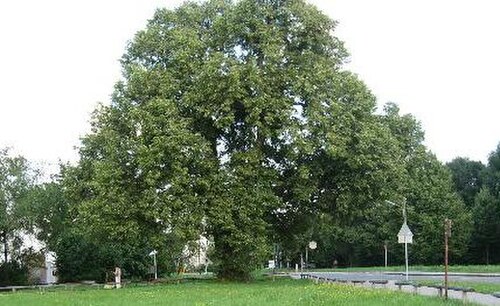
A painter made this tree famous by sitting under it, and the tree has been fighting for its life ever since.
Tilia cordata
For centuries in this part of Europe you were tried under one of these. We map 72 of them, in 55 cities.
The Gerichtslinde, the court lime, was a real institution: a broad tree on the village square with benches beneath it, where the local court sat in the open because everybody could then see and hear what had been decided. Small-leaved lime was usually the species chosen, since it lives long, takes heavy pruning and builds exactly that kind of wide low crown. Aachen's Forster Linde, put at roughly a thousand years, hosted a manorial court until 1390, death sentences included. The habit of gathering under them outlasted the courts. Carters running between Vienna and Trieste stopped under Ljubljana's Furmanska lipa to buy hay for their horses, and that tree, planted in 1626, turns 400 in 2026. In 2011 a lime before a village church in Transylvania was voted European Tree of the Year.
A painter made this tree famous by sitting under it, and the tree has been fighting for its life ever since.
For centuries in this part of Europe, a village's justice was handed down under a lime.
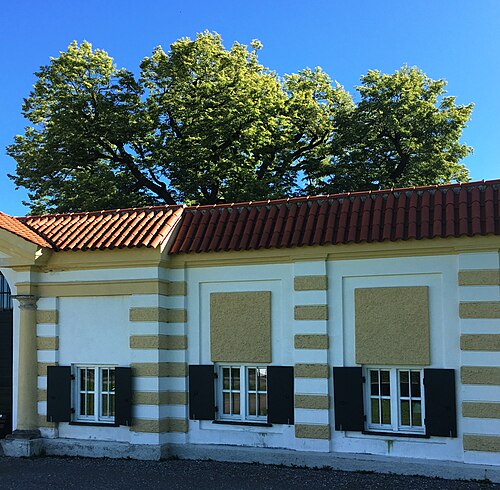
A small-leaved lime grows on the working grounds of the Nymphenburg Porcelain Manufactory, Bavaria's royal china works, founded in 1747 and still hand-painting porcelain in the same rondell buildin...
Photo: Peterf, CC BY-SA 4.0 (CC BY-SA 4.0)
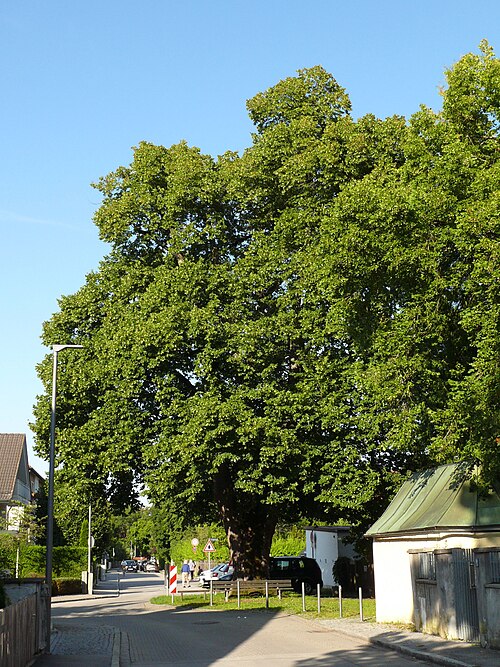
The officials who protect this lime do not agree on which lime it is.
Photo: Martinus KE (CC BY-SA 4.0)
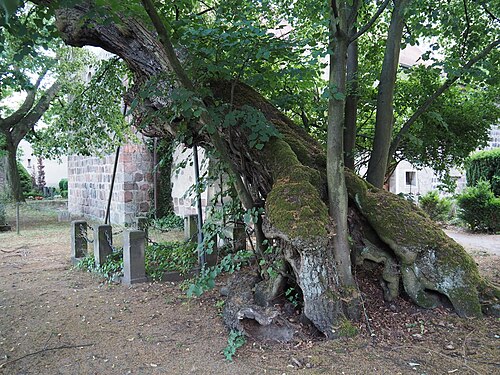
In 2021 Berlin's district register dropped two of Mahlsdorf's protected trees, a Balkan horse chestnut and a black poplar, from its list of natural monuments.
Photo: Bernard Ladenthin (CC BY 4.0)
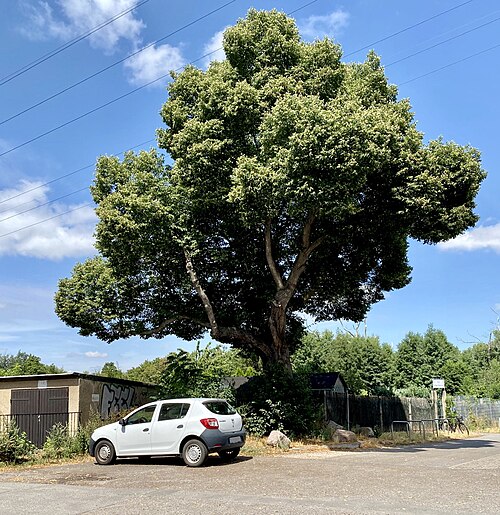
Adolf von Menzel drew this lime into his sketchbook, and it is still standing on the corner where he found it.
Photo: Caisare (CC BY-SA 4.0)
Four of the ages on this walk come off a tape measure rather than out of any record, and this is the only one where the arithmetic gets to use the tree's own species.
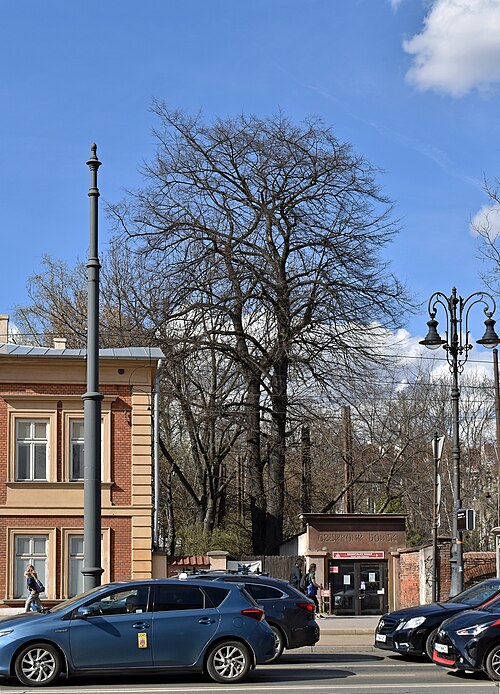
Krakow did not put this lime on its register of natural monuments until December 2013, by which time it had been standing on ul.
Photo: Zygmunt Put (CC BY-SA 4.0)
Krakow already protects one small-leaved lime on this page, a 402 centimetre trunk on ul.
At 6.5 metres around, this is a serious lime, and it stands in a small park in Heiligenstadt that most visitors to the city never reach.
Vienna protected this lime for owning a street corner.
On 18 July 2023 a storm took the top off the oldest lime in Vilnius.
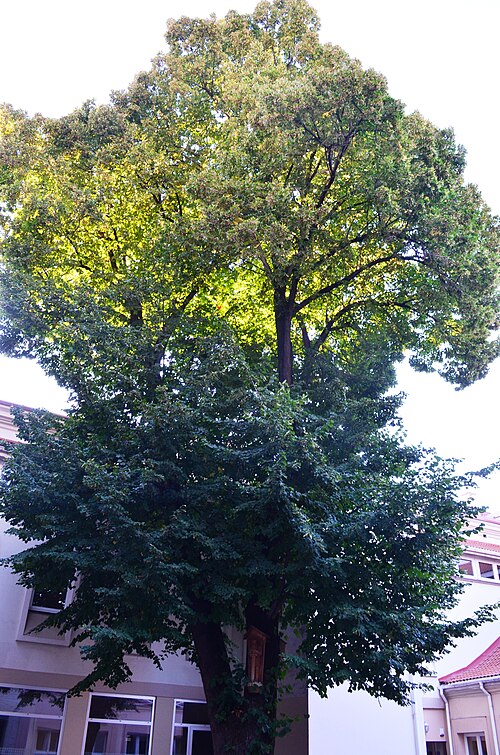
Somebody has carved a chapel into this tree.
In the summer of 1844 Henry Wadsworth Longfellow came home to find that workmen had "lopped away the long low branches of my Linden tree, misunderstanding my directions", and he wrote it up in his...
Local and museum tradition names this lime for King Jan III Sobieski, who built Wilanow Palace in the late 17th century and is documented, in general accounts of the gardens, as having planted lind...
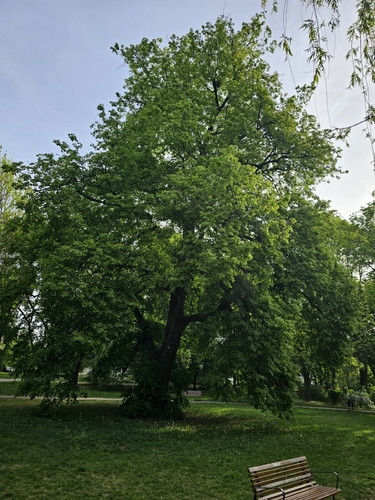
Warsaw has protected this lime since 27 December 1990 and has never written down exactly where it is.
Photo: Marcin Jasiński (CC BY)
Carters bound between Vienna and Trieste used to stop under this linden to buy hay for their horses, and the trade gave the tree its name, Furmanska lipa, the Carter's Linden.
This linden and the garden around it were planted the same year, and both were named for the same brief, foreign occupation.
The inn beside it is named after it, in two languages.
Kongens Have is Copenhagen's oldest public park, laid out from 1606 for King Christian IV beside his new Rosenborg Castle, and its formal linden avenues were planted soon after: Kavalergangen and D...
In March 1940 the biggest Elbe flood of the twentieth century drove ice floes 40 centimetres thick against this lime for ten to fifteen hours.
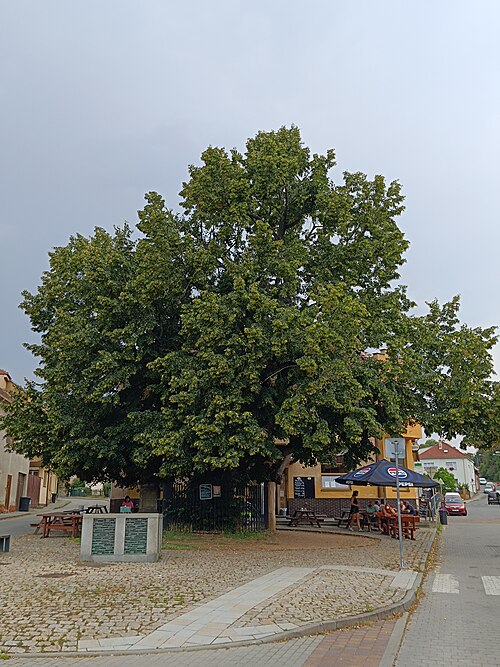
In 1933 a neighbour tried to smoke a marten out of this tree by packing the hollow with straw and setting it alight.
Photo: Martin Strachoň, CC BY-SA 4.0 (CC BY-SA 4.0)
Before Oslo's Royal Palace existed, this stretch of ground was Sommerro, a meadow the mayor Christian Henrik Stoedt turned into a small rococo garden in 1751.
Tilia cordata, the Small-Leaved Lime, is Britain's only native lime, and in the wild it all but disappears once you travel north of the Midlands, which makes the twenty-five metre example growing i...
Zurich's history is often said to begin on this hilltop, a Roman customs post and later a Carolingian imperial palace, and lindens have been planted here continuously since at least 1474, when a ch...
This winter linden did not grow from a seed that fell nearby.
Almost every lime along a Dutch street is a hybrid.
Two hundred metres from this lime tree is the bridge where the Cold War traded people.
People took tea under this lime, and the floor they did it on is still there.
Potsdam's register places this lime with unusual precision: by the church, in front of the sacristy.
The official record fixes this tree's position by the village weighbridge.
Two trees, one monument.
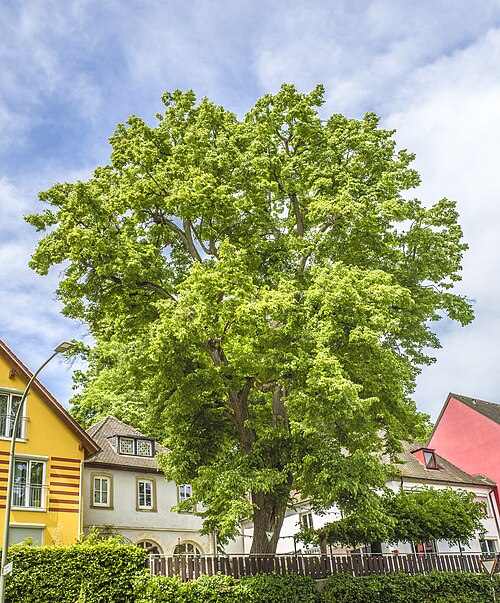
Its official name is a house number.
Photo: Stephan van Helden (CC BY-SA 4.0)
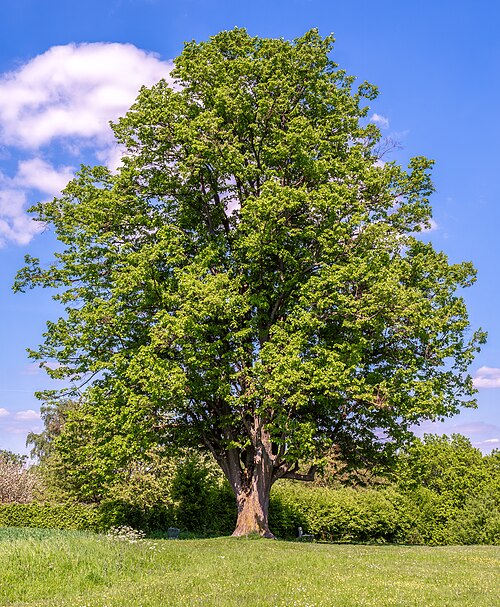
The estate this tree is named after was pulled down in the middle of the 1960s.
Photo: Reinhold Möller (CC BY-SA 4.0)
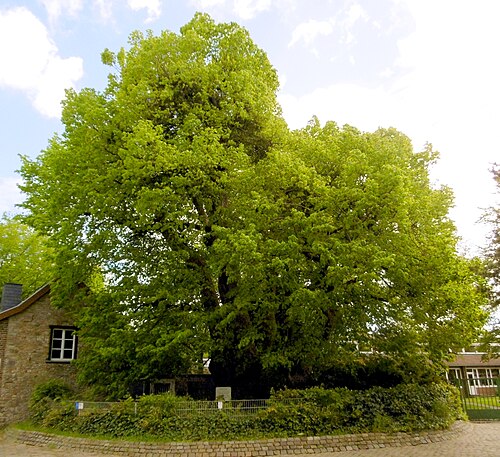
Aachen's oldest tree used to help decide who died.
Photo: ArthurMcGill, via Wikimedia Commons, CC BY 3.0 (CC BY 3.0)
A tree decided Schlagsdorf had a new ruler, and later decided who got whipped for it.
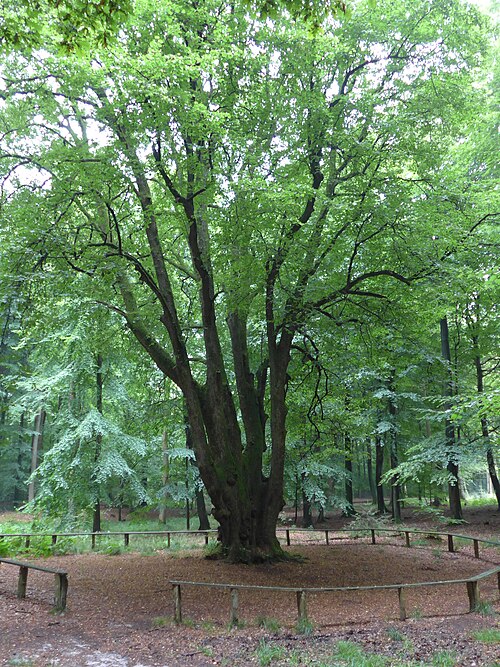
Five stems, one tree, and the shape of an open hand.
Photo: JanTappenbeck (CC BY-SA 3.0)
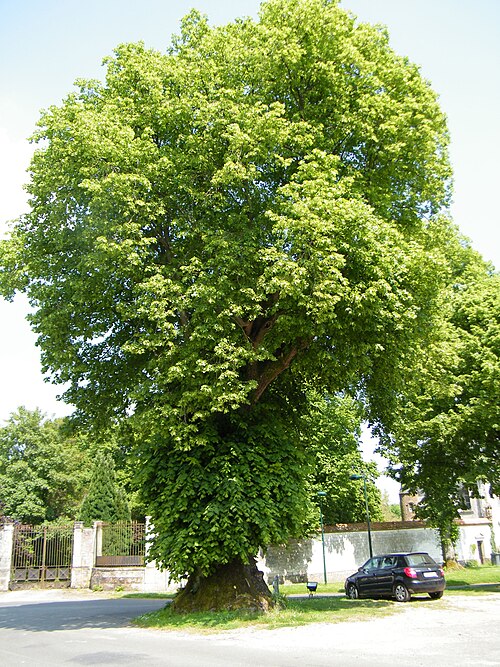
The storm of 15 and 16 October 1987 tore the crown clean off this lime.
Photo: APictche (CC BY-SA 4.0)
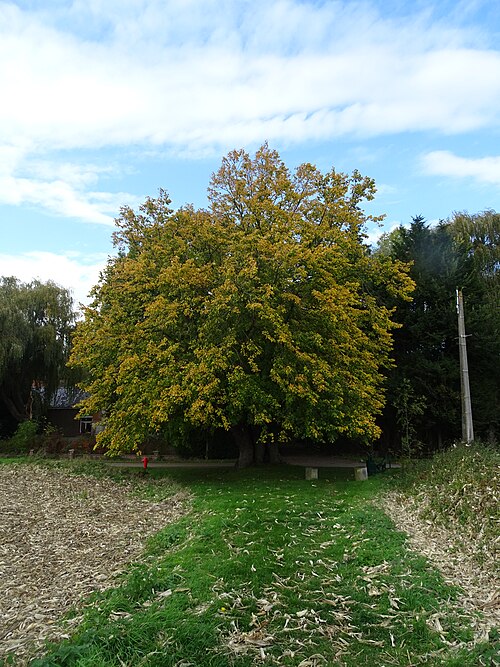
Shellfire levelled the village of Aubers in the First World War.
Photo: Pierre André Leclercq (CC BY-SA 4.0)
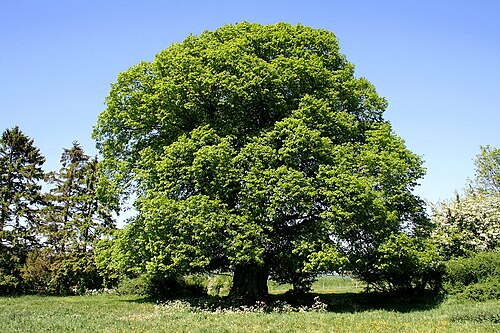
Cows graze right up to this lime, kept off the trunk itself only by a stock fence and a line of electric wire, which is why the Grand Tilleul of Bioul is a tree you view from the road rather than w...
Photo: Jean-Pol GRANDMONT (CC BY 2.5)
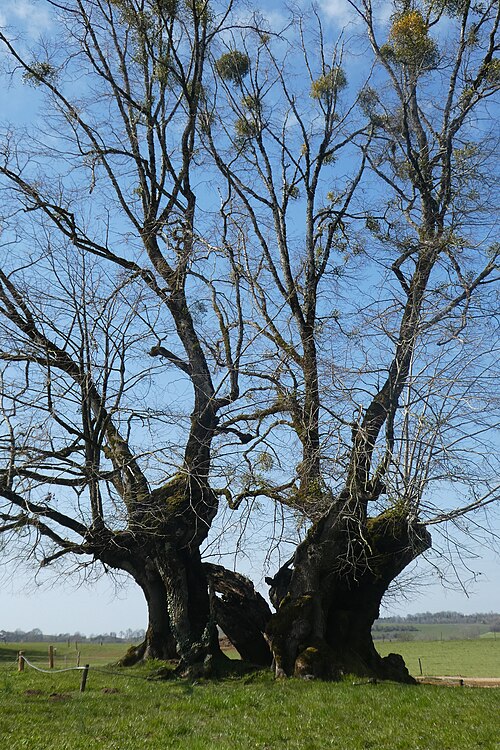
Depending on who measured it, this lime is either 17 metres round and the largest in France, or 13.2 metres and merely enormous.
Photo: Pmau (CC BY-SA 4.0)
Seven people could hide inside this lime, and an opening near the top of the hollow let whoever was in there look out over the fields.
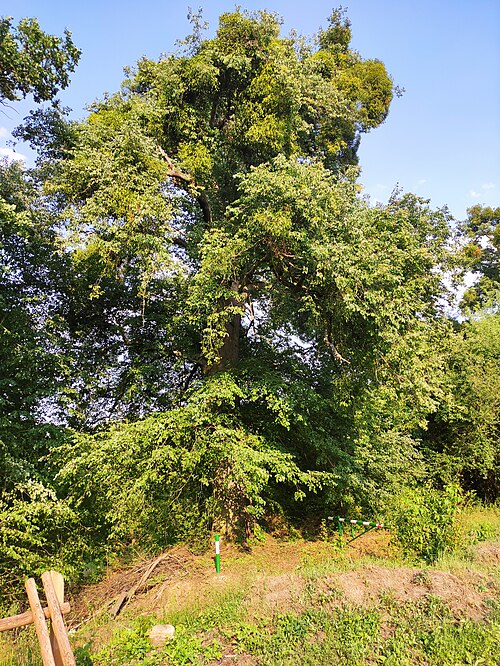
A lime rarely out-measures the oak growing fifteen metres away.
Photo: Fry72 (CC BY-SA 4.0)
Somebody in the forest service named this lime after a saint.
On the night of 5 October 2017 Hurricane Ksawery put this lime on the ground.
Measure this lime at chest height and you get 5.45 metres of single trunk.
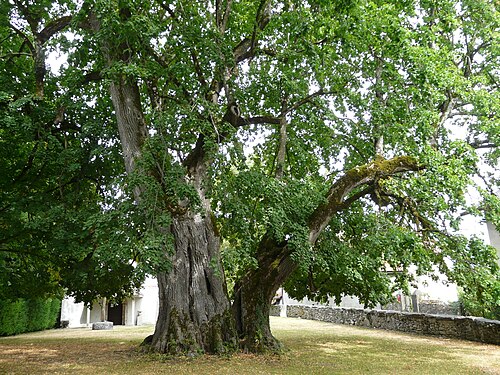
This lime measures 10.2 metres around the trunk at chest height.
Photo: Camster (CC BY-SA 4.0)
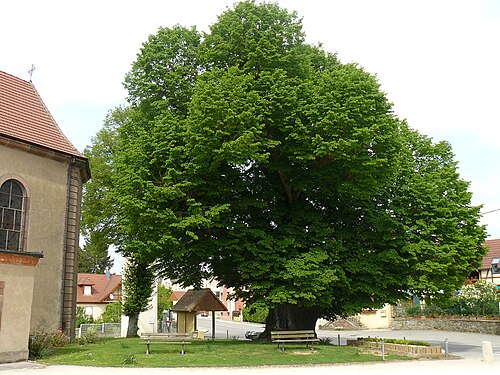
On 29 December 1674 the Marshal de Turenne stopped at Fontaine and took his officers' reports under this lime, with the village turning out to pay its respects.
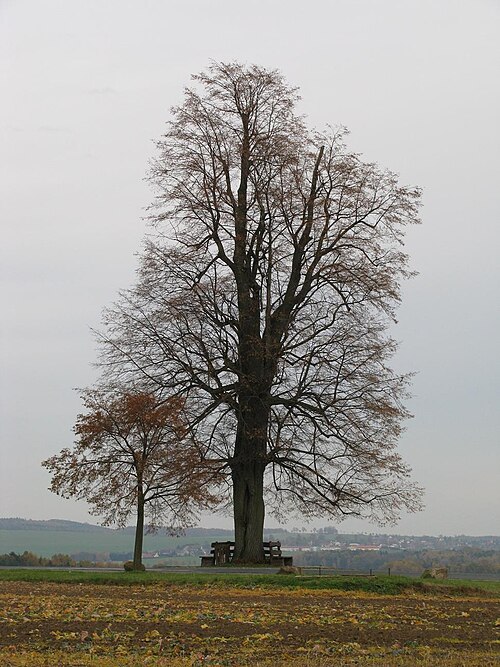
A pastor's wife had this lime planted in 1783 to mark the birth of her first son.
Photo: WikiAnika (CC BY-SA 3.0)
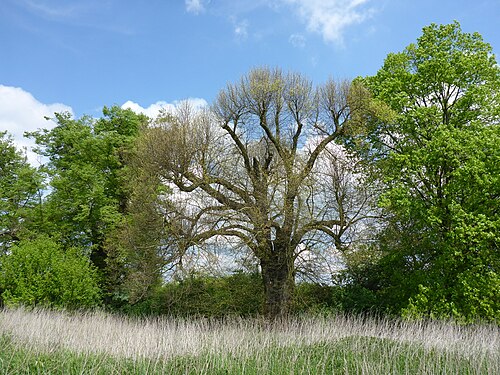
The oldest of these limes has been through fire twice, taken lightning and repeated storm damage, and a survey in February 2021 still described it as vital, if partly hollow.
Photo: B!G!1851 (CC BY-SA 4.0)
Nobody has to estimate this tree's age.
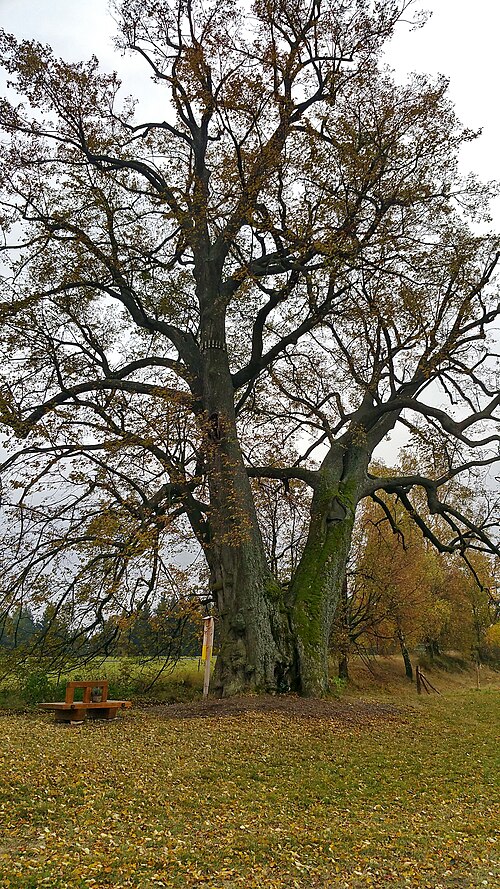
This lime lost a third of itself and came back looking deliberate.
Photo: Lubor Ferenc (CC BY-SA 4.0)
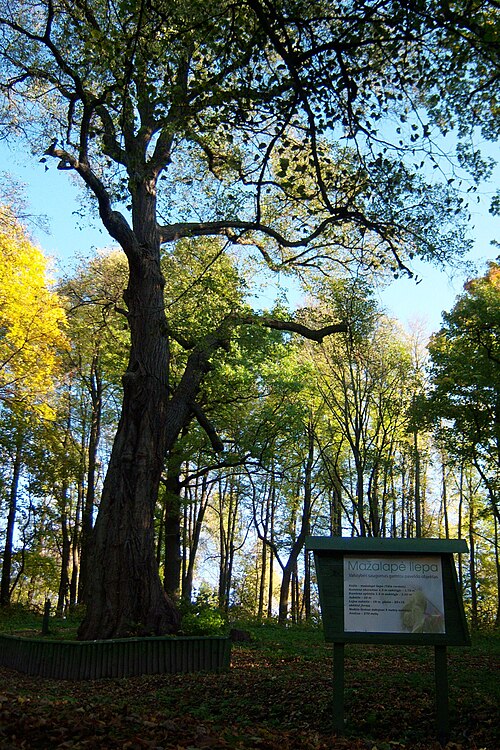
Most tree ages on this site are estimates.
Photo: Vilensija (CC BY-SA 3.0)
Four trunks, five crown tops, and by local tradition it began as five lime saplings planted together in one spot.
In 2011 a lime in front of a village church in the Szekler hills of Transylvania was voted European Tree of the Year, with 23,298 votes.
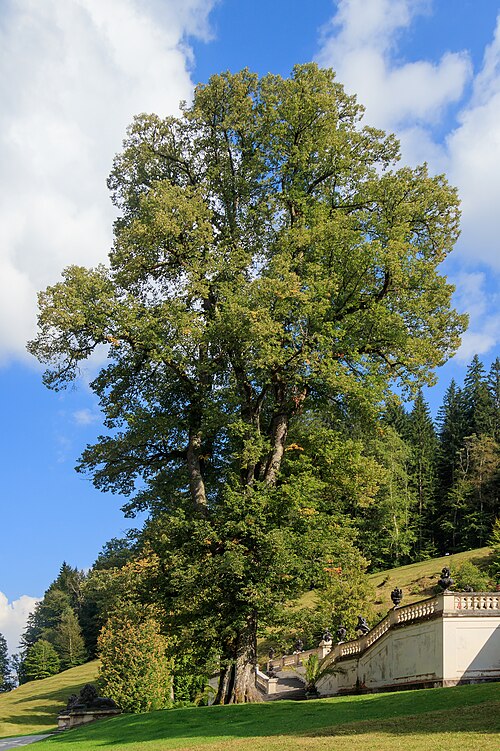
When King Ludwig II laid out the gardens of Linderhof, his smallest and only fully finished palace, the plan called for clearing most of what already grew on the site to make way for Carl von Effne...
Photo: Llez (CC BY-SA 3.0)
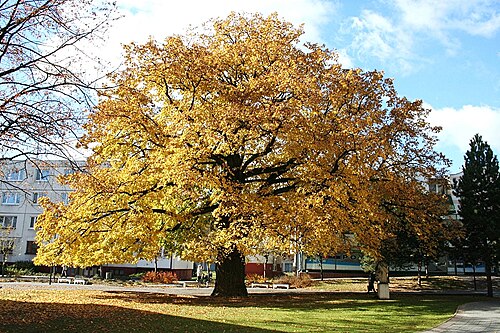
Lipany is named after lindens, and by local tradition this is the last one left.
Photo: Ekopolis Foundation (CC BY-SA 4.0)
Lightning split this lime roughly down the middle and the tree answered by growing back around itself.
Somebody cut this tree down, and it came back with six trunks.
Step inside the trunk of this lime and there is a seat waiting: a square bench built into the hollow centre, framed by three tiers of branches trained out over an octagonal wooden support.
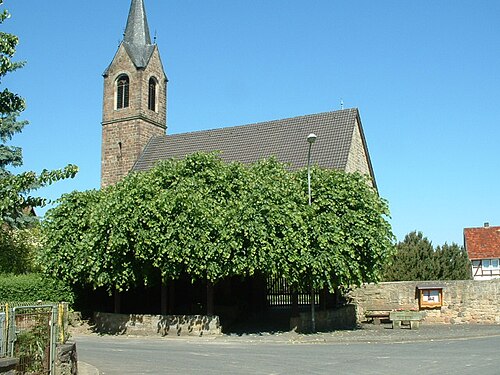
This lime is the thickest of Malsfeld's four guided lindens, 3.34 metres round, and by some distance the shortest, cropped back so hard and so often that it stands just 5 metres tall.
Photo: Dr. Klaus Lambrecht (CC BY-SA 3.0)
The memorial this linden stands beside was built for one war and unveiled three months before the next one began.
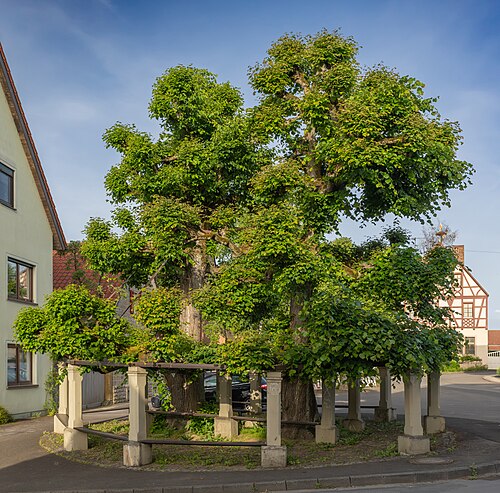
By village tradition these two limes were planted in 1683 by Franconian soldiers who had just come home from the relief of Vienna, which is how they got their name: the Turkish limes.
Photo: Stephan van Helden (CC BY-SA 4.0)
Three saplings went into one grave in 1863, and they are now a single tree.
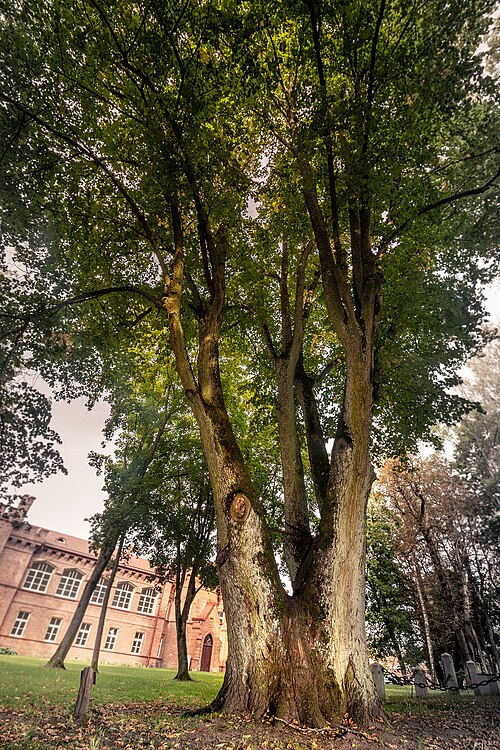
Seven trunks, and a legend that accounts for them in the worst way available.
Photo: Darius Petrulis (CC BY-SA 4.0)
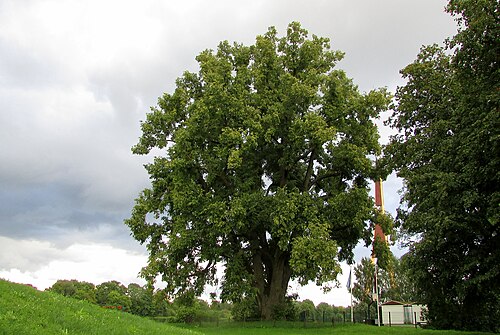
A rowan grows out of this linden, rooted in the fork where the trunk divides.
Photo: Evita wiki (CC BY-SA 4.0)
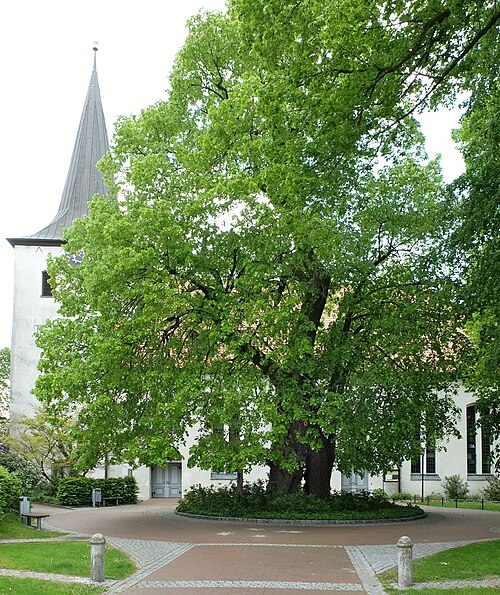
Court was held under this lime, and by the account that survives it had been going on since 1288.
Photo: Yvonne Bentele (CC BY-SA 3.0)
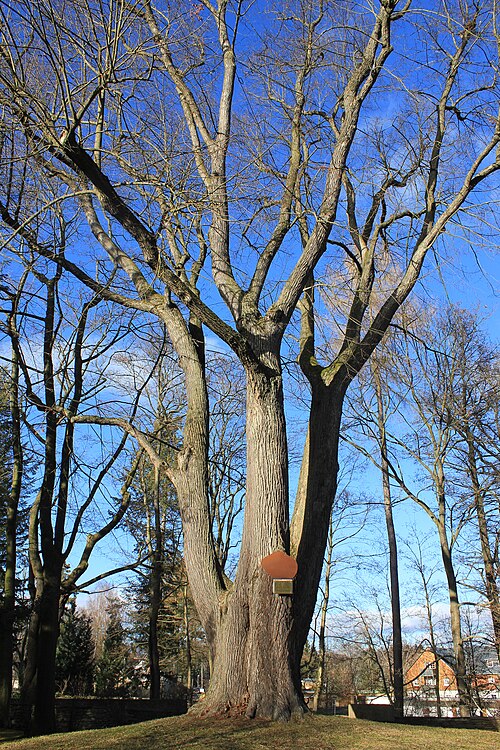
The castle is about 800 years old and the lime in its park is not far behind.
Photo: Kora27 (CC BY-SA 3.0)
The church was already three centuries old before anyone planted the tree in front of it.
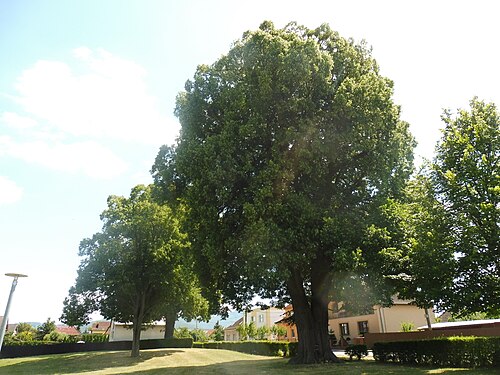
Two sources have dated the larger of these two lindens and their answers are 250 years apart.
Photo: TomphanTK (CC BY-SA 4.0)
Inside the hollow trunk of the thickest lime in the Baltic states, the wood has grown into shapes that visitors read as owls, hedgehogs, turtles and snakes.
Nobody has recorded how old these two lindens are.
Explore by city: Munich · Berlin · Leipzig · Krakow · Vienna · Vilnius · Boston · Warsaw · Ljubljana · Trieste · Copenhagen · Dresden · Brno · Oslo · York · Zurich · Delft · Arnhem · Cesky Krumlov · Bamberg · Giessen · Kaunas · Malsfeld · Ottawa · Riga · Stuttgart · every city · or browse all species.