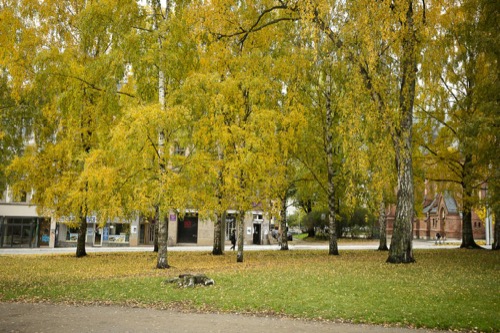
Before Oslo's Royal Palace existed, this stretch of ground was Sommerro, a meadow the mayor Christian Henrik Stoedt turned into a small rococo garden in 1751. When the merchant Bernt Anker took over the property in 1778, he kept the formal garden but planted a linden avenue through the surrounding land he was reshaping into a more naturalistic park, the alley that still opens today toward Henrik Ibsens gate. The Royal Palace itself would not be built for another half-century, going up between 1823 and 1849 around and beside the park Anker had already shaped; when it was finished, his linden alley became part of the grounds of a building that did not exist when the trees were planted. Not everything from that planting survives: when a new entrance to the National Theatre metro station opened in the park's southwest corner in 1998, the oldest lindens in that stretch were removed to make way for it. The alley that remains is Oslo's clearest surviving link to the city's pre-royal, merchant-era parkland, predating the palace it now appears to belong to by nearly half a century.
From people who stood here
No notes yet
Did you visit the tree? Leave a note for the next visitor.
Getting there
Dronningparken, Slottsparken, Oslo
You can recognise them by the formation, a straight avenue of limes rather than scattered trees, opening toward Henrik Ibsens gate. They stand in Dronningparken, planted half a century before the palace beside them.
Free, open access, Dronningparken/Slottsparken (public park, open at all times)
National Theatre railway and metro station, short walk
In bloom
July to August, when it flowers
The line is our estimate of how much there is to see, not a measurement. Typical for this species where this tree stands; exact weeks shift with the year.
Sources
Where the facts on this page come from. The story was written with AI from these sources, and readers who know the tree correct it.