Seasons2 of 4
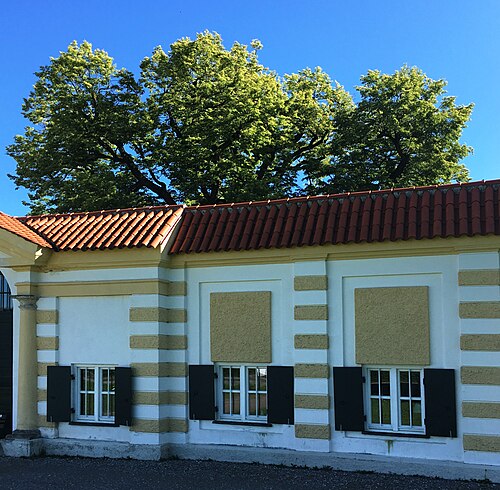
A painter made this tree famous by sitting under it, and the tree has been fighting for its life ever since. On 14 October 2026 it was named a Nationalerbe tree, one of Germany's national heritage trees. The city of Munich puts it at around 450 years, specialists at 400 to 500, and someone who works on tree protection in Munich at 390 or more. Local tradition holds that it was planted as a peace tree after the Thirty Years' War ended in 1648, which would make it younger than those estimates, and no planting record exists to settle it. Landscape painter Philipp Röth worked in its shade around the turn of the 20th century, and it now carries his name and a memorial plaque. That long life has come at a cost. A botched fungal treatment in the 1980s left the trunk hollow, and the tree today stands on eight metal crown braces and a branch support, watered and pruned as what one local report calls an intensive-care patient. Still it leafs out every spring, 23 metres tall, with a trunk measured at 6.45 metres round in January 2026.
From people who stood here
No notes yet
Did you visit the tree? Leave a note for the next visitor.
Getting there
Near Gut Nederling, Moosach, 80992 München
You can recognise it by eight metal crown braces holding up a hollow trunk over six metres round, kept alive as what one report calls an intensive-care patient. It stands near Gut Nederling, Moosach.
Free, public land, viewable from outside Gut Nederling
In bloom
June and July, when its flowers scent the whole meadow
The line is our estimate of how much there is to see, not a measurement. Typical for this species where this tree stands; exact weeks shift with the year.
Sources
Where the facts on this page come from. The story was written with AI from these sources, and readers who know the tree correct it.
- In the official register: Naturdenkmale Bayern (LfU Bayern), no. ND-01985
- de.wikipedia.org, Röth Linde
- hallo-muenchen.de
- de.wikipedia.org, Röth Linde
- muenchen.de