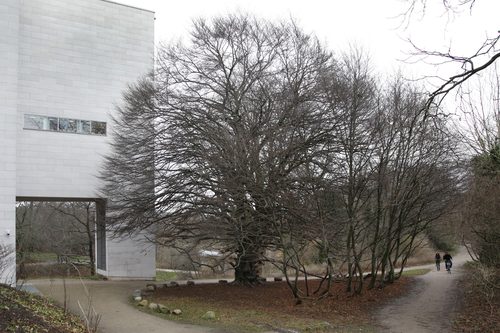
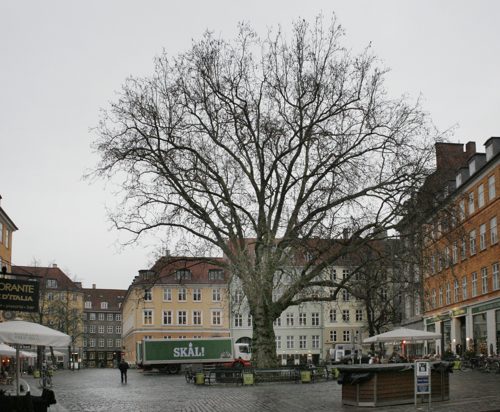
Kongens Have is Copenhagen's oldest public park, laid out from 1606 for King Christian IV beside his new Rosenborg Castle, and its formal linden avenues were planted soon after: Kavalergangen and Damegangen, the two clipped alleys nearest the castle, date to around 1664 and 1700. Almost none of those original trees survive; both avenues have been replanted more than once in the four centuries since. Husalle, a third avenue running parallel to the garden's main axis a little further north, has fared differently: its lindens are described by garden historians as among the oldest living trees in Denmark, having escaped the repeated replacements that emptied the more formal avenues nearer the castle of their original planting. The garden itself has survived far more than ordinary wear. It has hosted royal pleasure grounds, public promenades, and, in recent years, a summer sound installation that lets speakers hidden in ten of its trees tell stories to anyone who walks close enough to trigger them, a very modern use for trees old enough to have shaded Danish kings centuries before recorded sound existed. Husalle's lindens do their storytelling the old way, simply by having outlasted almost everything planted around them.
From people who stood here
No notes yet
Did you visit the tree? Leave a note for the next visitor.
Getting there
Husalle, Kongens Have, Copenhagen
Not one tree but the Husalle avenue itself, running parallel to the main axis further north than the two clipped alleys nearest the castle.
Norreport railway and metro station, short walk
In bloom
June to July, when it flowers
The line is our estimate of how much there is to see, not a measurement. Typical for this species where this tree stands; exact weeks shift with the year.
Sources
Where the facts on this page come from. The story was written with AI from these sources, and readers who know the tree correct it.