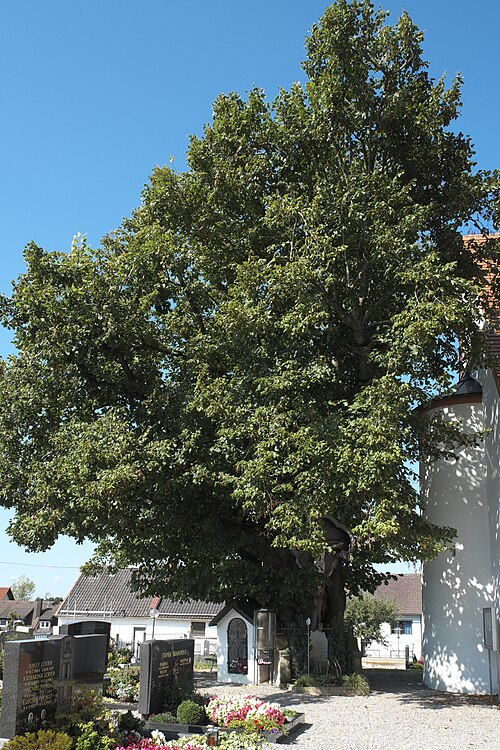
A king's daughter is said to have lived inside this tree for 35 years.
Photo: Rainer Lippert
Tilia platyphyllos
A lime has marked the exact spot where three Brussels communes meet since at least 1777, and that is the sort of job this species keeps getting: boundary post, landmark, court, dance floor, the tree a place organises itself around. We map 84 of them, in 70 cities.
Schenklengsfeld held its court under its lime from 1557 to 1796; at 17.91 metres round it has the largest trunk circumference of any tree in Germany, and in the 2018 heatwave the village fire brigade pumped 100,000 litres of water onto it. Heede's is widely reported as the thickest lime in Europe and sits on the village coat of arms. Prague has one a president refused to lose, Tomas Garrigue Masaryk having had a castle terrace built around it. Telling a large-leaved lime from a small-leaved one is harder than it sounds, and under Nuremberg's 400 year old tree the sign and the botanists still disagree.
A king's daughter is said to have lived inside this tree for 35 years.
Photo: Rainer Lippert
Two large-leaved limes stand together at the chapel of St.
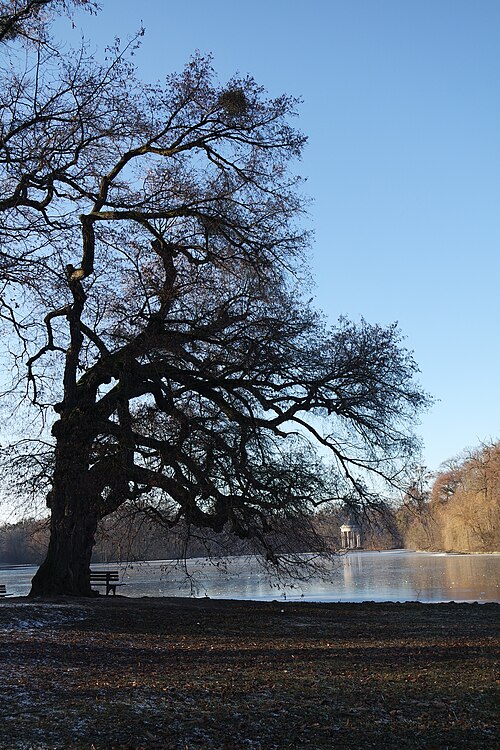
Munich protects this lime, in law, for being strange looking.
Photo: NiamhNature (CC BY-SA 4.0)
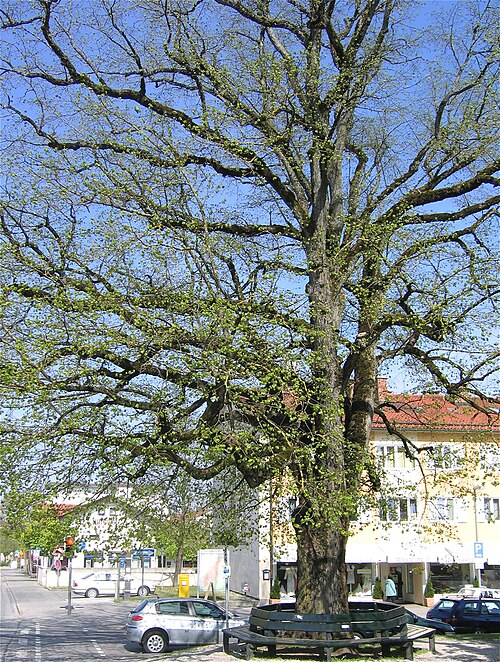
This lime was planted to celebrate a constitution, and it has outlived the kingdom that wrote it.
Photo: Rufus46 (CC BY-SA 3.0)
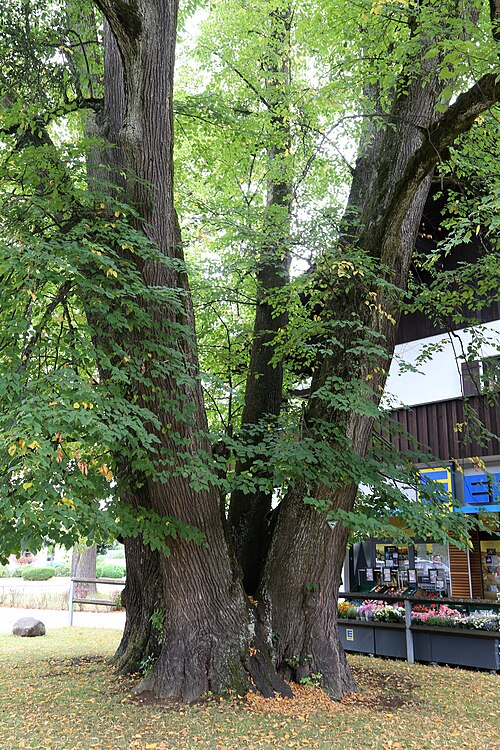
Seven trunks rise from one base here, and together they measure about ten and a half metres round.
Photo: Rufus46 (CC BY-SA 4.0)
This lime is already drawn on a plan of the park from 1807, which makes it one of very few trees in Munich with a paper trail.
The best part of this lime is at the bottom.
Landsberger Strasse is the old road west out of Munich, the one that ran to Landsberg and on toward Augsburg before anybody thought of a motorway, and near its far end this lime holds down a corner...
Four trunks leave the ground here as one tree, and Vilnius has protected the result since 1996 without ever writing down how old it is.
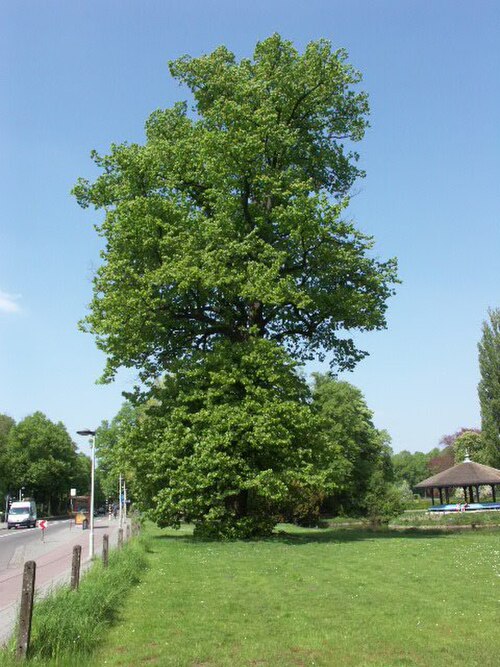
A single linden tree earned government protection in 2010 not for its species, which is common, but for exactly where it stands: in front of Sterckshof castle, at the heart of a park whose ownershi...
Photo: Geert Van der Linden / Flanders Immovable Heritage Agency (CC BY 4.0)
A president picked a tree, and an architect built a terrace around it.
Vienna's tree registry lists nearly nine hundred trees in the eighth district and gives this one a girth of 489 centimetres, which makes it comfortably the thickest thing growing in Josefstadt.
Six metres round at chest height, and then the trunk stops being one trunk.
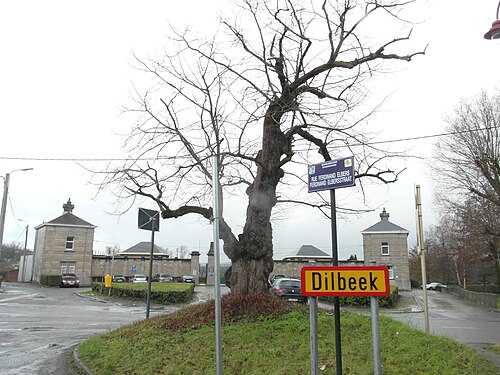
A single lime tree marks the exact spot where three Brussels communes meet, and it has been doing the job since at least 1777, when the Ferraris map, the first detailed survey of the Austrian Nethe...
Photo: Geert Van der Linden / Flanders Immovable Heritage Agency (CC BY 4.0)
Every tree the national register lists inside Arboretum Trompenburg comes with a plot number, except this one.
This lime is the youngest of three different Tilia species this page now protects, and the arithmetic that ages it borrows from the other two.
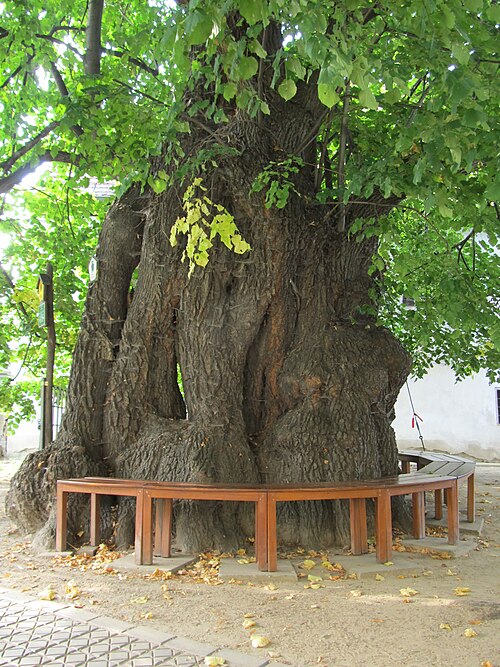
Half of this tree burned in 1818 and what holds the other half up is its own roots.
Photo: Rainer Lippert
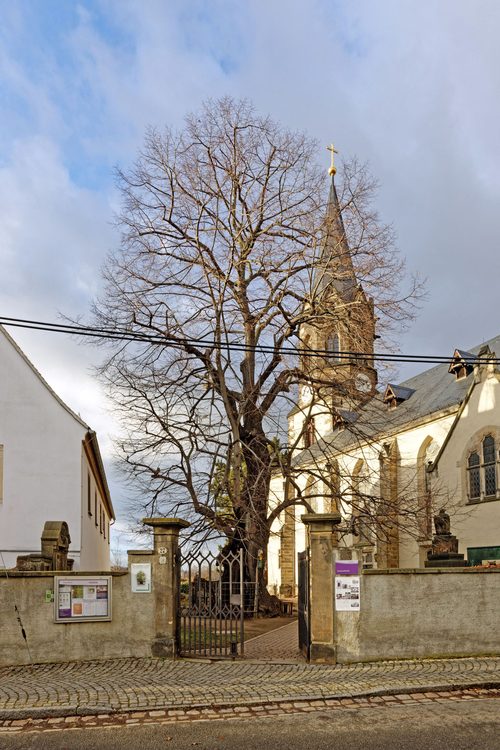
Few trees come with their planter's own words.
Photo: Rainer Lippert
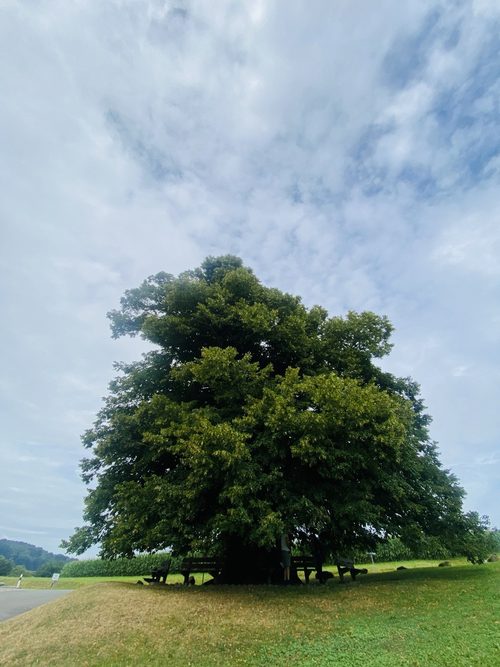
Local legend says that if this linden's shadow ever stops reaching Habsburg Castle, the world ends.
The trunk you can put a hand on is younger than the tree.
This small park is all that is left of a country place, and it reads like one the moment you walk in: dominated by tall beeches, with the light already gone by the time it reaches the ground.
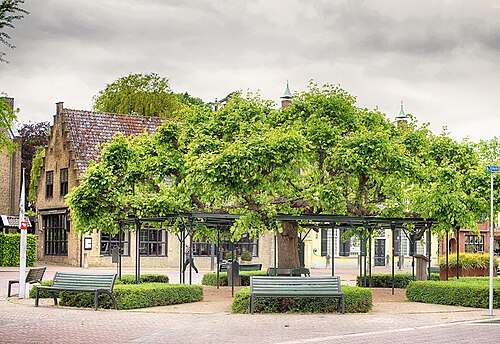
Nearly three and a half centuries old, and barely two metres round, the Moeierboom is small on purpose.
Photo: Egon Zitter (CC BY-SA 4.0)
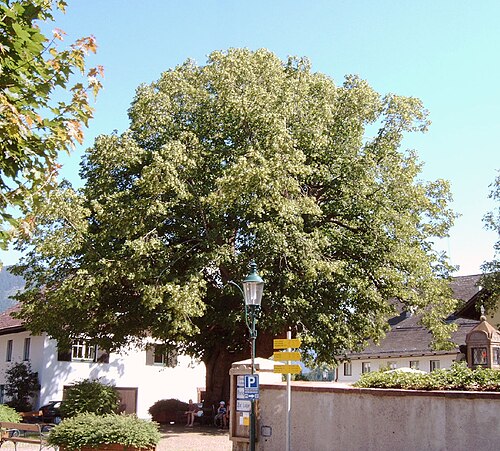
For nine days in the autumn of 1863, a preacher stepped out of the inside of this tree to speak.
Photo: Heinz-Peter Deska (CC BY-SA 3.0)
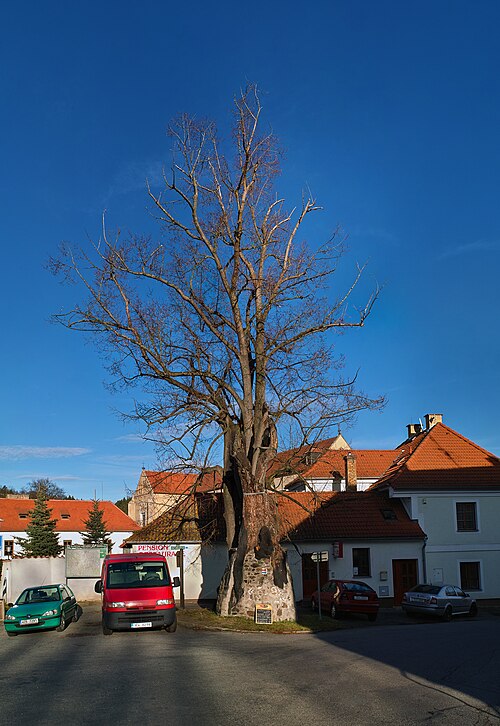
Part of this trunk is stonework.
Photo: Xth-Floor (CC BY-SA 3.0)
The leaves curl into hoods.
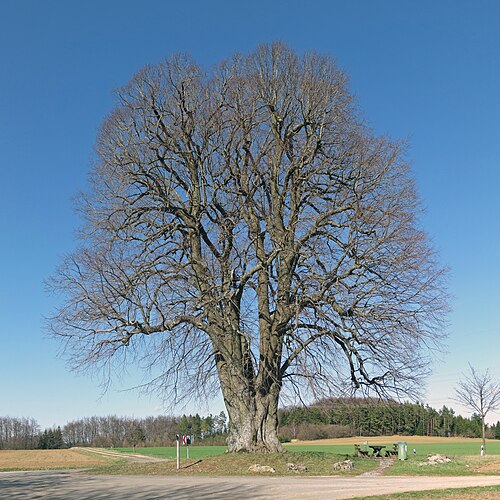
Local legend ties this lime to the Thirty Years' War: soldiers from the Swedish army, the story goes, were buried here in the 1630s and the tree grew from their graves.
Photo: Rainer Lippert
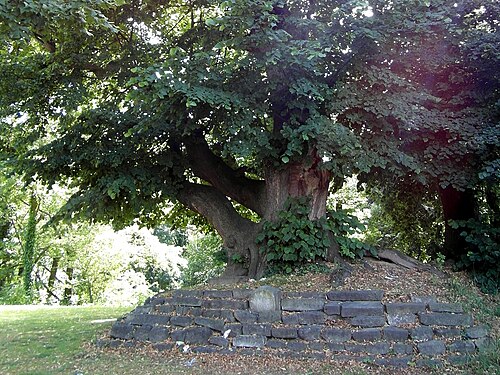
People once climbed into this tree to drink with a future Tsar.
Photo: Den man tau, via Wikimedia Commons, CC BY-SA 4.0 (CC BY-SA 4.0)
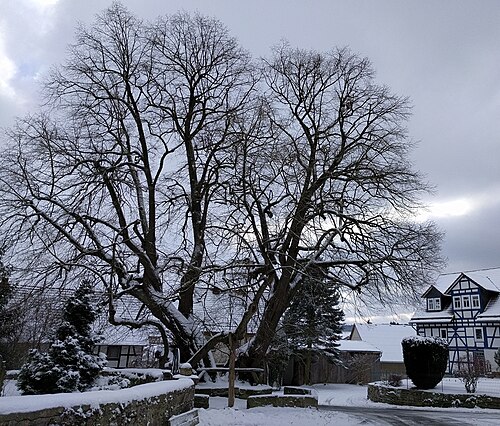
Until around 1900 a band played from inside this tree.
Photo: Rainer Lippert
The old lime on Lindenstraße in Hochneukirchen is slowly swallowing the sign that protects it.
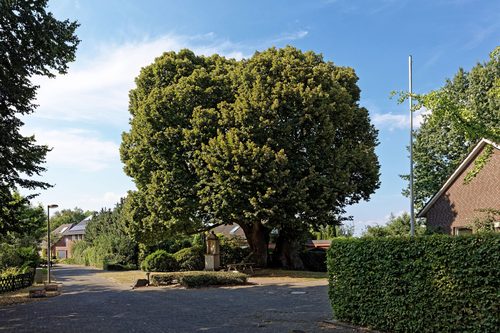
The Dicke Linde of Asbeck measures 10.47 metres round, and part of the reason is that it is no longer one trunk.
Photo: Rainer Lippert
What stands at the Heidenbaum today is the remnant of a court tree, and the ground still shows how big it once was.
Altenberge put this lime on its coat of arms.
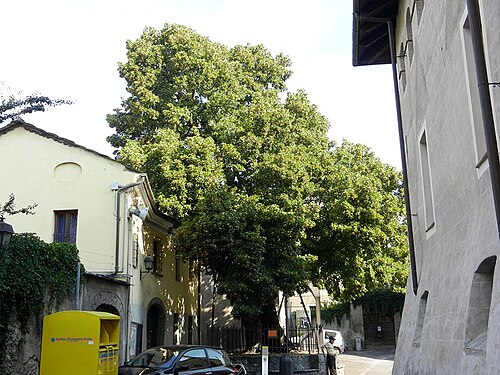
Legend says a sixth-century hermit planted this lime with his own hands, and the tree the city protects today contradicts him: its documented planting sits in the 1530s or 1540s, roughly a thousand...
Photo: Geobia (CC BY-SA 3.0)
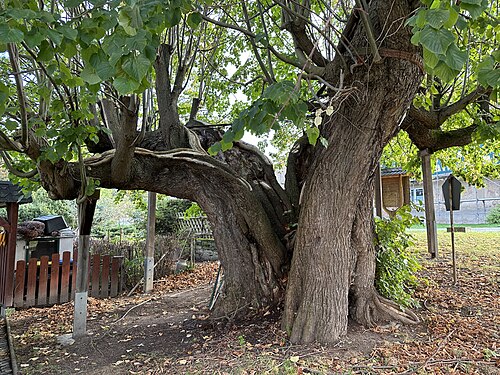
Around 1900 the inn across the road served drinks from a platform built inside this tree.
Photo: Michael Wolf (Webseite) (CC BY-SA 3.0)
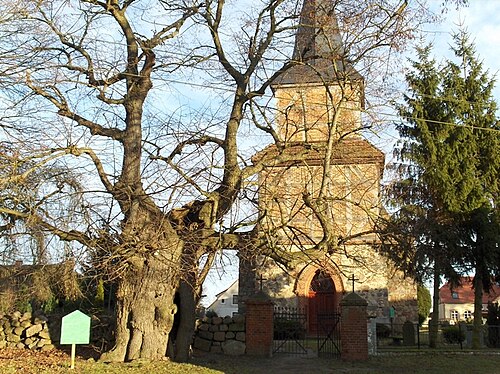
Local tradition says French soldiers stood watch inside this trunk and tapped their beer from it during the Napoleonic wars, which is where the name Franzosenlinde, the French Lime, comes from.
Photo: Martin Thurow (Ma.Thu at de.wikipedia) (CC BY-SA 3.0)
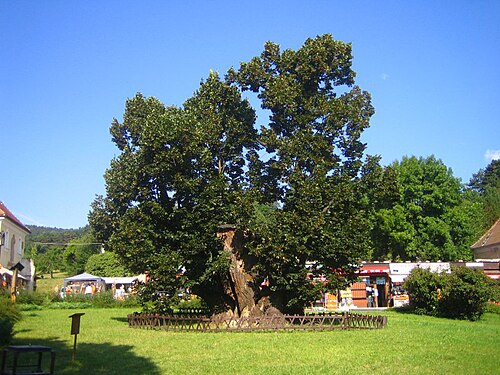
A linden propagated from this tree in 2005 had nearly caught up with its parent ten years later.
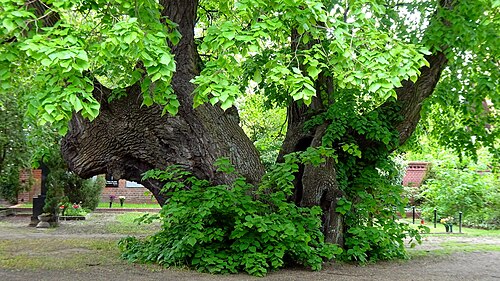
Brandenburg's thickest recorded tree stands in a village churchyard, not a forest, and it has been quietly falling apart for longer than anyone alive has watched it happen.
Photo: Peter Troendlin (CC BY-SA 4.0)
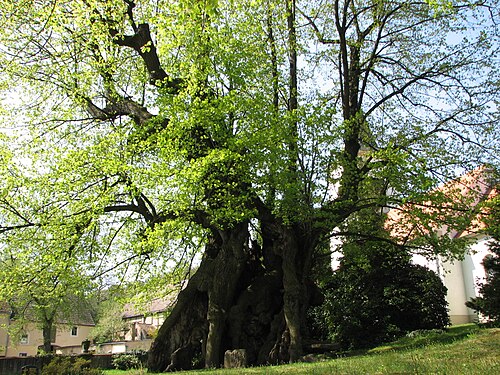
Justice for the Meissen region was handed down under this lime.
Photo: Rainer Lippert
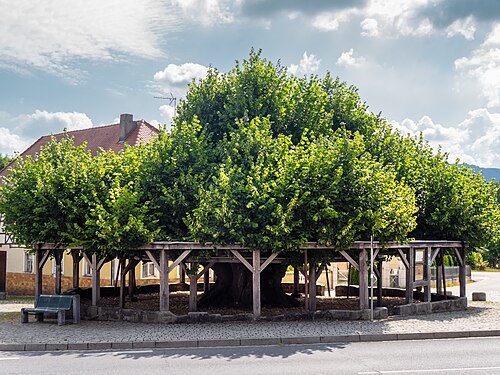
The crown of this lime sits eight metres up and runs twenty metres across, flat as a table, and none of that is an accident.
Photo: Rainer Lippert
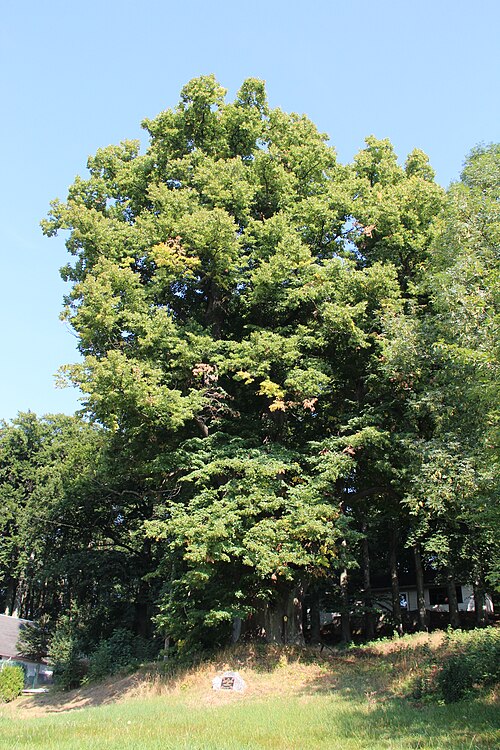
On the night of 8 June 1813 the poet Theodor Koerner bivouacked with part of his volunteer corps on the meadow beside this lime, days before a raid on Hof and months before he was killed in action...
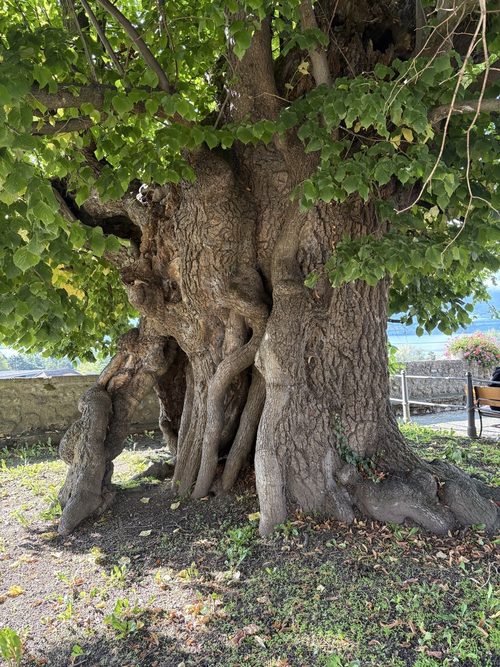
On a terrace above Lake Neuchatel in Estavayer-le-Lac, a lime has grown into something that hardly looks like a single tree.
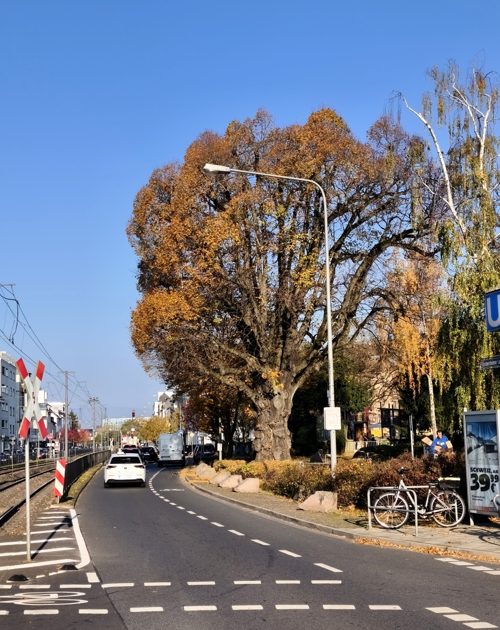
The U-Bahn along Eschersheimer Landstrasse takes a slight bend where this lime stands, and by local account it was laid that way to spare the tree.
Photo: Hans Hofele
These two limes are the oldest protected trees in Freiburg, first on the city's Naturdenkmal register when it opened in 1954, and local tradition puts their planting in 1645, during the last years...
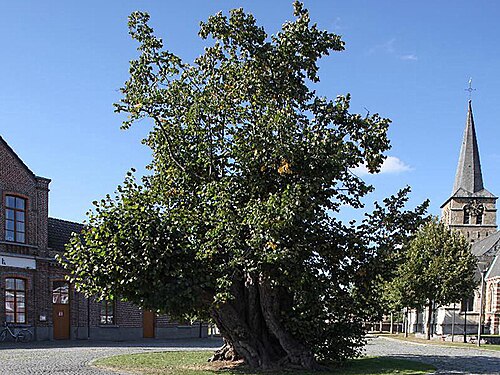
In 2016 the country voted this lime its tree of the year, and the tree it beat into second place is called the Thousand-Year Oak of Lummen.
Photo: Roel Jacobs, Hugo Baeyens, Benedicte Vispoel (CC BY-SA 4.0)
The name says a thousand years.
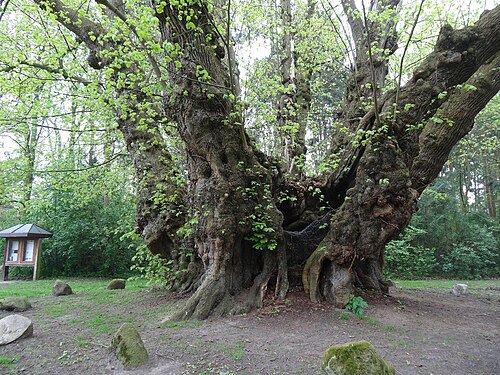
This is widely reported as the thickest lime tree in Europe, and the two published figures for its waist sit nearly two metres apart.
Photo: Rainer Lippert
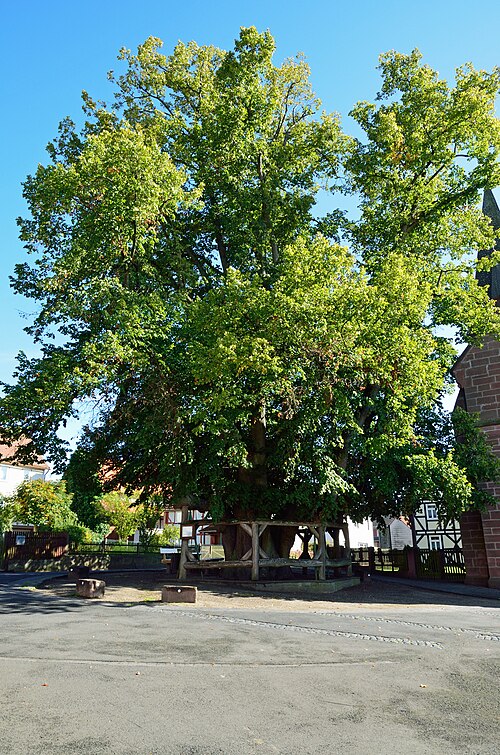
Climb the ladder built against its trunk and you reach a room.
Photo: Rainer Lippert
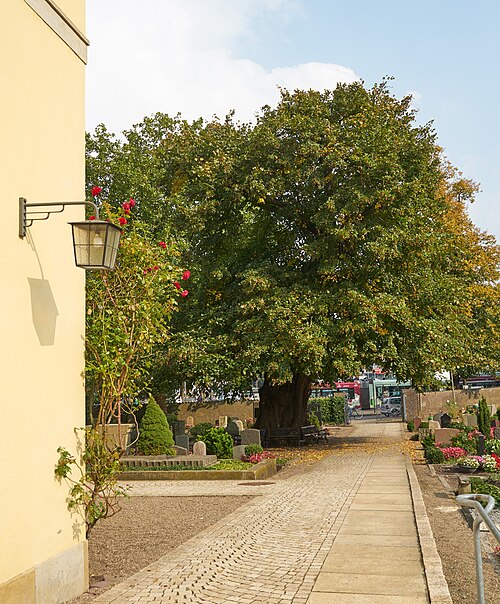
Bremen's oldest tree is not really one tree.
Photo: Godewind (CC BY-SA 4.0)
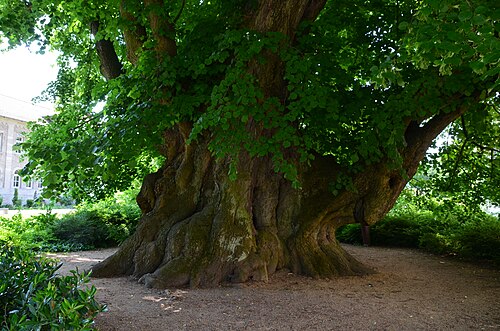
There is brickwork inside this lime.
Photo: Rainer Lippert
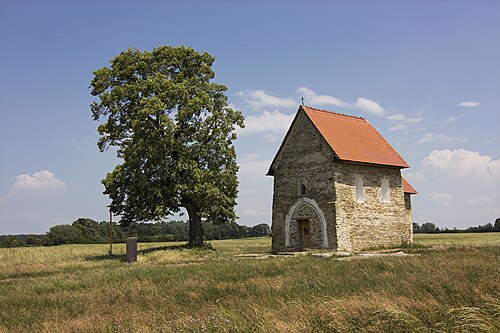
The building beside this lime is the real headline.
Photo: Martin Babarík (CC BY-SA 4.0)
When a uranium mine was proposed under the Podjestedi countryside, the campaign against it took these two limes as its emblem.
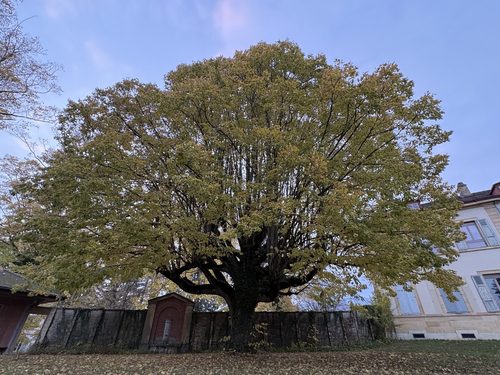
A large-leaved lime stands near the wall of the Préfargier park in Laténa, and a reader photographed it in late autumn when its leaves had turned yellow-green.
The city's tree register and the city's tourist office disagree about this linden by a hundred years.
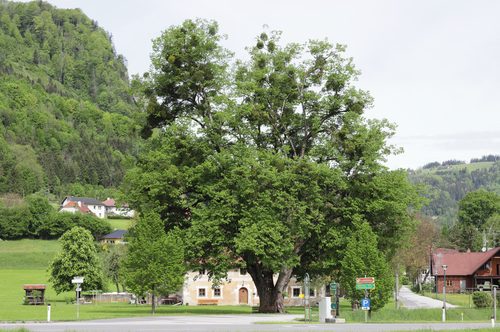
This lime has a signposted parking bay and a bench of its own, and almost no paperwork.
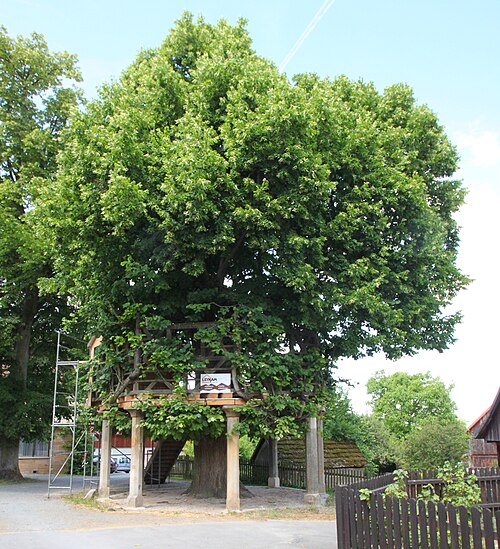
Every year since 1792, with barely a gap, this village has danced four metres up inside a tree.
Photo: Benreis (CC BY-SA 4.0)
Twelve wooden posts hold this lime up: eight round the outside, four within, all of them standing on stone footings and last rebuilt in 1988.
Slovakia's thickest tree is hollow, and during the war partisans are said to have hidden inside it.
European regional development money helped put a dance floor back into a 380-year-old lime.
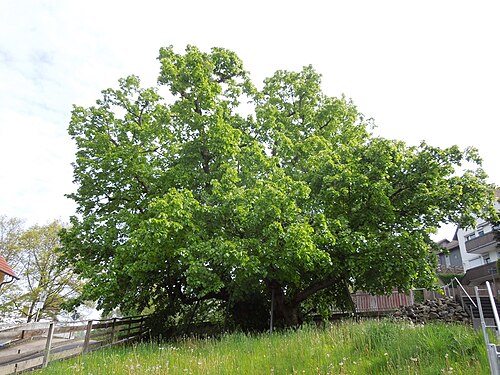
The town and the tree may be the same age, and that is where the number comes from.
Photo: Rainer Lippert
On 28 December 2019 a group of former carnival princes planted a tree inside this tree.
The sign at the foot of this tree and the botanists who have looked at its leaves do not agree on what it is.
The register's entry for this tree is mostly about medicine.
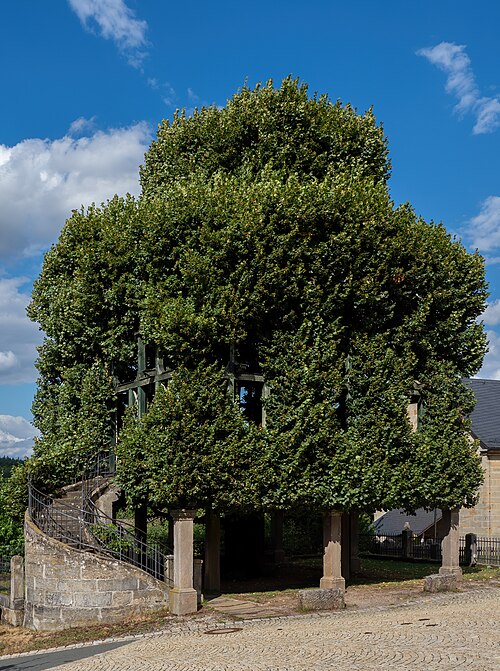
A spiral staircase runs up into this tree and comes out in a room.
Photo: Ermell (CC BY-SA 4.0)
Four old limes and five young ones stand in a ring on the western side of Plunge Manor Park, and this is the tree the ring was built around.
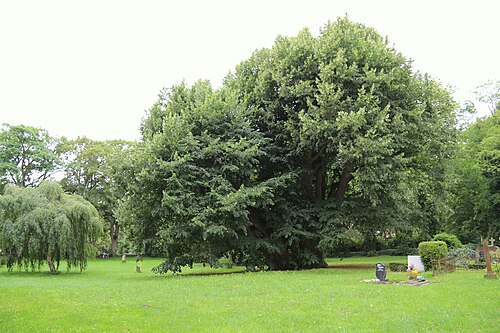
Everyone assumed this was three trees.
Photo: Rainer Lippert
Portland's heritage register is a dry document, all measurements and directions, and for this tree it breaks character: "This tree is gigantic." The figures back the word up. It is a large-leaved...
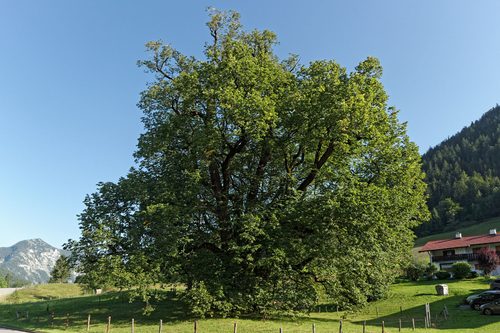
A tape measure around this lime's trunk in June 2025 read 10.85 metres, barely different from the 10.90 metres recorded in 2015 and the 11.30 metres logged at chest height back in 1988, so a tree t...
Photo: Rainer Lippert
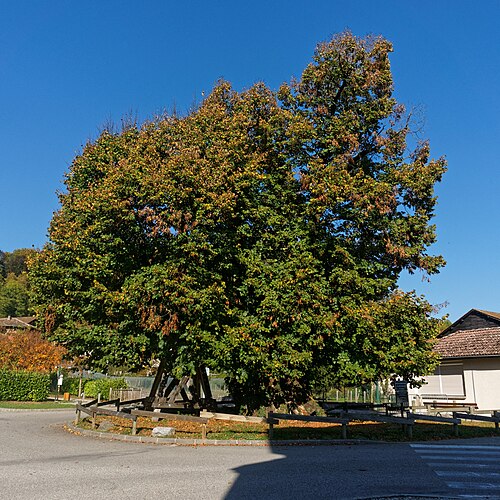
In 1891 somebody filled this tree with masonry.
Photo: Jvillafruela (CC BY-SA 4.0)
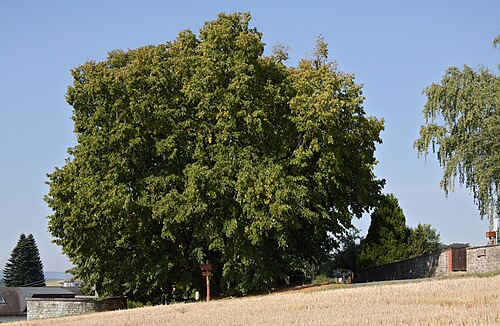
Fourteen point three four metres around, which puts this among the thickest lime trees recorded in Germany.
Photo: Rainer Lippert
A pilgrimage site exists because of this tree.
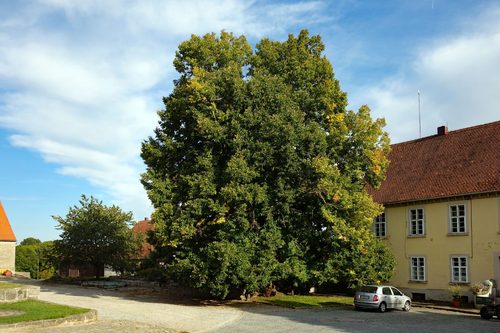
The trunk is in two pieces, and they are one tree.
Photo: Rainer Lippert
The town wall beside this linden records the year it was planted.
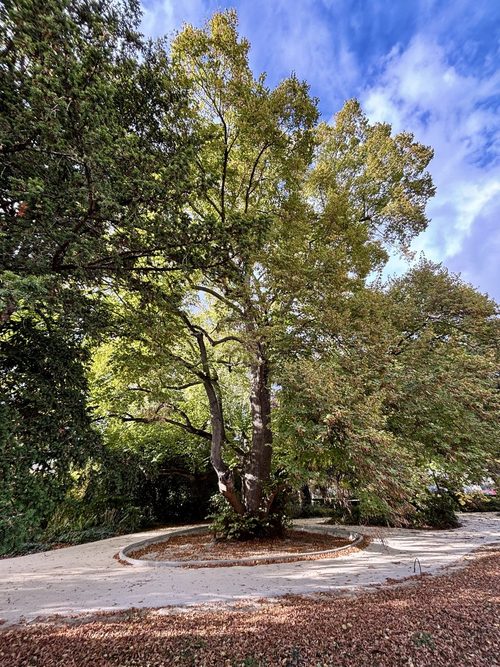
A reader who has been sending us the remarkable trees south of Paris found this lime in the old village centre of Rungis, better known to most people as the home of the great wholesale food market.
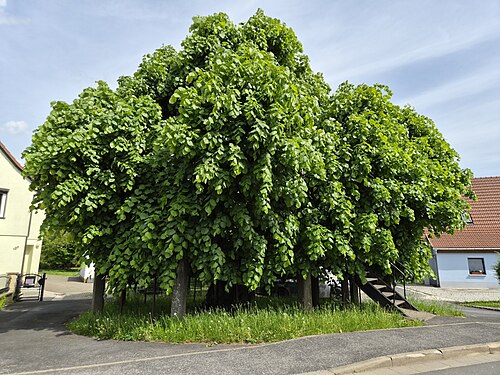
Germany has five lime trees with a dance floor built into the crown, and this is the oldest and thickest of them.
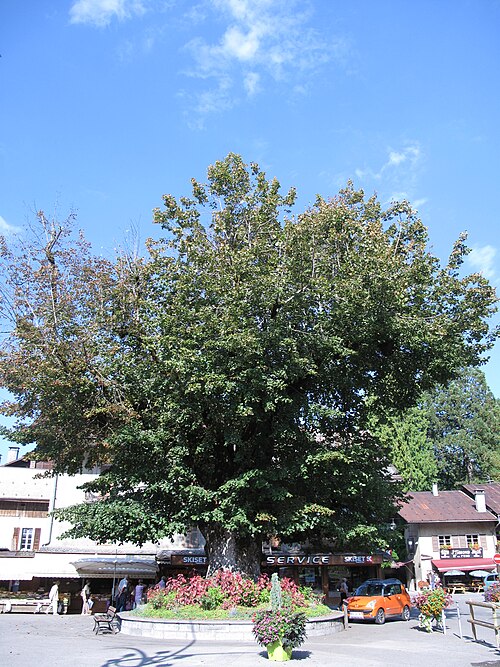
Before Samoëns had a town hall, it had this lime.
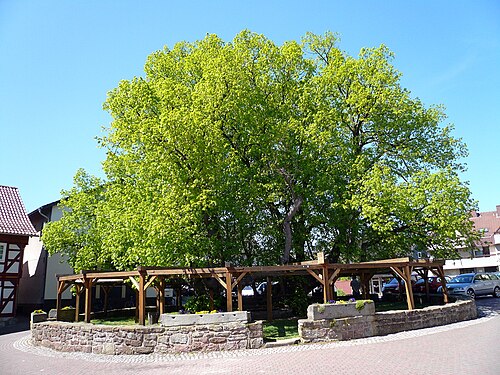
In the heatwave of 2018 the village fire brigade pumped 100,000 litres of water onto this tree.
Photo: Rainer Lippert
Ten metres round is the number that gets repeated about this lime, and it undersells the legend behind it: local tradition dates the planting to 1114, which would make the tree close to nine hundre...
A scribe named Jirousek is said to have hidden inside this trunk in the late 17th century, copying religious books the Counter-Reformation had banned, working by candlelight.
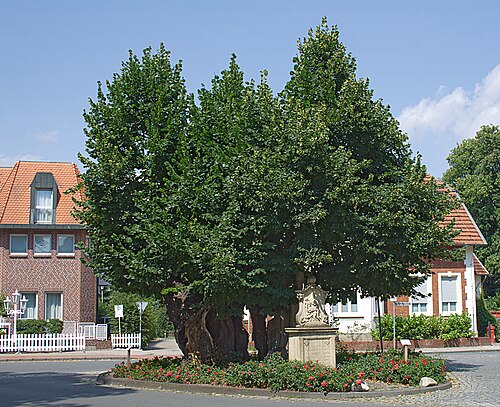
Telgte's pilgrims used to take a leaf of this lime home with them, and in the seventeenth century that habit is reckoned to have cost the tree some 150,000 leaves a year.
Photo: Yvonne Bentele (CC BY-SA 3.0)
For about a fortnight in June this lime does something no other tree on the street can: it fills the air.
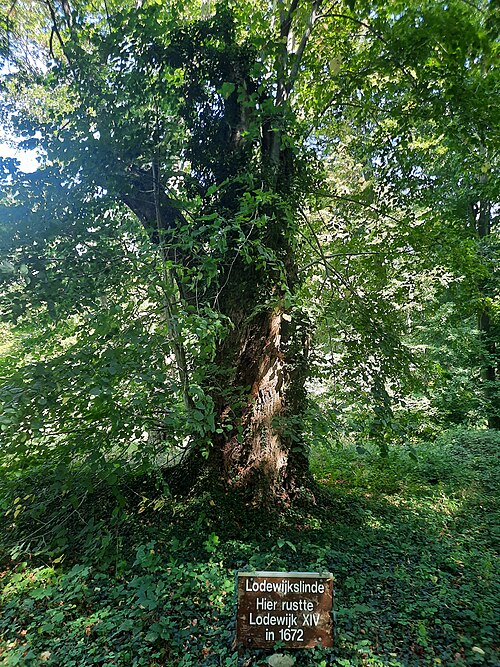
This lime once stood about 30 metres tall.
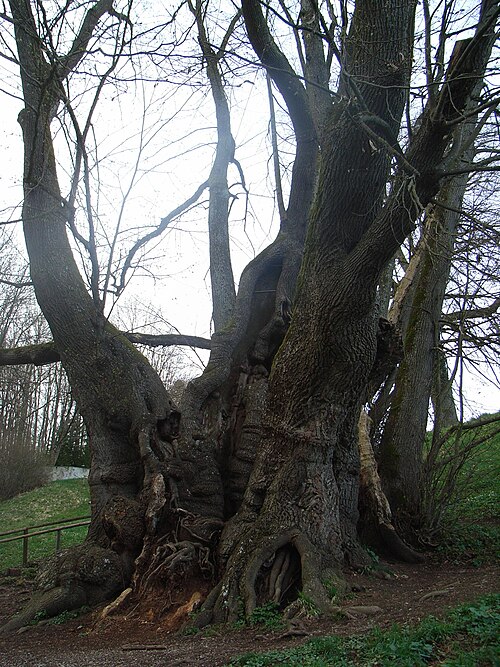
The legend attached to this lime has an arithmetic problem.
Photo: Rainer Lippert
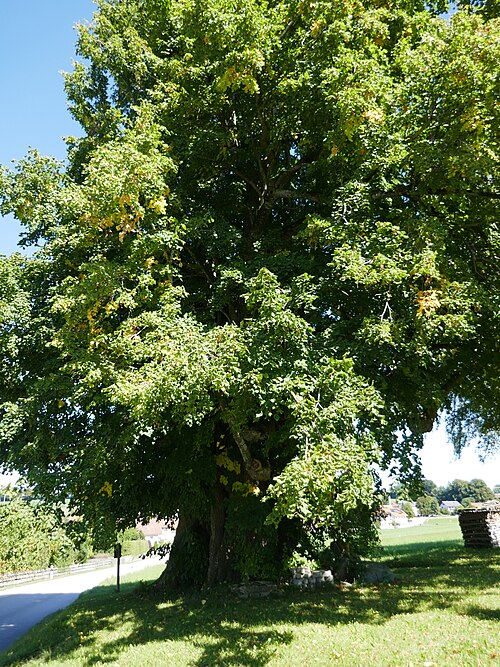
A few kilometres from the Tassilolinde, in a hamlet that shares its municipality, stands a second lime with a name of its own.
Photo: Rainer Lippert
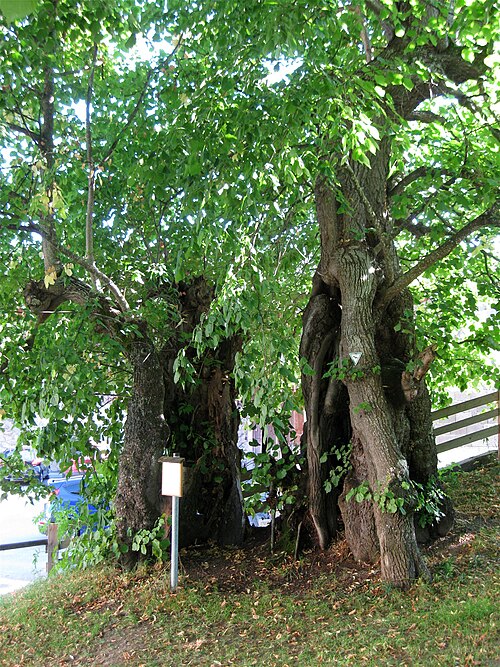
Ten metres round and twelve metres tall, this lime is almost as wide as it is high, which is what centuries of losing limbs and regrowing them does to a tree.
Photo: Rufus46 (CC BY-SA 3.0)
Explore by city: Munich · Antwerp · Vienna · Brussels · Dresden · Zurich · Bamberg · Coppenbrügge · Erdmannrode · Hochneukirchen-Gschaidt · Münsterland · Aosta · Baldenhain · Bargischow · Bojnice · Brielow · Collm · Effeltrich · Eichigt · Estavayer-le-Lac · Frankfurt · Freiburg · Heede · Himmelsberg · Königslutter am Elm · Kopčany · Kotel · Laténa · Leonstein · Limmersdorf · Macon · Myjava · Neudrossenfeld · Niedenstein · Nuenen · Nuremberg · Ottawa · Peesten · Polchow · Ramsau bei Berchtesgaden · Reaumont · Reinborn · Rimov · Rothenburg ob der Tauber · Rungis · Sachsenbrunn · Samoëns · Schenklengsfeld · St. Georgen im Attergau · Teleci · Telgte · Vorden · Wilparting · every city · or browse all species.


