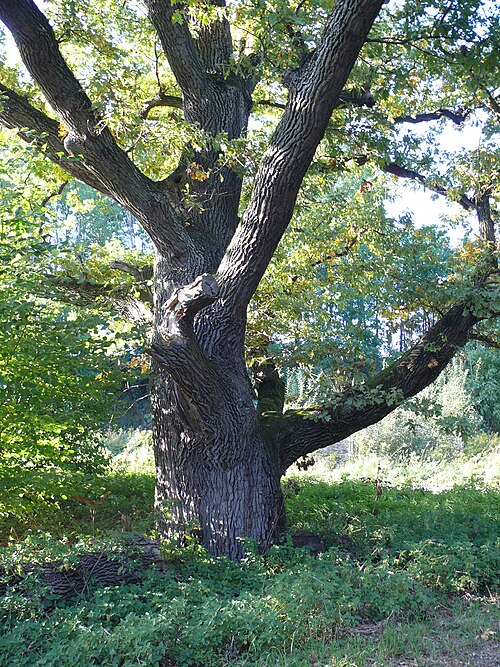
By the county's own estimate this oak is about 220 years old, and it lives fifteen metres from a railway embankment north of Dachau.
Photo: Martinus KE (CC BY-SA 4.0)
Quercus sp.
These oaks carry only their genus, Quercus, because nobody has yet taken a leaf or an acorn stalk close enough to say which species each one is. We map 36 of them, in 32 cities.
That gap does not make them less worth the walk. The oak on the Hrádek at Lukavice, put at nearly 800 years, survived an estate manager stripping cartloads of soil from its roots and was voted Czech Tree of the Year in 2024. Belfast's Belvoir Oak got down to six acorns one winter and is still standing. Ypres's Christusboom has been cut to nothing by two wars and grown back from the stump both times. Austin's Auction Oaks shaded the 1839 sale of town lots before the city existed. Hainich's Betteleiche is hollow because medieval friars are said to have carved it out to keep alms dry. If you can tell a pedunculate from a sessile oak at a glance, tell us.
By the county's own estimate this oak is about 220 years old, and it lives fifteen metres from a railway embankment north of Dachau.
Photo: Martinus KE (CC BY-SA 4.0)
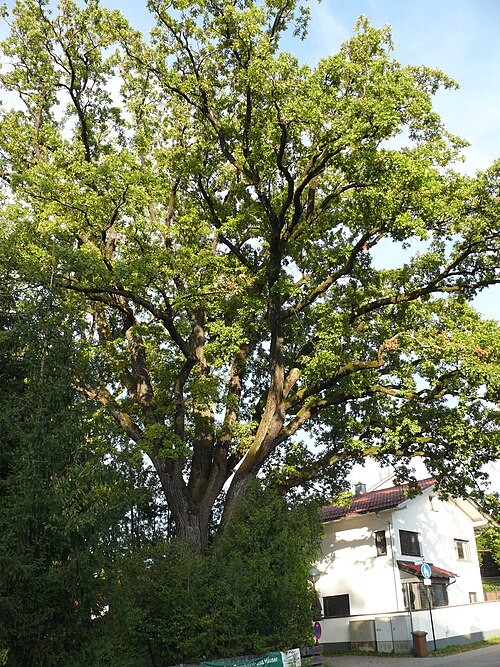
This oak starts branching so low on its trunk that its crown has room to spread wide, and the photographer who documented it in 2021 left one piece of advice: see it from the west.
Photo: Martinus KE (CC BY-SA 4.0)
Two oaks flank the start of a footpath on the west side of Statenbolwerk, planted in the 1850s to mark the entrance the way a gate would, a decade or so before the villas that now line the park wen...
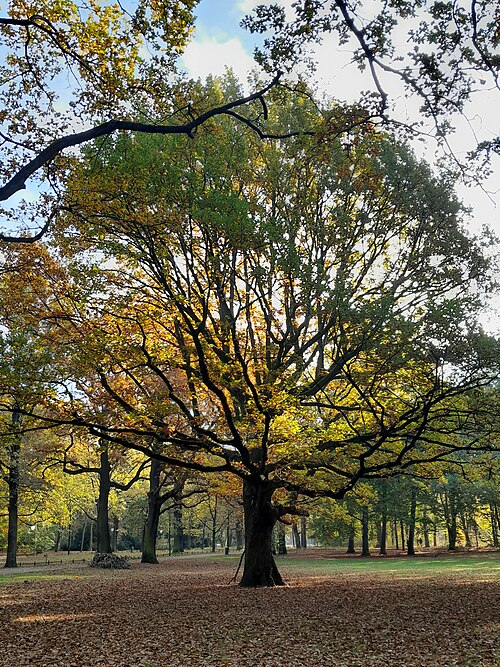
Berlin's register and the photographer who has followed this oak through every season cannot agree on what it is.
Photo: Vandeley (CC BY-SA 4.0)
Dvarcionys is the part of Vilnius people go to for the lake, not the history, a spot on the eastern edge of the city known for its beach, its forest paths and a natural spring the city also lists a...
Vancouver's heritage register lists a pin oak at 4010 Blenheim Street.
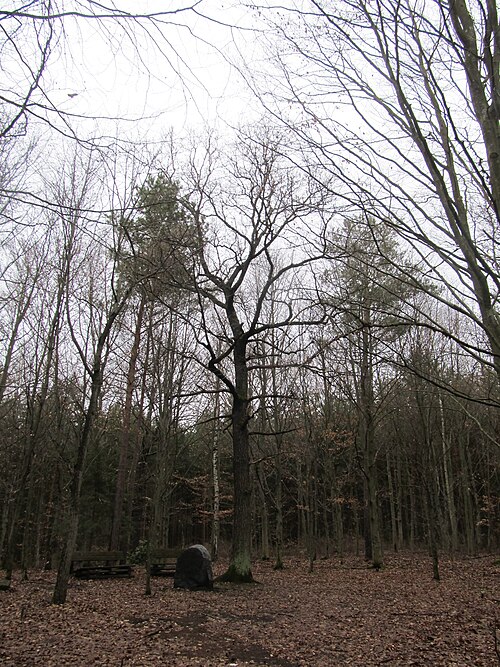
This oak was planted to honour four hundred years of the Reformation, and it has spent a century failing to look the part.
Photo: DynaMoToR (CC BY-SA 4.0)
The name gives away a building that is no longer there.
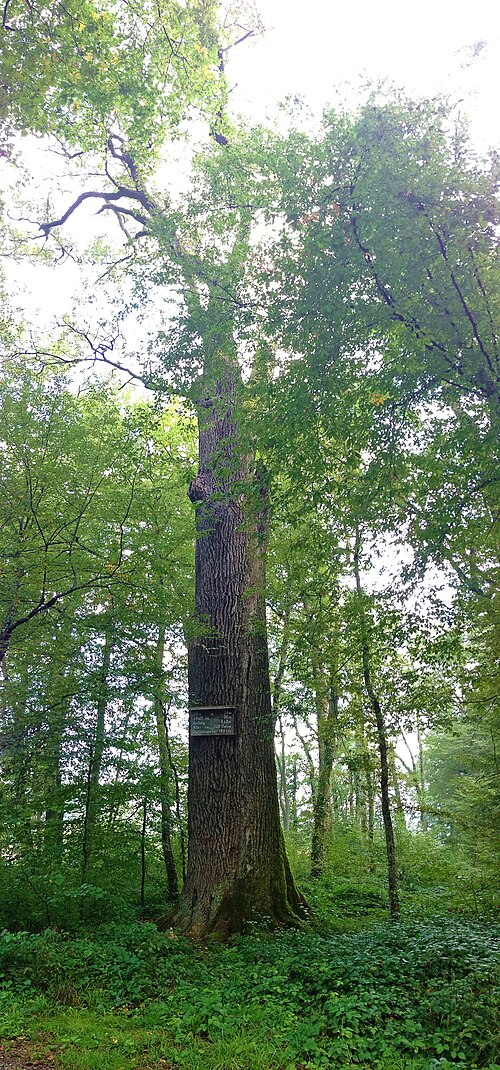
The walk to one of the oldest oaks in Switzerland crosses a football pitch, and the village museum that documents the tree advises bringing a ball.
Photo: Kurt Spalinger-Røes (CC BY 3.0)
Above the traffic of Itzlinger Hauptstraße, an oak stands on a high embankment, and for decades it has been one of the things that gives this stretch of Itzling its look.
A boundary tree is a plain job: it marks where one man's land stops and the next begins.
Most protected trees in the Bamberg district get a number.
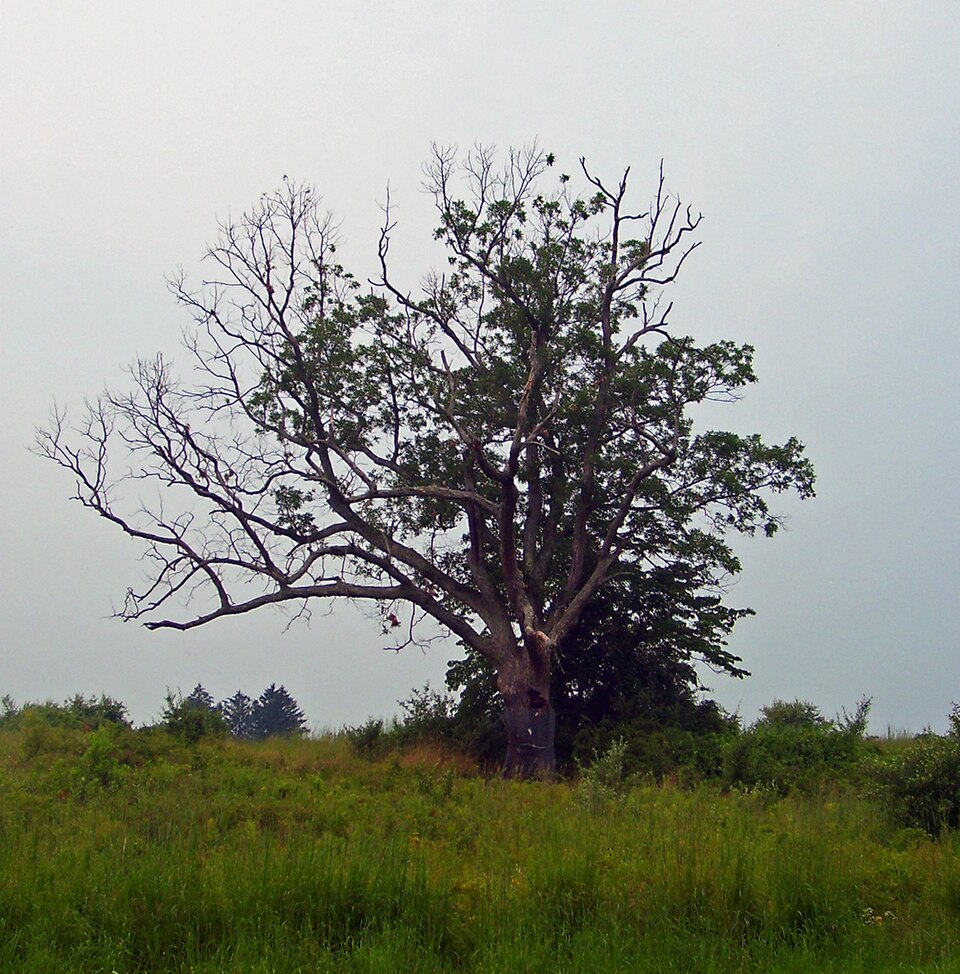
People have tried to cut this oak down with axes and with chainsaws, and it is still standing, carrying the marks.
Photo: The original uploader was Daniel Case at English Wikipedia (CC BY-SA 3.0)
In August 1839 the lots of a city that did not yet exist were sold in the shade of these trees.
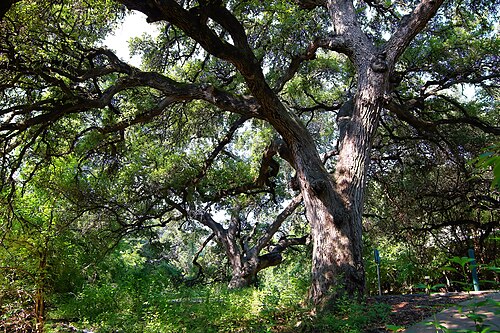
In the spring of 1842 Gideon White was out looking for livestock when riders caught him in the open.
Photo: Larry D. Moore (CC BY 4.0)
In the winter of 2016 a ranger counted the acorns on this oak.
Berga has two oaks, and this is not the famous one.
Most of Britain's big old oaks were worked for a living.
Fort Worth's first lasting business opened under this oak, because the army would not let it any closer.
The Alexandereiche is not named after Alexander von Humboldt, which is the first thing almost everyone assumes.
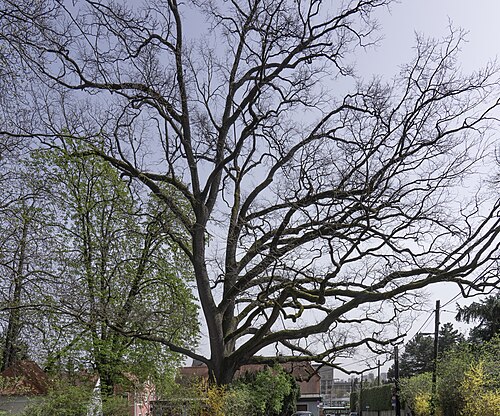
Both sources that describe this oak agree on exactly where it stands and neither can say which oak it is.
Photo: Thomas Ledl (CC BY-SA 4.0)
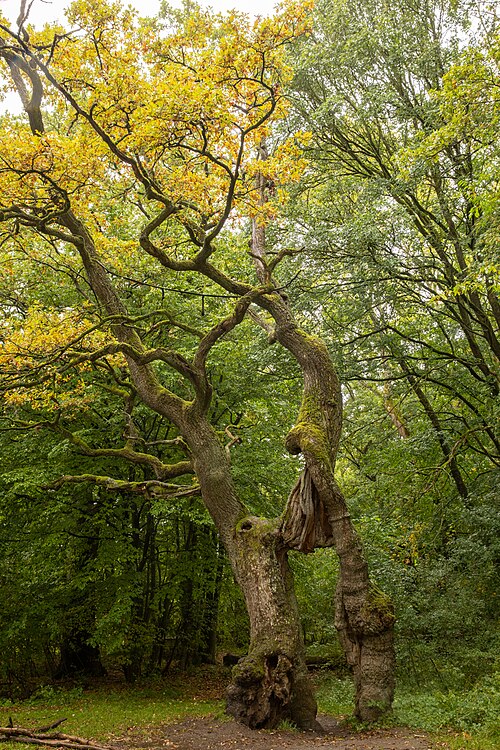
Monks are said to have cut a hollow into this oak so that the alms would stay dry.
Photo: Quaster64 (CC BY-SA 4.0)
The register's own name for this tree translates as simply "the oak of the neighbourhood", and its own note is almost as plain: almost certainly planted when the neighbourhood itself was built.
The register calls this one simply Eiche, oak, and that omission is deliberate rather than sloppy.
Two princes are supposed to have met under this oak to plot against their own brother, the king, and the Swedes who wrote it down do not believe a word of it.
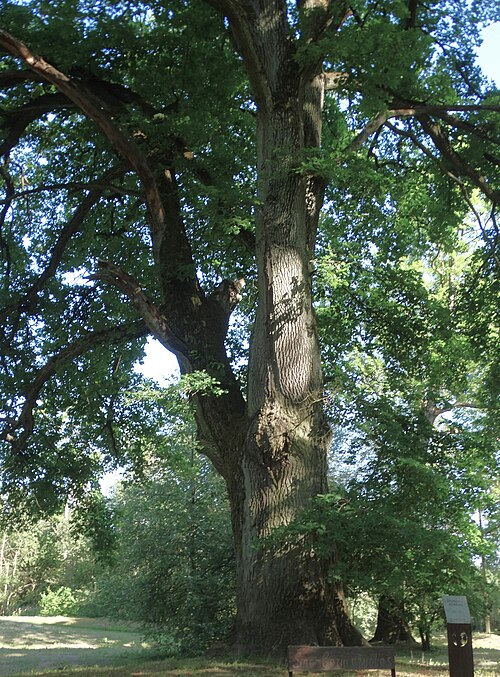
Oaks in this part of Europe usually spread rather than climb.
Photo: Vilensija (CC BY-SA 3.0)
To reach this oak you walk past a dead one.
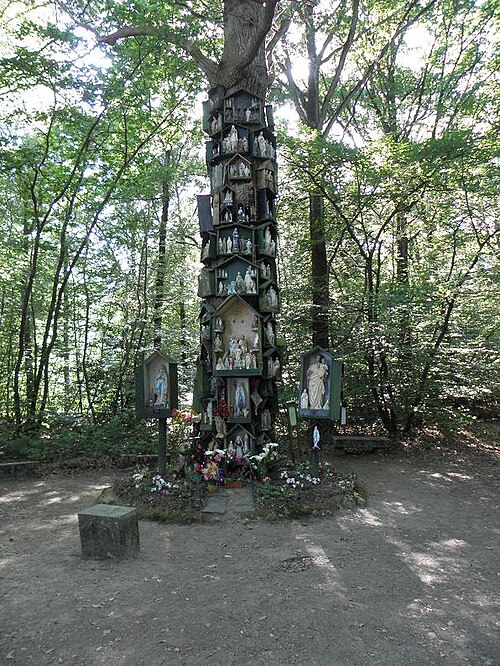
In July 2018 one of the candles left at this oak set fire to it.
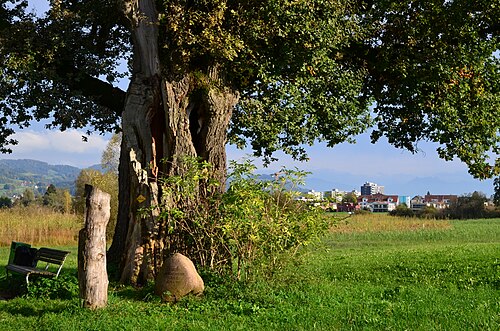
In 1858, labourers cutting a drainage channel near this oak's roots turned up the first waterlogged timbers of a Stone Age lakeside village, preserved so well in the peat that organic finds nobody...
Photo: Roland zh (CC BY-SA 3.0)
Count the trees and you have the dead.
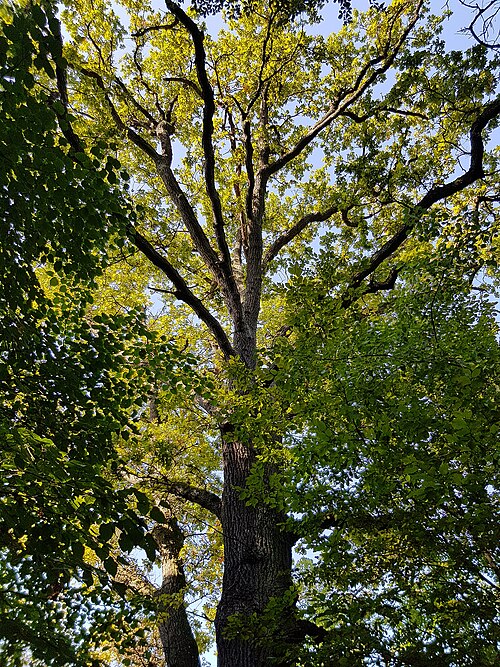
On 7 May 1515 Duke Ulrich of Württemberg took his stable master out hunting in this forest and killed him.
Photo: Ziegler175 (CC BY-SA 4.0)
In 2019 France gave its Tree of the Year title to an oak standing on its own in a field.
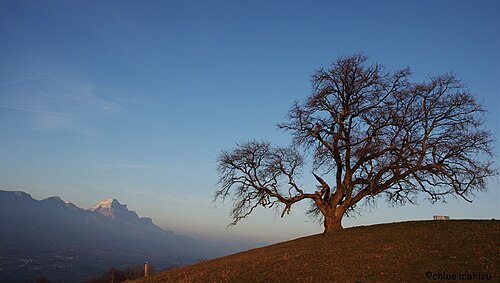
A storm in late November 2024 tore one of its three main limbs off.
Photo: Chloe.mh4 (CC BY-SA 4.0)
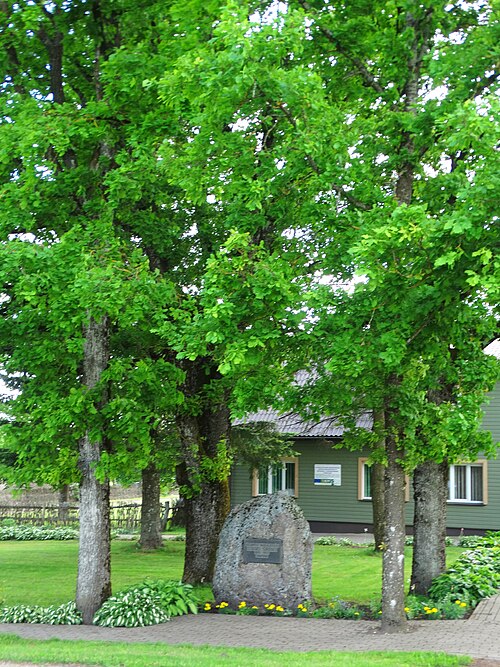
Five years after three of these oaks went into the ground, the man born on this spot flew a single-engine plane out of New York and never arrived.
Photo: Vilensija (CC BY-SA 3.0)
Whoever planted this oak measured it first.
Two wars cut this oak down to nothing, and it grew back from the stump both times.
Explore by city: Munich · Haarlem · Berlin · Vilnius · Vancouver · Dresden · Tilburg · Zurich · Salzburg · Bamberg · Austin · Belfast · Cardiff · Freiburg · Graz · Heerlen · Heidelberg · Priekulė · Stuttgart · Ypres · every city · or browse all species.