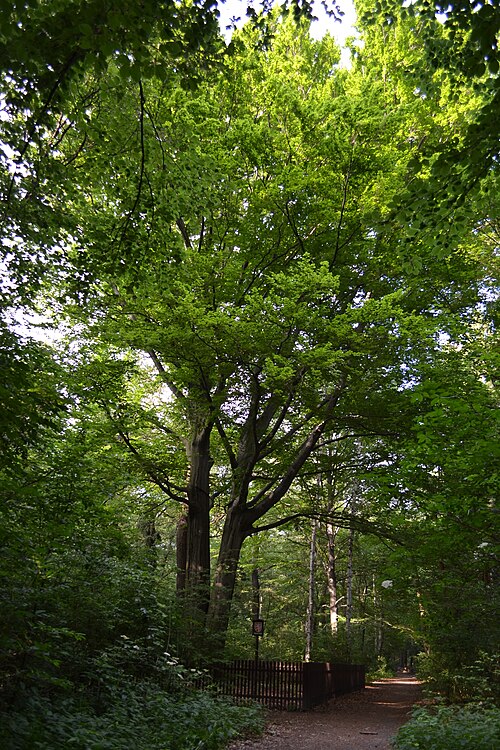
Autumn colour
One of the two tallest trees on this page stands on a 17th century battlefield and splits into two trunks a few feet off the ground, which is why it is simply named Twin Beech.
Photo: Sefjo (CC BY-SA 3.0)
Fagus sylvatica
Almost nothing grows under a beech, and the tree is doing it deliberately. We map 68 of them, in 45 cities.
The leaves sit in dense overlapping layers that let very little light through, which is why a beech wood feels like a room rather than a thicket, and why left alone most of northern Europe would return to beech forest within two centuries. So a beech in a city park is often the one tree that would have been there anyway, which is what Nuremberg says of its two. The ones worth crossing town for are beeches given open ground, which keep their lower limbs and bring the crown down in a skirt you have to duck under. Prague's Twin Beech reaches 45 metres on a 1620 battlefield. Haarlem's carries a crowned monogram an exiled king cut into it around 1809. Denmark's Svalebøgen, said to have sprouted from a mouse's buried larder, is 12.5 metres round.
One of the two tallest trees on this page stands on a 17th century battlefield and splits into two trunks a few feet off the ground, which is why it is simply named Twin Beech.
Photo: Sefjo (CC BY-SA 3.0)
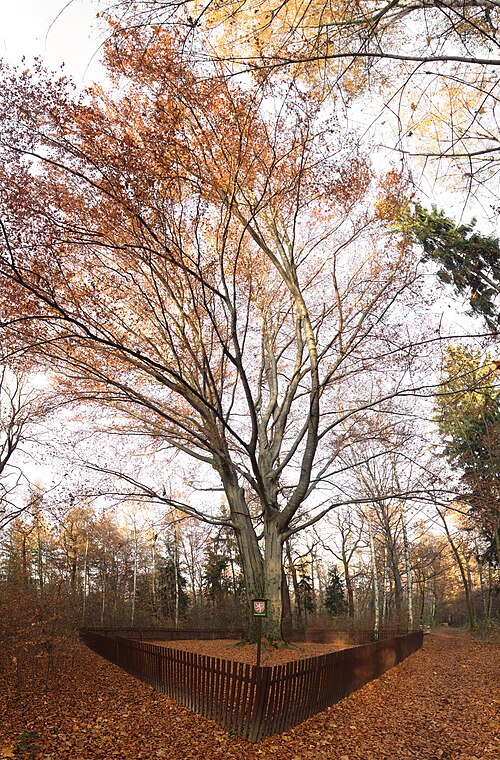
Two invading armies stripped this wood before the tree standing here was ever planted.
Photo: Aktron (CC BY 3.0)
This beech was protected for its height, not its age.
The famous tree in Parc Leopold is a plane.
Of every European beech in the Brussels-Capital Region, only six are thicker than this one.
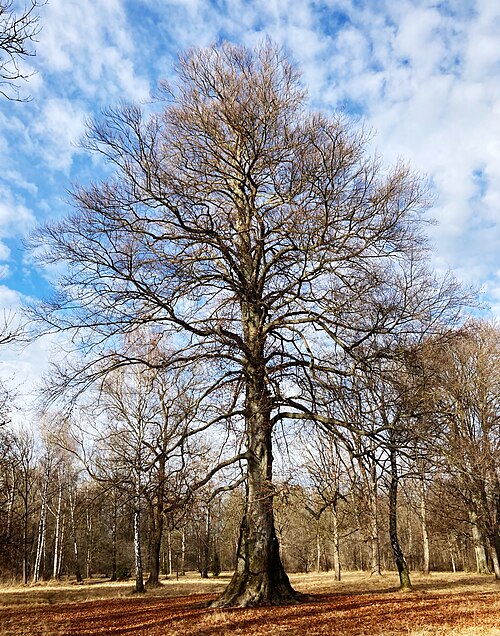
This beech was already old when the park around it was new.
Photo: Peterf (CC BY-SA 4.0)
Munich's ordinance calls this one of the mightiest beeches in the city and notes that it carries branches almost to the ground.
The school across this green space has been teaching since 1559, which makes it the oldest in Munich.
A beech that still has its lowest branches has never had a neighbour.
For decades Berlin's tallest tree was the wrong tree.
Berlin's register takes the trouble to say exactly which beech this is: Gewoehnliche Buche, Rot-Buche, the plain green common beech.
This is the plain, green-leaved beech among a park that otherwise favours its copper and weeping cousins, which makes it the least conspicuous registered tree in Wilhelminapark and one of the largest.
A parked lawn beside a seventeenth century church holds one of Groningen's largest stands of old beeches, roughly thirty of them by some counts, and the Dutch national monumental tree register sing...
There is a small classical temple in this park, built in 1924 to hold the work of one sculptor.
It stands next to the building where Friesland keeps its memory.
These two beeches were dated by a photograph.
This beech has added about a centimetre of girth a year for the last three decades, and that number is the reason anyone looked twice at it.
The copper beeches across this park are this tree in fancy dress.
When a city protects a tree for its profile, it is saying something simple: this one shapes the neighbourhood.
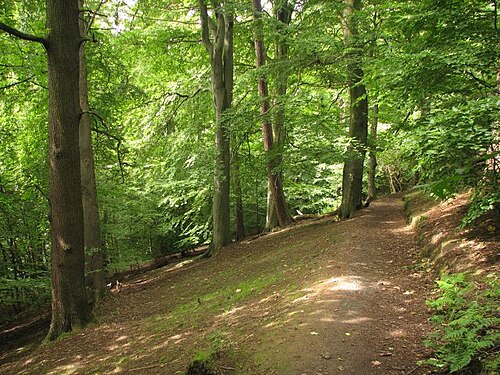
The valley floor of the Hermitage of Braid holds some of the tallest trees in Edinburgh, beech and sycamore that clear 130 feet in a steep sided gorge between the Braid Hills and Blackford Hill.
Photo: Callum Black, via Geograph Britain and Ireland / Wikimedia Commons (CC BY-SA 2.0)
Vancouver's heritage register is mostly buildings.
An opera singer's wife gave her name to this park, and this beech has outgrown every owner who has held it since.
This beech is registered under the name of a boat trip.
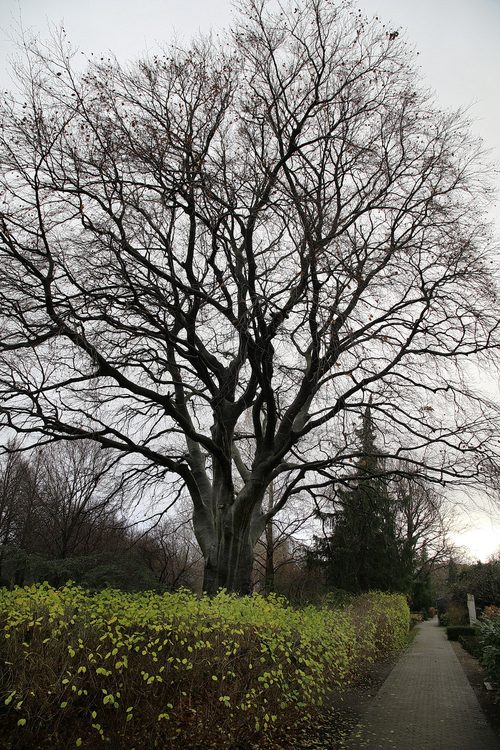
The surveyor who measured this beech wrote that the base is almost an elephant's foot, half a metre up the trunk.
Photo: Hans Erik Lund
Stadspark's own marked walking route names these three beeches, standing together partway along the Jeker, as the oldest trees in a park that otherwise holds more than 1,400 of them.
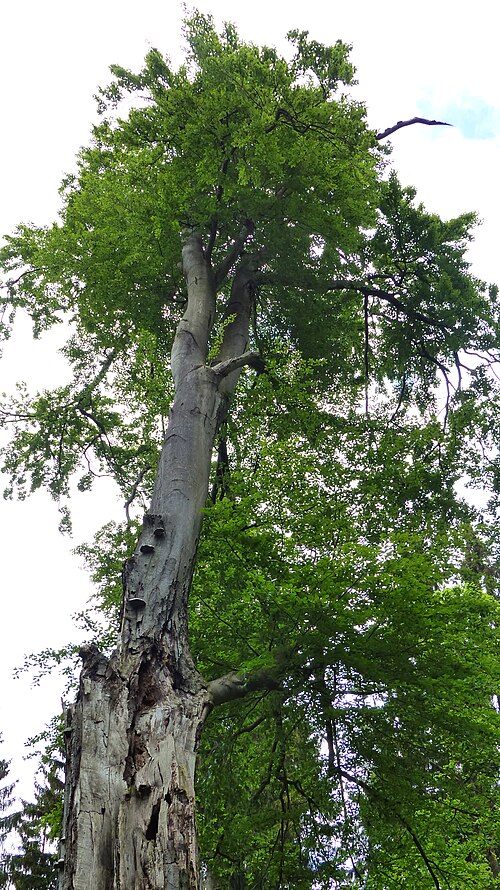
In October 2002 a hurricane found a fork in this beech that nobody knew was failing, and more than a third of the crown came down.
Photo: Dr. Bernd Gross (CC BY-SA 3.0)
Nijmegen's oldest tree does not stand on a battlefield or beside a museum.
Fifteen metres from that horse chestnut stands a beech with a trunk over four metres round, thick enough that the city's own register lists a diameter class normally reserved for trees decades olde...
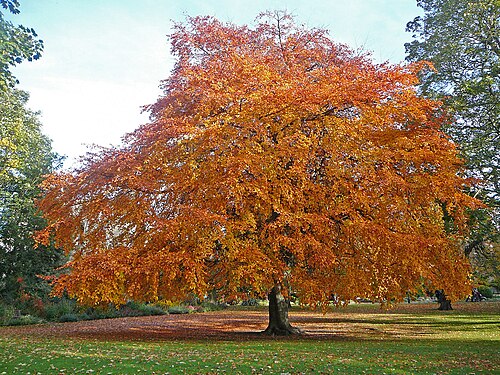
Halfway up the trunk of this beech, at almost exactly two metres, the bark changes: rough and fissured like a pear tree's below the line, smooth and grey like an ordinary beech's above it.
Photo: Tim Green (CC BY 2.0)
The national heritage tree survey rates this beech among Blarney's exceptional specimens, alongside the more famous yew and cedar, and puts it at somewhere between 150 and 200 years old, which woul...
A lonely, exiled king passed the time by carving his own royal monogram into a beech tree, and two centuries later almost nothing is left to see of it.
The two men who laid out this cemetery are buried in it, and three beeches carry their name.
Four beeches grow together along the Statenbolwerk footpath near house number 26, planted in the 1850s as part of the same wave of planting that gave the walking park its villas a decade later.
In 1799 the mayor of Zwolle published a 34 verse poem about this garden.
The register calls these the poortbomen, the gate trees, which is a job description rather than a species.
In a park where beeches were planted in almost every decade from the 1870s to the 1930s, the national monumental tree register picked this one.
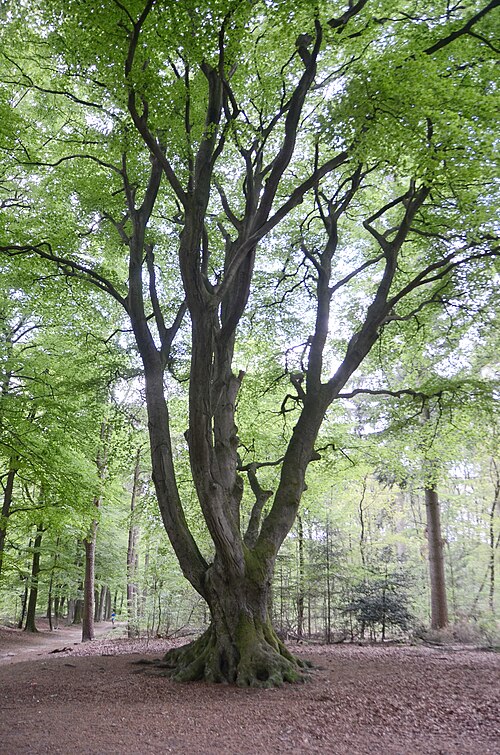
Somebody called this tree Marjan and the name went into the national register.
Photo: Henk Monster (CC BY 3.0)
Somebody looked at this beech and saw a pig.
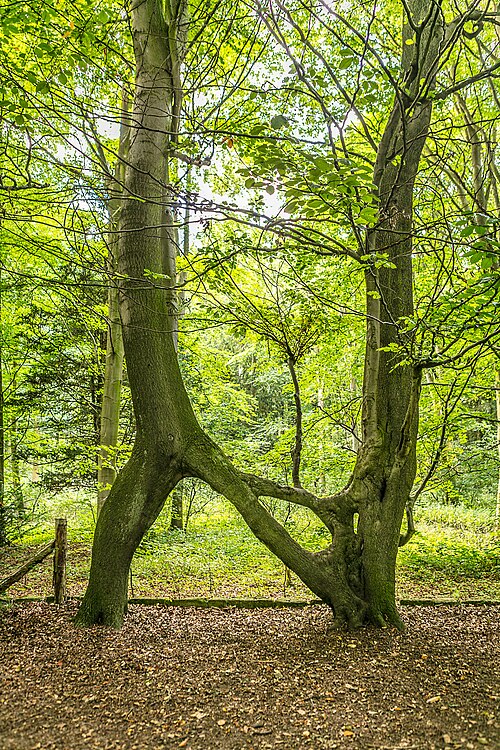
A miner spelled his girlfriend's initial in living wood.
Photo: Rob Grange (CC BY-SA 4.0)
This beech has got smaller.
The tree standing here is not the tree the stories are about.
Local tradition says this beech started as a mouse's winter larder.
This beech was made a protected natural monument on 17 November 1939, ten weeks into the war, which is a curious moment to be filing paperwork about a tree.
A forester working on its estate has said on record that its species is nothing special and its legend is made up.
People drove nails into this beech to get rid of their toothache.
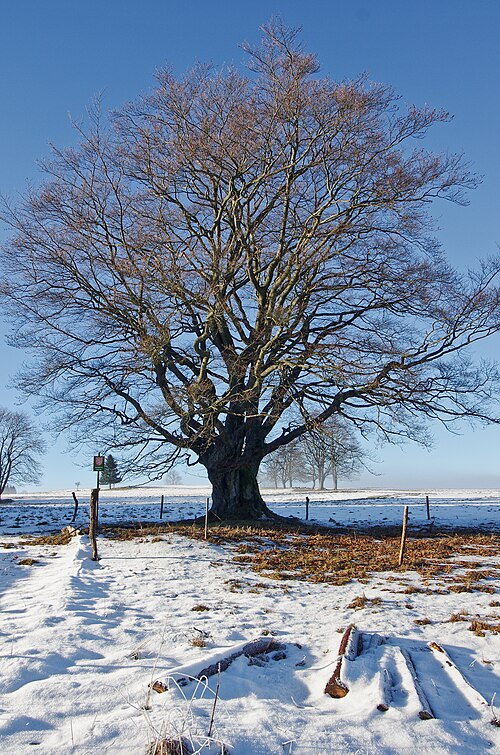
Half of this beech is lying on the ground, and both halves are still legally protected.
Photo: Lubor Ferenc (CC BY-SA 3.0)
Shepherds used to stop here at noon with their flocks, and the beeches they rested under are still standing, though not for much longer.
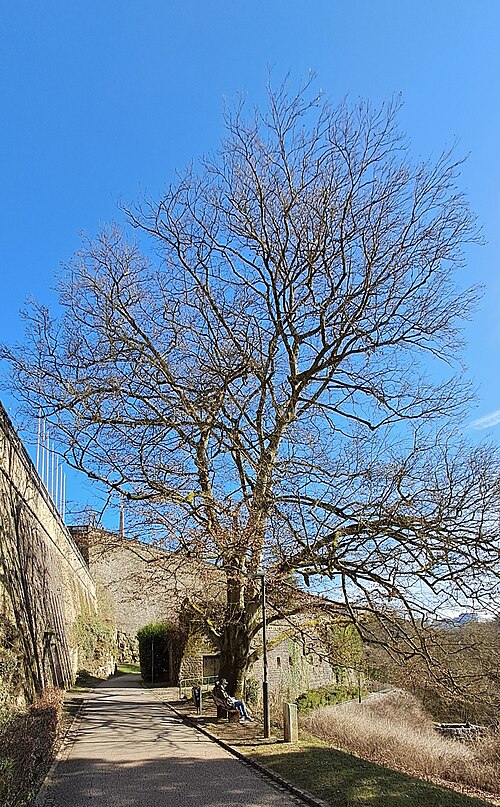
In twenty-three years this beech added one centimetre to its trunk.
Photo: Zinneke (CC BY-SA 4.0)
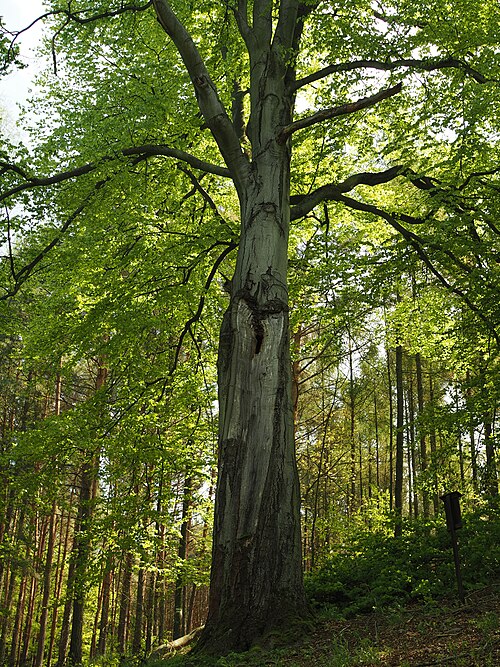
This beech has been under legal protection since 25 July 1978, which is longer than almost anything else on this map, and that is very close to everything anybody has written down about it.
Photo: Tomáš Merta (CC BY-SA 4.0)
A beech 4.10 metres round stands in open country outside Mokřice, a hamlet belonging to the small town of Krásná Hora nad Vltavou, and according to OpenStreetMap somebody has put a picnic table rig...
This beech is dying, and the village has decided not to fight it.
Birds nest in this beech, and a fungus is eating it, and both facts are in the official record.
Almost nothing grows under a beech, and the tree is doing that on purpose.
Two trees in this park would be here without anyone's help, and both of them are beeches.
Eighty metres from this beech stands another one just like it, and Nuremberg's own register keeps them as two separate legal entities: Naturdenkmal Nr. 28 and Nr. 29, each with its own designation...
This beech and its neighbour eighty metres away are the two survivors of a trio.
Seven metres round and twenty six metres tall, at the end of a residential street in Parkrose Heights, on a strip of unimproved public right of way that never became road.
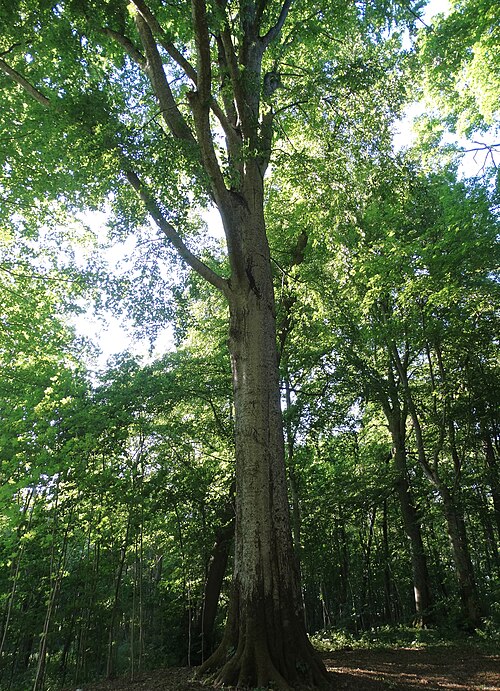
At 37 metres this is one of the tallest trees on this list, on a trunk 4.27 metres round at chest height, and the local heritage trail claims the beeches in this old park run to the largest dimensi...
Photo: Vilensija (CC BY-SA 3.0)
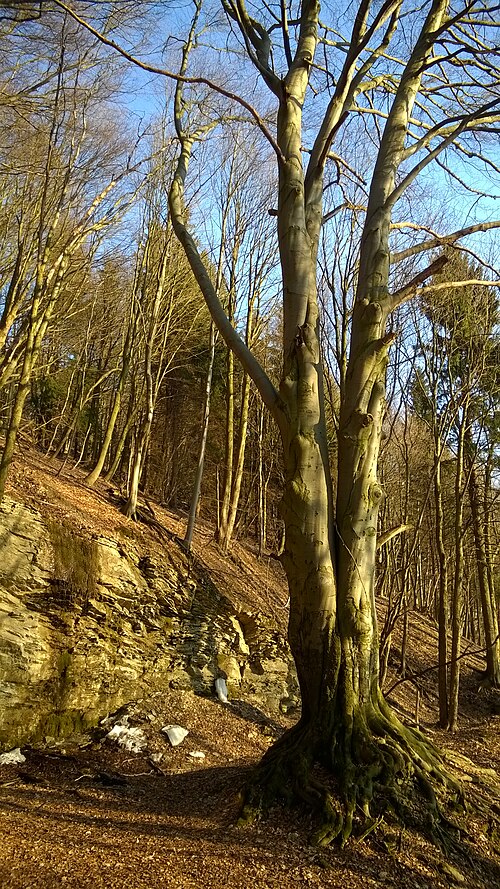
There is a waterfall here that nobody designed.
Photo: MartinVeselka (CC BY-SA 4.0)
One of the biggest beeches in the Foret de Roumare is also one of the easiest to reach: it stands at the forest edge beside the D351, a few steps off the tarmac rather than a kilometre into the trees.
Trees usually turn colour at their own speed.
The register praises this beech for being straight, which sounds like faint praise and is not.
Two of this beech's branches have grown into each other and welded shut, which is how it got its name.
Several beech trunks have come up inside the walls of a ruined castle, and the walls are losing.
The town of Sorèze gives this beech a crown ninety metres across, close to the length of a football pitch, carried on a trunk six metres round.
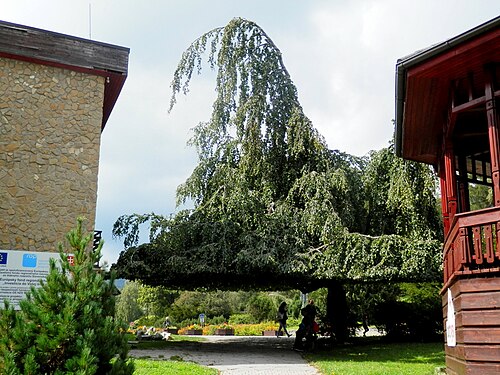
A weeping beech in the middle of Slovakia's best-known mountain resort has a nickname most trees never earn: the Tree of Lovers.
Photo: Ing.Mgr.Jozef Kotulič (CC BY-SA 4.0)
Strasbourg's oldest park is full of beeches and the register singles out one of them: more than four metres around the trunk, with a crown the city calls exceptionally well developed.
Four and a half metres of trunk, and nothing else growing within reach of its branches.
Explore by city: Prague · Brussels · Munich · Berlin · Breda · Groningen · Leeuwarden · The Hague · Vienna · Edinburgh · Vancouver · Gdansk · Copenhagen · Maastricht · Dresden · Nijmegen · York · Cork · Haarlem · Zwolle · Ede · Aarhus · Heidelberg · Luxembourg City · Nuremberg · Portland · Priekulė · Strasbourg · Trento · every city · or browse all species.