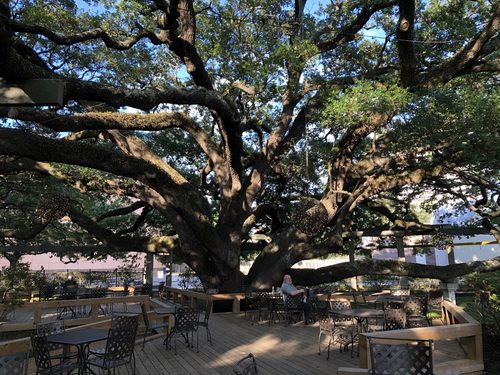
Most restaurants buy land for the parking.
Quercus virginiana
Southern live oak is the evergreen oak of the humid coastal South, hung with Spanish moss and rarely far from salt air, and its old ones spread wider than they grow tall. We map 44 of them, in 22 cities.
The Middleton Oak in Charleston, put at 900 to 1,000 years, was long described as the largest tree in the eastern United States. Brunswick built Albany Street around Lover's Oak rather than through it. In New Orleans the McDonogh Oak rests its heavy branches on wooden crutches, and the Live Oak Society, whose members are the trees themselves, lists the Middleton Oak as its First Vice President. The Emancipation Proclamation got its first public reading in the South under a live oak in Hampton, Virginia, in 1863. In Dealey Plaza the shots at President Kennedy passed through a live oak's canopy, and Pisa has grown one since 1829.
Most restaurants buy land for the parking.
The most famous thing about this oak is a story nobody can document.
Herman Strack landed at Galveston in 1848, a blacksmith out of Prussia and the first of five brothers to settle north Harris County.
Houston is younger than this tree, probably by the better part of a century.
The puzzle of this oak is where it stands: in a narrow walkway between graves, halfway up a slope at the back of Glenwood Cemetery.
The crown is the thing.
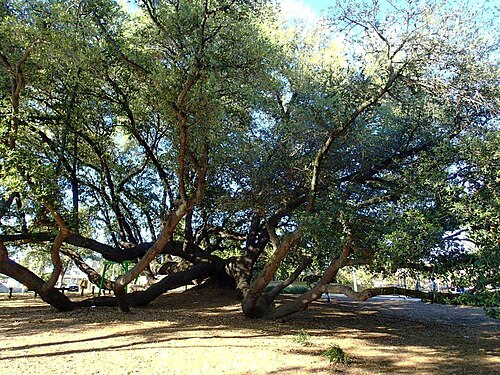
On New Year's Day 1941 a storm split what was reported to be the largest tree in Australia into two pieces.
Photo: Meganesia (CC BY-SA 4.0)
This oak keeps its leaves through winter, and its timber was once worth more to a navy than to a carpenter.
These four live oaks were already big trees when they were hoisted onto the top of a hill that had not existed a few years earlier.
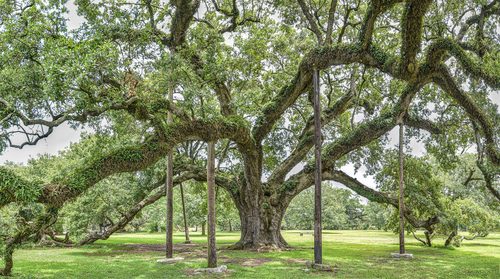
The branches are too heavy for the tree now, so they rest on wooden crutches.
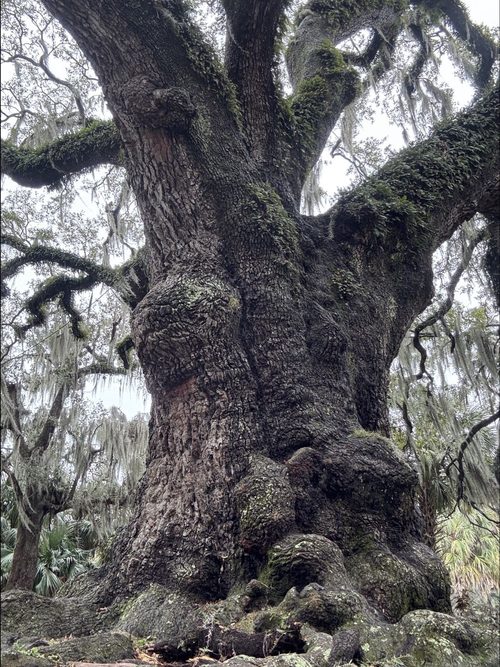
Victor Anseman was a florist who retired and then gave the last fifteen years of his life to a park.
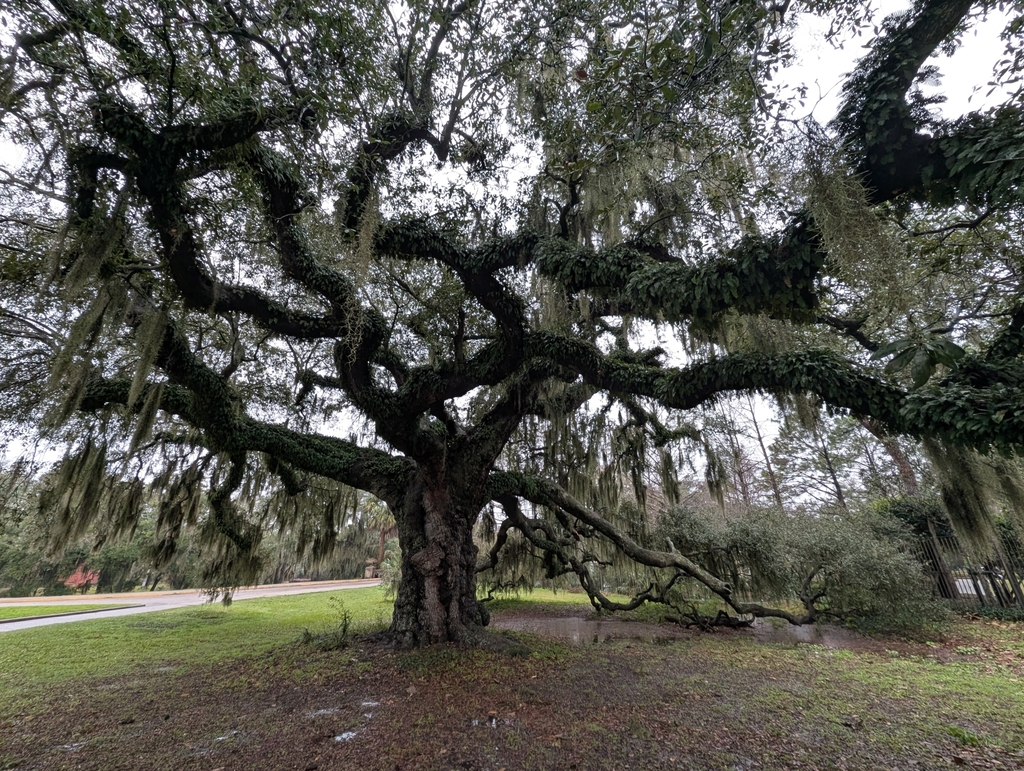
Between 1834 and 1844 there were stretches when scarcely a day passed without a duel being fought under these trees.
Photo: Ken-ichi Ueda (CC BY)
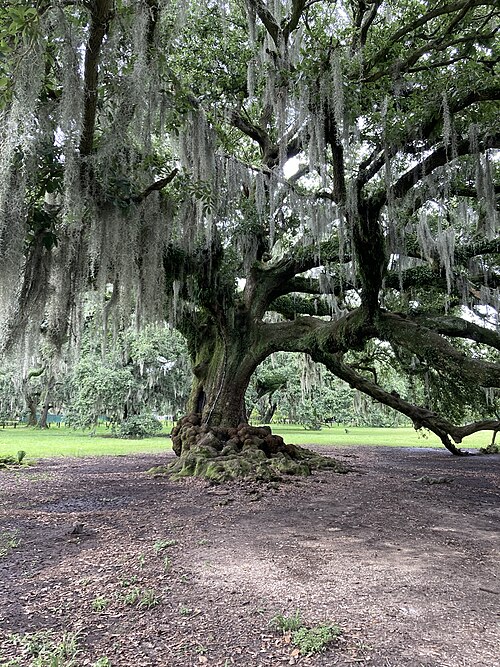
Eleven metres round, eighteen tall, and a crown reaching close to fifty metres across, which means the limbs left the trunk, ran horizontally as far as they could, and then came back down to the gr...
Seven sets of wind chimes hang in this oak, the longest of them over four metres, and they are tuned so that the wind cannot play a wrong note.
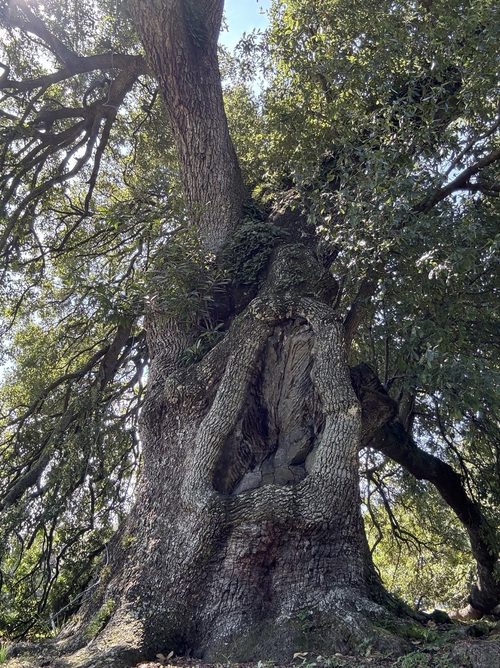
The name is the reason most people come and it is worth stating plainly: sixteen men took their own lives under this tree over about twelve years, from the 1890s into the 1900s, when this corner of...
Martha Washington had a husband and a rival, and both were oaks.
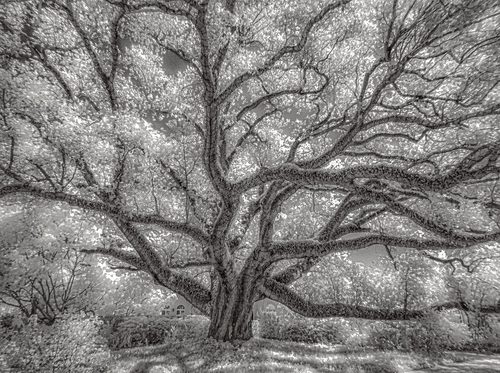
Every December this oak wears blue.
Photo: William Guion
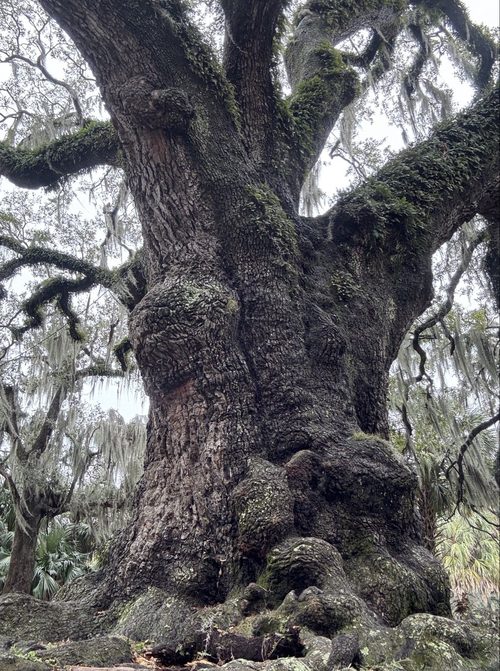
City Park holds one of the largest stands of old live oaks anywhere, dozens of them with names of their own, and a reader sent us this one from the heart of the grove.
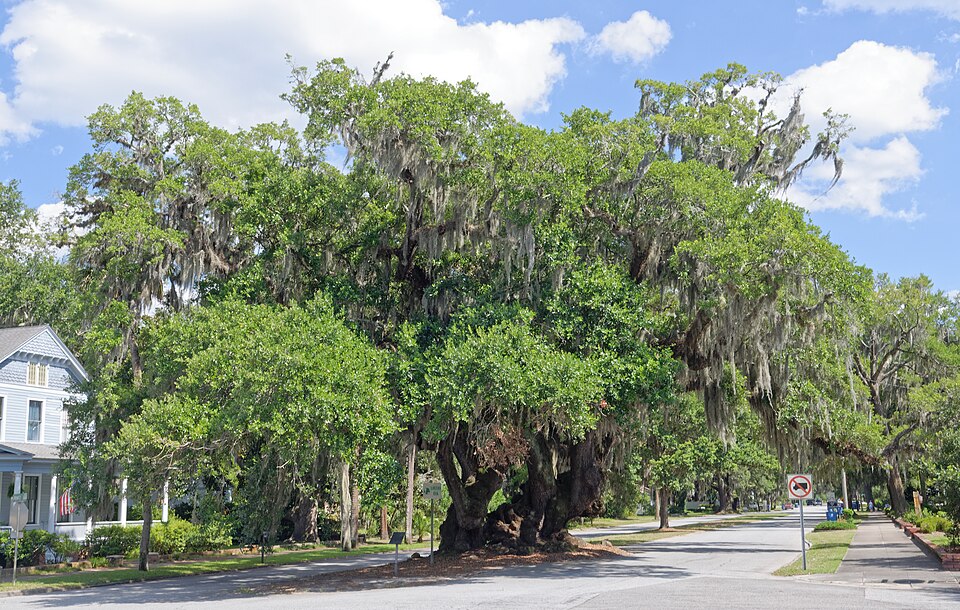
Brunswick built its street around this oak instead of through it.
Photo: Jud McCranie (CC BY-SA 4.0)
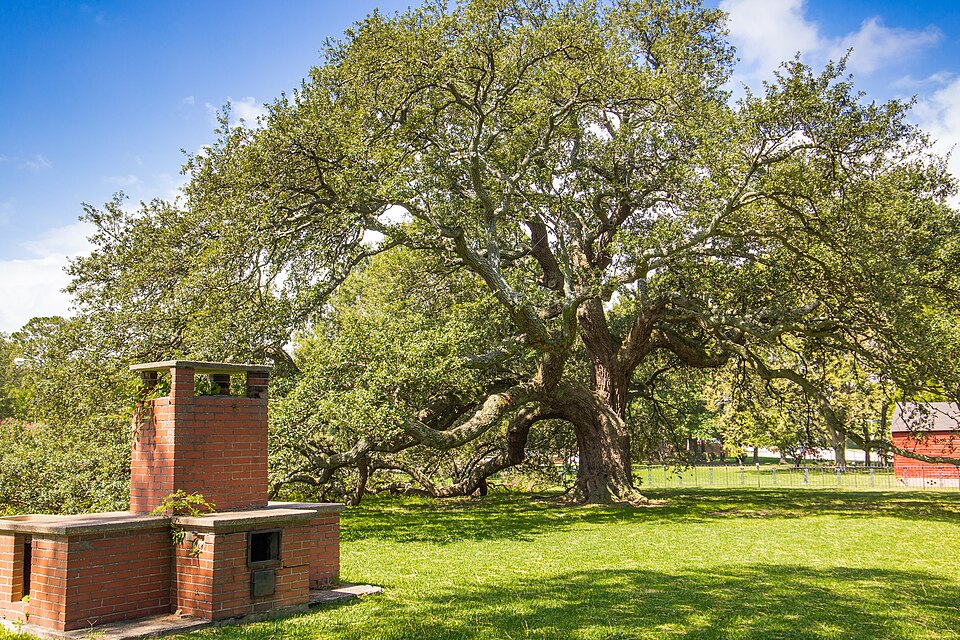
The Emancipation Proclamation got its first public reading in the South under this live oak, in September 1863, to the Black community of the Virginia Peninsula gathered in its shade.
Photo: Erik Soderstrom (CC BY-SA 4.0)
Until 2012 this oak was described as the largest tree in the eastern United States.
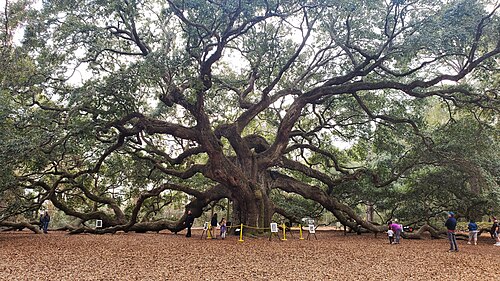
The souvenirs say 1,500 years.
Nobody has published an age for a single tree in this yard, and the honest reason is that they are not all the same age.
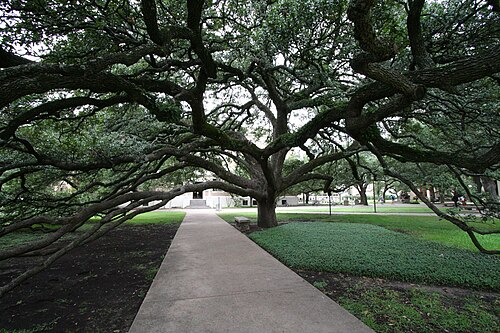
The crown of the Century Tree spreads about 101 feet, more than twice as wide as the tree is tall.
Photo: Ed Schipul (CC BY-SA 2.0)
The shots fired at President Kennedy on 22 November 1963 passed through this canopy.
The grassy knoll is a slope with oaks on it, which is the part the photographs never quite show.
In 1998 the city and the corporation across the street proposed removing 21 mature live oaks from this plaza, by most accounts to move a roost of grackles along with them.
When Fort Worth's Museum of Science and History was rebuilt from 2007, one live oak was allowed to stay, and the new building was shaped around it.
A road was moved to keep these live oaks.
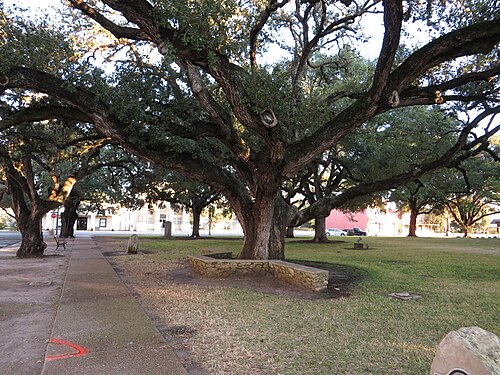
For a quarter of a century, Goliad held court in the shade of this oak.
Photo: Ken Lund (CC BY-SA 2.0)
On the night of 13 March 1836, Sam Houston and as many as four hundred Texans camped under this live oak with Gonzales burning behind them.
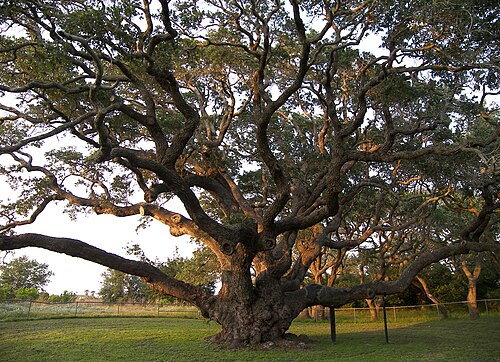
The Texas Forest Service put this live oak at over 1,000 years old.
Photo: Larry D. Moore (CC BY 4.0)
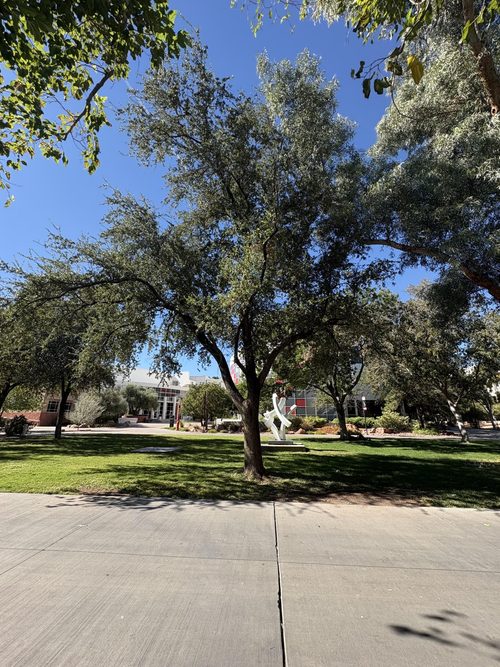
Nevada's champion live oak is a campus shade tree.
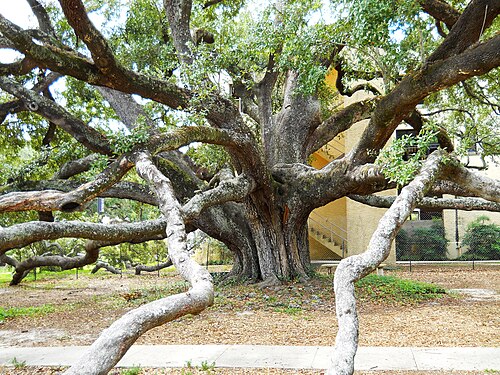
Hurricane Camille stripped the Friendship Oak of its leaves in 1969.
Photo: Woodlot (CC BY-SA 3.0)
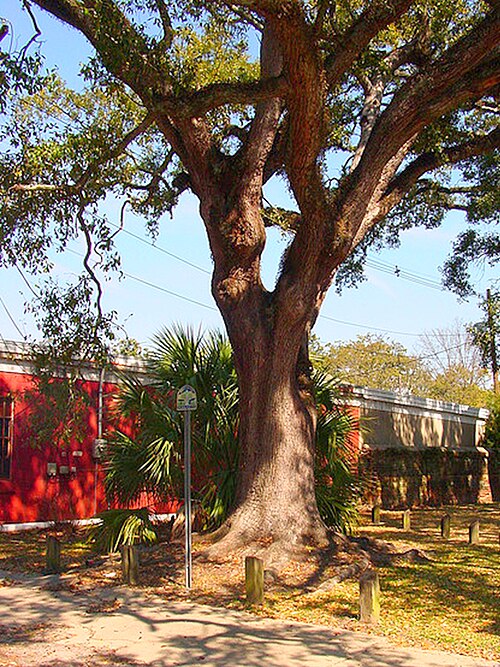
Charles Boyington swore an oak would grow from his heart to prove he was innocent.
Photo: Altairisfar (CC BY-SA 3.0)
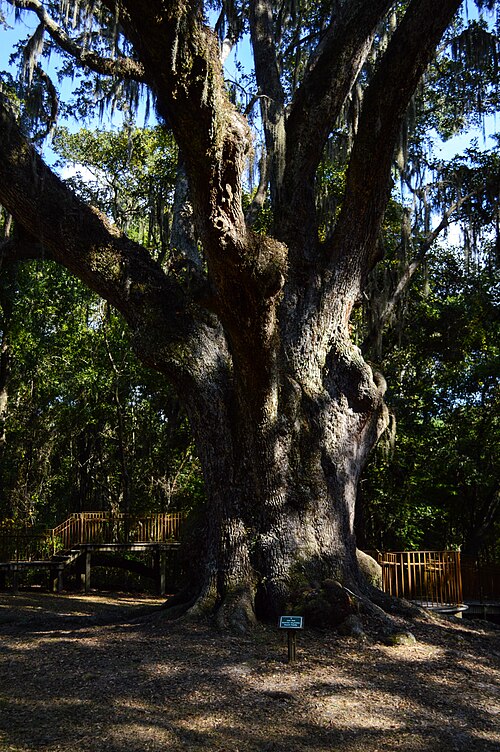
Andrew Jackson is supposed to have stood under this oak in 1814 and addressed his troops on the way to Pensacola.
Photo: Ddiggs721 (CC BY-SA 4.0)
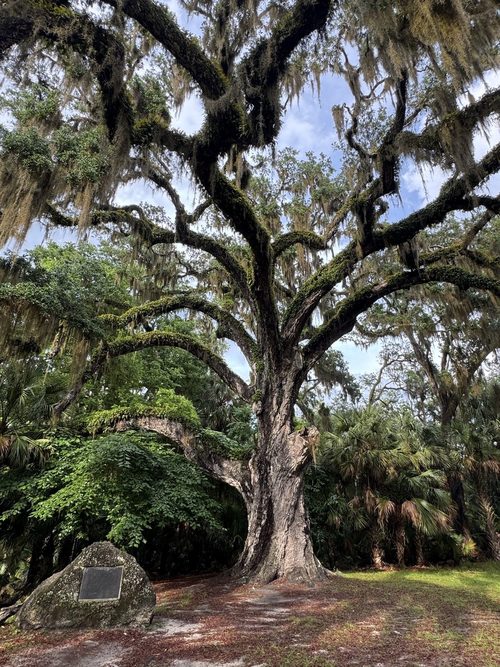
A bronze plaque on a boulder beside this live oak says it "has gladdened man's heart for 2000 years".
A live oak from the American South has been growing in Pisa since 1829.
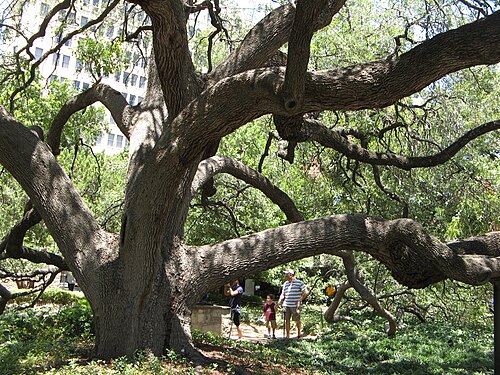
The most photographed tree at the Alamo arrived on a mule cart.
Photo: olekinderhook (CC BY 3.0)
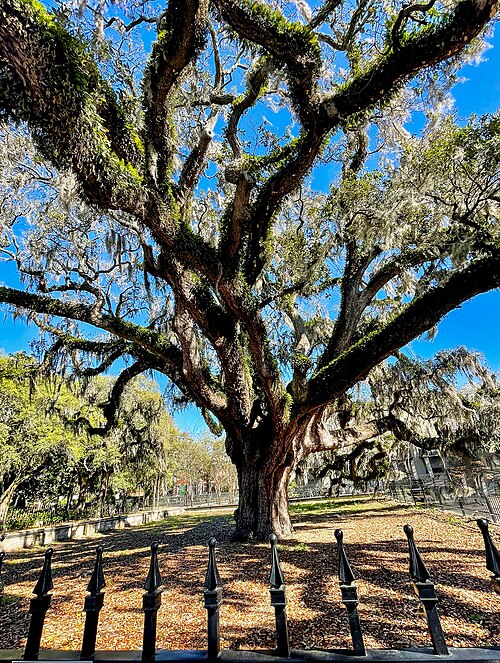
The first conservation easement granted to a single tree in the United States went to an oak that cars were parking on.
Photo: MrsHoldridge (CC BY 4.0)
The Candler Oak downtown is about 5.2 metres round.
The most photographed thing at Wormsloe is the youngest thing at Wormsloe.
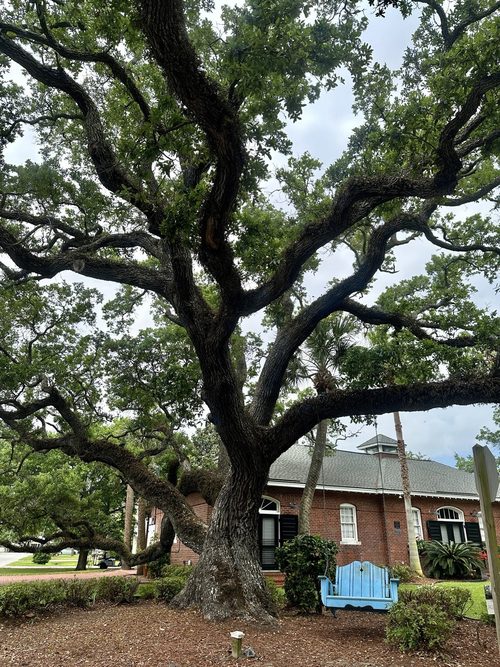
Fort Screven was the army post on the north end of Tybee Island, where the Savannah River meets the Atlantic, and a reader walking among its old buildings sent us this live oak.
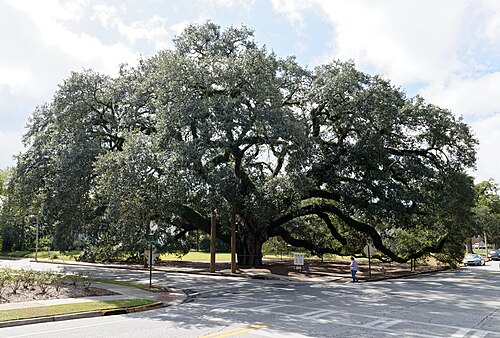
Dial the number posted by the Big Oak and a camera across the street takes your picture with it.
Photo: Jud McCranie (CC BY-SA 4.0)
Explore by city: Houston · Sydney · New Orleans · Brunswick, Georgia · Hampton, Virginia · Charleston · College Station, Texas · Goliad, Texas · Gonzales, Texas · Goose Island State Park · Las Vegas · Long Beach, Mississippi · Ormond Beach · Savannah · Thomasville · every city · or browse all species.


