The Emancipation Proclamation was read to the South for the first time under this live oak, in September 1863, to the free and newly freed Black community of the Virginia Peninsula. Mary Peake had already taught children to read beneath it, at a time when Virginia law forbade teaching them. The tree still stands on the Hampton University campus, canopy about 98 feet across, and is still used for ceremonies. Its age is unsettled, with estimates from 200 to over 300 years. Open campus ground, free, nothing between you and it.
0 of 1 visited in Hampton, Virginia
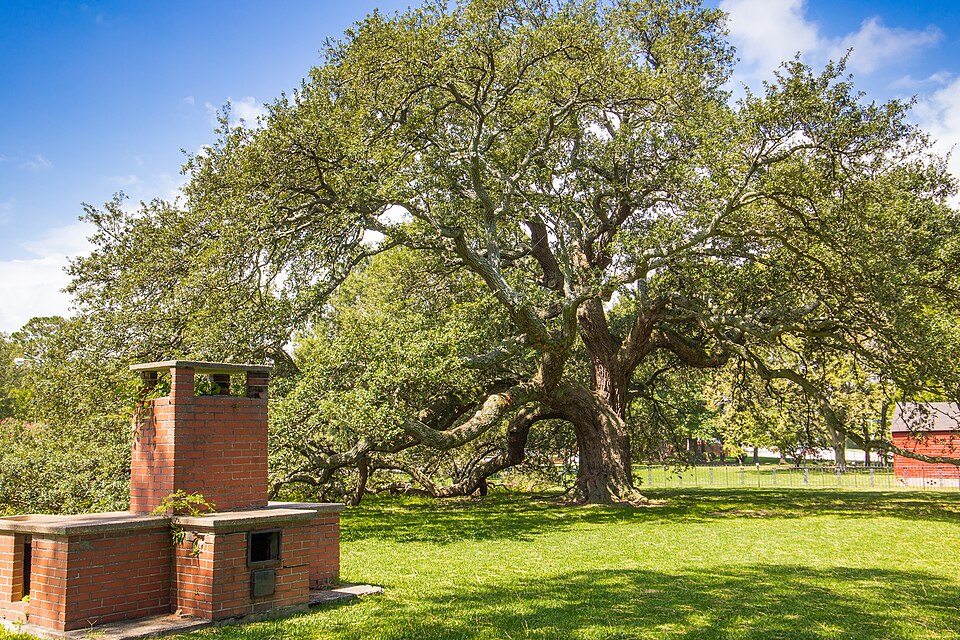
Southern Live Oak (Quercus virginiana) · 200-300 years · Hampton University campus
The Emancipation Proclamation got its first public reading in the South under this live oak, in September 1863, to the Black community of the Virginia Peninsula gathered in its shade. Before that, and before it was legal, Mary Peake taught freed and enslaved children to read under the same branches. The tree is still on the Hampton University campus and still used for ceremonies. Its canopy spreads about 98 feet across on a trunk barely 50 feet tall, which is what a live oak does when nothing crowds it: out rather than up. The age is genuinely unsettled. Older material says 150 to 200 years, a 2023 estimate says around 250, a 2022 report says 309. Nobody has cored it, deliberately, because taking a core from an old live oak to settle a number is a poor trade. Read it as somewhere between two and three centuries, and note that even the low end puts it here, and grown, in 1863. National Geographic once listed it among ten great trees of the world. It stands inside Hampton University's National Historic Landmark district, on open campus ground, free, with nothing between you and it. Most places where something like this happened keep a plaque. This one kept the tree that people were standing under.
Photo: Erik Soderstrom (CC BY-SA 4.0)