The Cistern Yard Oaks
Approximate location.
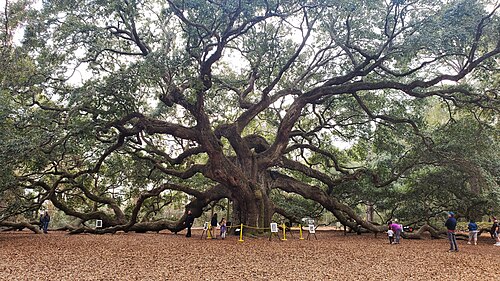
Nobody has published an age for a single tree in this yard, and the honest reason is that they are not all the same age. Hurricane Hugo came through Charleston in 1989 and took some of these oaks with it, so what stands now is a mix of the survivors and what went in afterwards. It reads as one thing regardless, which is the whole point of the place: a compact, iron-fenced yard of live oaks hung with Spanish moss, closed at the end by the portico of Randolph Hall. That building went up between 1828 and 1830 and is a National Historic Landmark. The cistern the yard is named for came later, in 1857, a sunken brick reservoir that once held the campus water supply and now works as the low stage everyone ends up sitting on. Before the College took the ground over in 1785 it was a colonial military barracks. It is still a working space rather than a lawn to look at. Commencement happens here, and the Spoleto Festival puts performances under the trees, so it is occasionally roped off. Come in from George Street and stand at the cistern. If anyone has ever dated the older oaks, the College's own records would settle it, and we would like to know.
The line is our estimate of how much there is to see, not a measurement. Typical for this species where this tree stands; exact weeks shift with the year.
66 George Street, Charleston, SC 29424 (College of Charleston campus)You are looking for the yard rather than one tree: iron-fenced live oaks hung with Spanish moss, closed at the far end by the portico of Randolph Hall. Come in from George Street and stand at the sunken cistern.
Free, open college campus green, self-guided visits welcome during daylight hours; occasionally closed off for commencement, Spoleto Festival performances or other campus events.
Downtown Charleston, walkable from the historic district; no dedicated transit stop needed
Sources
Where the facts on this page come from.