A monarch's word could put a tree in the ground and keep it there for centuries, and enough of them did that the result reads like an itinerary of vanished courts. A retired Japanese emperor carried his own camphor north in 1160 to plant it at a shrine he had just founded. A shogun kept his pine as a bonsai in a pot and only let it touch soil after his death. Henri IV's own herbalist raised Paris's oldest tree from an American seed, and his son planted the second inside the king's own medicinal garden. Queen Victoria planted a Californian sequoia on Irish soil in 1861 and started a habit every visiting head of state since has copied. None of these merely grow in a royal park. Someone with a crown, or a court appointment, specifically wanted each one exactly there.
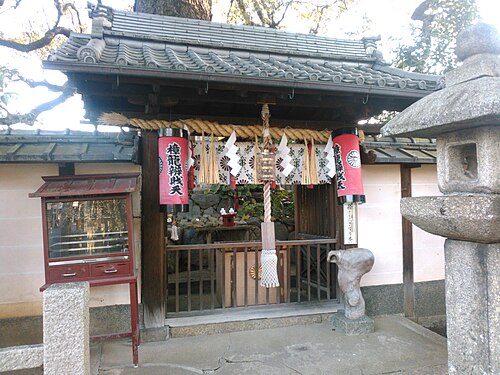
Camphor Tree (Cinnamomum camphora) · about 866 years · Imakumano, Higashiyama-ku
When the retired emperor Go-Shirakawa founded Imakumano Shrine in 1160 as a branch of the distant Kumano sanctuaries, he did not simply commission a building. He had this camphor carried north from the original site and planted at the new one, transplanting a living piece of the older shrine rather than starting from a fresh seedling. Nearly nine centuries later it still functions as the shrine's landmark, visible before the buildings themselves.
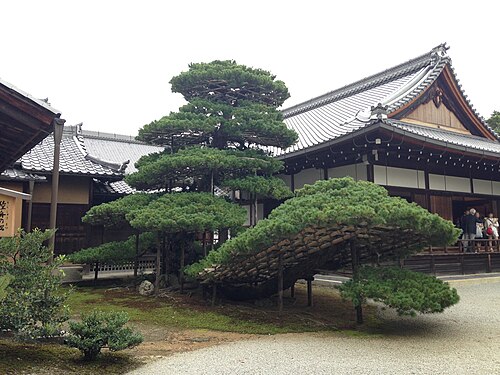
Japanese White Pine (Pinus parviflora) · about 600 years · Kinkakuji, Kita-ku
Ashikaga Yoshimitsu did not commission this tree from a gardener. He kept it as his own bonsai, a miniature pine tended in a pot while he built the Golden Pavilion nearby, and only after his death in 1408 did someone plant it in the ground beside the pond he had shaped. Temple gardeners have spent six centuries since clipping it into the shape of a ship, sailing the model a shogun once held in his own hands.
Weeping Higan Cherry (Prunus subhirtella) · about 160-180 years · Kamigamo, Kita-ku
Emperor Komei kept this weeping cherry inside the grounds of the Kyoto Imperial Palace before deciding to give it away. He had it presented to Kamigamo Shrine sometime during his reign, which ended in 1867, and the gift is the reason a tree with no ancient connection to the shrine still carries the name Gosho-zakura, palace cherry. It has bloomed on the shrine's approach path for roughly a century and a half since.
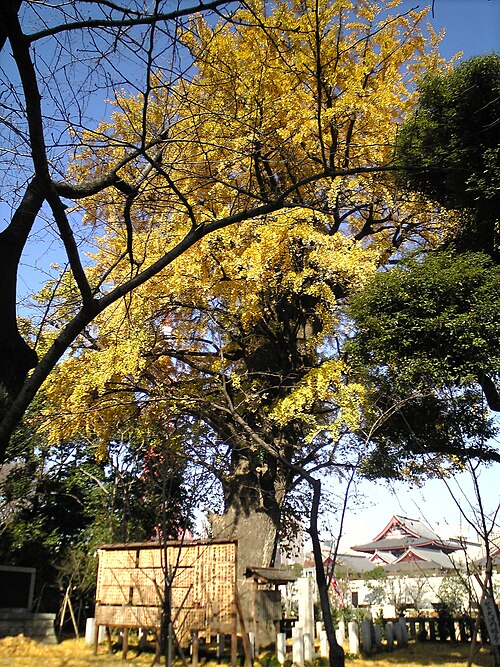
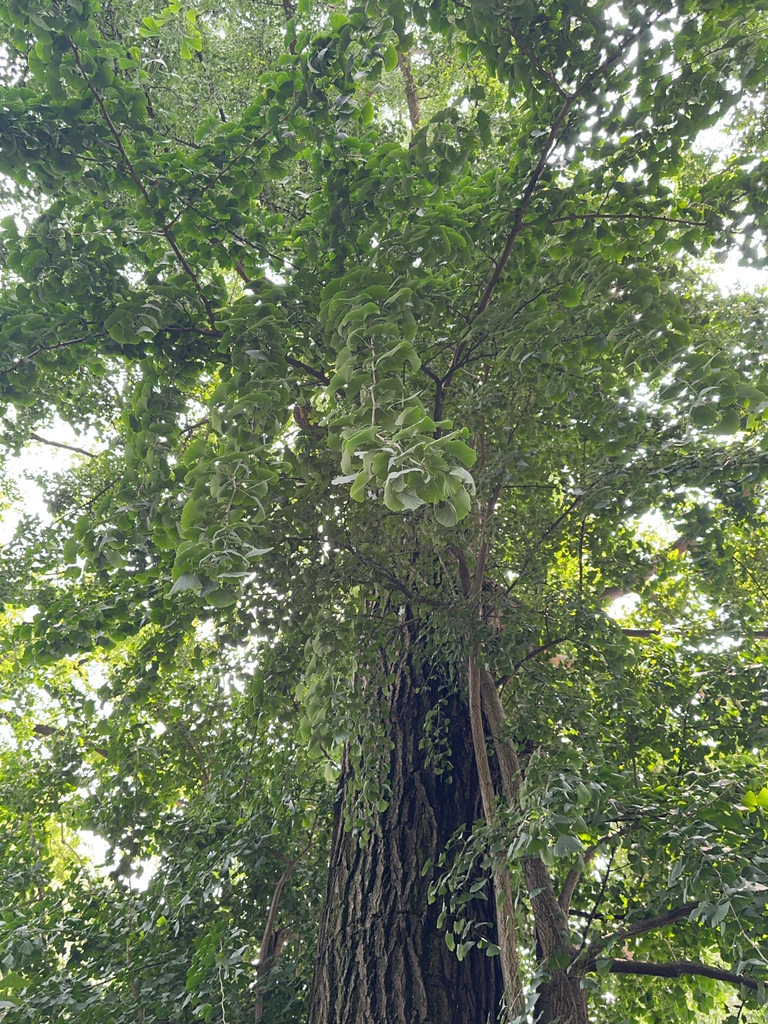
Ginkgo (Ginkgo biloba) · 800 years · Asakusa, Taito
Minamoto no Yoritomo, Japan's first shogun, is said to have stuck a spent branch into the ground here around 1189, and the branch is credited with becoming this tree. No document from the twelfth century confirms it, only centuries of temple tradition, but the ginkgo is still treated as the shogun's own casual planting. Eight hundred years and a firebombing later, it is still growing.
Ginkgo (Ginkgo biloba) · 385 years · Shiba Park, Minato
Tokugawa Iemitsu, the third Tokugawa shogun, is said to have planted this ginkgo with his own hands in 1641, at a shrine built specifically to deify his grandfather Ieyasu. That makes it one of the few trees on this list credited to a ruler's actual hands rather than his order or his gardener's spade. It survived the 1945 firebombing that took Zojoji's main hall next door, still standing where the man who founded the whole dynasty is honored.
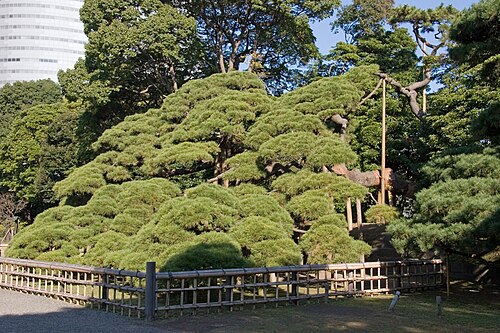
Japanese Black Pine (Pinus thunbergii) · 300+ years · Hamamatsucho, Chuo
Hamarikyu was a shogunal duck hunting villa, not a public garden, and this pine went into the ground around 1709 as part of the sixth shogun Tokugawa Ienobu's own rebuilding of the estate. Three centuries on it has grown low and wide rather than tall, its branches propped on log supports running twenty metres from the trunk. A garden built for one shogun's private pleasure now floods twice a day for anyone who buys a ticket.
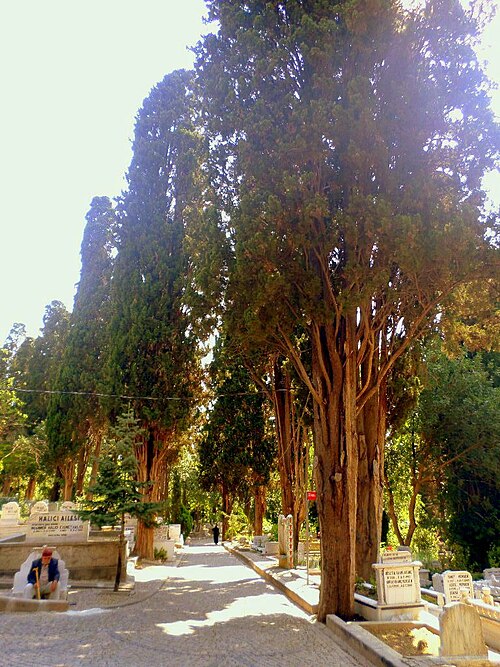
Mediterranean Cypress (Cupressus sempervirens) · 440+ years (planting tradition; individual trees unconfirmed) · Üsküdar
Nurbanu Sultan did not simply donate land to expand Karacaahmet in 1582. She had cypresses planted across it on her own order and assigned guards specifically to protect them, turning a burial ground into a planting scheme with its own security detail. Nine specimens here still carry official Monument Tree status today, though whether any single trunk dates back to her original planting or grew from the same replanted tradition is honestly impossible to say.
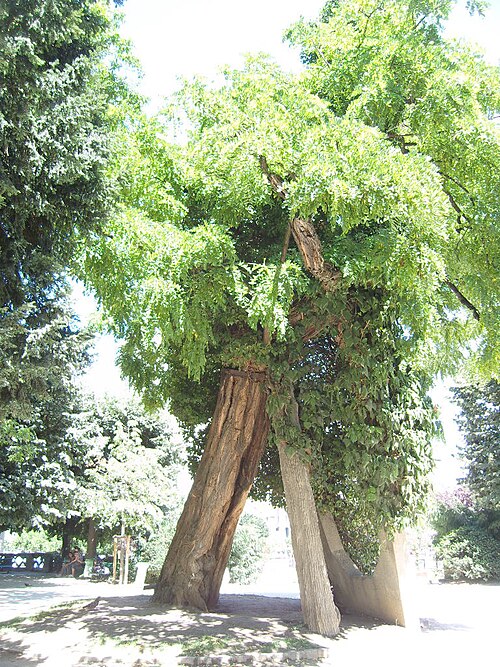
Black Locust (Robinia pseudoacacia) · 425 years · Latin Quarter, 5th arrondissement
Jean Robin held his position because Henri IV appointed him royal herbalist, tasked with building and tending the crown's collection of plants from the New World. This black locust, raised from American seed in 1601, was one result of that job, planted by the king's own botanist rather than by any anonymous nursery worker. It is now the oldest tree in Paris, four centuries after the appointment that put it in the ground.
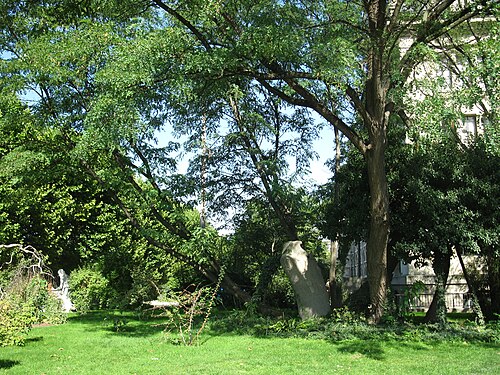
Black Locust (Robinia pseudoacacia) · 390 years · Jardin des Plantes, 5th arrondissement
Vespasien Robin inherited his father's job along with his cutting: royal botanist to the crown, the same title his father held when he raised Paris's oldest tree. In 1636 he planted a cutting from that locust inside the brand new royal medicinal garden that became the Jardin des Plantes, one of the few trees anywhere planted by a king's gardener inside a king's own garden. Father and son, both in royal service, are almost certainly the oldest parent and child trees in any European city.
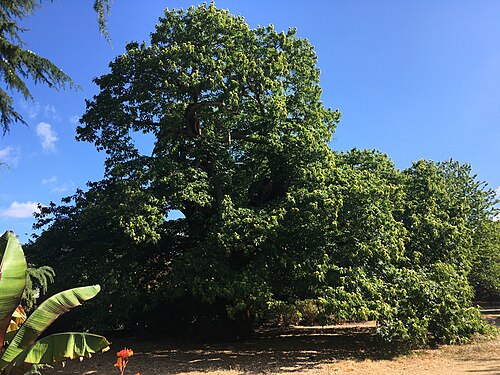
Sweet Chestnut (Castanea sativa) · 365 years · Greenwich
Charles II wanted a French style approach to his park and ordered hundreds of sweet chestnuts marched up the hill in straight avenues after his restoration in 1660, a planting scheme carried out entirely on his own instruction rather than inherited from an older wood. This chestnut is one of roughly fifty survivors of that specific royal order, out of the hundreds originally planted. Storms, disease and three and a half centuries have taken the rest.
Ginkgo (Ginkgo biloba) · approximately 235-251 years · Brera
Empress Maria Theresa founded Milan's botanical garden in 1774 as a teaching collection for the university, and gardeners planted this pair of ginkgos, a male and a female grown from seed carried from China, into the ground the very next year. They are now the oldest documented trees in Milan, outlasting the empress by two and a half centuries and the idea of a unified Italy by nearly a hundred years.
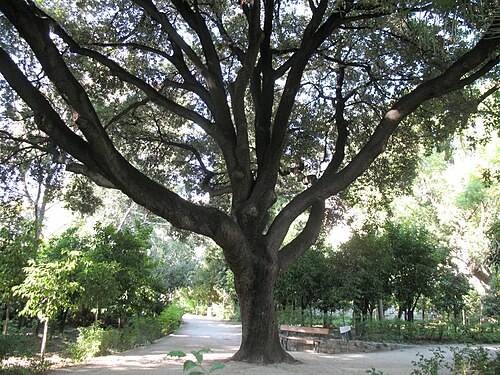
Queen Amalia commissioned Athens's National Garden in 1839 and had her gardeners fill it with species gathered from across the Mediterranean and beyond. This holm oak is one of the survivors of that original royal planting scheme, a native Greek species that a Bavarian born queen's staff chose to leave standing rather than replace with something more exotic. It has since outgrown almost every wild holm oak left in the country.
Giant Sequoia (Sequoiadendron giganteum) · 165 years · Phoenix Park
Queen Victoria planted this giant sequoia herself during her 1861 visit to Dublin, in the grounds of what was then the Viceregal Lodge. Seed of the species had only reached Britain eight years earlier, making hers one of the first sequoias planted anywhere in Europe. The gesture became a habit: Charles de Gaulle, John F Kennedy, Pope John Paul II and Barack Obama have each since planted their own tree in the same grounds.