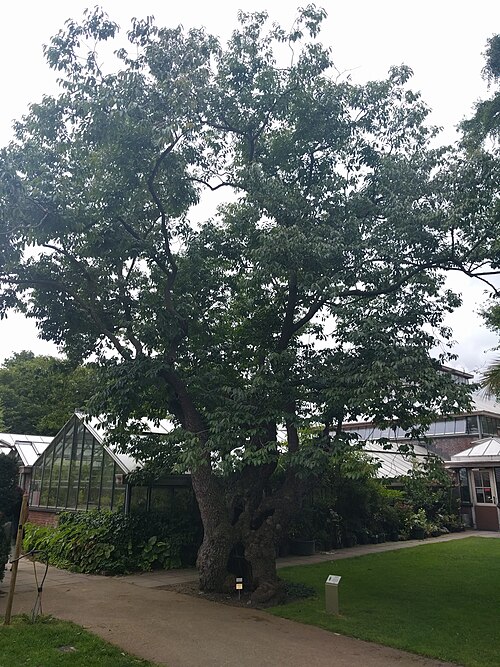
Children call this one the Halloween tree, and the holes in its trunk have a stranger history than the nickname suggests.
Photo: Rudolphous (CC BY-SA 4.0)
Leiden, Netherlands
Leiden's Hortus Botanicus was founded in 1590, and eight of the city's remarkable trees stand inside it.
The tulip tree by professor Herman Boerhaave's name came from a Virginia seed a London apothecary posted across the Channel in October 1716, eleven days before it reached Leiden's soil. The zelkovas came further: Philipp Franz von Siebold, a physician stationed on the Dutch trading post at Deshima in the 1820s, sent home more Japanese plants than any European before him, and the Hortus holds the first zelkovas that ever left the country. A ginkgo planted in 1785 spent a century and a half producing nothing but the small catkins of a male tree, until gardeners grafted female branches onto it in 1935 so it would finally bear seed. A date-plum, which children call the Halloween tree, has holes in its trunk left by a maple that seeded itself inside the older tree's wood in the late 19th century. A horse chestnut at the garden's edge is the thickest of its kind recorded anywhere in the Netherlands, 5.8 metres round by the national monumental tree register's own measurement, its roots reaching almost to the water of the Witte Singel. And a catalpa leaning toward the canal is kept from going in by cables tied to another tree on this same list. The garden is open to the public with an admission charge.
Children call this one the Halloween tree, and the holes in its trunk have a stranger history than the nickname suggests.
Photo: Rudolphous (CC BY-SA 4.0)
This tree exists because a London apothecary put a Virginia seed in the post.
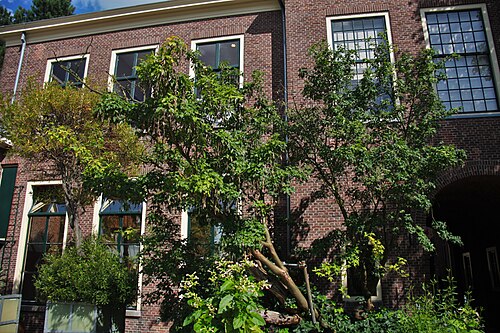
For decades this tree was sold on a story its own garden no longer believes.
Photo: Xsandriel (CC BY-SA 4.0)
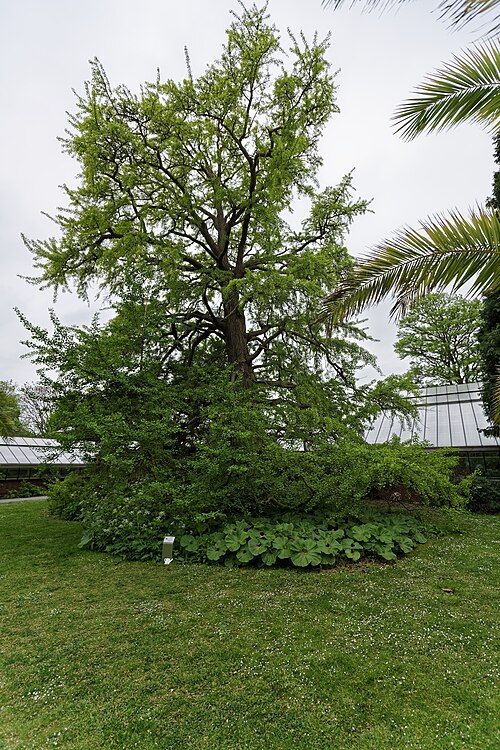
Planted in 1785, this ginkgo spent a century and a half as what botanists call, without much romance, a male specimen, producing only the small catkins that never make seed.
Photo: Txllxt TxllxT (CC BY-SA 4.0)
At 5.8 metres round, this is the thickest horse chestnut in the Netherlands by the national monumental tree register's own measurement.
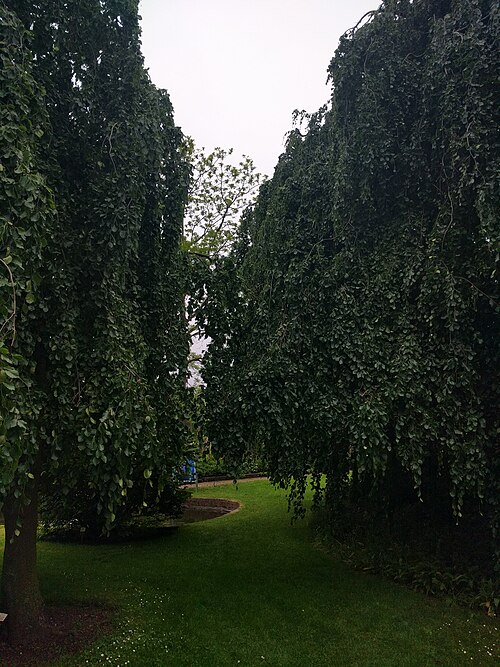
These are the first zelkovas that ever left Japan.
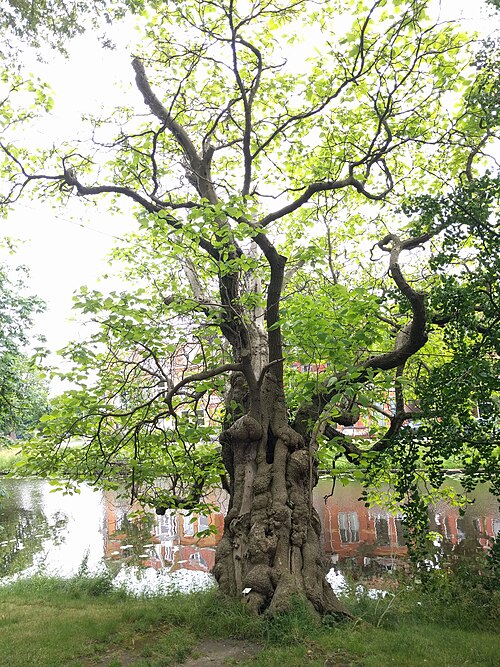
This catalpa is kept out of the canal by cables tied to another tree on this list.
Photo: Rudolphous (CC BY-SA 4.0)
An Englishman gave this tree its first paper trail.
Photo: Rudolphous (CC BY-SA 4.0)
More parks worth the walk: every park we map. Or explore by city: Prague · Brussels · Porto · Brisbane · Munich · Cambridge