Almost every ancient tree on this site carries an estimate: a ring count, a girth measurement fed into a growth curve, a guess dressed up as a fact. These fourteen do not. Somewhere in a garden's own ledger, a shrine's dated tradition or a city's own peace festival records, someone wrote down the year a sapling went into the ground, and the record survived along with the tree. The span runs from a Medici garden in Florence, where the botanist who planted the yew in 1720 kept the books himself, to an Antwerp linden planted on a single named day in 1994. Between them: a plane tree that watched Napoleon abdicate, an oak planted for one dead soldier and all his comrades, and a fig gardeners put in the ground by mistake. Age by inference is common here. Age by paperwork is rare, and it changes what a visit means.
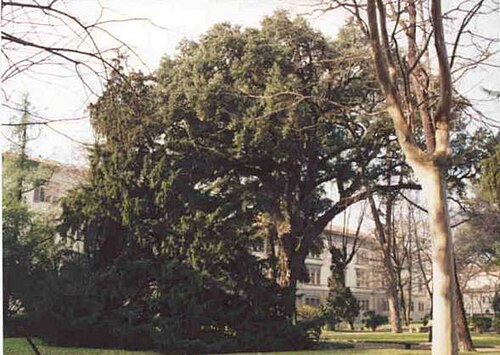
European Yew (Taxus baccata) · 306 years · San Marco
Pier Antonio Micheli, one of Europe's first professional botanists, logged this yew into the Orto Botanico's own record book in 1720, the year he planted it while running the garden for Cosimo III de' Medici. Three centuries on it is Florence's most precisely dated living thing, free of the ring-count guesswork behind almost everything else in the city. It has outlived the Medici Grand Duchy that employed its planter by more than 150 years.
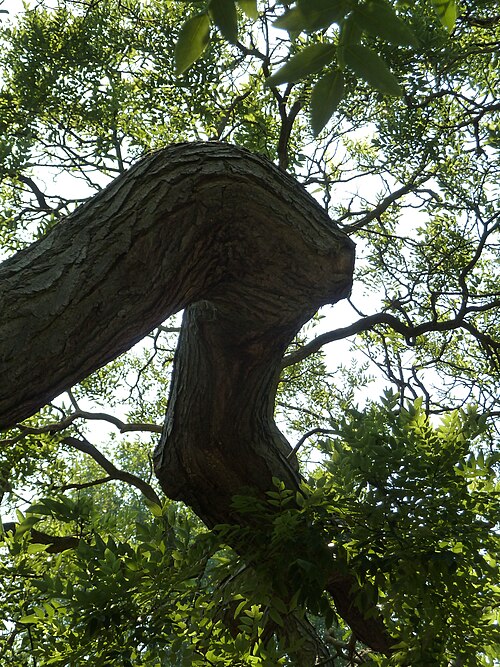
Japanese Pagoda Tree (Styphnolobium japonicum) · 250+ years · Kew, South West London
John Smith, Kew's first curator, named this Japanese pagoda tree one of the garden's Old Lions, a nickname for the handful of specimens that predate Kew's existence as a public institution. It went into the ground in 1762, decades before the garden merged with the neighbouring Richmond estate, and now ranks among the oldest of its species growing anywhere in Europe outside its native range. Seeing it means a paid ticket and a walk across a meaningful stretch of the grounds, since Kew groups its Lions by age rather than location.
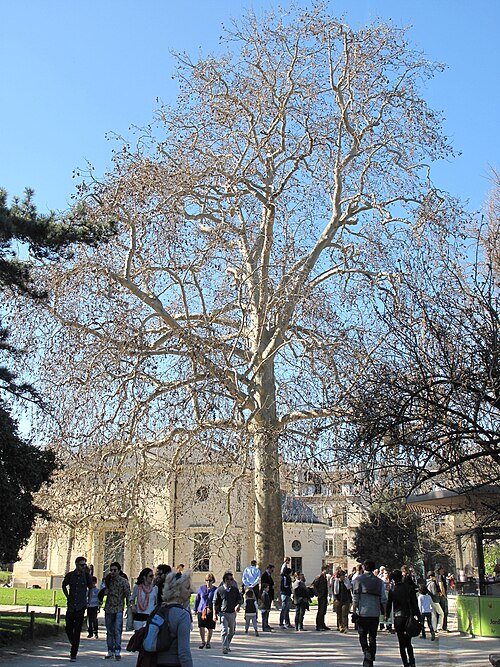
Oriental Plane (Platanus orientalis) · 240 years · Jardin des Plantes, 5th arrondissement
In 1785, four years before the Revolution, the naturalist Buffon planted three oriental planes in the Paris garden he had run for half a century. He missed the Terror himself by five years, though his own son went to the guillotine. Two of the three plantings are gone; this one kept growing through all of it, the last tree Buffon is known to have put in the ground with his own gardeners.
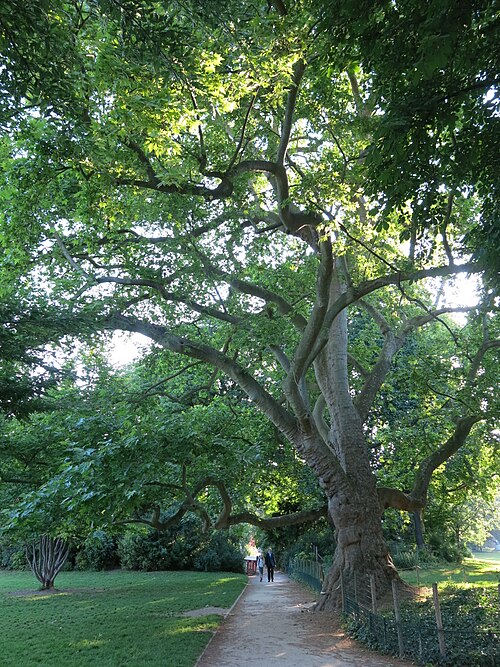
Oriental Plane (Platanus orientalis) · 210 years · 8th arrondissement
The thickest tree in Paris went into the ground in 1814, the year Napoleon abdicated and allied armies camped in the city, inside what was then the Orleans family's private pleasure garden. It grew up faster than the follies around it: a waistline of seven metres today, the largest oriental plane in Paris. The park became public under Haussmann in 1861, and Proust is said to have walked here as a boy under a tree that already predated him by decades.
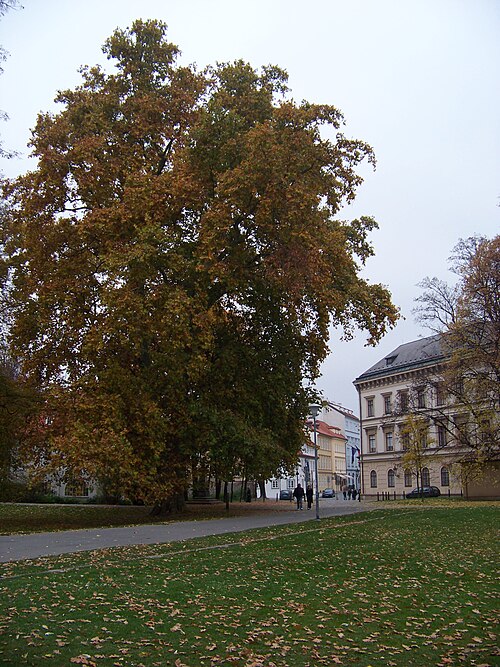
London Plane (Platanus x acerifolia) · 213 years · Mala Strana, Kampa
Countess Barbora Kolowratova Krakovska had her riverside garden planted with foreign flowers and trees in 1813, and this plane is the clearest survivor of that scheme, later absorbed into Kampa Park. Most of Prague's old planes carry an age with a decade or two of margin either side; this one has a single year attached to it because someone wrote it down at the time. It now stands 35 metres tall, taller than most buildings on the island it anchors.
Cedar of Lebanon (Cedrus libani) · 200 years · Inverleith
This cedar of Lebanon has what the Royal Botanic Garden Edinburgh calls a birth certificate few Scottish trees can match: 1826, recorded by the garden's own staff as one of the first plantings after it moved to its current Inverleith site. Cedar of Lebanon was the fashionable statement tree for institutions wanting to signal permanence, and RBGE's planting did exactly that. It turned two hundred years old this year, still spreading its broad, tiered branches near the Glasshouses.
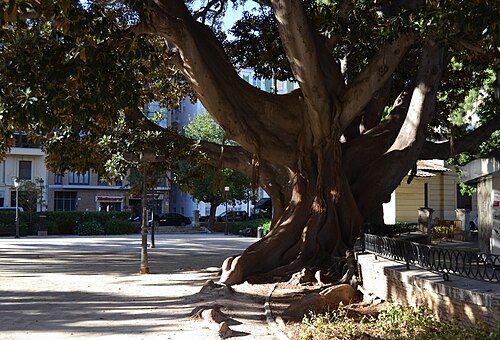
Moreton Bay Fig (Ficus macrophylla) · 174 years · Ciutat Vella
Gardeners planted this fig by accident in 1852, mistaking the young sapling for one of the 47 magnolias also going into the newly laid Parterre garden that year. The mistake became Valencia's most celebrated tree: a trunk nearly 13 metres around and a canopy shading close to 1,000 square metres, the widest of any tree in the city. In 1915 it became a study subject for Madrid's agricultural engineers, proof of how early its scale was noticed.
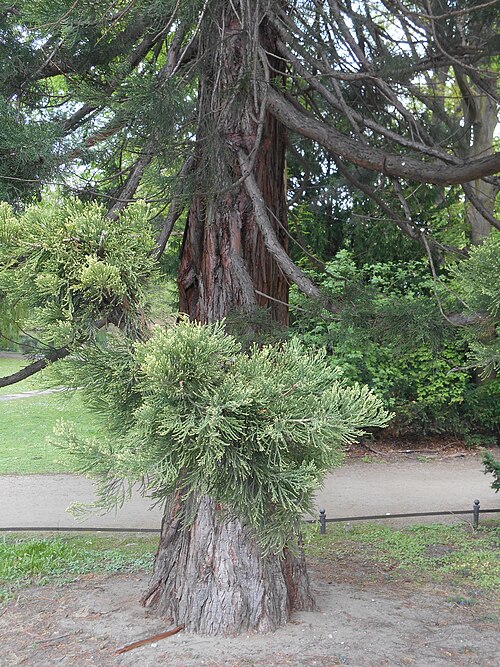
Coast Redwood (Sequoia sempervirens) · approximately 170 years · Alhambra
Coast redwoods reached Europe in 1843, and Granada planted some of the continent's first only a decade later, sequoias going into the Generalife's Upper Gardens between 1854 and 1856 while the gardens were still private property. Sequoia sempervirens can live three thousand years and top 100 metres in California; these are comparatively young, but they are already among the tallest living things inside the Alhambra complex. Seeing them requires a timed, paid Alhambra and Generalife ticket.
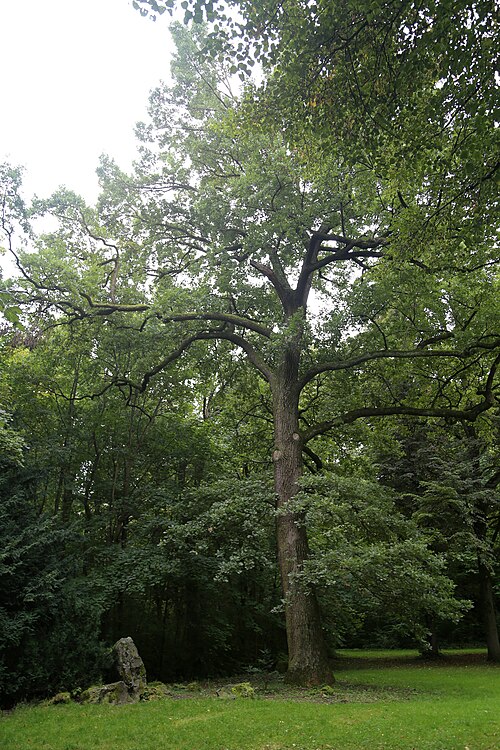
Pedunculate Oak (Quercus robur) · 155 years · Flaucher, Sendling
Twelve thousand schoolchildren watched a handful of classmates set a young oak into the ground at a Munich peace festival on 1 July 1871, weeks after the treaty ending the Franco-Prussian War was signed. A plaque at the site still reads Reich and Peace Oak, planted by the youth of the city of Munich on that exact date, which makes this one of the few trees anywhere with an undisputed planting day rather than an estimate. A century and a half later it has grown into an ordinary looking oak in a riverside park, its real distinction lying in the date rather than the trunk.
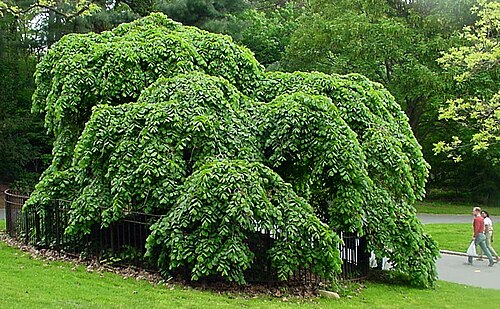
Camperdown Elm (Ulmus glabra 'Camperdownii') · about 154 years · Prospect Park, Brooklyn
Every Camperdown elm on earth is a clone of a single mutant branch found on a Scottish estate in the 1830s, and this graft, planted near Prospect Park's Boathouse in 1872, is among the oldest specimens anywhere. By the 1960s it had declined badly enough that Brooklyn nearly lost it, until the poet Marianne Moore, a devoted park visitor, wrote publicly in its defence and helped save it. She later called it Brooklyn's crowning curio, and its low, twisted canopy still spreads wide enough that visitors duck to walk beneath it.
Giant Sequoia (Sequoiadendron giganteum) · 135 years · Tiergarten, Mitte
A tree that can live 3,000 years in California has had 135 of them in central Berlin. This giant sequoia went into the Tiergarten's Englischer Garten section in 1891, decades after the species itself reached Europe, part of a brief craze among wealthy estate owners for what nurseries of the time marketed as Wellingtonia. It survived two world wars and the postwar famine winters that saw Berliners fell most of the park's other trees for firewood.
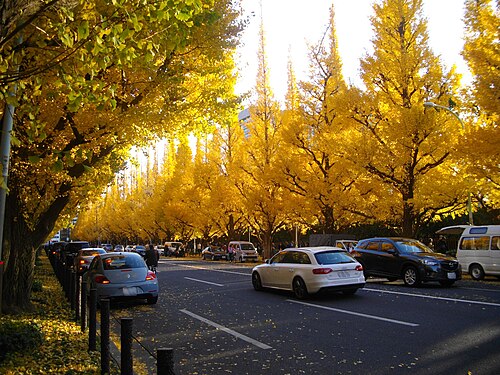
Ginkgo (Ginkgo biloba) · 100+ years · Kitaaoyama, Minato
Gardeners collected ginkgo seeds from Shinjuku Gyoen in 1908 and grew 1,600 seedlings in a nursery; fifteen years later the straightest 146 survivors, already six meters tall, were transplanted to line this avenue when Meiji Jingu Gaien opened in 1923 as a memorial to Emperor Meiji. Landscape architect Origeshi Yoshinobu spaced them nine meters apart along a 300 meter stretch, engineering the perspective so the trees funnel toward the Meiji Memorial Picture Gallery's dome from any angle on the street. A century on, the avenue turns uniform gold every November and draws tour groups and engagement shoots in equal number.
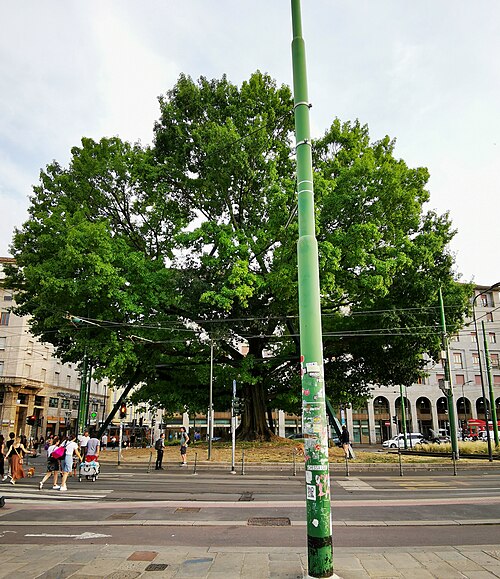
Northern Red Oak (Quercus rubra) · approximately 131 years · Porta Ticinese
Giunio Capè had this oak, already growing in an American nursery, brought to Piazza XXIV Maggio at the end of the First World War and planted in 1924 in memory of his son Giuseppe, an Alpine soldier who survived the war, and of the Alpini who did not. Milanese press sometimes calls it the oldest tree in the city, which it is not, but it may be the only one whose exact planting date and reason for standing there are both on record. A steel exoskeleton has held up its crown since 2019.
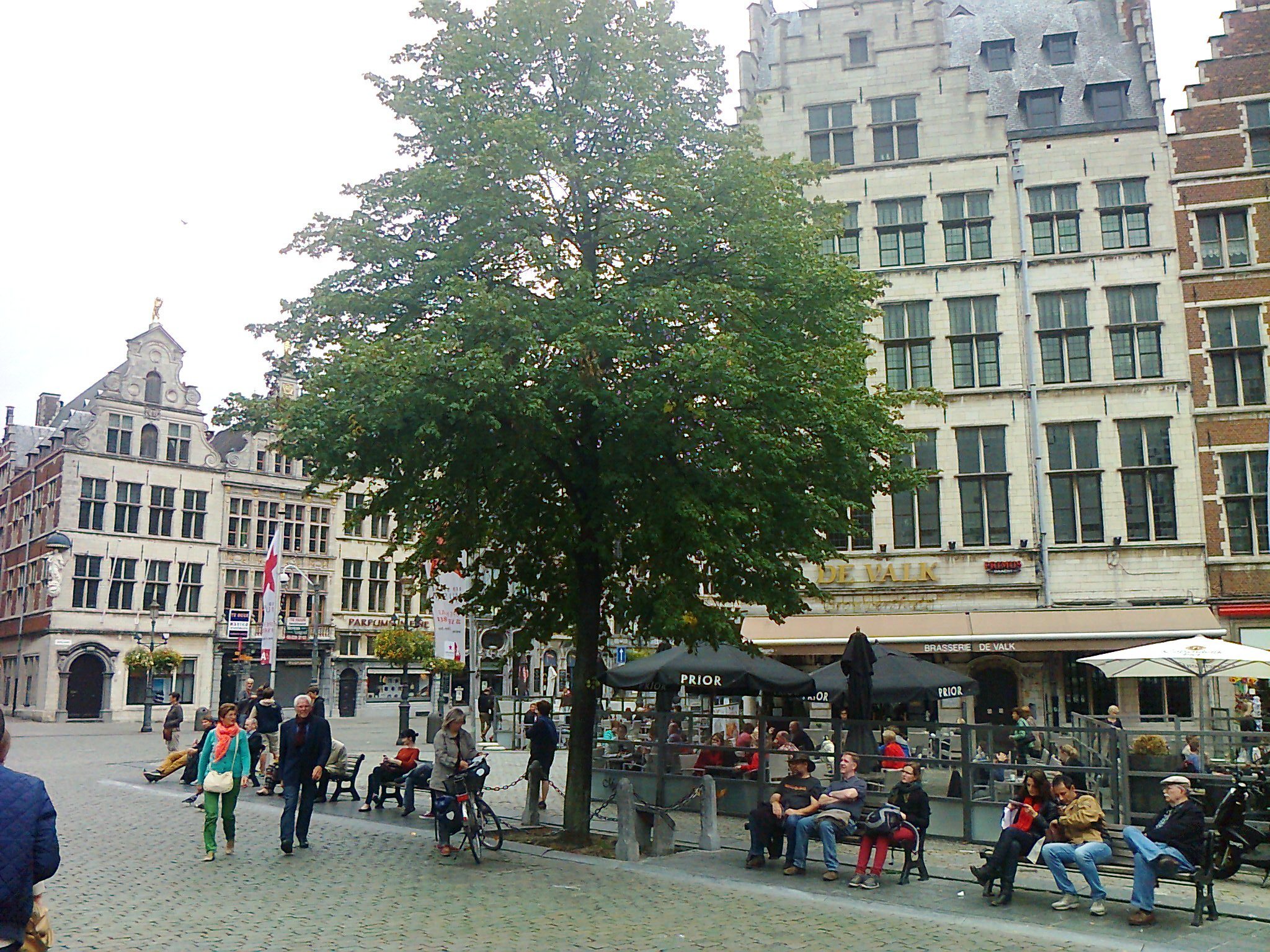
Common Lime (Tilia x europaea) · under 35 years · Historic Centre
The youngest tree in this collection has the least ambiguous birthday of any tree on the whole site: 3 September 1994, when Antwerp planted a small linden on the Grote Markt to mark exactly fifty years since the city's liberation from German occupation. A bronze plaque chained to four posts spells out the anniversary in plain terms. It is barely three decades old, a sapling by the standard of a Medici garden's yew, but it offers what none of the older trees on this list quite can: zero folklore, zero disputed circumference, just a dated, deliberate act of memory.