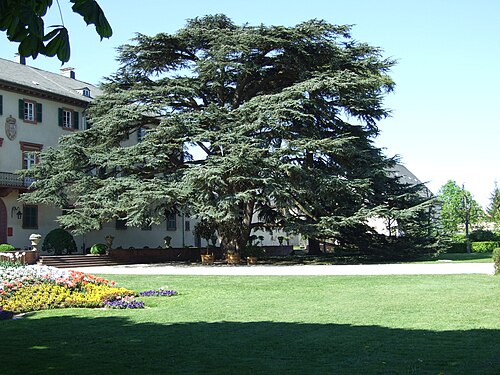
Sixteen cedar seedlings came from Kew and two of them are still standing here.
Photo: Rainer Lippert
Bad Homburg, Germany
Six trees in this park are worth stopping for, and the thickest is the one nobody has named.
It is a plane about ten metres east of the second wingnut, 5.66 metres round, wider than the famous cedars beside the palace. It carries no plaque and appears in no register. It turned up in a dendrologist's survey of the park in 2021 and that is the whole of its paper trail. The cedars are the pair everyone comes for, and they earn it. Sixteen seedlings arrived from Kew through Princess Elizabeth of Great Britain, who married Landgrave Friedrich VI Joseph in 1818 and kept her English botanical contacts; two went into the ground in front of the royal wing in 1822 and both still stand there. The larger runs 6.40 metres round and 21 metres tall, and by 2011 its crown measured more than 35 metres from east to west, so the tree is considerably wider than it is high. Three big pedunculate oaks stand in the park: 5.39 metres round at the bridge, 4.94 by the lake, and the Schöne Eiche near the gate to the Altstadt, about five metres round and, by the estimate of a reader who knows the park trunk by trunk, some 36 metres tall. He named it for its crown, whole and vigorous without the dead limbs most old oaks carry. None of the three is dated or labelled. The fastest grower is the dawn redwood at the southern pond: about seventy years old, already 5.80 metres round and 28 metres tall, which is more girth than the cedar has managed in two centuries. The ground has been garden since at least 1441, was laid out as a baroque garden from 1680 and remade as an English landscape park from the later eighteenth century, which is the style it still wears: grass, water, and single large trees given room. It is a Hessian state park, so walking through it costs nothing and passes no gate; the palace buildings themselves are ticketed.
Sixteen cedar seedlings came from Kew and two of them are still standing here.
Photo: Rainer Lippert
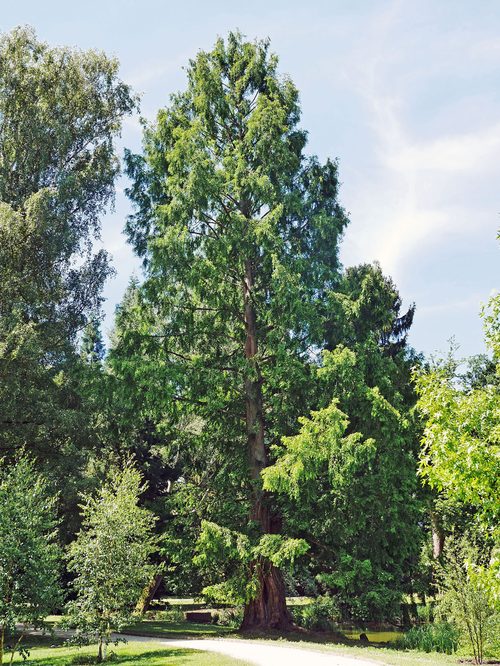
This species was known only from fossils until 1944.
Photo: Rainer Lippert
Nobody has dated this oak, and it is probably the oldest thing in the park.
This pedunculate oak is 4.94 metres round, measured in August 2021, and it stands about thirty metres south-west of the lake rather than on its bank, which is where our map first put it.
At 5.66 metres round, this is the thickest trunk anyone has measured in the park, wider than the famous cedars and wider than the big oak thirty metres away.
This oak has no plaque, no register entry and no date, and it may be the finest tree in the park.
More parks worth the walk: every park we map. Or explore by city: Palermo · Seville · Tokyo · Lisbon · Berlin · Singapore