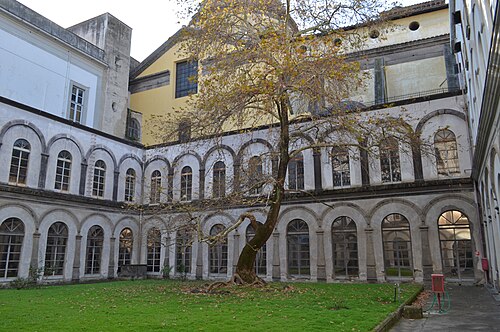
The Podocarpus of Piazza Cavour
There are two of these in Piazza Cavour and one of them is lying down. The register carries the upright one, 25 metres tall with a trunk 2.42 metres round; the other, nicknamed il Podocarpo sdraiato, the reclining podocarpus, toppled and went on living horizontally, and was struck off the regional register for it. So identifying this tree matters more than usual, and the identification is solid: a photograph on Wikimedia Commons from 2018 carries coordinates a few metres from the register's point and shows a single tall upright trunk under a full crown, which is the standing tree and not its fallen neighbour. Podocarpus macrophyllus is not a pine despite its English name. It is a southern conifer from China and Japan, with long strap-shaped leaves rather than needles, and it carries its seeds on a swollen fleshy stalk that turns purple and is the only part of the plant that is not toxic. Birds take them; the seed itself they leave. Neither register gives it an age. It stands in a working square above the Museo metro station, two minutes from the National Archaeological Museum, which makes it the easiest tree on this page to add to a day you were already having.
Piazza Cavour, NapoliThe UPRIGHT one. Piazza Cavour has a second podocarpus lying on its side and still alive; this is the 25 metre standing tree.
Free, public square
Museo or Cavour metro station, 2 min walk
Sources
Where the facts on this page come from.
- In the official register: Elenco degli alberi monumentali d'Italia (MASAF), no. 18/F839/NA/15
- masaf.gov.it
- commons.wikimedia.org
- napoliapiedi.it