Seasons1 of 4
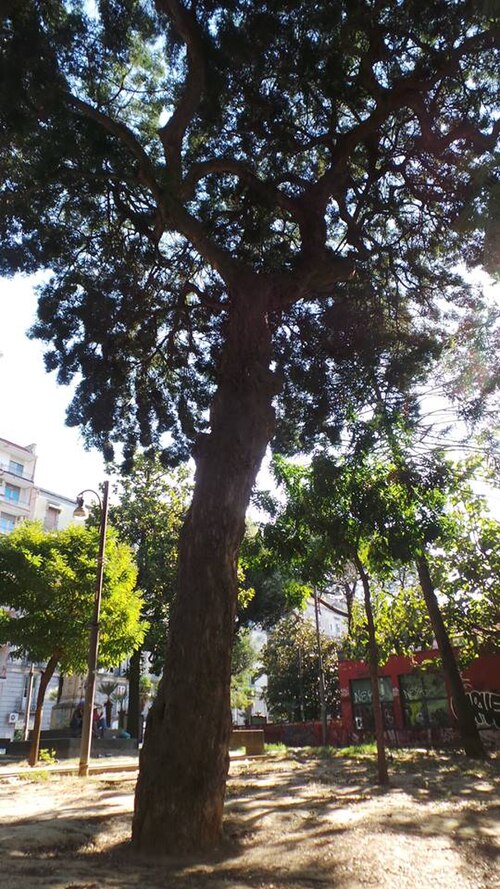
The tree standing today in the Cloister of the Platano is not the tree the cloister was named for, though it is, in a sense, the same organism. Legend credits the original planting to Saint Benedict of Norcia in the 5th or 6th century, using land donated for the monastery, and whether or not that founding story is literal, a plane tree of real age genuinely dominated this cloister for centuries, reaching a documented 8.45 metres in trunk circumference before termite damage forced its removal in 1959. Rather than replant from scratch, the monastery let the stump regrow from its own root system, so the tree visible today, now well past six decades old itself, is a direct continuation of the original rather than an unrelated replacement, a distinction this site is careful to draw clearly. The cloister itself, the oldest part of the complex, dates to the 10th century and carries a cycle of early 16th century frescoes depicting Saint Benedict's life on two of its four walls. The complex now houses Naples's State Archive, and the cloister remains publicly accessible during archive opening hours.
From people who stood here
No notes yet
Did you visit the tree? Leave a note for the next visitor.
Getting there
Complesso dei Santi Severino e Sossio, Via Bartolomeo Capasso, 80138 Napoli
You can recognise it as the plane tree that regrew from its own felled stump after 1959, standing at the centre of a cloister frescoed with scenes of Saint Benedict's life. It stands in the Complesso dei Santi Severino e Sossio.
Free, State Archive of Naples (check archive opening hours)
10 min walk from Napoli Duomo metro
The line is our estimate of how much there is to see, not a measurement. Typical for this species where this tree stands; exact weeks shift with the year.
Sources
Where the facts on this page come from. The story was written with AI from these sources, and readers who know the tree correct it.