The Raised-Root Pine
You need a ticket to see this treePaid entry to Kenrokuen: 320 yen for adults, 100 yen for ages 6 to 17. Open every day, 7:00 to 18:00 from 1 March to 15 October and 8:00 to 17:00 from 16 October to the end of February; last entry 30 minutes before closing.
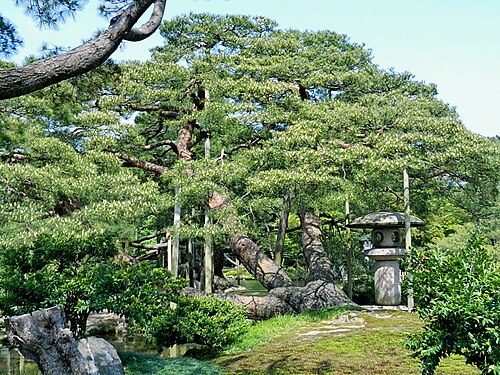
Forty-odd roots stand two metres clear of the ground before they meet the trunk. The story told about it is that the thirteenth Maeda lord, Nariyasu, planted a young pine on a heaped mound of earth with his own hands and then had the soil taken away a little at a time over years, leaving the root system exposed in the air as the tree grew into it. If that is right, the tree dates from his lifetime, 1822 to 1866, which puts it at somewhere around 150 years and makes it the youngest tree on this page by centuries. Above the roots the trunk gathers into one, then splits into three, and the crown it carries is unhurried and wide. It stands where the Tatsumi canal, which brings water into the garden from an intake 8.5 kilometres up the Saigawa, swings through a deep bend. Kenrokuen has an area of about 11.5 hectares and its name was chosen for it: the twelfth lord asked Matsudaira Sadanobu to name the garden and he took it from a Song dynasty account of the famous gardens of Luoyang, meaning a garden that combines six qualities at once, spaciousness and seclusion, artifice and antiquity, water and a view. The whole garden was made a Special Place of Scenic Beauty in March 1985.
Kenrokuen, Kenrokumachi 1, Kanazawa 920-0936You can recognise it by the forty-odd roots standing bare above the ground before the trunk gathers and splits into three. It stands where the Tatsumi canal bends, inside Kenrokuen.
Bus to Kenrokuen-shita, then into the garden
Sources
Where the facts on this page come from.