The Karasaki Pine
Approximate location.
You need a ticket to see this treePaid entry to Kenrokuen: 320 yen for adults, 100 yen for ages 6 to 17. Open every day, 7:00 to 18:00 from 1 March to 15 October and 8:00 to 17:00 from 16 October to the end of February; last entry 30 minutes before closing.
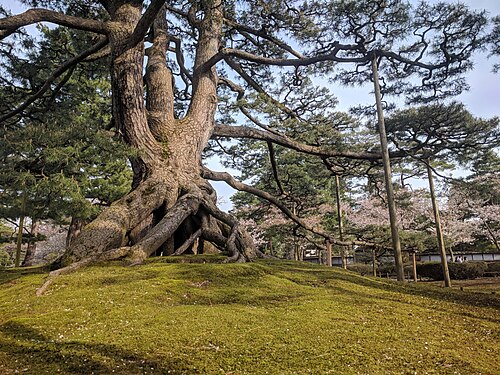
On the first of November every year, this is the tree they do first. Kanazawa gets heavy wet snow off the Sea of Japan and it breaks pine branches, so the garden's answer is the yukitsuri: a pole set upright at the centre of the tree and ropes fanned out from its tip down to every major limb, holding them up from above. The method is called ringo-tsuri, apple hanging. Kenrokuen puts it up at more than eight hundred places between 1 November and the middle of December and takes it down in March, and the Karasaki pine is always the opening job, which means the picture of Kanazawa in winter that everybody has seen is usually this tree. It is a black pine grown from seed, and the seed was fetched. The thirteenth Maeda lord, Nariyasu, sent for it from the famous pine at Karasaki on the shore of Lake Biwa, one of the eight classic views of Omi, and raised this one from it on the edge of Kasumigaike pond, where the branches now run out low and wide over the water. Kenrokuen was closed to ordinary people until 1874.
Winter shape
November to February, when the snow ropes are up and the pine is the first tree they go on
Kasumigaike, Kenrokuen, Kenrokumachi 1, Kanazawa 920-0936You can recognise it by the branches running out low and wide over Kasumigaike pond, and in winter by the ropes fanned down from a central pole: it is the first tree the garden rigs every November.
Bus to Kenrokuen-shita, then into the garden; the tree is on the shore of Kasumigaike
Sources
Where the facts on this page come from.