The Kurogane Holly of Terukuni Park
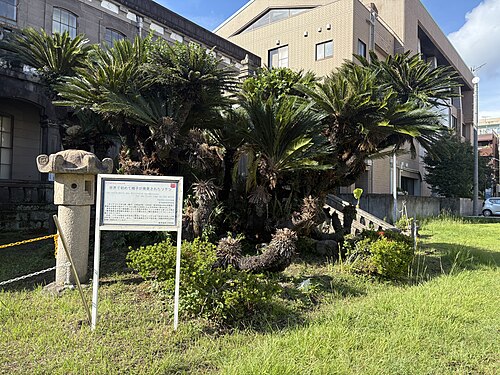
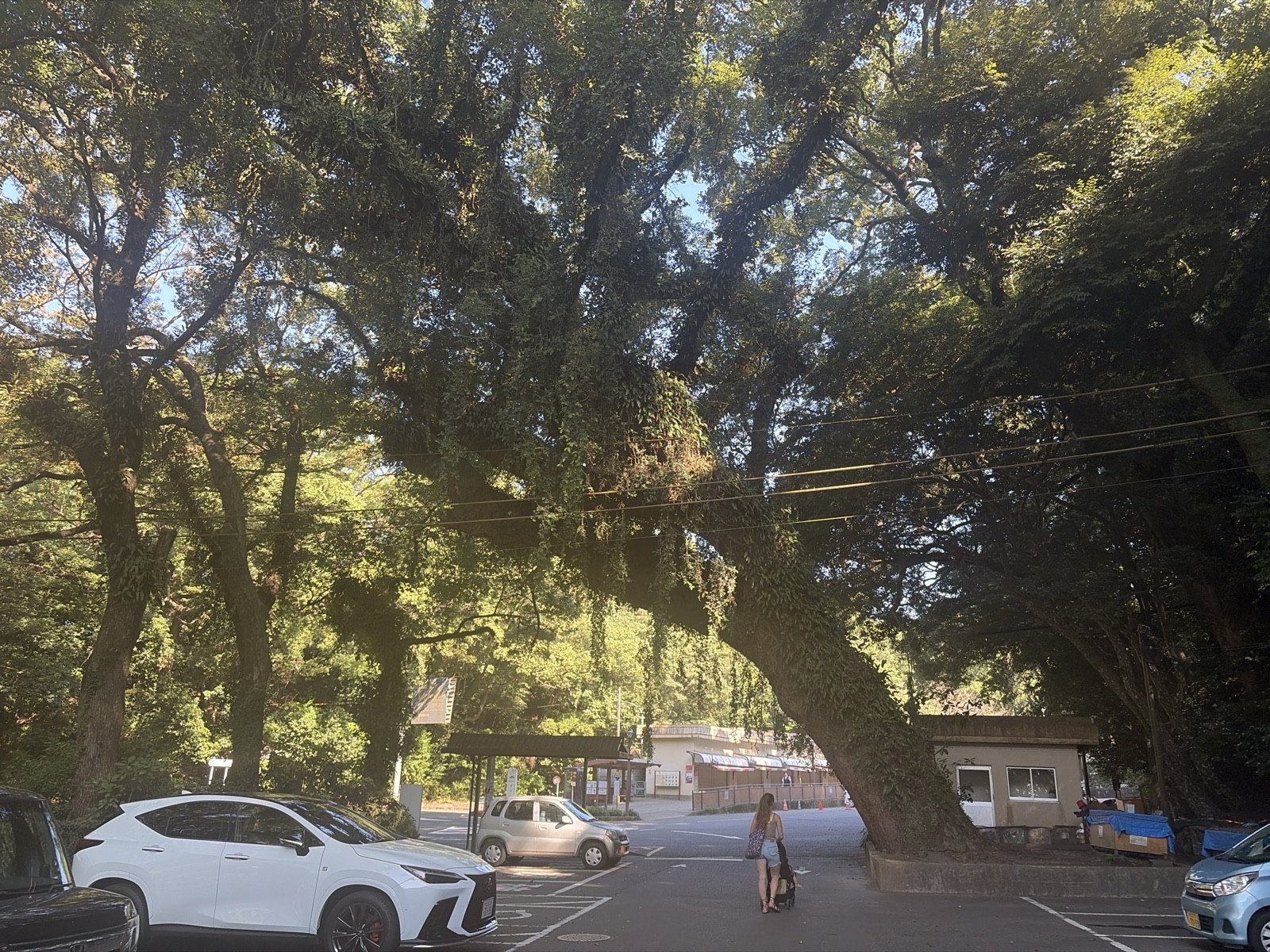
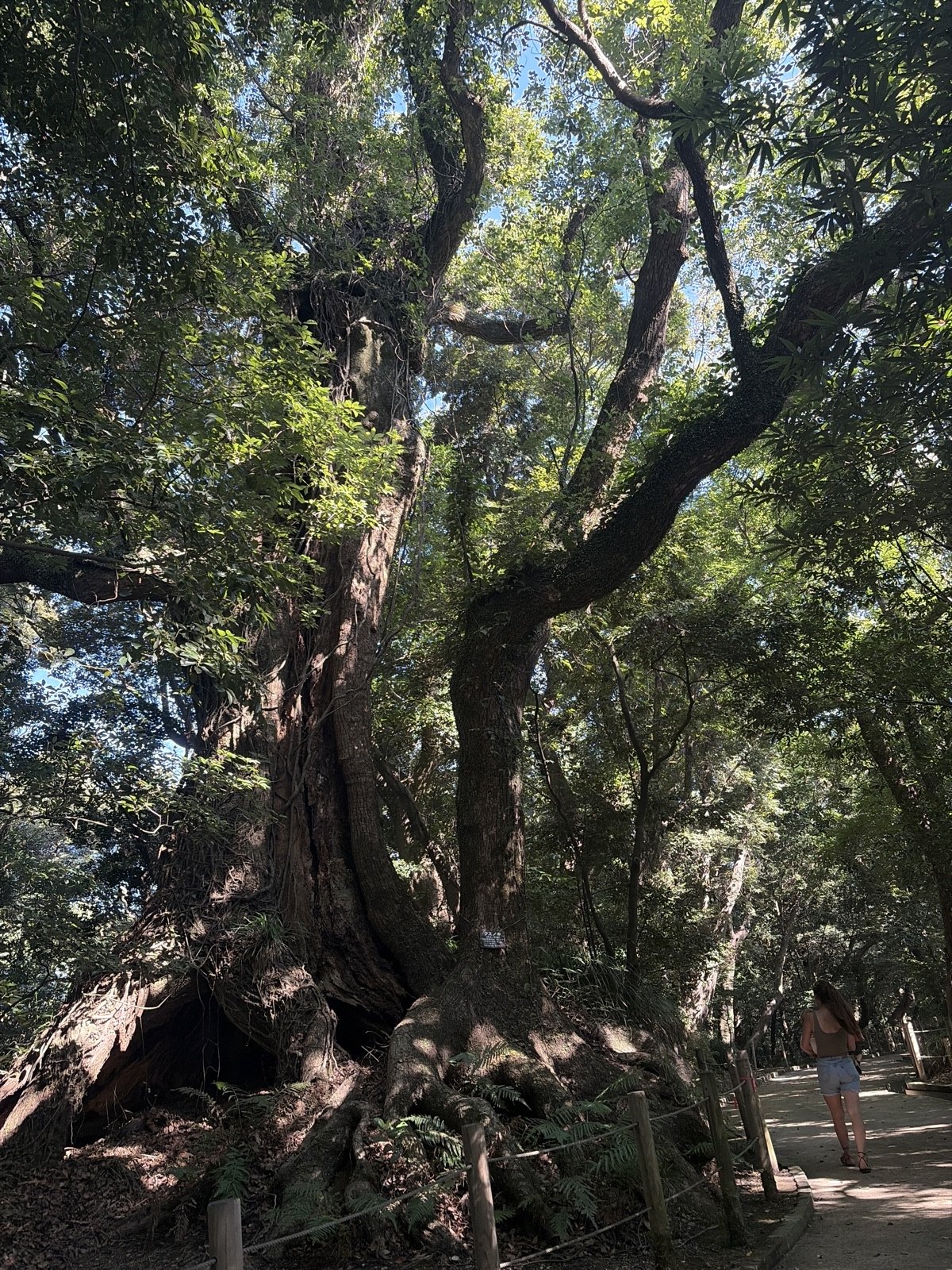
Four national highways die at the crossroads this tree stands over. Route 3 comes down the west coast of Kyushu, Route 10 comes down the east coast, and both of them, with Routes 225 and 226, end at the intersection south of Terukuni Shrine. The holly is at the park's southern corner, the closest tree to that junction. Kurogane holly grows all over southern Japan as a street and garden tree and very rarely gets to this size: 4.85 metres around at 1.5 metres, 13.5 metres tall, about 180 years old by the city's estimate. It is multi-stemmed rather than single-trunked, so the girth is the whole cluster, but the crown it carries is broad and even and reads as one tree from any distance. Kagoshima made it preserved tree number 6 on 20 March 1974, in the first batch the city ever designated. The park is effectively the front garden of the Kagoshima Prefectural Museum, and the shrine beside it enshrines Shimazu Nariakira, the lord who put a reverberatory furnace and a glassworks into Satsuma in the 1850s and sat for the oldest surviving photograph taken by a Japanese photographer, then died at 49 with the works half built. Female hollies of this species carry dense red fruit through the winter, which is most of why anyone plants them.
Terukuni Park, Shiroyama-cho 1, Kagoshima 892-0853You can recognise it by its multi-stemmed cluster carrying one broad, even crown. It stands at the southern corner of Terukuni Park, nearest the highway junction.
Free, open park
Tram to Tenmonkan-dori or Shiyakusho-mae, then about 8 minutes on foot
Sources
Where the facts on this page come from.