The Gray Poplar of Palazzo dei Diamanti
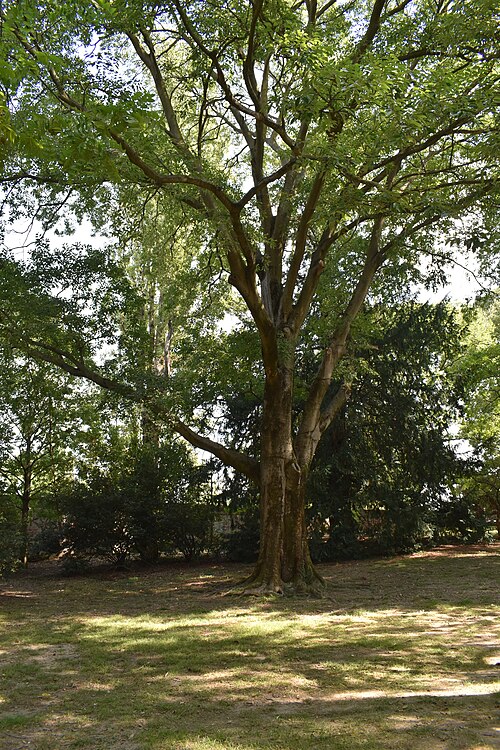
This gray poplar has grown in the garden of one of the Italian Renaissance's most recognisable buildings for more than a century and a half, long enough to have watched the palace's stone facade go from a private noble residence to a public gallery. Palazzo dei Diamanti, faced with 8,500 pointed marble blocks cut to look like diamonds, gives its name to the whole Renaissance addition to the city Duke Ercole I d'Este ordered in 1492, a planned extension that later helped earn Ferrara its UNESCO World Heritage listing. The tree itself, 4.44 metres round and 24 metres tall, is a hybrid of white poplar and European aspen, identifiable by bark that starts pale gray with diamond-shaped fissures echoing the palace's own facade and darkens to brown with age. It was named to Italy's first official list of monumental trees under the 2013 protection law, recognised for both its age and its size. A 2023 restoration of the garden finally opened the space properly to visitors, so a tree that had spent most of its life screening a private courtyard now grows in ground anyone can walk into.
Palazzo dei Diamanti, Corso Ercole I d'Este, 44121 FerraraThe tall poplar in the palace's garden, its pale, diamond-fissured bark echoing the building's famous stone facade.
Free, in the palace garden, generally open with the palace's own hours; check before visiting
About a 15 minute walk north-west of Ferrara railway station
Sources
Where the facts on this page come from.
- In the official register: Elenco degli alberi monumentali d'Italia (MASAF), no. 15/D548/FE/08
- masaf.gov.it
- museoferrara.it
- internoverde.it
- MASAF, Elenco degli alberi monumentali d'Italia (Italy's national register of monumental trees), no. 15/D548/FE/08