Count the ancient trees on this map that stand in European cities and four in ten of them are not European. That is 271 trees out of 686, across 70 of the 79 cities, and the commonest species of the lot is a tree that exists nowhere in the wild: the London plane, a chance hybrid of an American and an Asian parent, which we map 62 times in 35 cities. The rest arrived the way anything else did, by ship and on purpose. A Mexican cypress came with Carmelite missionaries. A black locust arrived as seed posted from the Appalachians. A Californian sequoia was planted in a Paris quarry by an emperor with something to prove. These twelve are the arrivals worth the walk, oldest first.
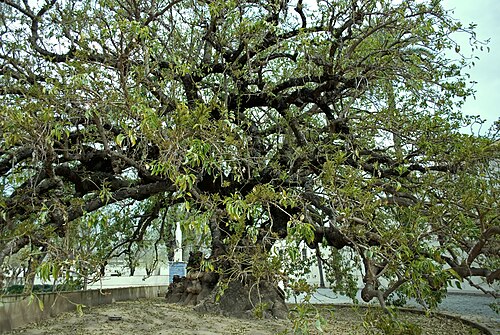
Ombu (Phytolacca dioica) · 500 years · Isla de la Cartuja
The oldest immigrant we have found in Europe, and the family connection is hard to beat: the seeds are said to have come back from South America with Hernando Colón, son of Christopher Columbus, who planted them in his own arboretum around 1529. An ombú is not really a tree at all but a soft-wooded giant relative of spinach, which is why it looks poured rather than grown.
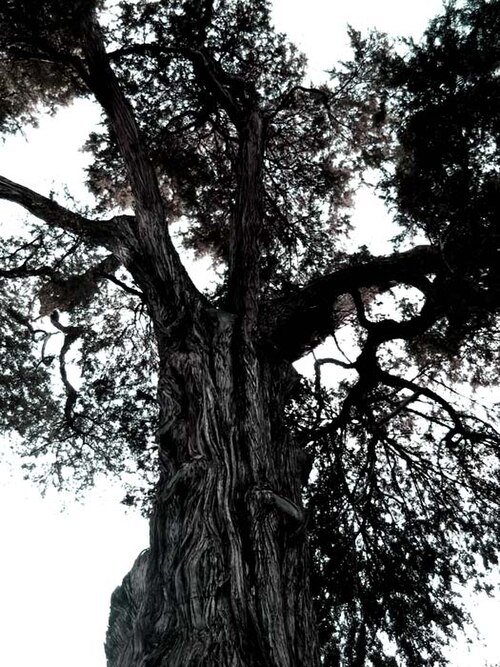
Mexican Cypress (Cupressus lusitanica) · approximately 440 years · Antequeruela
A Mexican cypress in Andalusia, roughly 440 years old, brought across by Carmelite missionaries who carried it to Portugal first and Spain after. It shares a cloister with the memory of the poet it is named for, and it is the reason the species carries a Portuguese name for a Central American tree.
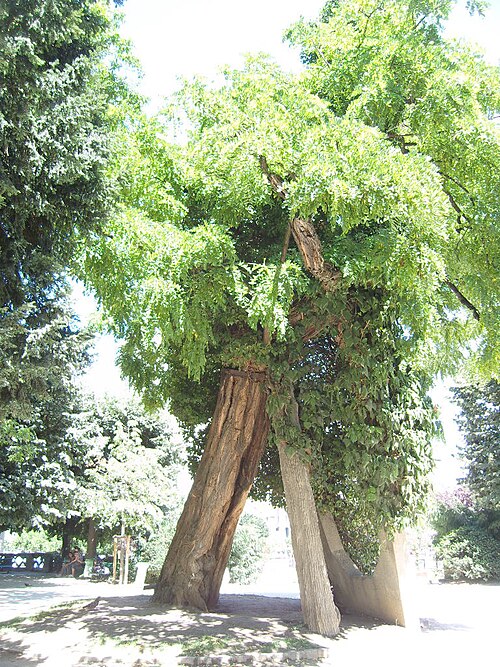
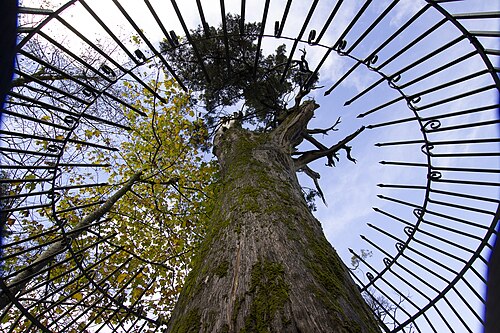
Black Locust (Robinia pseudoacacia) · 425 years · Latin Quarter, 5th arrondissement
The oldest tree in Paris was planted in 1601, nineteen years before the Mayflower sailed, from seed that the English naturalist John Tradescant posted out of the Appalachians. Jean Robin, herbalist to Henri IV, raised it, and the entire genus Robinia was named after him afterwards. It leans on props now and still flowers.
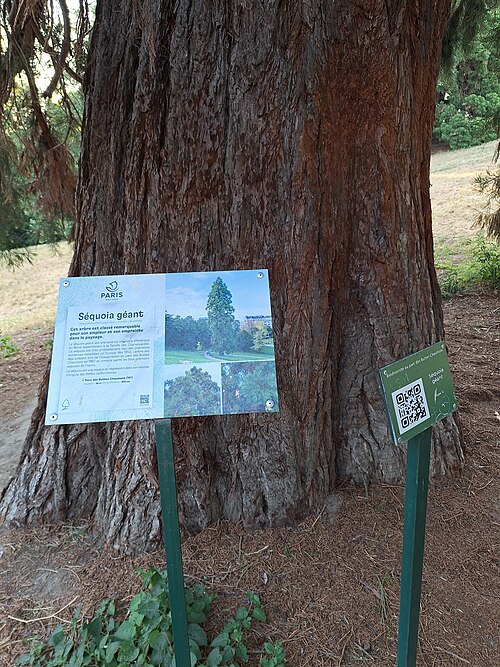
Giant Sequoia (Sequoiadendron giganteum) · 150+ years · 19th arrondissement
A Californian giant sequoia growing on a former gypsum quarry in working class Paris, planted after Napoleon III opened the Parc des Buttes-Chaumont in 1867. The species can live three thousand years; this one has had about 150 of them, and it is still a young tree doing an impression of an old one.
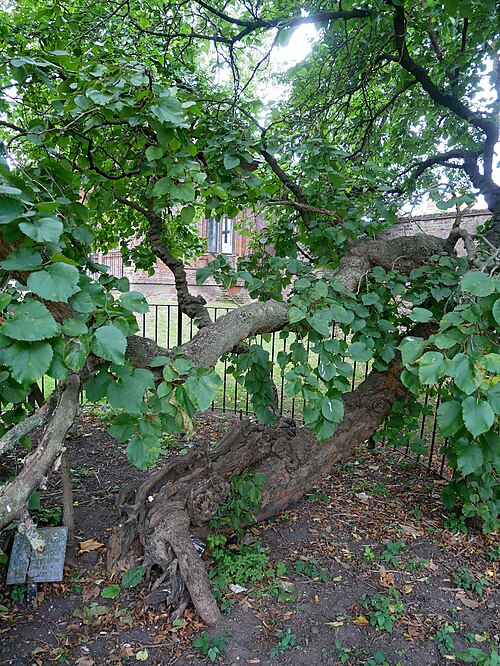
Black Mulberry (Morus nigra) · 400 years · Charlton, South East London
A monument to a national scheme that failed on a technicality. James I ordered mulberries planted across Britain in 1608 to feed silkworms and start a domestic silk industry, then the plan collapsed because silkworms want white mulberry leaves and these were black. Four centuries later the tree is still fruiting in a Charlton garden while the silk industry never happened.
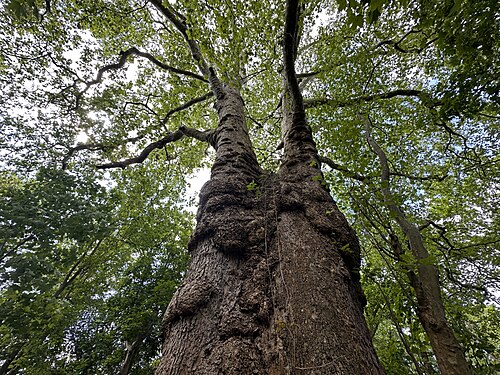
London Plane (Platanus x acerifolia) · 300+ years · Barnes, South West London
The biggest London plane in London, nicknamed Barney, standing at Barn Elms where almost no Londoner goes looking for it. Worth knowing what you are looking at: the London plane is a hybrid that arose in cultivation and has no wild population anywhere, so every one of the 62 we map descends from a crossing that happened in a nursery.
Mexican Cypress (Cupressus lusitanica) · about 380 years · Ermida de Sao Jose
This is the tree that gave a Mexican cypress its Portuguese name. Philip Miller described the species in 1768 from specimens growing here, called it Cupressus lusitanica after the country he found it in, and the Portuguese returned the compliment by naming it after Buçaco. Roughly 380 years old and still the reason for a piece of botanical confusion.
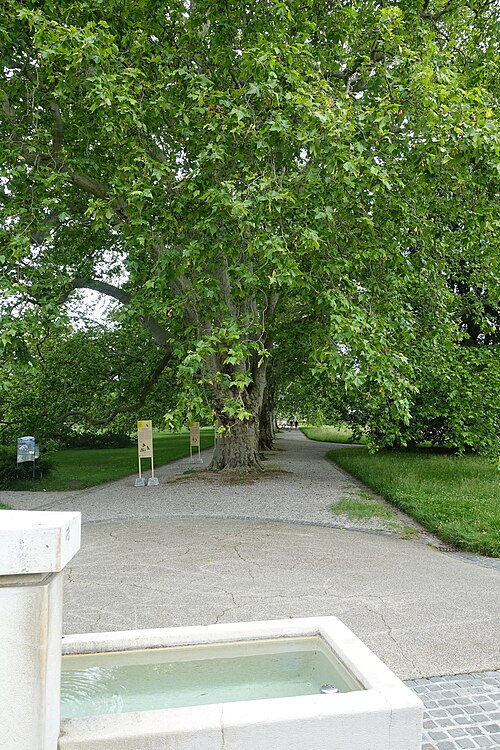
London Plane (Platanus x acerifolia) · at least 298 years · Nations
Five planes in the botanical garden that were already big enough to be drawn on a cantonal map in 1728, nearly two hundred years before the garden moved onto their land. They are the oldest London planes we map, which makes them among the first of the hybrid that would go on to line half the streets of Europe.
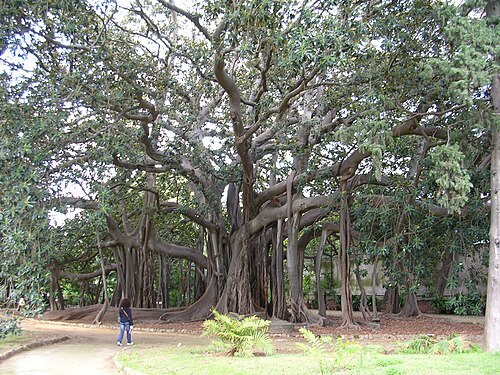
Moreton Bay Fig (Ficus macrophylla) · approximately 181 years · Kalsa
Planted in 1845 in the Orto Botanico, this Australian fig has spent 180 years building a canopy of about 3,000 square metres on aerial roots that thickened into trunks. Its more famous offspring stands in Piazza Marina, which means Palermo's best known tree is the child of this one.
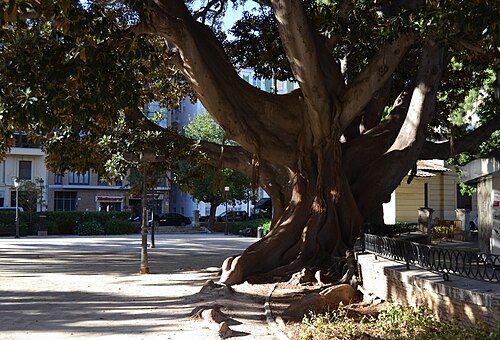
Moreton Bay Fig (Ficus macrophylla) · 174 years · Ciutat Vella
El Titán went into the ground in 1852 by mistake, when gardeners took the young Australian fig for one of the 47 magnolias being planted in the Parterre that year. The error is now the largest tree in central Valencia and the magnolias are not what anybody crosses town to see.
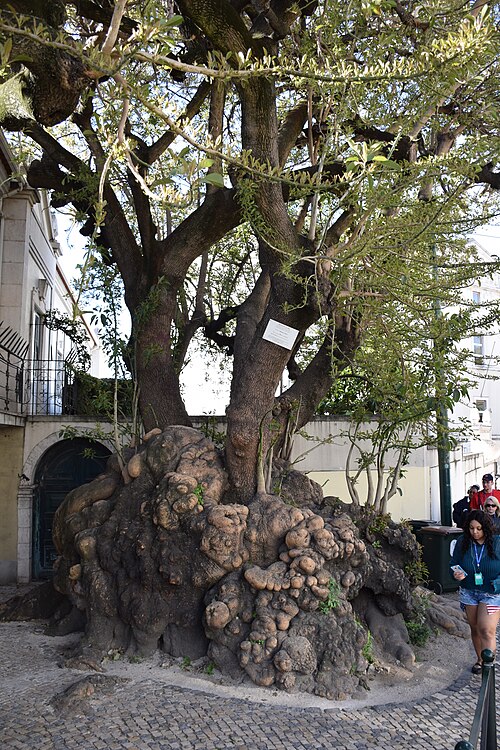
A square named after a lemon tree that died, now defined by a South American ombú whose fluted base measures some seventeen metres around, wider than the house fronts behind it. Nothing about the shape reads as a tree until you notice the leaves.
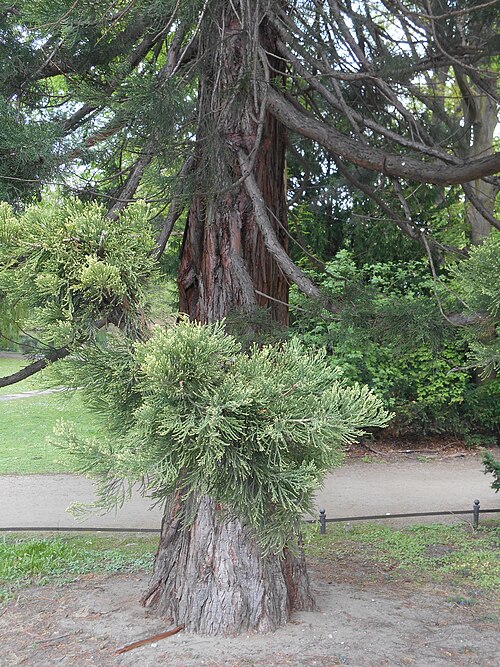
Giant Sequoia (Sequoiadendron giganteum) · 135 years · Tiergarten, Mitte
Planted in the Tiergarten in 1891, only decades after Europeans first saw the species at all. It is the clearest example of what this list is about: a tree from the Sierra Nevada standing in central Berlin because the nineteenth century could not resist a novelty, and now old enough to be a landmark.