The Mulberry of Charlton House
United KingdomLondonCharlton, South East London
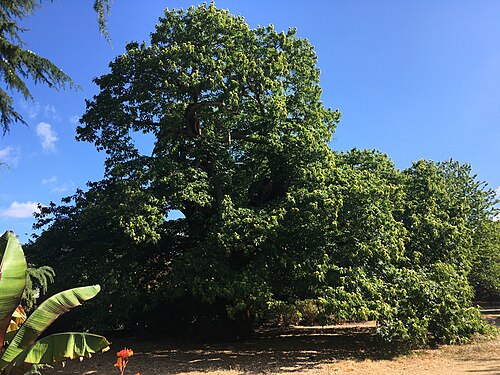
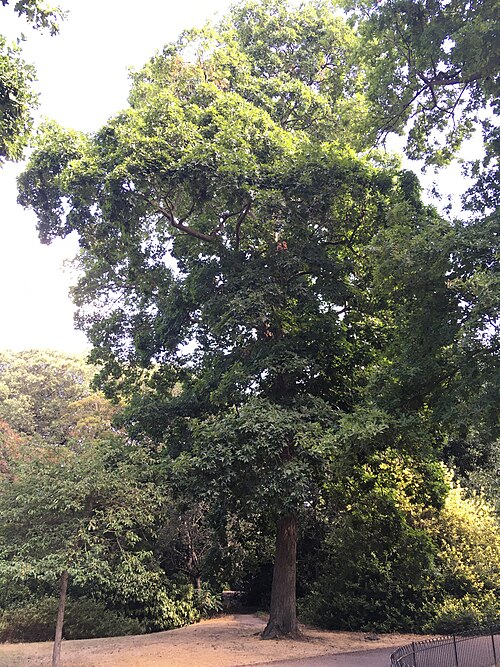
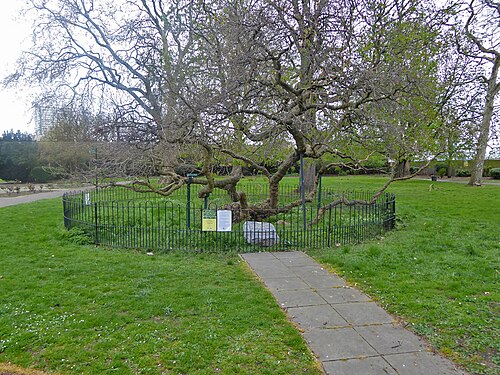
James I wanted Britain to grow its own silk, and in 1608 he ordered mulberry trees planted across the country to feed the silkworms that would spin it. The plan collapsed almost immediately over a basic mistake: silkworms eat white mulberry leaves and mostly refuse black ones, and the trees planted nationwide, including this one, were black mulberries. Charlton House got one of them, and unlike England's silk industry, the tree itself survived the error by four hundred years and counting. It now leans so far from vertical that its lower branches nearly touch the ground, propped up by a scaffold of wooden supports rather than left to collapse under its own spread, and it still fruits every August, small dark berries falling onto grass that has replaced whatever formal garden once surrounded it. The tree predates the surrounding community centre by roughly three centuries. Charlton House itself, a Jacobean mansion finished the same decade this mulberry went into the ground, has changed use many times since, while the tree in its garden has simply kept growing, propped a little more with each passing century.
In fruit
August, when it still fruits every summer despite four centuries of leaning
The line is our estimate of how much there is to see, not a measurement. Typical for this species where this tree stands; exact weeks shift with the year.
Charlton House, Charlton Road, London SE7 7THYou can recognise it by the wooden props holding it up and by the lean that brings its lower branches almost to the grass. It stands in the garden of Charlton House, the Jacobean mansion now used as a community centre.
Free, open grounds of Charlton House community centre
Charlton rail station, 5 min walk
Sources
Where the facts on this page come from.