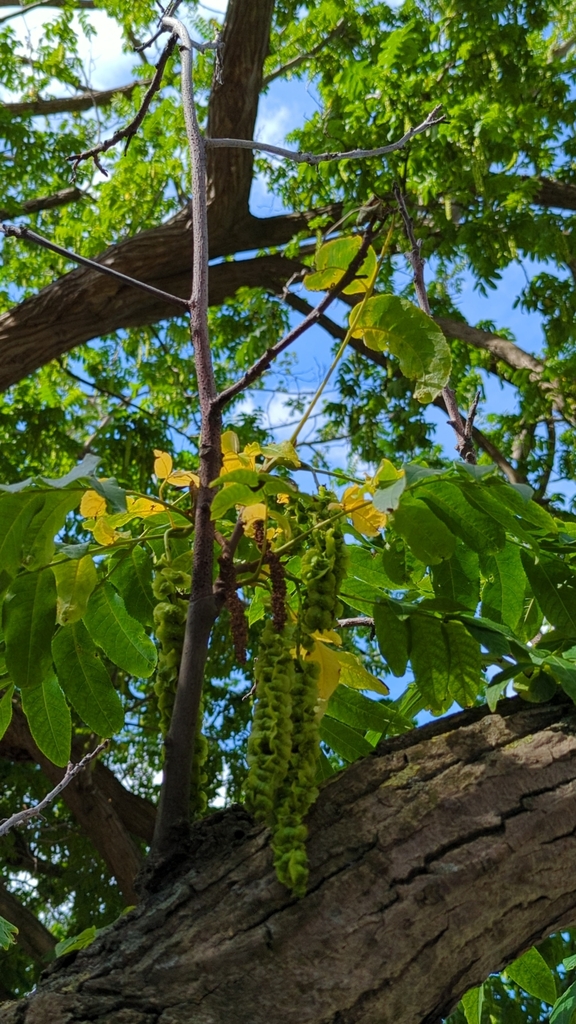
The Amstelkade Olive Willow
Despite the name, this tree is not a willow and has nothing to do with olives. The olijfwilg on Amstelkade is an Elaeagnus, a shrub-turned-tree genus with silvery, willow-shaped leaves and small fragrant flowers that ripen into fruit resembling tiny olives, hence a common name that misleads on both counts. Planted in 1948, three years after the Netherlands emerged from wartime occupation, it has grown along the Amstelkanaal into what the city's own tree inventory calls a specimen unique in the Netherlands for its combination of size and age. Nobody has documented a comparable one anywhere else in the country. At under 80 years old it is the youngest tree on this list by decades, included not for age but because Elaeagnus rarely gets the decades of undisturbed growth it takes to reach tree scale, most specimens staying shrub-sized in gardens rather than lining a public street. Amsterdam's official register of notable trees lists it among the city's most distinctive, a quiet distinction for a tree most passersby would assume was an ordinary willow if they noticed it at all.
In bloom
May and June, when the small yellow flowers scent the whole street
Amstelkade, Scheldebuurt, 1078 AZ Amsterdam-ZuidOn the Amstelkade along the Amstelkanaal, narrow silvery leaves that look like a willow's on a trunk 1.75 metres round.
Free, public street
Tram 3 or 4, Amsteldijk/Rivierenbuurt area
Sources
Where the facts on this page come from.
- In the official register: Landelijk Register Monumentale Bomen (Bomenstichting), no. 1696156
- boomzorg.nl
- amsterdam.nl
- api.data.amsterdam.nl
- maps.amsterdam.nl
- services-eu1.arcgis.com