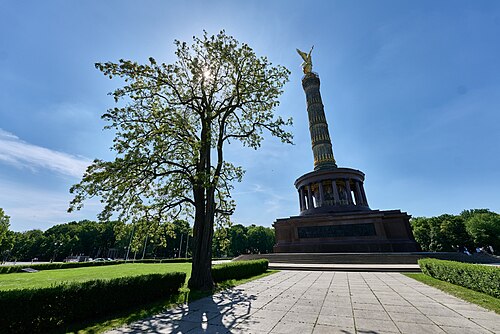
Berlin's most famous traffic island holds a 67-metre column, a gilded Victoria and a protected tree from North America.
Robinia pseudoacacia
The oldest tree in Paris is a black locust planted in 1601, and the second oldest is its son. We map 24 of them, in 19 cities.
Jean Robin, herbalist to Henri IV, raised the first from seed sent out of the Appalachians; in 1636 his son Vespasien took a cutting and planted it in the new royal medicinal garden two kilometres away. Both are still standing, and the genus Robinia carries the family name. The species is otherwise the opposite of distinguished. It arrived from North America in the eighteenth century, spread across Europe's sandy ground so successfully that it is now valued mainly for holding loose banks together, and it typically runs up thin and fast and then falls over. Which is what makes the exceptions worth the walk: Barcelona's went sideways to 4.3 metres on twelve metres of tree, and Antwerp's is the thickest recorded anywhere in Belgium.
Berlin's most famous traffic island holds a 67-metre column, a gilded Victoria and a protected tree from North America.
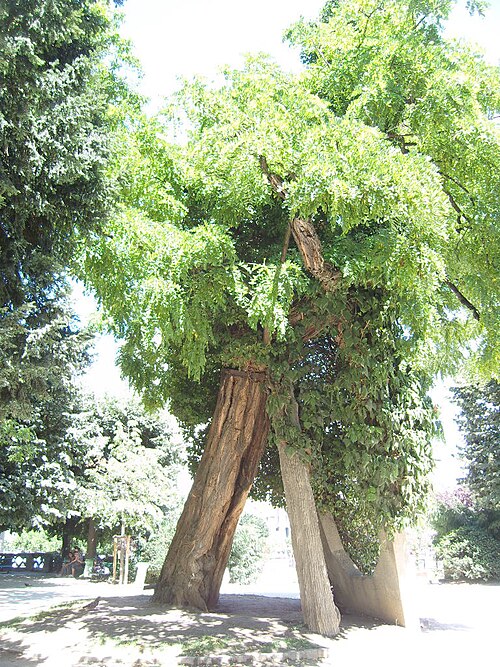
The oldest tree in Paris was planted in 1601, before the Mayflower sailed.
Photo: Ordifana75 (CC BY-SA 3.0)
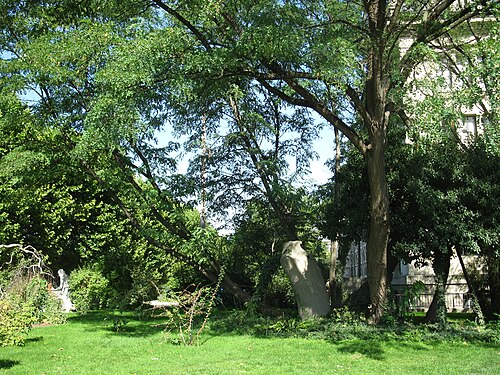
Paris's second oldest tree is the son of its oldest.
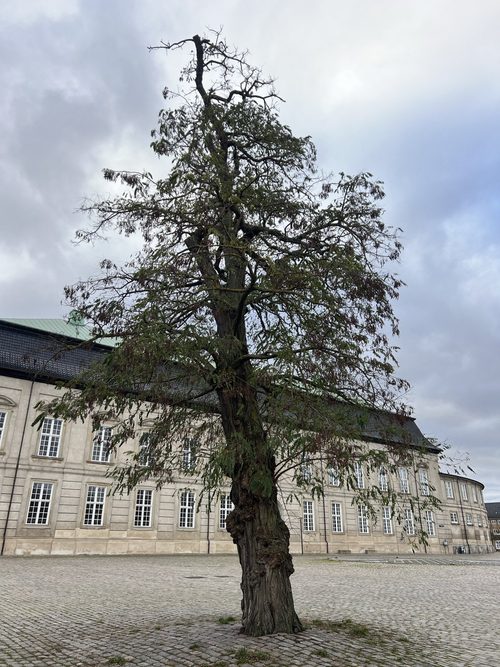
Bertel Thorvaldsen spent more than 40 years in Rome becoming Europe's most celebrated Neoclassical sculptor before returning home to Copenhagen in 1838 to a hero's welcome, and this multi-stemmed b...
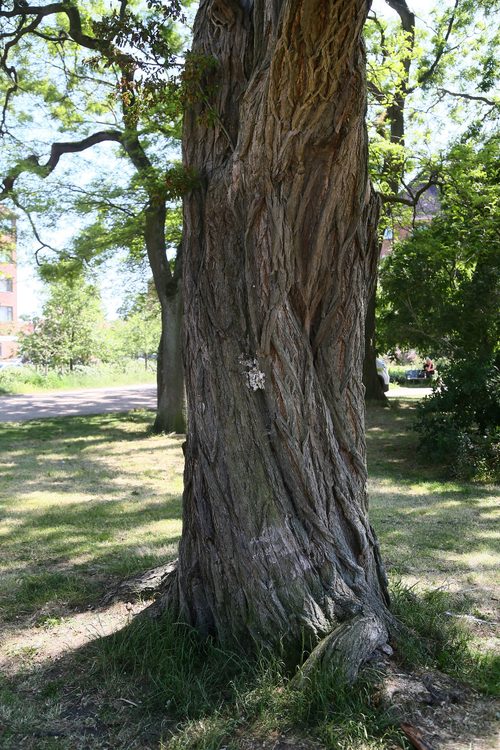
Something took a large piece of bark off the south side of this tree and it carried on growing.
Photo: Hans Erik Lund
A trunk of 4.3 metres on a tree only 12 metres tall makes this the stoutest black locust in Barcelona and the only one the city has ever put on its register.
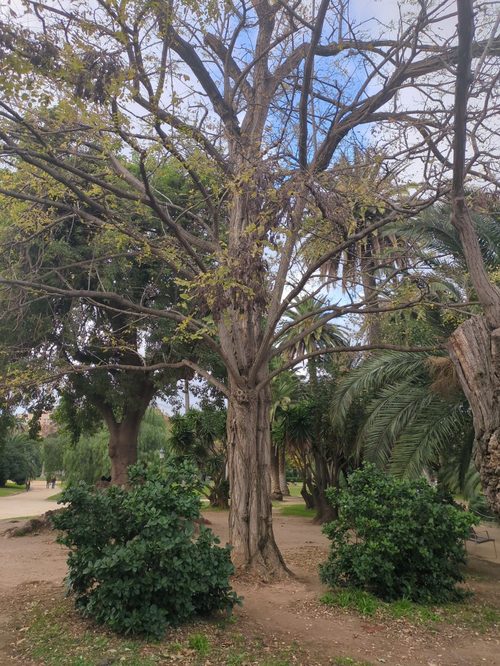
A reader walking through Parc de la Ciutadella stopped at this black locust and sent it to us, and the trunk is why.
The thickest black locust tree recorded anywhere in Belgium grows in a small city park hemmed in by three Antwerp streets.
This tree is 160 centimetres round and five metres tall, which is the wrong shape for a black locust.
This tree is celebrated for being 227 years old, and a historian has taken that number apart with photographs.
A 1960s survey by Budapest's own parks department already described this black locust as over a hundred years old, which places its planting somewhere in the 1860s, not long after Erzsebet Square i...
Black locusts are not supposed to be rare in Poland.
Somebody actually checked.
This black locust has its feet in a hedge.
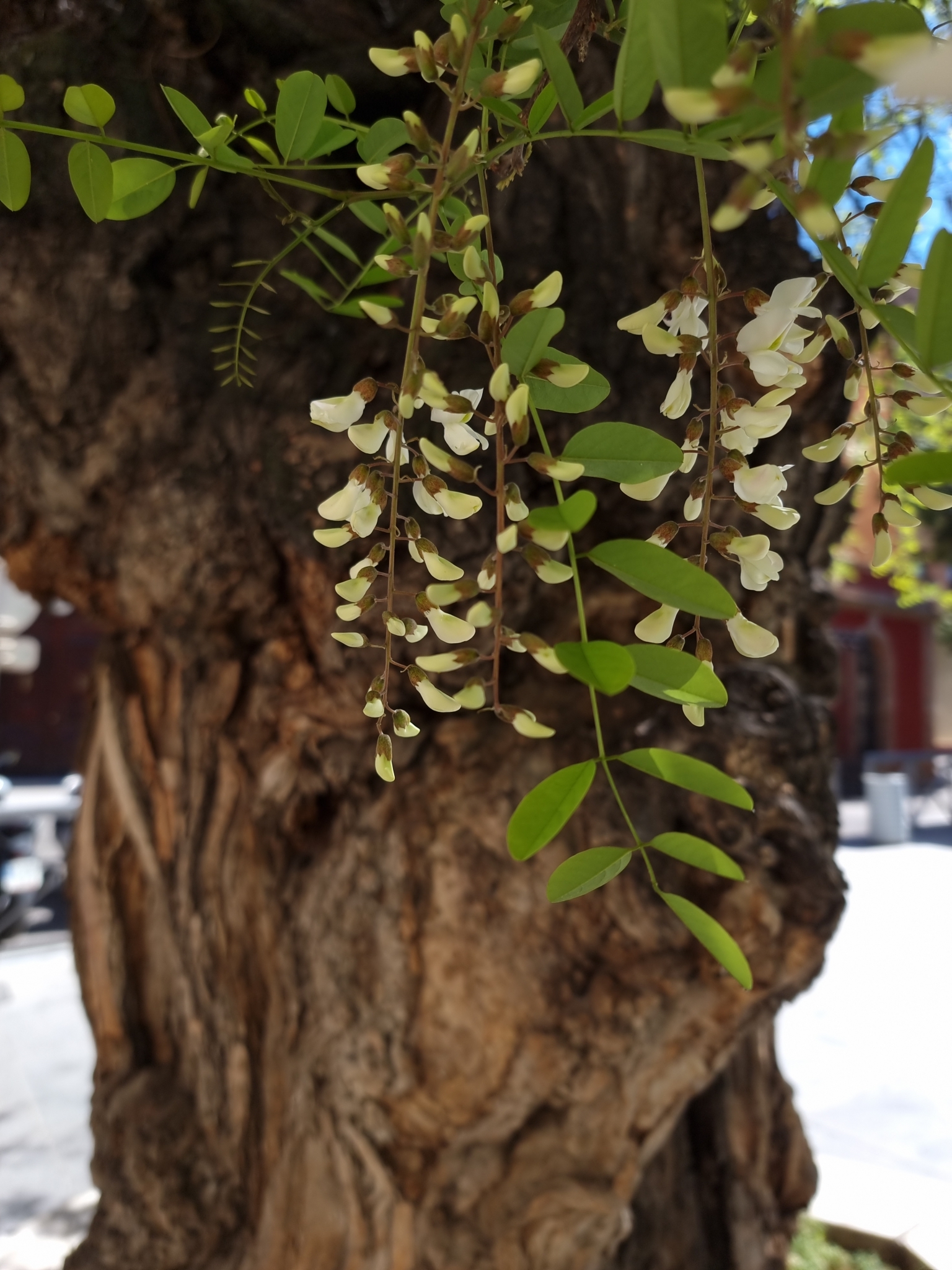
This robinia has become famous enough in Granada to appear on a national lottery ticket.
Photo: Ben Thomas (CC BY 4.0)
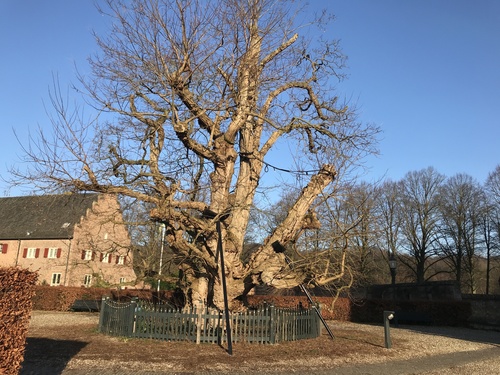
A black locust normally carries a feathery leaf made of a dozen small leaflets.
Leeuwarden's own walking brochure does not lead on this tree's species.
A tree from the eastern United States holds the high ground in Pamplona's sixteenth-century citadel.
The medieval building beside these trees went up in the 1960s, put together from the remains of an old palace on the calle Nueva.
A dead crown is not usually a reason to walk anywhere.
The register records this black locust as 412 centimetres around and three metres tall.
Innsbruck protects these two black locusts as one natural monument.
Two of Pittsburgh's champion trees stand about a hundred metres apart in Highland Park, and they could hardly be less alike.
This black locust opposite the post office on Roosendaal's Markt has a trunk 4.06 metres round under a crown just 14 metres high.
Explore by city: Berlin · Paris · Copenhagen · Barcelona · Antwerp · Warsaw · Pamplona · Malaga · every city · or browse all species.
