The Earpod Tree of Fort Canning
SingaporeSingaporeFort Canning, Singapore
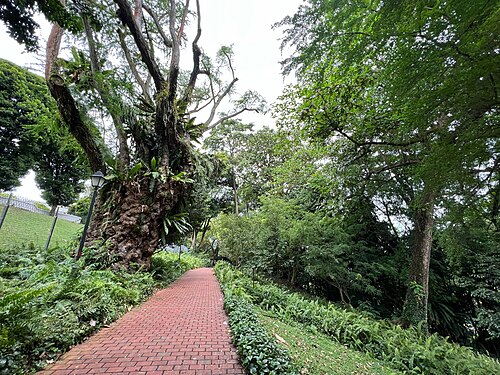
The seed pods explain the name: dark, flat, coiled into a near-perfect circle and close enough to a human ear that the tree is called after one in both Spanish and English. In Costa Rica, where the same species is the national tree, those pods are a roadside fixture. The earpod at Fort Canning has been on Singapore's heritage register since 2001, with 5.94 metres of girth and 17.9 metres of height, standing on the path behind the Fort Wall. It came from the tropical dry forests running from Mexico down to Venezuela, where it is one of the largest trees of that habitat, reaching 40 metres with a trunk three metres through, and where old specimens push surface roots out far enough to lift nearby paving. It arrived here as an ornamental and is now the first stop on NParks' own walking trail of the hill's heritage trees, which puts four more within a few hundred metres of it. One thing is unresolved and worth knowing before you go. Both the register and NParks' current Fort Canning trail guide describe this tree standing. A 2025 travel account describes an earpod tree somewhere in the same park that came down in a 2014 storm and kept growing on its side, its trunk now carrying orchids and ferns. Nobody has confirmed whether that is this tree or another one. If you find it lying down, it is alive, and it is still worth the walk.
Fort Canning Park, between the Fort Wall and Hotel Fort Canning, SingaporeYou can recognise it by its dark, coiled, ear-shaped seed pods and a 5.94 metre girth trunk. It stands on the path behind the Fort Wall, between the wall and Hotel Fort Canning.
Free, public park, open 24 hours
8-10 minute walk from Fort Canning MRT station (Downtown Line)
Sources
Where the facts on this page come from.