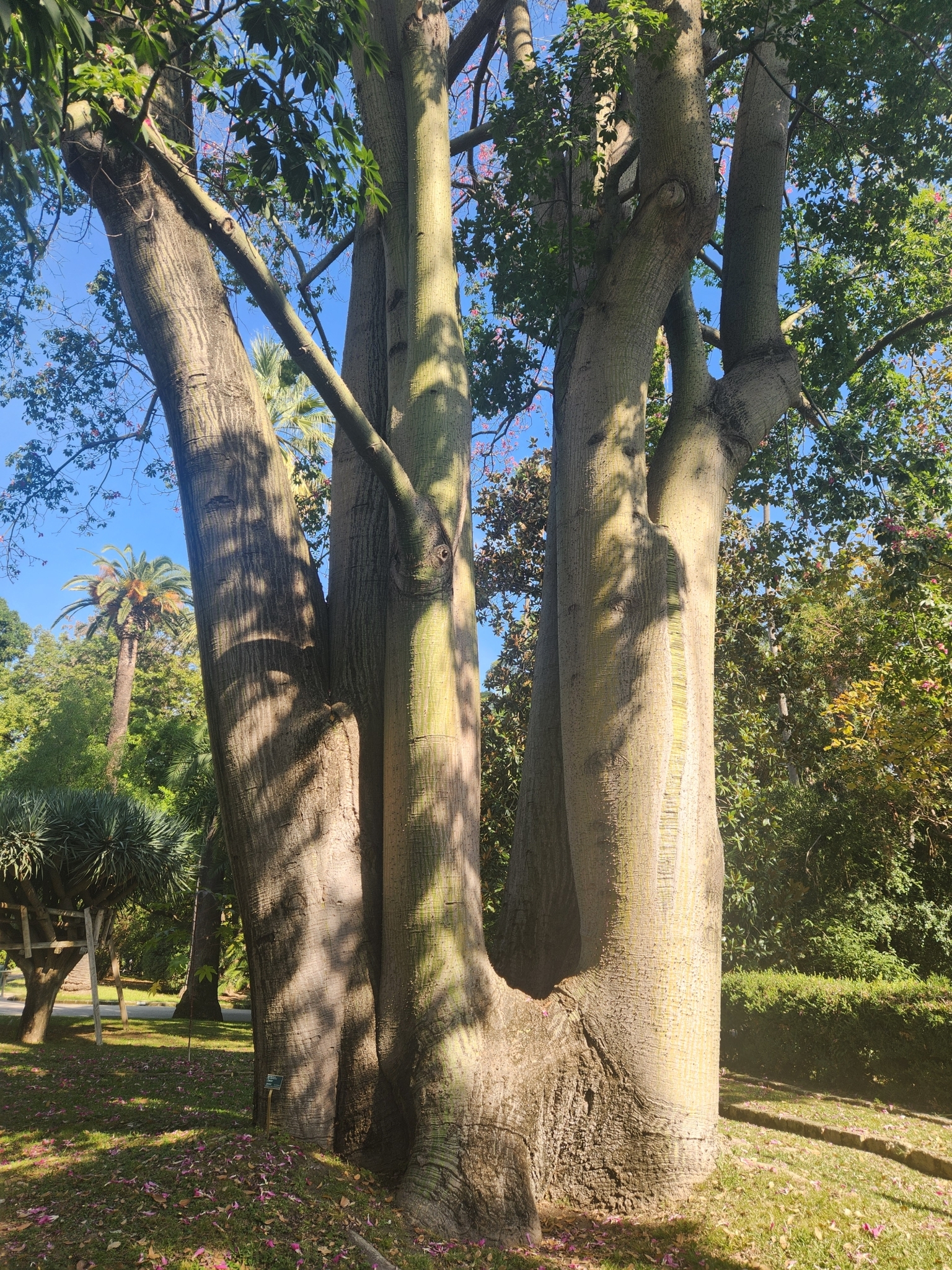
Photo: Mary Lata (CC BY 4.0)
Naples has 53 entries on Italy's national monumental register and this one has the widest trunk of the lot.
Founded by Napoleonic decree in 1807 and planted with things Naples had never seen, which is why most of these trees come from other continents.
The widest trunk on Naples' entire national register stands here, a silk floss tree whose bulging green trunk looks less like timber than like something inflated. Beside it grows a Chilean wine palm, a species nearly drunk out of existence because its trunk is full of sweet sap that was tapped for wine. The exception is the ginkgo, which is not a novelty from far away but a survivor from far back.
All 7 stand in Naples, which maps 24 remarkable trees in total.
Photo: Mary Lata (CC BY 4.0)
Naples has 53 entries on Italy's national monumental register and this one has the widest trunk of the lot.
Every other tree on this walk came to Naples as a novelty from somewhere far away.
This oak is two species at once.
Thirty metres, which makes this the tallest tree the registers record inside the garden, and the reason it stands here at all is a nineteenth century medical theory that turned out to be wrong.
This palm was very nearly drunk out of existence.
Two official Italian registers record this palm under a name that has since gone out of use.
Italy's national register calls this one Nolina longifolia.
Opening times and visitor information: the garden’s own site.
More parks worth the walk: every park we map. Or explore by city: Brussels · Pamplona · Lisbon · Barcelona · Oahu · Amsterdam