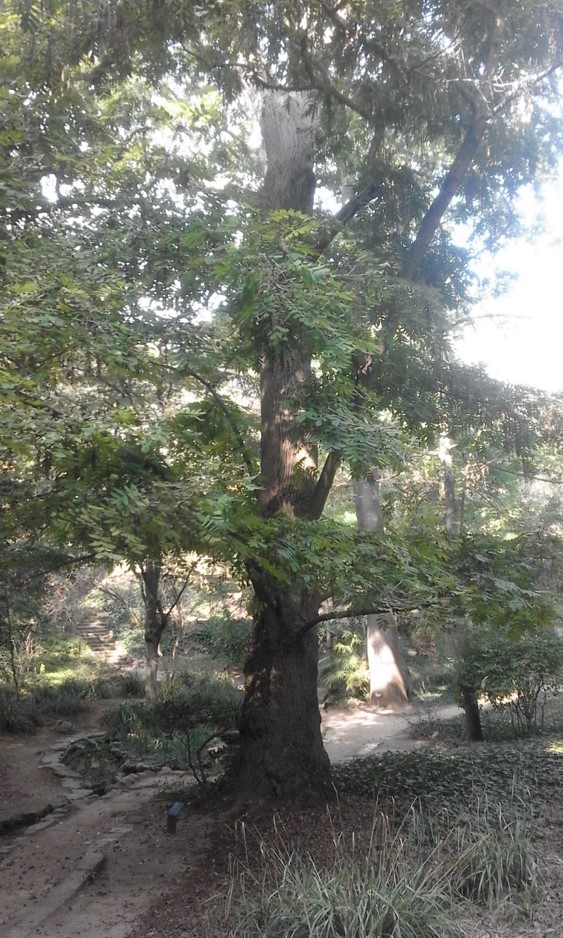
Barcelona's biggest tree grows in a hole nobody visits.
Barcelona, Spain
Barcelona's biggest tree grows in a hole nobody visits.
The Sot de l'Estany is a former quarry pit inside the historic botanical garden on Montjuic, deep and damp enough to work like a greenhouse, and a Rehder's wingnut there has reached roughly 40 metres, a height the city's catalogue admits it struggled to measure because the walls block a laser sightline. A green ash planted in 1924 in the same ravine stands 32 metres, and a hornbeam, a species that barely grows wild on the Iberian peninsula, has found the one cool pocket in the city that suits it. The second quarry pit, the Sot de la Masia, holds the garden's female ginkgo, the one of its three that fruits. A camphor tree is nearly twice as wide as it is tall, with a crown 27 metres across and only 15 metres of height. At the gate stands an olive that, by the garden's 2009 guide, has grown unpruned for more than seventy years, so it shows the shape the species has when nobody cuts it.
Barcelona's biggest tree grows in a hole nobody visits.
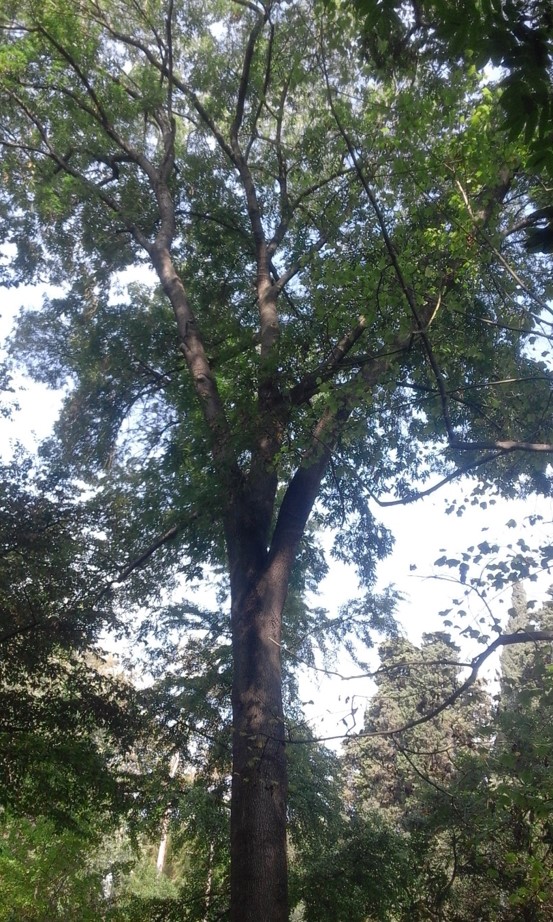
This ash comes from the flooded river bottoms of eastern North America, a species built to have its roots underwater for weeks at a time, and it is rare enough in Barcelona that the city's own tree...
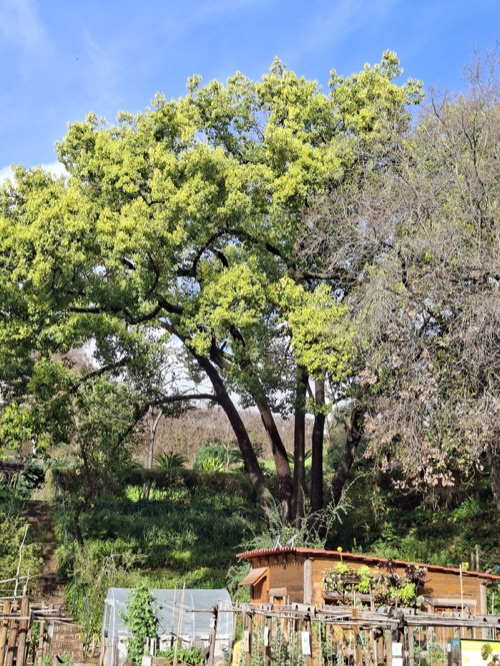
This camphor tree is nearly twice as wide as it is tall.
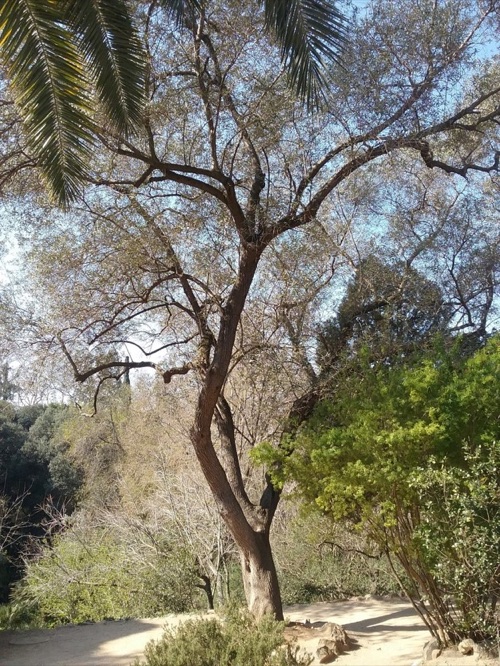
Almost every olive tree you have ever seen has been pruned.
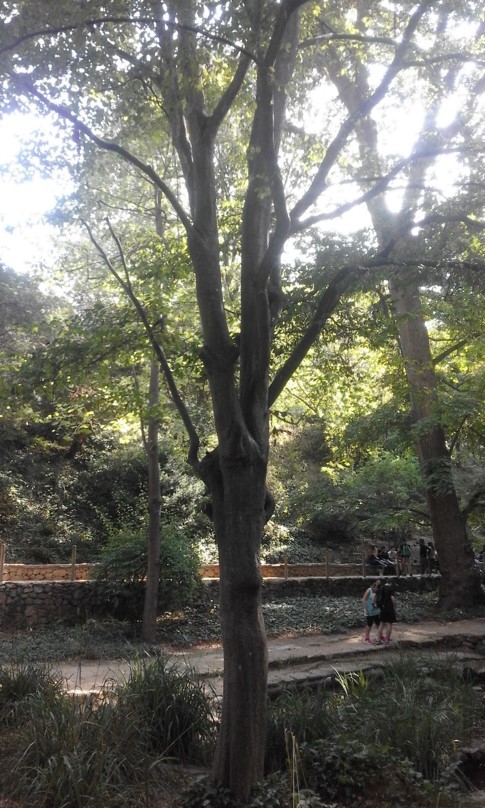
Common hornbeam barely grows wild anywhere on the Iberian peninsula, which makes the specimen in Barcelona's Jardi Botanic Historic an outlier by definition.
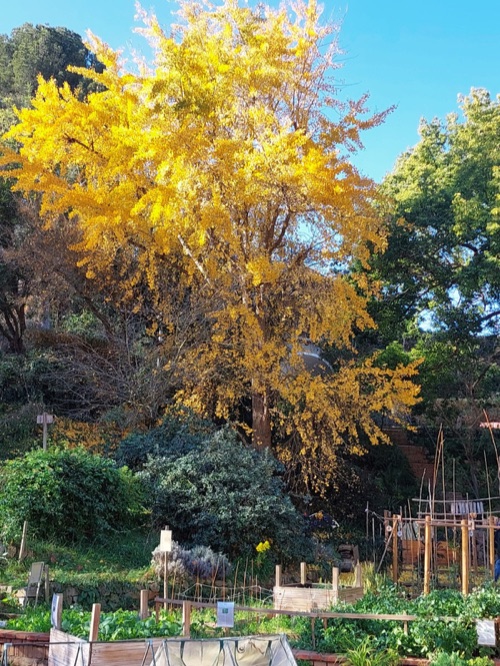
The historic botanical garden on Montjuic has three ginkgos, and this is the one that fruits.
More parks worth the walk: every park we map. Or explore by city: London · Kyoto · Malaga · Porto · Rome · Munich