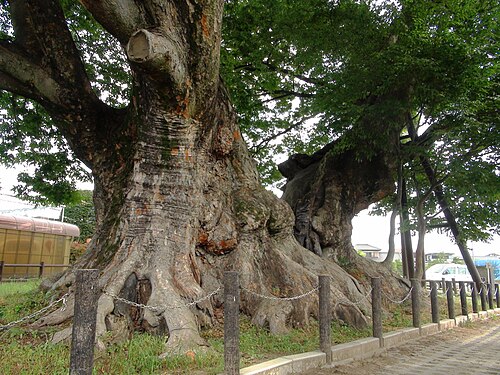
The Junipers of Kochozenji
JapanMinami-AlpsAyusawa, Minami-Alps City
There are four of them, one at each corner of the courtyard, and the tradition holds that they stand for the Four Heavenly Kings. Kochozenji is a Rinzai Zen temple founded in 1316 by Muso Kokushi, and the planting of these Chinese junipers is attributed to him at that founding. That is where the figure of about 700 years comes from: a date on the temple, carried across to the trees, rather than anything measured in the wood. Locals call them the Yotsu-byakushin, the four byakushin. They sit roughly ten metres apart around the front court of what used to be the guest hall, and the state lists them as one thing, a single National Natural Monument since 14 November 1953. They are not matching specimens. Girth at 1.5 metres runs from 2.00 to 3.90 metres across the four, and height from 11.20 to 17.70 metres, so the corners of the courtyard are visibly unequal. The temple was the family temple of Oi-fujin, mother of Takeda Shingen, the warlord whose cavalry decided the shape of this province in the sixteenth century. If the founding tradition holds, the junipers were already two centuries into their growth when she came here to pray. The courtyard is open nine to five, every day of the year. There is nothing to pay and nobody to ask.
505 Ayusawa, Minami-Alps City, Yamanashi PrefectureYou can recognise it as one of four junipers standing at the corners of the temple courtyard, each a visibly different size from the others. It stands in the front court of Kochozenji temple.
Free, temple grounds open daily 9:00-17:00 year-round. Public Zen temple courtyard, no appointment needed.
About 40 minutes by bus from Kofu Station
Sources
Where the facts on this page come from.