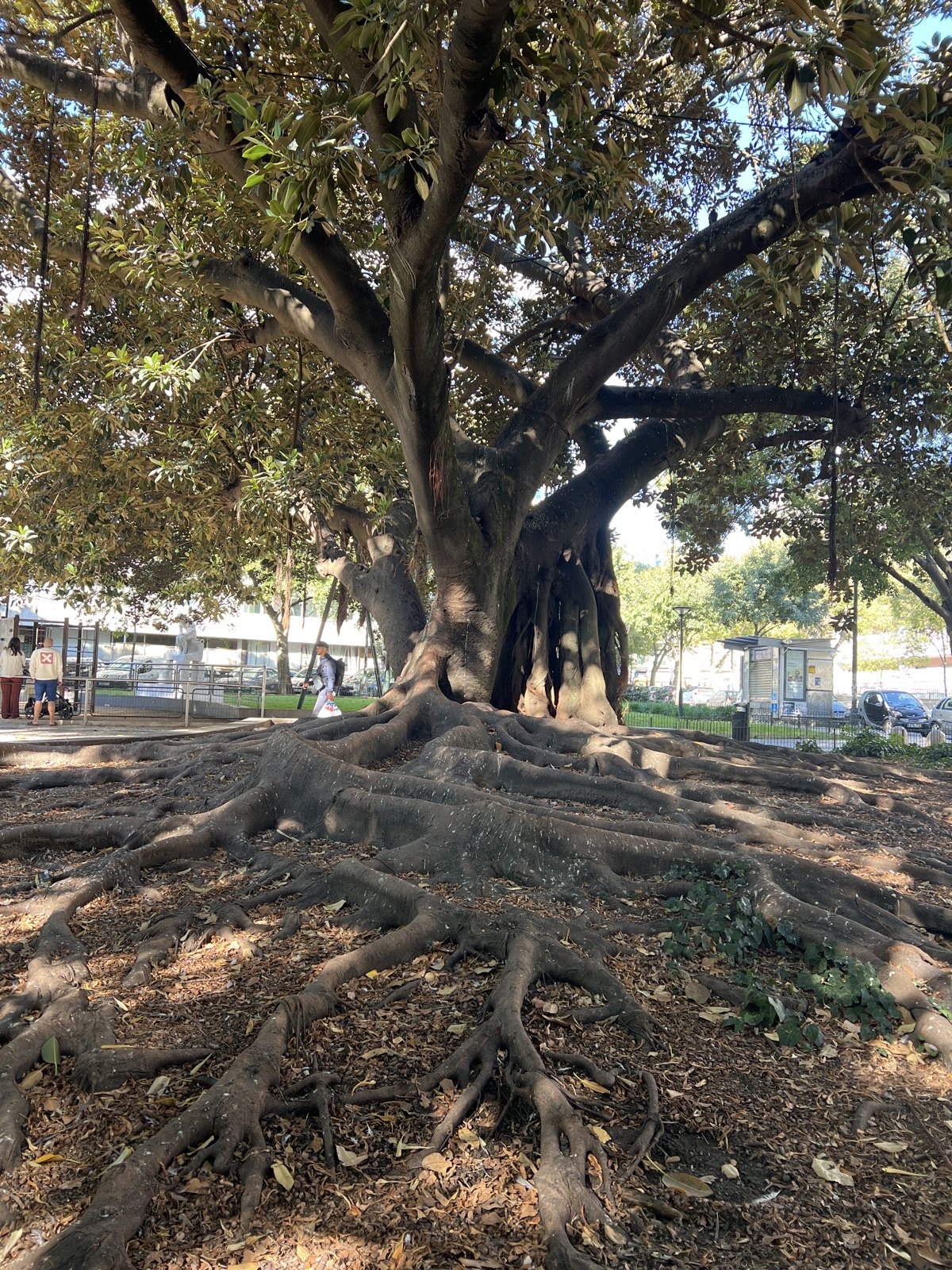
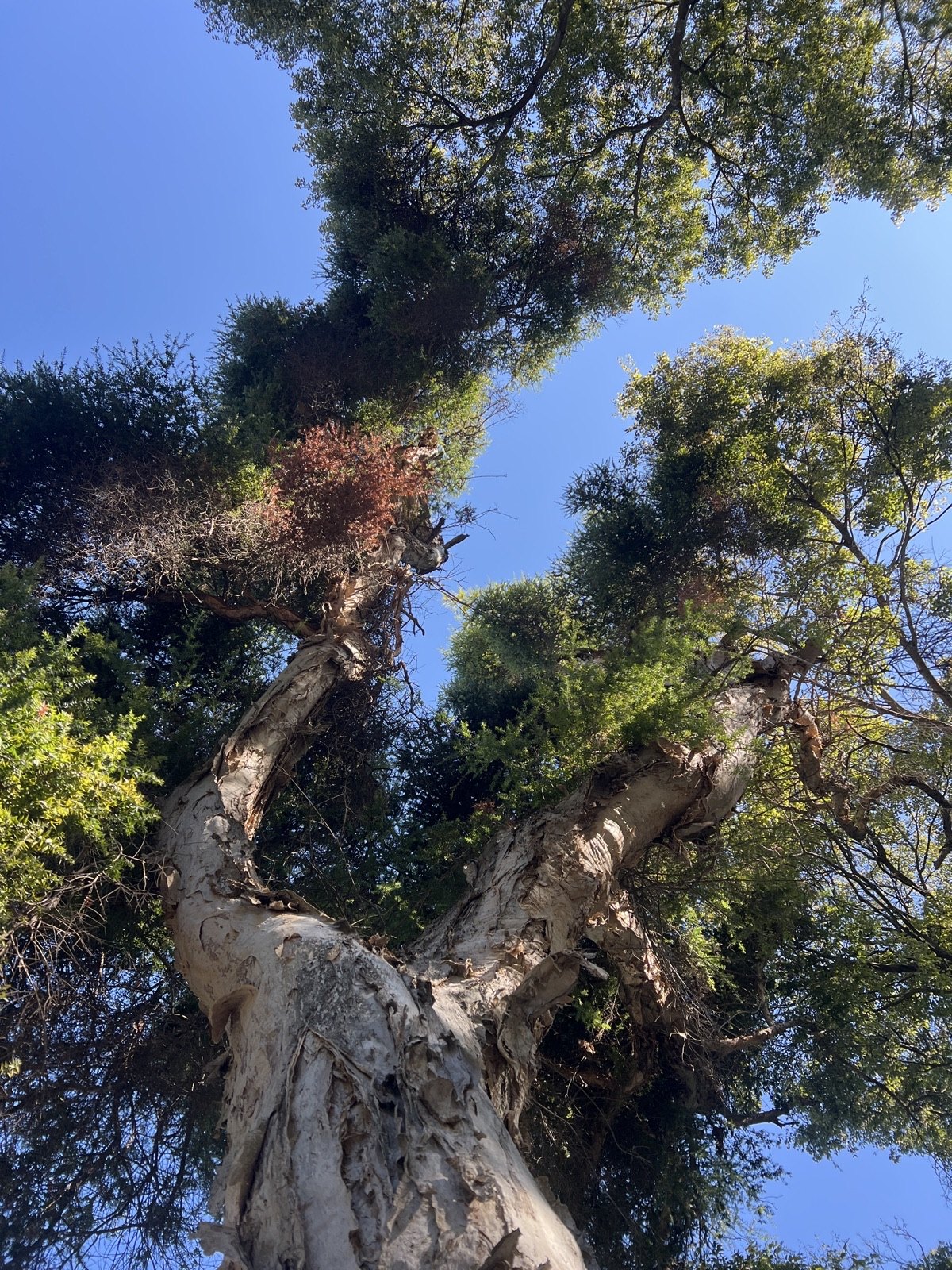
The Ginkgo of Praça Paiva Couceiro
Ginkgo biloba is often called a living fossil, a species virtually unchanged for over 200 million years and one of the very few plants known to have resprouted near ground zero at Hiroshima, a resilience the species carries in its reputation rather than this particular tree's own biography. Lisbon's specimen in Praça Paiva Couceiro, in the working class Penha de França neighbourhood, is a comparatively young member of an ancient lineage: over a century old and classified as a tree of public interest, though nobody has pinned down its exact planting date. Its fan shaped leaves turn a uniform bright yellow every November before dropping almost simultaneously, a spectacle unrelated to anything else on this list and one that draws a small annual crowd of photographers to an otherwise unremarkable square. Ginkgos are dioecious, male or female, and only female trees produce the notoriously foul smelling fruit; whether this one has simply spared the neighbourhood that autumn hazard, or its sex was never recorded, nobody seems to know. Either way, it is Penha de França's one living link to a genus older than most of the world's mountain ranges.
Autumn colour
November, when its leaves turn uniform bright yellow and drop almost simultaneously
The line is our estimate of how much there is to see, not a measurement. Typical for this species where this tree stands; exact weeks shift with the year.
Praça Paiva Couceiro, 1170-284 LisboaYou can recognise it by its fan-shaped leaves, turning a uniform bright yellow each November. It stands in Praca Paiva Couceiro, in the Penha de Franca neighbourhood.
Free, public square
Roughly 10 min walk from Arroios station (Metro Red Line)
Sources
Where the facts on this page come from.
- In the official register: Arvoredo de Interesse Público (ICNF), no. KNJ1/271
- getlisbon.com
- amensagem.pt