The Dragon Tree of the Goethe-Institut Garden
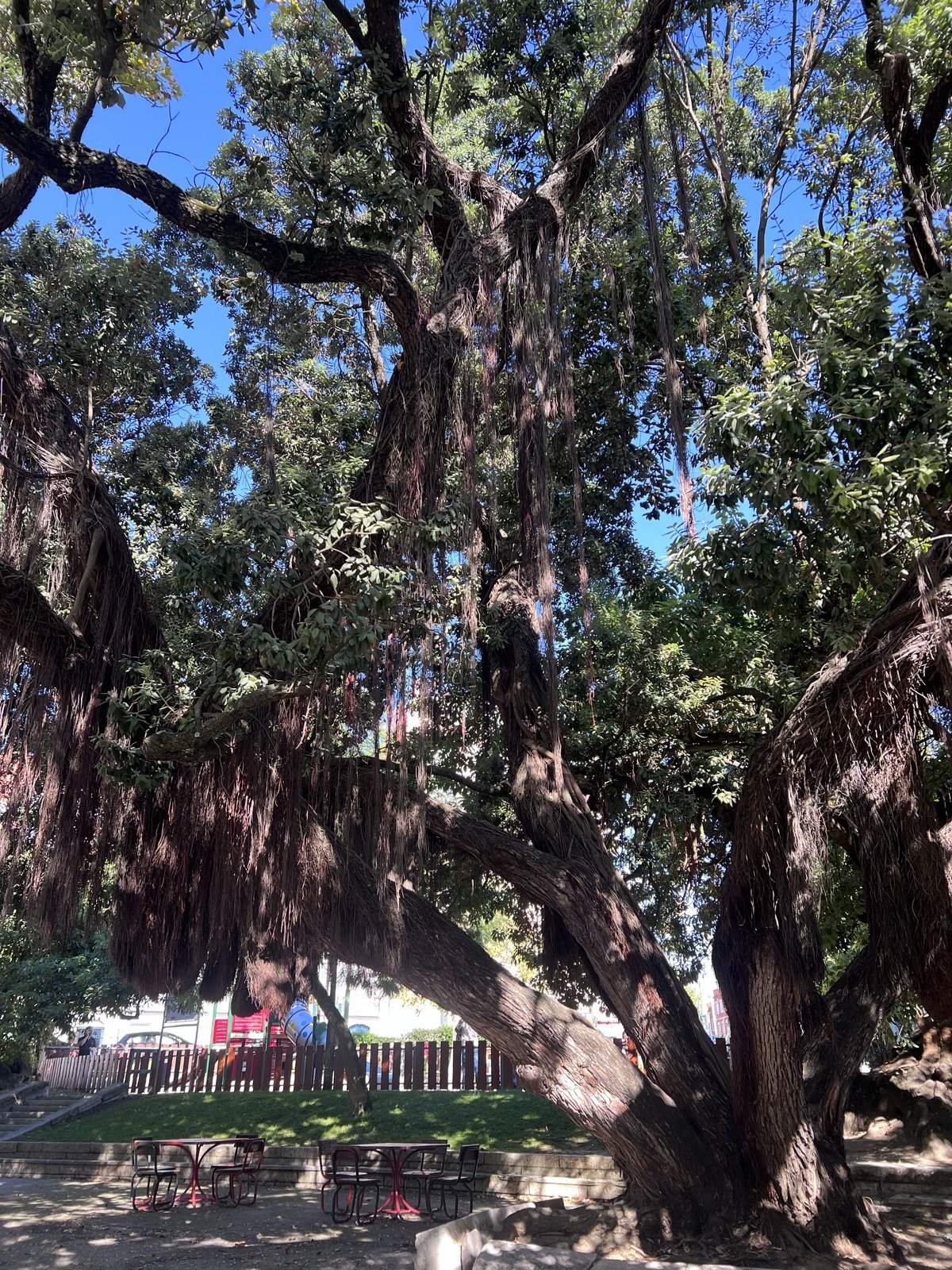
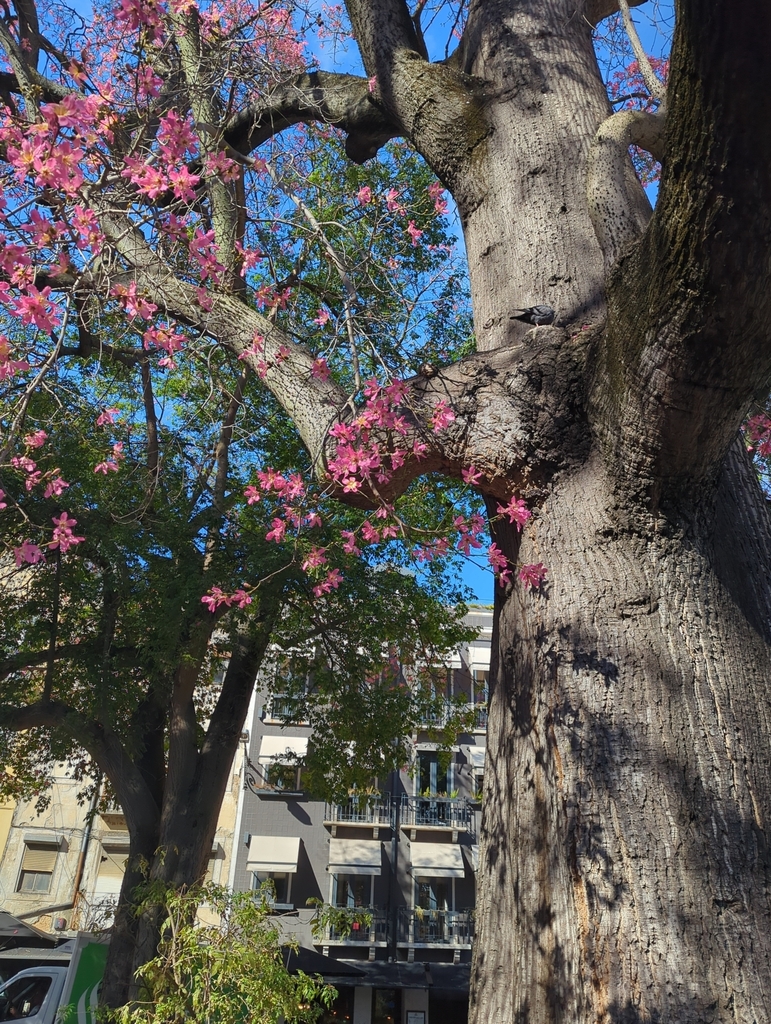
A reader found this one, in the garden of the Goethe-Institut at Campo dos Mártires da Pátria. The photograph shows a dragon tree, Dracaena draco, and it does not look like most trees. The trunk is thick and grey, and it splits into a thicket of forking limbs that run out sideways and then turn up, each ending in a tuft of stiff, sword-shaped leaves. Together they make a dense umbrella that reaches over the garden tables, so the cafe sits in its shade. Dragon trees grow naturally on the Atlantic islands, the Canaries and Madeira among them, and they were planted in gardens across Portugal. Their branching is the whole point: a young plant is a single spike, and only with age does it begin to fork, so a crown this wide has had decades to build. We have no age or girth for this one, no register lists it, and the reader gave none. The institute is housed in the Palácio Valmor, and Time Out Lisboa describes its garden as an esplanade with large trees and an old dragon tree, with a cafe that serves lunch. It is a short walk from the Weeping Fig of Campo Santana. If you go, a tape around the trunk, a wider photograph, or anything you know about its age would make this page longer.
Goethe-Institut Portugal, Campo dos Mártires da Pátria 37, LisbonA grey, heavily forking dragon tree with a wide umbrella crown of leaf tufts, standing in the middle of the garden cafe's terrace.
Free to enter the garden through the institute at Campo dos Mártires da Pátria 37; it is run as a public garden cafe. Hours as listed by Time Out Lisboa: Mon to Thu 08:30 to 21:00, Fri to 20:00, Sat 09:00 to 17:30. Check before you go.
A short walk from Campo Santana (Campo dos Mártires da Pátria); Intendente and Martim Moniz metro stations are both about 10 minutes on foot.
Sources
Where the facts on this page come from.