The Pagoda Tree of Karl-Heine-Strasse
Approximate location.
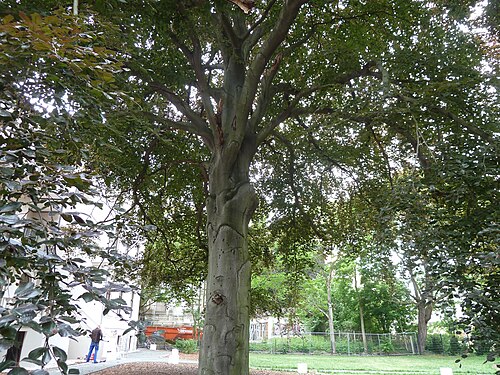
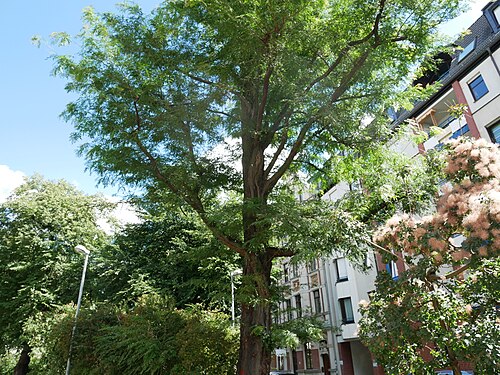
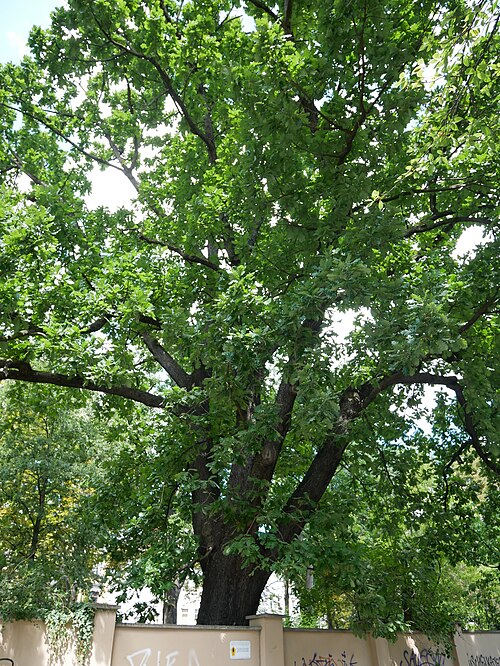
Despite the name, the Japanese pagoda tree is native to China, not Japan; it reached Europe through Japanese trade ports in the eighteenth century and kept the misnomer. This one has grown large enough on a Plagwitz street to be protected as a Naturdenkmal, Saxony's strongest legal status for an individual tree. It flowers late for a tree of its size, creamy white clusters in August when most other street trees have finished for the year, which is usually the detail that gets a pagoda tree noticed at all outside of botanical collections. It stands a few doors from a protected copper beech, the last of five Naturdenkmal trees packed into roughly 150 metres of Karl-Heine-Strasse: a ginkgo, a European white elm and a bald cypress complete the run. In its native range the pagoda tree's unopened flower buds are harvested by the ton for rutin, a plant compound used in dyes and in vitamin supplements, a use this single street tree in Plagwitz will never see put to work.
In bloom
August to September, when it flowers
The line is our estimate of how much there is to see, not a measurement. Typical for this species where this tree stands; exact weeks shift with the year.
Karl-Heine-Strasse 24b, 04229 LeipzigYou can recognise it by flowering in August, creamy white clusters when most other street trees have finished for the year. It stands at Karl-Heine-Strasse 24b.
Visible from Karl-Heine-Strasse; the Wagner-Nietzsche-Villa grounds it stands in now operate as a private guesthouse, not open to casual visitors
Karl-Heine-Strasse tram (lines 3/N3) or S-Bahn Leipzig MDR, then a short walk
Sources
Where the facts on this page come from.
- In the official register: Naturdenkmale der Stadt Leipzig (Verordnung 1142/98), no. ND 126
- wikidata.org