Sudajii of Omiya Gate, Kyoto Gyoen
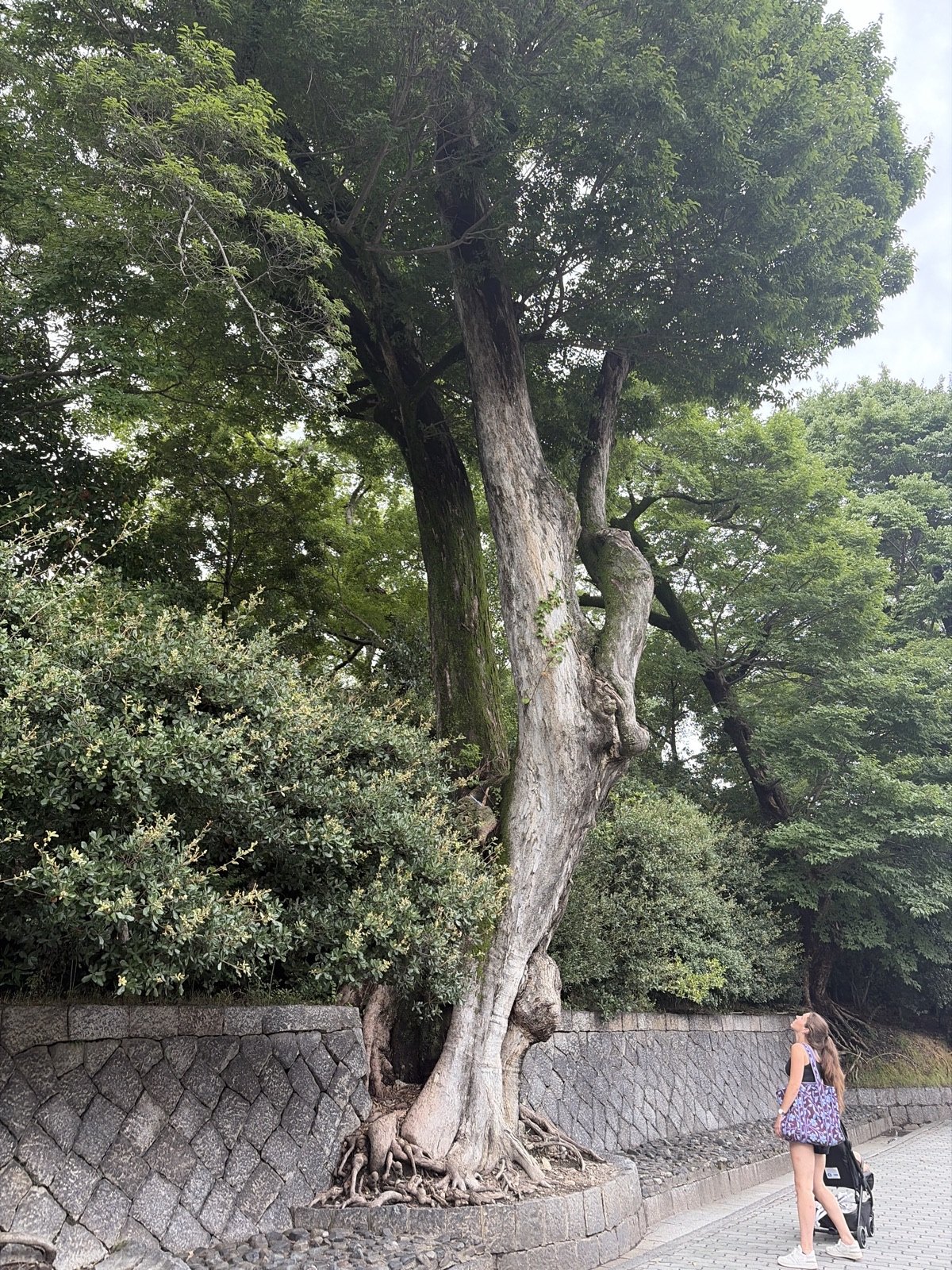
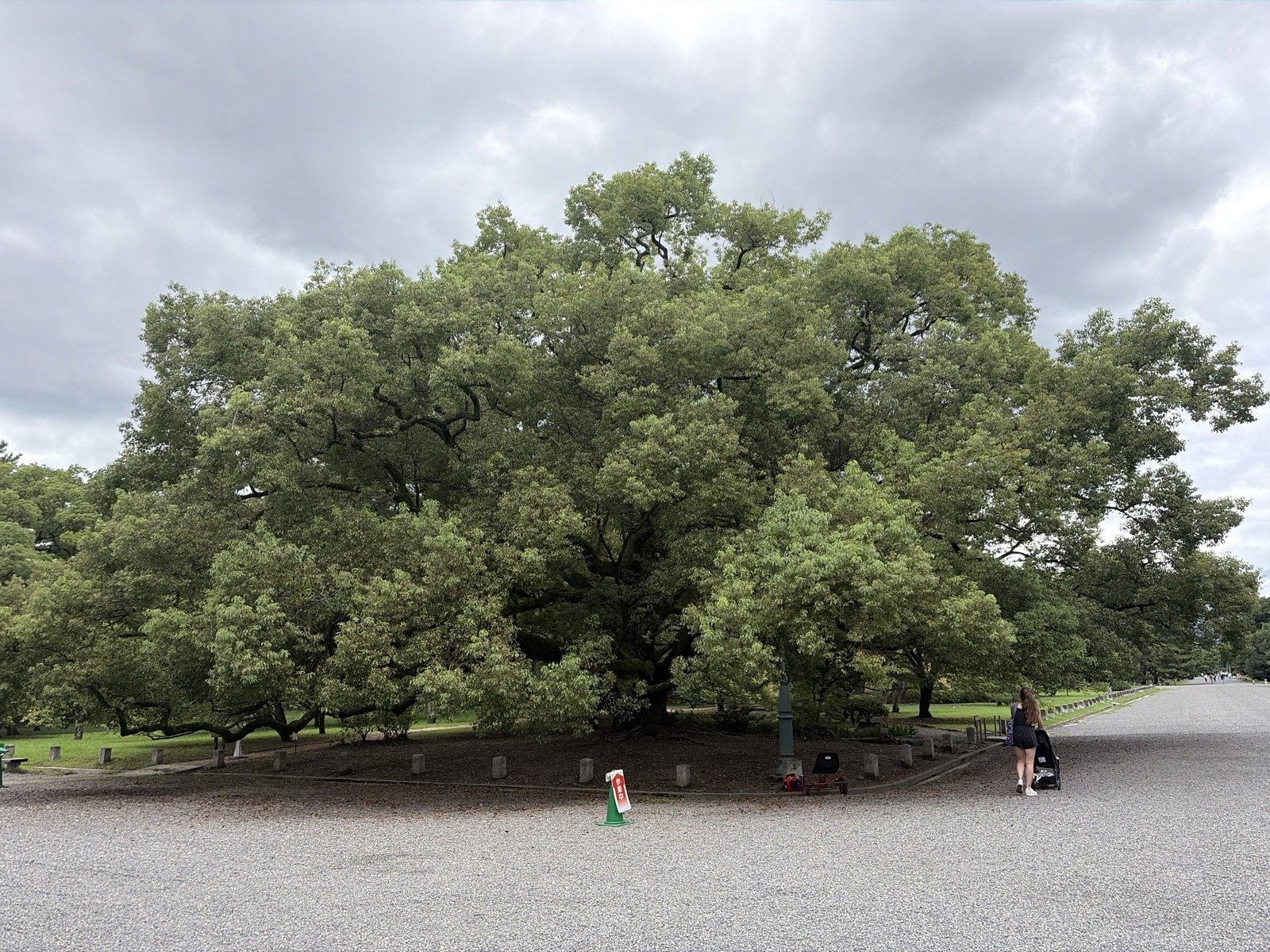
Before there was a city here, this was the tree that covered the ground. Sudajii, the Japanese chinkapin, was the dominant canopy of the evergreen broadleaf forest that ran across lowland western Japan until it was cleared for rice, timber and capitals, which makes a full-grown one inside Kyoto a leftover of the landscape the city replaced. This one stands at the Omiya gate on the south side of Kyoto Gyoen. Kamigyo Ward added it to its register of pride trees in October 2008 and measured it at 14.6 metres tall, with a trunk 2.78 metres around. Nobody has dated it, and that ward register is the only document that mentions it at all, so the measurements are the whole of what anyone can offer. Its acorns are the ones worth bending down for. Most oak acorns are too bitter to eat without leaching first; chinkapin acorns are sweet enough raw and better roasted, which is why generations of Japanese children knew them by taste rather than from a book. They come down in autumn onto the gravel. The Omiya gate opens onto the same short circuit as the camphor at Munakata Shrine and the hackberry at Demizu-guchi, close enough together that all three fit inside one slow hour.
You can recognise it by the acorns on the gravel beneath it, sweet where oak acorns are bitter, and by a trunk 2.78 metres round under 14.6 metres of evergreen crown. It stands at the Omiya gate on the south side.
Free. Kyoto Gyoen National Garden is open to the public year-round, dawn to dusk.
Marutamachi Station (Kyoto Municipal Subway Karasuma Line), roughly 3 minute walk
Sources
Where the facts on this page come from.
- In the official register: Kamigyo Ward Pride Trees (上京区民の誇りの木)
- city.kyoto.lg.jp