The Willow Nearest the Hypocentre
Approximate location.
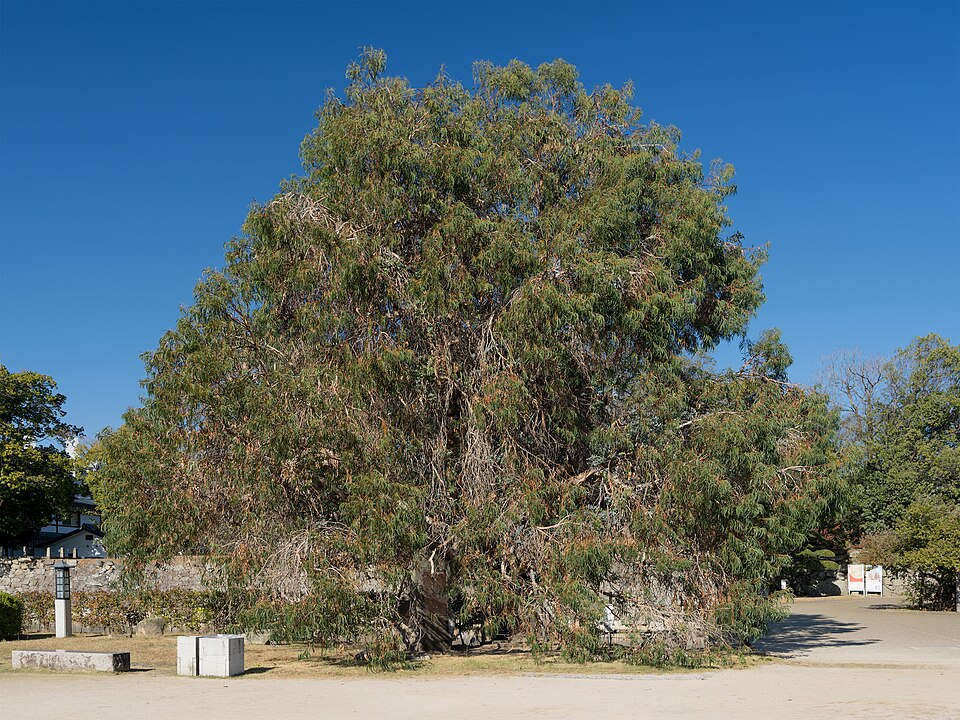
Three hundred and seventy metres. That is the whole of what makes this willow remarkable, and it is enough: no registered survivor in Hiroshima stood closer to the point the bomb went off. It is the first entry on the city's list, N03a1-01, and the code itself carries the facts. N for north of the hypocentre, 03 for the three hundred metre band, a for never transplanted. It is standing where it stood. A weeping willow is not a strong tree. It is fast, soft-wooded and short-lived, the sort of thing a city plants along a river because it grows quickly and looks well over water, and at this distance the heat and the blast took everything above ground. What survived was underground. The willow came back from its own roots, which is how most of the trees on this register survived, and the trunk you stand in front of grew after 1945 from a root system that did not. Nobody has published its age. The register does not carry one, because the register was built to record a distance rather than a life. It stands in the Chuo Park green space west of the Youth Centre, on ground that is now grass and paths and was, for a while after 1945, expected to grow nothing at all.
Motomachi 14, west of the Hiroshima Youth Centre, Naka-ku, Hiroshima 730-0011You can recognise it by the setting: a weeping willow standing alone on the grass west of the Youth Centre, 370 metres from the hypocentre. It stands in the Chuo Park green space at Motomachi 14.
Free, public park green space
About 12 minutes on foot from Hiroshima Peace Memorial Park, or Kamiyacho-nishi tram stop
Sources
Where the facts on this page come from.