The Olive Tree of Vouves
You need a ticket to see this treePaid entry through the small Olive Tree Museum of Vouves beside the tree, historically a nominal fee of a euro or two, though some recent visitors report no charge. Museum open daily 10:00-19:00 from April to October, by appointment from November to March. Signposted, and no permission is needed.
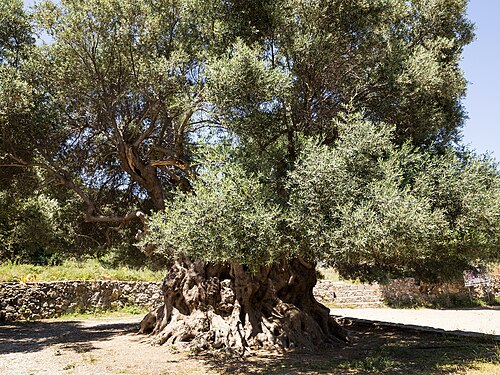
Two sets of scientists have dated this olive and their answers differ by two thousand years. Ring analysis by Oliver Rackham and Jennifer Moody, published in 1996, established a floor and no more: at least 2,000 years old. Scientists at the University of Crete have since put it at 4,000, a figure now repeated from the Greek press to Forbes, and one that would make it the oldest living olive known anywhere. Neither number can be checked. The tree's heartwood rotted away centuries ago, which is what happens to ancient olives rather than a fault in this one, and it removes the material any dating method needs. English Wikipedia's summary is blunt: the exact age cannot be determined, and there is no agreed scientific method for dating olive trees at all. The trunk is not in dispute. It measures 12.5 metres around and 4.6 metres across, hollowed into a twisting shell with the grain running in curves. The tree still fruits, grafted with the Tsounati cultivar, and the Region of Crete declared it a protected natural monument in 1997. Branches from it were woven into victory wreaths at the Athens Olympics in 2004 and Beijing in 2008. Two Geometric-period cemeteries were found nearby, which tells you people were here three thousand years ago and nothing whatsoever about the tree.
In fruit
September to November: the harvest, when the fruit turns from green to black
The line is our estimate of how much there is to see, not a measurement. Typical for this species where this tree stands; exact weeks shift with the year.
Ano Vouves, Kolymvari, Platanias municipality, Chania regional unit, Crete, GreeceA hollow twisting shell of a trunk 12.5 metres round with the grain running in curves, beside the small olive museum that takes the entry fee.
No public transport nearby. A car is the realistic way: roughly 25 minutes from Kolymvari and about 40 minutes from Chania.
Sources
Where the facts on this page come from.