Spring is the one season no evergreen can compete with. These eleven trees, across nine cities, each have a real, documented peak between late February and the end of May: an orange grove that scents an entire cathedral courtyard, a wisteria a 19th century woodblock master painted from life, chestnut avenues that turn whole boulevards white with flower. None of these moments are guessed. Every one is sourced to the tree's own species and climate, not applied as decoration. Start in Seville, where the blossom comes earliest.
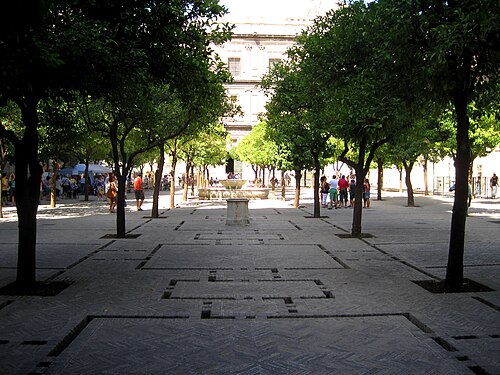
Bitter Orange (Citrus aurantium) · 100 years or less · Casco Antiguo
The orange trees that give Seville Cathedral's most famous courtyard its name are younger than the courtyard itself, built between 1172 and 1186 as a mosque's ablutions yard. Azahar season scents the whole space from late February.
Empress Tree (Paulownia tomentosa) · over 65 years, exact age undocumented · Brera
Milan's most photographed tree grows on a triangular scrap of land where a building stood until Allied bombs brought it down in the Second World War. Its lilac flowers cover the bare branches every April before the leaves appear.
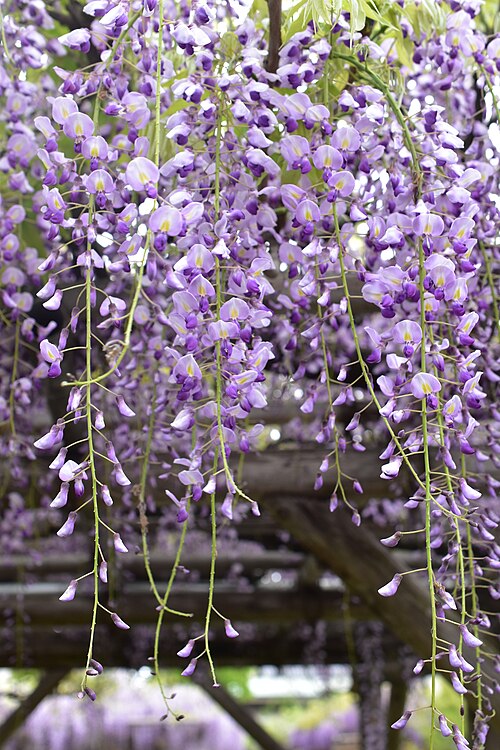
Japanese Wisteria (Wisteria floribunda) · 150+ years (shrine's wisteria tradition dates to 1663) · Kameido, Koto
Utagawa Hiroshige painted this shrine's wisteria and its arched drum bridge in his 1856 series, a print art historians trace forward to Claude Monet's own water garden at Giverny. It still hangs in flower from late April into May.
The wooded hillside below the Alhambra was a Nazarid-era cemetery before it was a forest. Its horse chestnuts peak in late April and early May, when the whole slope's blossom comes out together.
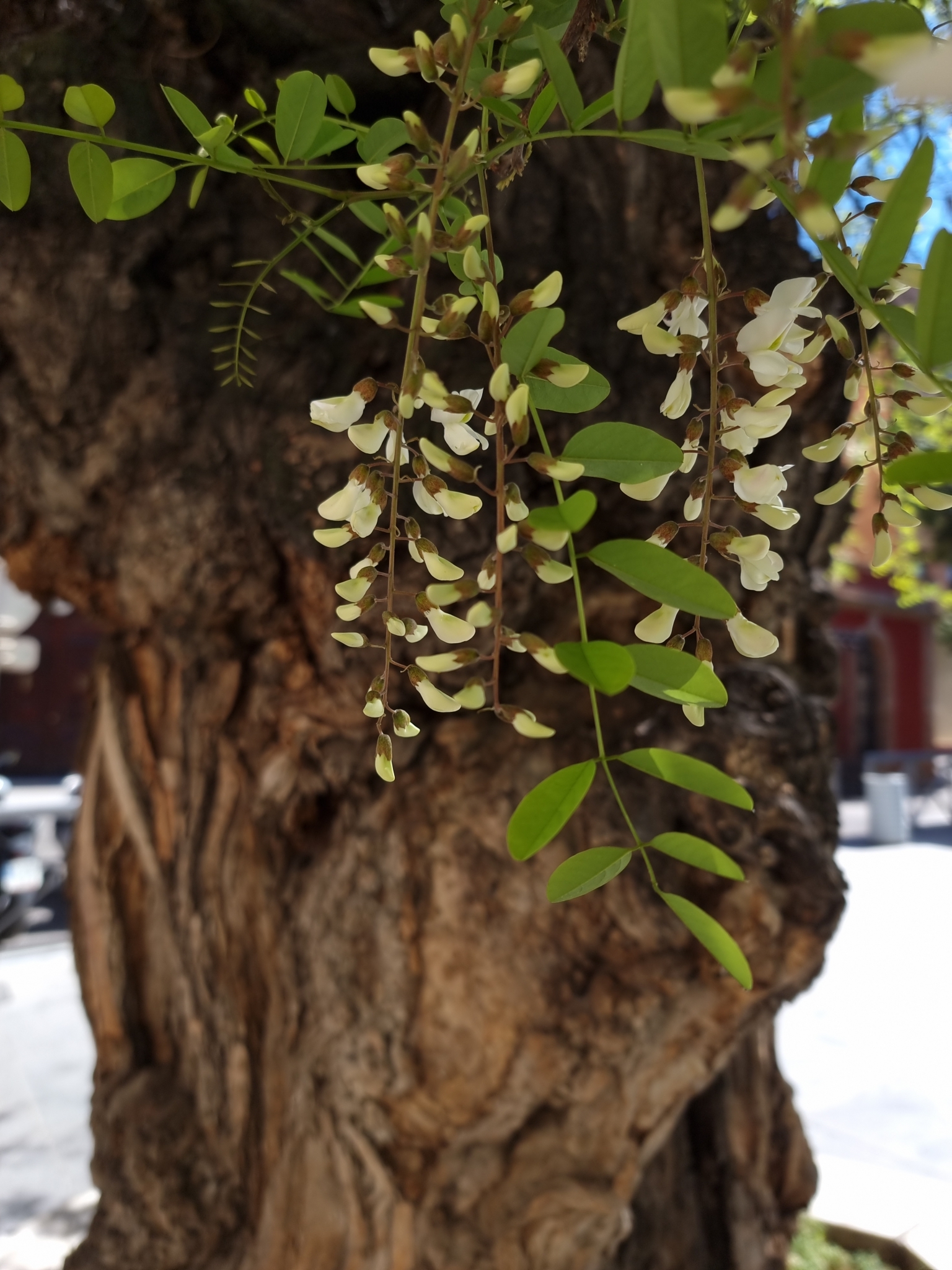
Black Locust (Robinia pseudoacacia) · approximately 200 years · Realejo
Famous enough in Granada to appear on a national lottery ticket: in 2023 Spain's blind people's organisation ONCE printed this robinia on five million tickets alongside the city's cathedral. It flowers white through May.
Horse Chestnut (Aesculus hippocastanum) · about 186 years, documented planted in 1840 · Leopoldstadt, 2nd district
Vienna's grandest avenue is two centuries older than the horse chestnuts that now define it, cut through the Prater's floodplain forest in 1538 on Emperor Ferdinand I's order. The avenue turns white with blossom every late April.
Middelheim is best known for the sculptures scattered across its lawns, but this cut-leaved horse chestnut is a genetic curiosity in its own right, every leaflet narrow and serrated instead of the usual broad fan. It flowers on schedule with any ordinary horse chestnut, come May.
Black Locust (Robinia pseudoacacia) · unknown, national champion · Zuid
The thickest black locust recorded anywhere in Belgium, holding the species' national girth record in the country's own dendrological inventory. Its white flower clusters hang from every branch by late May.
Horse Chestnut (Aesculus hippocastanum) · undated, called a giant specimen · Champvert, 5th arrondissement
Most visitors come to Parc de la Garde for its unusually wooded character rather than any single tree, but this chestnut at its centre is the reason locals bother naming the place at all. Its candle-shaped flower spikes cover the canopy in May.
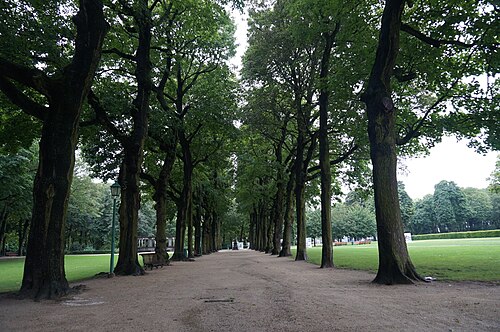
Horse Chestnut (Aesculus hippocastanum) · possibly close to 200 years · European Quarter / Etterbeek
When Brussels built Parc du Cinquantenaire in 1880 to mark the country's fiftieth year, it cheated on the trees, transplanting specimens that were already fully grown rather than waiting decades for saplings to fill in. The avenue still blooms candle-white every May.
Red Horse Chestnut (Aesculus x carnea) · over 100 years (precise planting date unconfirmed) · Van Cortlandt Park, Bronx
Local tradition holds a member of the Van Cortlandt family planted this tree themselves beside their 1748 house, the oldest building still standing in the Bronx. Its pink flower spikes stand out every May against the ordinary white-flowering chestnuts nearby.