The Cedro-do-Bucaco of the First Fall
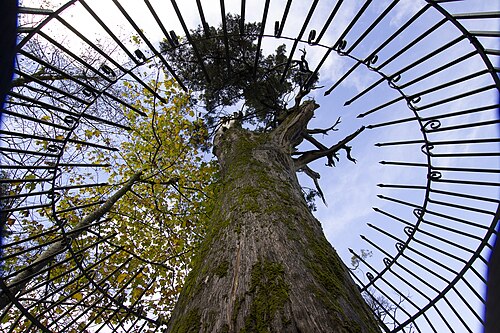
Stop at the wrong shrine and you might miss it: this cypress stands beside the station on the Via Sacra that marks Christ's first fall, one of the roughly twenty small chapels barefoot Carmelite friars built at the end of the seventeenth century, the distance between each one measured out to match the walk from the Mount of Olives to Calvary. The tree itself has nothing to do with that geography. Cupressus lusitanica is native to Mexico and Guatemala, and Bucaco's own name for it, cedro-do-bucaco, only exists because Carmelite gardeners planted so many of them here over the centuries that the species became identified with this one forest on the far side of the Atlantic from where it belongs. Wikipedia calls it the forest's most abundant tree, and this specimen is a serious example of it: five metres and a quarter around the trunk, thirty-one metres tall, and by the state's own measurement in 2016 already three centuries old, which would make it the second oldest classified tree in the whole forest after the more famous Cedro de Sao Jose a short walk south. No source names this particular tree by its position on the Via Sacra, only the forest's register, so treat the age and the rank as the register's word rather than a settled fact.
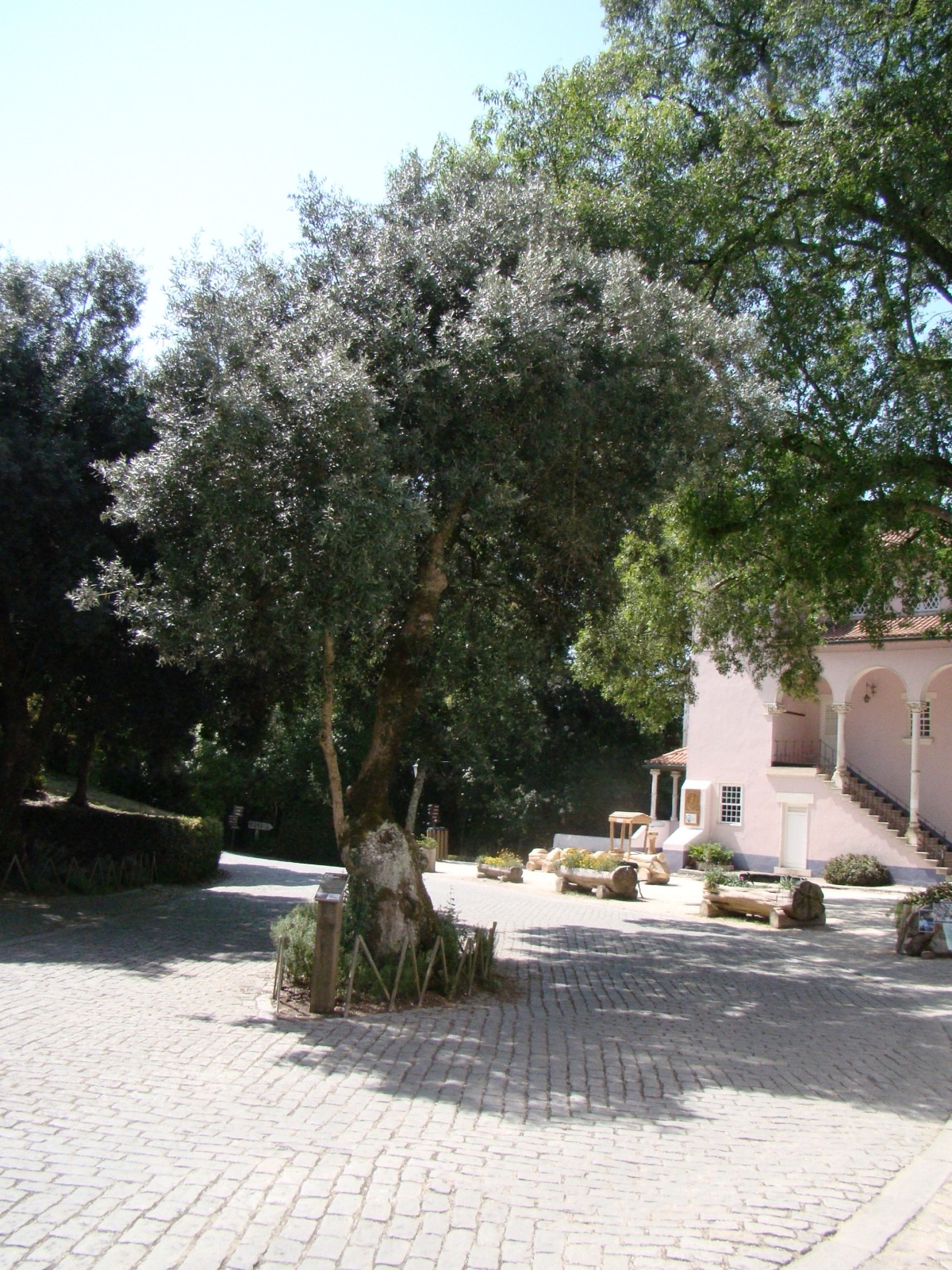
Passo da Primeira Queda, Via Sacra, Mata Nacional do Bucaco, 3050-261 LusoYou can recognise it by standing beside the Via Sacra station marking Christ's first fall. It stands at the Passo da Primeira Queda.
Free on foot. Cars pay 5 euros at the forest gate
On the Via Sacra path above the monastery, about 500 m up from the Largo do Mosteiro
Sources
Where the facts on this page come from.
- In the official register: Arvoredo de Interesse Público (ICNF), no. AIP01110412I
- si.icnf.pt
- en.wikipedia.org
- fmb.pt