The Olifantsiep
NetherlandsAmsterdamZeeburg, Amsterdam-Oost
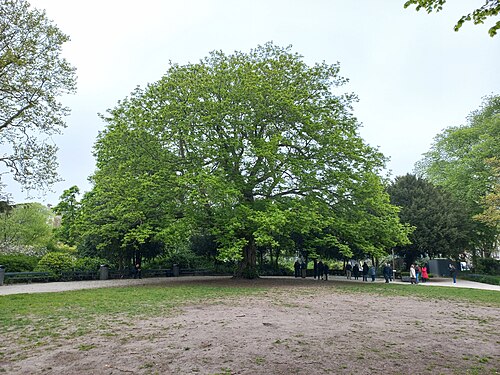
One branch of this elm grows so low and so heavy that the city built it a prop, and that branch is where the tree gets its name: early residents thought it looked like an elephant's trunk reaching for the ground. Amsterdam planted this twin-stemmed elm on Zeeburgerdijk sometime between 1900 and 1915, according to conflicting municipal and conservation records. The city has tens of thousands of elms, more per capita than almost anywhere else in Europe, a legacy of planting elms along canals for their tolerance of the polluted, waterlogged soil common near open sewers a century ago. Dutch elm disease, first identified and named in the Netherlands in the 1920s, wiped out huge numbers of European elms over the following decades, and Amsterdam's collection survived largely because of an aggressive, decades-long eradication and breeding program that continues today. The Olifantsiep, girth pushing five metres, has outlived that epidemic and the severe storm of January 2018, and still leafs out every spring behind a low fence anyone can lean on.
The line is our estimate of how much there is to see, not a measurement. Typical for this species where this tree stands; exact weeks shift with the year.
Zeeburgerdijk, corner of Panamalaan, 1093 Amsterdam-OostThe twin-stemmed elm on the Zeeburgerdijk with one branch grown so low and heavy that the city built it a prop, which is the branch the name refers to.
Free, public street
Tram 14, Zeeburgerdijk area
Sources
Where the facts on this page come from.
- In the official register: Landelijk Register Monumentale Bomen (Bomenstichting), no. 1686172
- bomenbieb.nl
- bomenstichting.nl
- services-eu1.arcgis.com